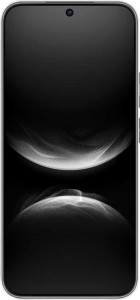
Huawei Nova 14
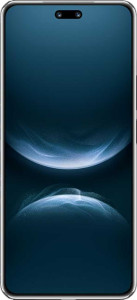
Huawei Nova 14 Pro

Huawei Nova 14 Huawei Nova 14 Pro

Overview

When choosing between the Huawei Nova 14 and the Huawei Nova 14 Pro, the decision comes down to more than just a name upgrade. Both phones share the same chipset, battery, and core feature set, yet they diverge in meaningful ways across display sharpness, camera versatility, and connectivity. This comparison breaks down every specification to help you decide which model truly fits your needs.

Common Features

  • Both phones are water resistant with an IP65 ingress protection rating.
  • Neither phone has a rugged build.
  • Neither phone can be folded.
  • Both phones feature an OLED/AMOLED display.
  • Both phones have a 120Hz refresh rate.
  • Both phones have a 300Hz touch sampling rate.
  • Both phones feature branded damage-resistant glass.
  • HDR10 support is available on both phones.
  • HDR10+ support is not available on either phone.
  • Always-On Display is available on both phones.
  • Dolby Vision support is not available on either phone.
  • Both phones are powered by the HiSilicon Kirin 8000 chipset with a Maleoon 910 GPU.
  • Both phones come with 12GB of RAM at 2200 MHz and 512GB of internal storage.
  • Both phones have a CPU speed of 1 x 2.2 & 3 x 1.5 & 4 x 2 GHz and a GPU clock speed of 750 MHz.
  • Both phones have integrated LTE support.
  • Both phones feature a 50 & 12 & 8 MP multi-lens main camera with optical image stabilization.
  • Both phones support 4K video recording at 30fps on the main camera.
  • Neither phone has a dual-tone LED flash, but both include 2 flash LEDs.
  • Both phones feature a CMOS sensor on the main camera.
  • Both phones have a 5500 mAh battery with 100W fast charging and come with a charger included.
  • Wireless charging is not available on either phone.
  • Neither phone has a removable battery.
  • Both phones lack a 3.5mm audio jack but feature stereo speakers.
  • Both phones support aptX and LDAC audio codecs.
  • aptX HD, aptX Adaptive, and aptX Lossless are not supported on either phone.
  • Neither phone has a built-in radio.
  • Both phones support 5G and dual SIM cards.
  • Both phones use Bluetooth 5.2.
  • Neither phone has an external memory slot.
  • Both phones feature USB Type-C with USB 2.0.
  • NFC is available on both phones.
  • Both phones have a fingerprint scanner.
  • Both phones have camera and microphone privacy options.
  • Dark mode is available on both phones.
  • Battery health check is available on both phones.
  • Both phones support customizable notifications and split screen.
  • Neither phone gets direct OS updates.
  • Neither phone can be used as a PC.
  • Both phones support sharing intents.
  • Neither phone has a sapphire glass display, curved display, or e-paper display.
  • Both phones have a video light.

Main Differences

  • Weight is 192g on the Huawei Nova 14 and 207g on the Huawei Nova 14 Pro.
  • Thickness is 7.2mm on the Huawei Nova 14 and 7.8mm on the Huawei Nova 14 Pro.
  • Width is 75.5mm on the Huawei Nova 14 and 75mm on the Huawei Nova 14 Pro.
  • Height is 161.7mm on the Huawei Nova 14 and 163.4mm on the Huawei Nova 14 Pro.
  • Volume is 87.90cm³ on the Huawei Nova 14 and 95.59cm³ on the Huawei Nova 14 Pro.
  • Screen size is 6.7″ on the Huawei Nova 14 and 6.78″ on the Huawei Nova 14 Pro.
  • Pixel density is 395 ppi on the Huawei Nova 14 and 447 ppi on the Huawei Nova 14 Pro.
  • Resolution is 1084 x 2412 px on the Huawei Nova 14 and 1224 x 2776 px on the Huawei Nova 14 Pro.
  • The main camera wide aperture is f/1.9, f/2.4 & f/2.2 on the Huawei Nova 14 and f/1.4, f/2.4 & f/2.2 on the Huawei Nova 14 Pro.
  • The front camera resolution is 50MP on the Huawei Nova 14 and 50 & 8MP on the Huawei Nova 14 Pro.
  • Manual shutter speed is available on the Huawei Nova 14 Pro but not on the Huawei Nova 14.
  • The front camera aperture is f/2.4 on the Huawei Nova 14 and f/2.2 & f/2.0 on the Huawei Nova 14 Pro.
  • A dual-lens front camera is present on the Huawei Nova 14 Pro but not available on the Huawei Nova 14.
  • Wi-Fi 7 (802.11be) support is present on the Huawei Nova 14 Pro but not available on the Huawei Nova 14, though both support Wi-Fi 4, 5, and 6.
Specs Comparison
Huawei Nova 14

Huawei Nova 14

Huawei Nova 14 Pro

Huawei Nova 14 Pro

Design:
water resistance Water resistant Water resistant
weight 192 g 207 g
thickness 7.2 mm 7.8 mm
width 75.5 mm 75 mm
height 161.7 mm 163.4 mm
volume 87.90012 cm³ 95.589 cm³
Ingress Protection (IP) rating IP65 IP65
has a rugged build
can be folded

Both the Huawei Nova 14 and Nova 14 Pro share the same IP65 water-resistance rating, meaning neither is fully submersible but both can handle splashes and light rain without issue. Neither adopts a rugged or foldable build, so they sit firmly in the mainstream flat-slab category. For everyday durability, these two phones are evenly matched.

Where the designs diverge is in physical footprint and feel-in-hand. The Nova 14 is notably the more compact option: at 7.2 mm thick and 192 g, it is slimmer and 15 g lighter than the Pro, which measures 7.8 mm and 207 g. That 0.6 mm thickness difference is perceptible to the touch, and the weight gap — roughly equivalent to three stacked coins — becomes noticeable during prolonged one-handed use or when the phone is in a shirt pocket. The volume difference (87.9 cm³ vs 95.6 cm³) reinforces that the Pro is a meaningfully bulkier device, despite the two phones being nearly identical in width.

From a pure design standpoint, the Nova 14 has a clear ergonomic edge: it is lighter, thinner, and less voluminous, making it the better fit for users who prioritize a sleek, easy-to-carry profile. The Pro's added bulk likely reflects internal upgrades (such as a larger battery or camera system) covered in other spec groups, but on design alone, the standard Nova 14 is the more pocketable and comfortable choice.

Display:
Display type OLED/AMOLED OLED/AMOLED
screen size 6.7" 6.78"
pixel density 395 ppi 447 ppi
resolution 1084 x 2412 px 1224 x 2776 px
refresh rate 120Hz 120Hz
touch sampling rate 300Hz 300Hz
has branded damage-resistant glass
supports HDR10
supports HDR10+
Always-On Display
supports Dolby Vision
Has a secondary screen
has a touch screen

Both phones share the same OLED/AMOLED panel technology, 120Hz refresh rate, and 300Hz touch sampling rate, so the fundamentals of smoothness and responsiveness are identical. HDR10 support, Always-On Display, and branded damage-resistant glass are also present on both, meaning neither has an edge in terms of feature set or panel quality tier.

The meaningful separation comes down to sharpness. The Nova 14 Pro's 1224 x 2776 px resolution on a 6.78″ screen yields a pixel density of 447 ppi, while the standard Nova 14 delivers 395 ppi at 1084 x 2412 px on its 6.7″ panel. That 52 ppi gap is tangible: at typical viewing distances, text edges appear crisper and fine image detail is more defined on the Pro. For users who read extensively, view high-resolution photos, or simply value display precision, this difference is genuinely noticeable rather than purely theoretical.

The Nova 14 Pro holds a clear display edge, driven entirely by its higher resolution and pixel density. Screen size, panel type, and feature parity are near-identical, so the Pro's sharpness advantage is the decisive factor here for display-conscious buyers.

Performance:
internal storage 512GB 512GB
RAM 12GB 12GB
Chipset (SoC) name HiSilicon Kirin 8000 HiSilicon Kirin 8000
GPU name Maleoon 910 Maleoon 910
CPU speed 1 x 2.2 & 3 x 1.5 & 4 x 2 GHz 1 x 2.2 & 3 x 1.5 & 4 x 2 GHz
GPU clock speed 750 MHz 750 MHz
Has integrated LTE
RAM speed 2200 MHz 2200 MHz
semiconductor size 5 nm 5 nm
Supports 64-bit
Has integrated graphics
Uses big.LITTLE technology
maximum memory amount 16GB 16GB
uses multithreading
Thermal Design Power (TDP) 6W 6W
DDR memory version 4 4

Under the hood, the Huawei Nova 14 and Nova 14 Pro are identical in every measurable way. Both are powered by the HiSilicon Kirin 8000 chip, built on a 5 nm process, paired with 12GB of DDR4 RAM running at 2200 MHz and 512GB of internal storage. The CPU configuration, GPU model, clock speeds, TDP, and maximum expandable memory ceiling are all exactly the same across both devices.

This means real-world performance — app launch times, multitasking fluidity, gaming frame rates, and thermal behavior — will be effectively indistinguishable between the two. The shared 6W TDP also indicates neither device is tuned for higher sustained performance at the cost of heat, so throttling behavior under load should be comparable. Buyers hoping the ″Pro″ label signals a processing upgrade will find none here.

Performance is a complete tie. The choice between these two phones cannot be decided on processing power, memory, or storage grounds — those factors are simply not in play. Any price premium for the Pro must be justified by differences in other specification areas entirely.

Cameras:
megapixels (main camera) 50 & 12 & 8 MP 50 & 12 & 8 MP
wide aperture (main camera) 1.9 & 2.4 & 2.2f 1.4 & 2.4 & 2.2f
Has a dual-lens (or multi-lens) main camera
megapixels (front camera) 50MP 50 & 8MP
has built-in optical image stabilization
video recording (main camera) 2160 x 30 fps 2160 x 30 fps
Has a dual-tone LED flash
number of flash LEDs 2 2
has a BSI sensor
has a CMOS sensor
has continuous autofocus when recording movies
Has phase-detection autofocus for photos
supports slow-motion video recording
has a built-in HDR mode
has manual exposure
has a flash
optical zoom 3x 3x
has manual ISO
has a serial shot mode
has manual focus
has a front camera
Has laser autofocus
Shoots 360° panorama
has manual white balance
shoots raw
has touch autofocus
has manual shutter speed
can create panoramas in-camera
wide aperture (front camera) 2.4f 2.2 & 2f
Has timelapse function
Has a front-facing LED flash
has a dual-lens (or multi-lens) front camera
supports HDR10 recording
supports Dolby Vision recording
has a front-facing camera under the display
Has a RGB LED flash
has 3D photo/video recording capabilities

The rear camera systems share the same 50 & 12 & 8 MP triple-lens configuration, OIS, laser autofocus, 3x optical zoom, and 4K/30fps video recording. At this level, the specs look nearly equivalent — but the main lens aperture tells a different story. The Nova 14 Pro's primary sensor opens to f/1.4, compared to the Nova 14's f/1.9. That is not a marginal gap: a wider aperture captures significantly more light, which translates directly into better low-light photography, shallower depth-of-field for subject separation, and improved performance in challenging indoor or nighttime conditions.

The front camera is another area where the Pro pulls ahead. While both phones field a 50MP primary selfie sensor, the Nova 14 Pro adds a secondary 8MP front lens, making it a dual front-camera system. This secondary lens typically enables a wider field of view for group selfies or video calls — a meaningful practical upgrade for selfie-focused users. The Pro also gains manual shutter speed control, a feature absent on the standard Nova 14, giving photographers finer creative control over exposure, particularly for long-exposure shots.

The Nova 14 Pro has a clear camera advantage. Its significantly wider f/1.4 main aperture, dual front camera setup, and added manual shutter speed control combine to make it the stronger imaging device across both rear and front shooting scenarios.

Operating system:
has camera/microphone privacy options
has dark mode
has battery health check
Has customizable notifications
supports split screen
gets direct OS updates
Can be used as a PC
Has sharing intents
has a child lock
Supports widgets
has voice commands
Tracks the current position of a mobile device
is a multi-user system

From a software standpoint, the Nova 14 and Nova 14 Pro are completely identical. Every tracked feature — from split-screen multitasking and widgets to camera/microphone privacy controls, child lock, multi-user support, and device tracking — is present on both. Neither phone receives direct OS updates, which is a shared limitation worth noting: users on both devices will depend on Huawei's own update delivery mechanism rather than receiving platform updates directly from the OS vendor.

The absence of any software differentiator means the day-to-day user experience — how notifications behave, how the interface is customized, how voice commands and sharing work — will feel functionally identical on both devices. For buyers whose decision hinges on software features or long-term update support, the data provides no basis to favor one over the other.

This is a complete tie. The operating system category offers zero differentiation between these two phones, and should carry no weight in a purchasing decision between them.

Battery:
battery power 5500 mAh 5500 mAh
has wireless charging
Supports fast charging
charging speed 100W 100W
comes with a charger
has a removable battery
has a battery level indicator
has a rechargeable battery

Battery is another category where the two phones are spec-for-spec identical. Both carry a 5500 mAh cell — a generously sized capacity that positions them well for all-day and potentially multi-day use under moderate loads. Neither supports wireless charging, and both ship with a charger in the box capable of 100W fast charging, which at that wattage can realistically bring a 5500 mAh battery from low to full in well under an hour.

The 100W charging speed is a standout figure worth emphasizing: it places both phones in a fast-charging tier that many competitors do not reach, making the lack of wireless charging a less significant trade-off for most users. With identical capacity and identical replenishment speed, there is no scenario based on these specs where one device would outlast or recharge faster than the other.

Battery is a complete tie. Capacity, charging speed, and every other battery-related attribute are shared equally between the Nova 14 and Nova 14 Pro — this category will not and should not influence a choice between them.

Audio:
has a socket for a 3.5 mm audio jack
has stereo speakers
has aptX
has LDAC
has aptX HD
has aptX Adaptive
has aptX Lossless
Has a radio

Audio hardware is identical across both devices. The Nova 14 and Nova 14 Pro each drop the 3.5mm headphone jack — a shared compromise that pushes users toward wireless or USB-C audio — but compensate with stereo speakers for a wider, more immersive soundstage compared to a single-driver setup. On the wireless audio codec front, both support aptX and LDAC, the latter being particularly noteworthy as it enables high-resolution Bluetooth audio streaming at up to 990 kbps, making it the preferred codec for audiophiles using compatible wireless headphones.

Neither phone extends into aptX HD, aptX Adaptive, or aptX Lossless territory, which would have offered further quality headroom for wired-equivalent wireless listening. That said, LDAC's ceiling is high enough to satisfy most discerning listeners, so the absence of those codecs is unlikely to be a practical pain point for the majority of users.

Audio is a complete tie. With matching speaker configurations, identical codec support, and the same jack-free design, there is no audio-based reason to choose one phone over the other.

Connectivity & Features:
release date May 2025 May 2025
has 5G support
Wi-Fi version Wi-Fi 4 (802.11n), Wi-Fi 6 (802.11ax), Wi-Fi 5 (802.11ac) Wi-Fi 4 (802.11n), Wi-Fi 6 (802.11ax), Wi-Fi 5 (802.11ac), Wi-Fi 7 (802.11be)
SIM cards 2 SIM 2 SIM
Bluetooth version 5.2 5.2
has an external memory slot
Has USB Type-C
USB version 2 2
has NFC
Has a fingerprint scanner
has emergency SOS via satellite
has crash detection
is DLNA-certified
has a gyroscope
supports ANT+
Has a heart rate monitor
has GPS
has a compass
supports Wi-Fi
Has an infrared sensor
has an accelerometer
has a cellular module
Has a barometer
has an HDMI output
Uses 3D facial recognition
Has an iris scanner
Stylus included
supports Galileo
Has motion tracking
Has optical tracking
Has a built-in projector

Across the vast majority of connectivity features — 5G, Bluetooth 5.2, NFC, USB Type-C, dual SIM, GPS with Galileo support, infrared sensor, and the full suite of motion sensors — these two phones are perfectly matched. For everyday connectivity needs, neither holds an advantage.

The single differentiator in this category is Wi-Fi. The Nova 14 Pro adds support for Wi-Fi 7 (802.11be), a standard absent on the base Nova 14, which tops out at Wi-Fi 6 (802.11ax). Wi-Fi 7 delivers substantially higher theoretical throughput, lower latency, and better performance in congested multi-device environments compared to Wi-Fi 6. While Wi-Fi 7 router infrastructure is still in early adoption, this is a meaningful future-proofing advantage — as networks upgrade, the Pro will be positioned to benefit while the standard Nova 14 will not.

The Nova 14 Pro edges ahead in this category solely on the strength of its Wi-Fi 7 support. It is a single but genuinely relevant differentiator, particularly for users who invest in cutting-edge home or office networking hardware, or who plan to hold onto their phone long enough for Wi-Fi 7 to become mainstream.

Miscellaneous:
has a video light
Has sapphire glass display
Has a curved display
Has an e-paper display

The miscellaneous feature set is entirely identical between the Nova 14 and Nova 14 Pro. Both include a video light, and neither adopts a curved display, sapphire glass protection, or an e-paper panel. With so few data points in this group, and all of them shared, there is simply no differentiation to analyze.

This category is a complete tie and carries no weight in a purchasing decision between the two phones.

Comparison Summary & Verdict

Both the Huawei Nova 14 and the Huawei Nova 14 Pro are well-matched siblings sharing the same HiSilicon Kirin 8000 chipset, 5500 mAh battery with 100W fast charging, and identical RAM and storage. However, the Pro steps ahead with a higher-resolution display at 447 ppi, a brighter f/1.4 main aperture, a dual-lens front camera with manual shutter speed control, and future-ready Wi-Fi 7 support. The standard Nova 14 rewards those who prefer a lighter, slimmer handset without sacrificing core performance. Choose the Nova 14 Pro if photography versatility and display quality are top priorities; opt for the Nova 14 if a more compact form factor and identical core hardware at a likely lower price point suit your lifestyle better.

Huawei Nova 14
Buy Huawei Nova 14 if...

Buy the Huawei Nova 14 if you prefer a lighter and slimmer device. It delivers the same core performance and battery experience in a more compact build.

Huawei Nova 14 Pro
Buy Huawei Nova 14 Pro if...

Buy the Huawei Nova 14 Pro if sharper display quality, a more versatile camera system with a dual-lens selfie setup and manual shutter control, and Wi-Fi 7 support are important to you.