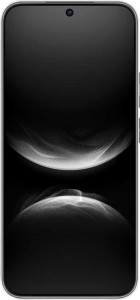
Huawei Nova 14
Tecno Camon 40

Huawei Nova 14 Tecno Camon 40

Overview

Welcome to our in-depth spec comparison between the Huawei Nova 14 and the Tecno Camon 40. Both phones share a sleek, water-resistant build with OLED displays and 120Hz refresh rates, but they diverge sharply when it comes to raw performance, camera versatility, and connectivity features. Read on as we break down every key specification to help you decide which device truly fits your needs.

Common Features

  • Both phones are water resistant.
  • Neither phone has a rugged build.
  • Neither phone can be folded.
  • Both phones feature an OLED/AMOLED display.
  • Both phones support a 120Hz refresh rate.
  • HDR10+ support is not available on either phone.
  • Always-On Display is available on both phones.
  • Dolby Vision support is not available on either phone.
  • Neither phone has a secondary screen.
  • Both phones have a touchscreen.
  • Both phones have integrated LTE.
  • Both phones support 64-bit processing.
  • Both phones have integrated graphics.
  • Both phones use big.LITTLE technology.
  • Both phones use DDR4 memory.
  • Both phones feature a multi-lens main camera.
  • Both phones have built-in optical image stabilization.
  • Both phones use a CMOS sensor.
  • Both phones support continuous autofocus when recording video.
  • Both phones support phase-detection autofocus for photos.
  • Both phones include camera and microphone privacy options.
  • Both phones have dark mode.
  • Both phones include a battery health check feature.
  • Both phones have customizable notifications.
  • Both phones support split screen.
  • Neither phone gets direct OS updates.
  • Neither phone can be used as a PC.
  • Both phones have sharing intents.
  • Wireless charging is not available on either phone.
  • Both phones support fast charging.
  • Both phones come with a charger.
  • Neither phone has a removable battery.
  • Both phones have a battery level indicator.
  • Both phones have a rechargeable battery.
  • Neither phone has a 3.5mm audio jack.
  • Both phones have stereo speakers.
  • aptX HD support is not available on either phone.
  • aptX Adaptive support is not available on either phone.
  • aptX Lossless support is not available on either phone.
  • Both phones support 2 SIM cards.
  • Both phones have a USB Type-C port.
  • Both phones use USB version 2.
  • Both phones have NFC.
  • Both phones have a fingerprint scanner.
  • Emergency SOS via satellite is not available on either phone.
  • Crash detection is not available on either phone.
  • Neither phone is DLNA-certified.
  • Both phones have a video light.
  • Neither phone has a sapphire glass display.
  • Neither phone has an e-paper display.

Main Differences

  • Weight is 192 g on Huawei Nova 14 and 177.2 g on Tecno Camon 40.
  • Thickness is 7.2 mm on Huawei Nova 14 and 7.3 mm on Tecno Camon 40.
  • Width is 75.5 mm on Huawei Nova 14 and 74.6 mm on Tecno Camon 40.
  • Height is 161.7 mm on Huawei Nova 14 and 164.1 mm on Tecno Camon 40.
  • Volume is 87.90 cm³ on Huawei Nova 14 and 89.37 cm³ on Tecno Camon 40.
  • IP rating is IP65 on Huawei Nova 14 and IP66 on Tecno Camon 40.
  • Screen size is 6.7″ on Huawei Nova 14 and 6.78″ on Tecno Camon 40.
  • Pixel density is 395 ppi on Huawei Nova 14 and 393 ppi on Tecno Camon 40.
  • Resolution is 1084 x 2412 px on Huawei Nova 14 and 1080 x 2436 px on Tecno Camon 40.
  • Damage-resistant glass is present on Huawei Nova 14 but not available on Tecno Camon 40.
  • HDR10 support is present on Huawei Nova 14 but not available on Tecno Camon 40.
  • Internal storage is 512GB on Huawei Nova 14 and 256GB on Tecno Camon 40.
  • RAM is 12GB on Huawei Nova 14 and 8GB on Tecno Camon 40.
  • AnTuTu benchmark score is 521000 on Huawei Nova 14 and 415000 on Tecno Camon 40.
  • The chipset is HiSilicon Kirin 8000 on Huawei Nova 14 and MediaTek Helio G100 on Tecno Camon 40.
  • The GPU is Maleoon 910 on Huawei Nova 14 and Mali G57 on Tecno Camon 40.
  • GPU clock speed is 750 MHz on Huawei Nova 14 and 1000 MHz on Tecno Camon 40.
  • RAM speed is 2200 MHz on Huawei Nova 14 and 4266 MHz on Tecno Camon 40.
  • Semiconductor size is 5 nm on Huawei Nova 14 and 6 nm on Tecno Camon 40.
  • Maximum memory amount is 16GB on Huawei Nova 14 and 12GB on Tecno Camon 40.
  • Thermal Design Power is 6W on Huawei Nova 14 and 5W on Tecno Camon 40.
  • Main camera megapixels are 50 & 12 & 8 MP on Huawei Nova 14 and 50 & 8 MP on Tecno Camon 40.
  • Front camera resolution is 50MP on Huawei Nova 14 and 32MP on Tecno Camon 40.
  • Optical zoom is 3x on Huawei Nova 14 while Tecno Camon 40 has no optical zoom.
  • Laser autofocus is present on Huawei Nova 14 but not available on Tecno Camon 40.
  • RAW photo shooting is supported on Huawei Nova 14 but not on Tecno Camon 40.
  • Battery capacity is 5500 mAh on Huawei Nova 14 and 5200 mAh on Tecno Camon 40.
  • Charging speed is 100W on Huawei Nova 14 and 45W on Tecno Camon 40.
  • aptX support is present on Huawei Nova 14 but not available on Tecno Camon 40.
  • LDAC support is present on Huawei Nova 14 but not available on Tecno Camon 40.
  • A radio is available on Tecno Camon 40 but not on Huawei Nova 14.
  • 5G support is present on Huawei Nova 14 but not available on Tecno Camon 40.
  • An infrared sensor is present on Huawei Nova 14 but not available on Tecno Camon 40.
  • A curved display is featured on Tecno Camon 40 but not on Huawei Nova 14.
Specs Comparison
Huawei Nova 14

Huawei Nova 14

Tecno Camon 40

Tecno Camon 40

Design:
water resistance Water resistant Water resistant
weight 192 g 177.2 g
thickness 7.2 mm 7.3 mm
width 75.5 mm 74.6 mm
height 161.7 mm 164.1 mm
volume 87.90012 cm³ 89.365578 cm³
Ingress Protection (IP) rating IP65 IP66
has a rugged build
can be folded

Both the Huawei Nova 14 and the Tecno Camon 40 share a broadly similar design philosophy — slim, non-rugged, non-foldable slabs with water resistance — but a few meaningful differences emerge on closer inspection. The most notable is weight: the Camon 40 comes in at 177.2 g versus the Nova 14's 192 g, a difference of nearly 15 grams. While that may sound minor on paper, in daily use it is perceptible, especially during extended one-handed use or long calls, giving the Camon 40 a slightly more comfortable feel in hand.

On dimensions, the two phones diverge in opposite directions: the Nova 14 is marginally narrower (75.5 mm vs 74.6 mm) and shorter (161.7 mm vs 164.1 mm), making it a touch more compact in footprint, while the thickness difference of 7.2 mm vs 7.3 mm is negligible in practice. The water resistance rating is where the Camon 40 pulls ahead more definitively: its IP66 certification means it can withstand powerful, sustained water jets, whereas the Nova 14's IP65 covers only lower-pressure water streams. For most everyday scenarios — rain, splashes, a wet sink — both will perform fine, but the Camon 40 offers a genuine extra margin of protection.

Overall, the Tecno Camon 40 holds a clear design edge in this group: it is meaningfully lighter and carries a superior IP rating. The Nova 14 counters only with a slightly more compact footprint, which is a secondary consideration for most users. If water durability and in-hand comfort are priorities, the Camon 40 is the stronger choice here.

Display:
Display type OLED/AMOLED OLED/AMOLED
screen size 6.7" 6.78"
pixel density 395 ppi 393 ppi
resolution 1084 x 2412 px 1080 x 2436 px
refresh rate 120Hz 120Hz
has branded damage-resistant glass
supports HDR10
supports HDR10+
Always-On Display
supports Dolby Vision
Has a secondary screen
has a touch screen

At a glance, these two displays look nearly identical on paper — both are OLED/AMOLED panels with a 120Hz refresh rate, Always-On Display support, and screen sizes separated by less than a tenth of an inch (6.7″ vs 6.78″). Pixel density is equally matched at 395 ppi and 393 ppi respectively, a difference so small it is imperceptible to the human eye. For everyday scrolling, video playback, and general use, both screens will feel smooth and sharp.

The real separation comes from two features exclusive to the Huawei Nova 14. First, it supports HDR10, which means compatible streaming content — movies and shows mastered with high dynamic range — will render with greater contrast and more accurate brightness levels. The Camon 40 simply does not support this standard, so HDR content will be tone-mapped down, losing some of that visual depth. Second, the Nova 14 features branded damage-resistant glass on its display, offering meaningful protection against everyday scratches and minor drops. The Camon 40 lacks this, making its screen comparatively more vulnerable to surface wear over time.

The verdict here is clear: the Nova 14 holds a genuine advantage in display quality. The HDR10 support elevates the media consumption experience, and the protective glass adds long-term durability the Camon 40 cannot match. For users who prioritize display resilience and richer visual output, the Nova 14 is the stronger performer in this category.

Performance:
internal storage 512GB 256GB
RAM 12GB 8GB
AnTuTu benchmark score 521000 415000
Chipset (SoC) name HiSilicon Kirin 8000 MediaTek Helio G100
GPU name Maleoon 910 Mali G57
CPU speed 1 x 2.2 & 3 x 1.5 & 4 x 2 GHz 2 x 2.2 & 6 x 2 GHz
GPU clock speed 750 MHz 1000 MHz
Has integrated LTE
RAM speed 2200 MHz 4266 MHz
semiconductor size 5 nm 6 nm
Supports 64-bit
Has integrated graphics
Uses big.LITTLE technology
maximum memory amount 16GB 12GB
Thermal Design Power (TDP) 6W 5W
DDR memory version 4 4

The performance gap between these two phones is substantial. The Huawei Nova 14 runs on the HiSilicon Kirin 8000, built on a 5nm process, while the Tecno Camon 40 uses the MediaTek Helio G100 on a 6nm node. A smaller semiconductor size generally translates to greater power efficiency and thermal headroom. The AnTuTu scores tell the story plainly: the Nova 14 registers 521,000 against the Camon 40's 415,000 — a lead of roughly 25%, which is meaningful in real-world terms. Users will notice this in faster app launches, smoother multitasking under load, and more capable handling of graphically intensive games.

Memory is another area where the Nova 14 pulls ahead. It ships with 12GB of RAM and 512GB of storage — double the Camon 40's 256GB — and supports a maximum of 16GB RAM versus 12GB on the Camon 40. More RAM means more apps can stay resident in the background without being force-closed, which is a tangible quality-of-life improvement for power users. The Camon 40 does counter with faster RAM at 4266 MHz versus 2200 MHz, and its GPU runs at a higher clock speed (1000 MHz vs 750 MHz), but these advantages do not compensate for the overall performance deficit reflected in the benchmark scores.

The Nova 14 is the clear winner in this category. Its more advanced chipset, higher benchmark output, greater RAM capacity, and double the base storage make it a significantly more capable device for demanding workloads. The Camon 40 remains a competent everyday performer, but for users who push their phone hard, the performance difference here is too wide to ignore.

Cameras:
megapixels (main camera) 50 & 12 & 8 MP 50 & 8 MP
Has a dual-lens (or multi-lens) main camera
megapixels (front camera) 50MP 32MP
has built-in optical image stabilization
Has a dual-tone LED flash
number of flash LEDs 2 2
has a BSI sensor
has a CMOS sensor
has continuous autofocus when recording movies
Has phase-detection autofocus for photos
supports slow-motion video recording
has a built-in HDR mode
has manual exposure
has a flash
optical zoom 3x 0x
has manual ISO
has a serial shot mode
has manual focus
has a front camera
Has laser autofocus
Shoots 360° panorama
has manual white balance
shoots raw
has touch autofocus
has manual shutter speed
can create panoramas in-camera
Has timelapse function
Has a front-facing LED flash
has a dual-lens (or multi-lens) front camera
supports HDR10 recording
supports Dolby Vision recording
has a front-facing camera under the display
Has a RGB LED flash
has 3D photo/video recording capabilities

Both phones share a competent foundation — 50MP primary sensors, optical image stabilization, phase-detection autofocus, and a broadly capable feature set for manual controls and video. For casual photography in good light, either device will cover the basics well. But the Huawei Nova 14 separates itself through a series of meaningful additions that compound into a notably richer camera system overall.

The most impactful difference is the Nova 14's 3x optical zoom, compared to the Camon 40's complete absence of optical zoom. Optical zoom uses dedicated lens hardware to magnify subjects without degrading image quality — something digital zoom simply cannot replicate. Paired with this is a third rear lens (50 & 12 & 8 MP triple setup versus the Camon 40's dual 50 & 8 MP), giving the Nova 14 more compositional versatility across shooting distances. Add to this laser autofocus for faster, more reliable locking in low-light conditions, the ability to shoot in RAW format for post-processing flexibility, and a significantly higher-resolution 50MP front camera versus the Camon 40's 32MP — and the gap becomes hard to dismiss.

The Nova 14 wins this category decisively. The optical zoom alone is a feature class the Camon 40 simply cannot compete with, and the additional lens, laser AF, and RAW support reinforce its position as the more versatile and capable imaging device for users who take mobile photography seriously.

Operating system:
has camera/microphone privacy options
has dark mode
has battery health check
Has customizable notifications
supports split screen
gets direct OS updates
Can be used as a PC
Has sharing intents
has a child lock
Supports widgets
has voice commands
Tracks the current position of a mobile device
is a multi-user system

Across every single data point in this category, the Huawei Nova 14 and the Tecno Camon 40 are identical — a rare outcome that makes the comparison straightforward. Both devices support the full suite of modern OS conveniences: split-screen multitasking, customizable notifications, widgets, voice commands, and camera/microphone privacy controls. These are no longer premium differentiators; they represent the expected baseline for contemporary smartphones, and both phones clear that bar without exception.

Worth acknowledging is one shared limitation: neither device receives direct OS updates. This means software upgrades are mediated through the manufacturer rather than pushed straight from the platform source, which can translate to delays in receiving security patches and new features. For security-conscious users, this is a consideration applicable equally to both phones.

This category is an unambiguous tie. No feature present on one device is absent on the other, and no gaps exist to tip the balance either way. Users choosing between these two phones should weight their decision entirely on the other specification groups — operating system features offer no differentiation here.

Battery:
battery power 5500 mAh 5200 mAh
has wireless charging
Supports fast charging
charging speed 100W 45W
comes with a charger
has a removable battery
has a battery level indicator
has a rechargeable battery

Battery life and charging speed are two sides of the same coin, and the Huawei Nova 14 leads on both. Its 5500 mAh capacity edges out the Camon 40's 5200 mAh — a 300 mAh difference that, while not dramatic, does offer a modest but real buffer for heavier usage days. Both are large cells by modern standards, meaning neither phone should struggle to last a full day for typical users.

Where the gap becomes more pronounced is charging speed. The Nova 14 supports 100W fast charging versus the Camon 40's 45W — a more than twofold advantage. In practice, this means the Nova 14 can go from near-empty to a usable charge in a fraction of the time, a genuinely impactful difference for users who charge on the go or during short breaks. The Camon 40's 45W is still respectable and faster than basic charging, but it cannot match the convenience that triple-digit wattage delivers. Both phones come bundled with a charger in the box, so neither user is left to source their own.

The Nova 14 takes a clear win in this category. It holds more charge and replenishes that charge significantly faster — a combination that adds up to a meaningfully better battery experience. The Camon 40 is not deficient, but it has no advantage to offer here.

Audio:
has a socket for a 3.5 mm audio jack
has stereo speakers
has aptX
has LDAC
has aptX HD
has aptX Adaptive
has aptX Lossless
Has a radio

Shared ground first: both phones ditch the 3.5mm headphone jack and both deliver stereo speakers, meaning wired listeners will need an adapter or Bluetooth earphones regardless of which device they choose, while speaker output will be spatially comparable on either. Beyond that, however, the audio profiles diverge in ways that matter depending on how a user listens.

The Huawei Nova 14 supports aptX and LDAC — two high-quality Bluetooth audio codecs that enable significantly higher bitrate transmission to compatible wireless headphones. LDAC in particular, developed by Sony, can transmit audio at up to three times the data rate of standard Bluetooth, preserving considerably more detail from high-resolution audio files. For users invested in quality wireless headphones and high-fidelity listening, this is a meaningful practical advantage. The Tecno Camon 40 supports none of these codecs, meaning Bluetooth audio will fall back to the standard SBC baseline regardless of what headphones are connected. What the Camon 40 does offer in return is a built-in FM radio — a niche but genuinely useful feature for users in markets where radio remains relevant, requiring no data connection or streaming subscription.

For most users, the Nova 14 holds the audio edge, particularly for wireless headphone listeners who want the best possible Bluetooth sound quality. The Camon 40's radio is a worthwhile inclusion for a specific audience, but it does not offset the absence of advanced codec support for the broader user base.

Connectivity & Features:
release date May 2025 March 2025
has 5G support
SIM cards 2 SIM 2 SIM
Has USB Type-C
USB version 2 2
has NFC
Has a fingerprint scanner
has emergency SOS via satellite
has crash detection
is DLNA-certified
has a gyroscope
supports ANT+
Has a heart rate monitor
has GPS
has a compass
supports Wi-Fi
Has an infrared sensor
has an accelerometer
has a cellular module
Has a barometer
has an HDMI output
Uses 3D facial recognition
Has an iris scanner
Stylus included
supports Galileo
Has motion tracking
Has optical tracking
Has a built-in projector

Much of the connectivity foundation is shared between these two devices — dual SIM, USB Type-C, NFC, fingerprint scanner, GPS with Galileo support, gyroscope, accelerometer, compass, and Wi-Fi are all present on both. For everyday tasks like contactless payments, navigation, and accessory pairing, users on either phone will find the experience essentially equivalent. That said, two specific differences shift the balance noticeably in favor of the Huawei Nova 14.

The more consequential gap is 5G support. The Nova 14 is 5G-capable; the Tecno Camon 40 is not. In regions where 5G infrastructure is available or expanding, this translates directly into faster mobile data speeds, lower latency, and greater future-proofing as networks continue to mature. For a user expecting to keep their phone for several years, buying a 4G-only device today is a meaningful trade-off. The second differentiator is the Nova 14's built-in infrared sensor, which allows the phone to function as a universal remote for compatible TVs and appliances — a convenient utility the Camon 40 lacks entirely.

The Nova 14 wins this category. Its 5G capability alone is a forward-looking advantage that the Camon 40 simply cannot match, and the infrared sensor adds a practical bonus on top. Users in active 5G markets or those planning for longevity should weigh this gap carefully.

Miscellaneous:
has a video light
Has sapphire glass display
Has a curved display
Has an e-paper display

This is a lean category with only one meaningful differentiator. Both phones include a video light and neither features sapphire glass or an e-paper display — points of parity that require no further analysis. The single distinguishing spec is the Tecno Camon 40's curved display, which the Huawei Nova 14 lacks.

A curved screen is primarily an aesthetic and ergonomic choice. The gentle arc at the display edges can make the phone feel slimmer in hand and lends a premium visual character to the device. The trade-off, however, is practical: curved edges are more susceptible to accidental touches at the sides and can make screen protectors harder to fit securely. Whether this counts as an advantage depends almost entirely on personal preference — some users actively seek the curved look, others deliberately avoid it.

Given that this is a matter of design taste rather than a clear functional gain, this category is effectively a tie for most users. The Camon 40's curved display is the only differentiator, and its value is subjective. Neither phone offers a compelling miscellaneous feature the other meaningfully lacks.

Comparison Summary & Verdict

After a thorough side-by-side analysis, both phones prove to be capable mid-range contenders, but with clearly different strengths. The Huawei Nova 14 pulls ahead in sheer performance with its HiSilicon Kirin 8000 chipset, a higher AnTuTu score, triple-lens camera system with 3x optical zoom, 5G connectivity, and significantly faster 100W charging — making it the stronger choice for power users. The Tecno Camon 40, on the other hand, appeals with its lighter build, superior IP66 water resistance, a curved display, and the added convenience of an FM radio, offering a well-rounded experience at likely a more accessible price point. Choose the Nova 14 for performance and versatility; choose the Camon 40 for a sleek everyday device with solid fundamentals.

Huawei Nova 14
Buy Huawei Nova 14 if...

Buy the Huawei Nova 14 if you want stronger performance, 5G support, optical zoom, and much faster 100W charging in a feature-packed package.

Tecno Camon 40
Buy Tecno Camon 40 if...

Buy the Tecno Camon 40 if you prefer a lighter, more compact phone with a curved display and a higher IP66 water resistance rating at a likely lower cost.