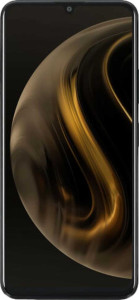
Huawei Nova 14i
Huawei Nova Y72S

Huawei Nova 14i Huawei Nova Y72S

Overview

Welcome to our detailed spec comparison between the Huawei Nova 14i and the Huawei Nova Y72S. Both phones share the same Qualcomm Snapdragon 680 4G chipset, 8GB of RAM, and 256GB of storage, making their shared foundation remarkably similar. Yet key battlegrounds emerge around display sharpness, battery capacity, and a set of software and hardware features that set them meaningfully apart. Read on to find out which device suits your needs best.

Common Features

  • Both phones have a thickness of 8.9 mm.
  • Neither phone has a rugged build.
  • Neither phone can be folded.
  • Both phones feature an LCD IPS display with a 90Hz refresh rate.
  • Neither phone has branded damage-resistant glass.
  • Neither phone supports HDR10, HDR10+, or Dolby Vision.
  • Neither phone has a secondary screen.
  • Both phones have a touchscreen.
  • Both phones come with 256GB internal storage and 8GB RAM.
  • Both phones are powered by the Qualcomm Snapdragon 680 4G chipset with an Adreno 610 GPU.
  • Both phones share the same CPU speed of 4 x 2.4 and 4 x 1.9 GHz.
  • Both phones have a Geekbench 6 multi-core score of 1466 and a single-core score of 416.
  • Both phones feature a dual-lens main camera with 50 and 2 MP and an 8MP front camera.
  • Neither phone has built-in optical image stabilization.
  • Both phones record video at 1080p 30fps on the main camera.
  • Both phones run an OS with clipboard warnings, location privacy options, and camera/microphone privacy options.
  • Both phones support dark mode, extra dim mode, and theme customization.
  • Neither phone supports wireless charging, but both support 22.5W fast charging.
  • Neither phone has a removable battery, and both have a rechargeable battery with a battery level indicator.
  • Both phones support Wi-Fi 4 and Wi-Fi 5, Bluetooth 5, dual SIM, USB Type-C with USB 2.0, and NFC.
  • Neither phone has a 3.5mm audio jack, aptX, LDAC, aptX HD, aptX Adaptive, aptX Lossless, or a radio.
  • Neither phone has 5G support.
  • Neither phone has an external memory slot.

Main Differences

  • Weight is 216 g on Huawei Nova 14i and 207 g on Huawei Nova Y72S.
  • Width is 79.9 mm on Huawei Nova 14i and 77.7 mm on Huawei Nova Y72S.
  • Height is 171.6 mm on Huawei Nova 14i and 168.3 mm on Huawei Nova Y72S.
  • Volume is 122.03 cm³ on Huawei Nova 14i and 116.38 cm³ on Huawei Nova Y72S.
  • Screen size is 6.95″ on Huawei Nova 14i and 6.75″ on Huawei Nova Y72S.
  • Pixel density is 376 ppi on Huawei Nova 14i and 260 ppi on Huawei Nova Y72S.
  • Resolution is 1080 x 2376 px on Huawei Nova 14i and 720 x 1600 px on Huawei Nova Y72S.
  • Always-On Display is not available on Huawei Nova 14i but is present on Huawei Nova Y72S.
  • On-device machine learning is not available on Huawei Nova 14i but is present on Huawei Nova Y72S.
  • Wi-Fi password sharing is available on Huawei Nova 14i but not on Huawei Nova Y72S.
  • Battery health check is available on Huawei Nova 14i but not on Huawei Nova Y72S.
  • Focus modes are available on Huawei Nova 14i but not on Huawei Nova Y72S.
  • App offloading is supported on Huawei Nova 14i but not on Huawei Nova Y72S.
  • Live Text is available on Huawei Nova Y72S but not on Huawei Nova 14i.
  • Battery capacity is 7000 mAh on Huawei Nova 14i and 6000 mAh on Huawei Nova Y72S.
  • Stereo speakers are present on Huawei Nova 14i but not on Huawei Nova Y72S.
  • A gyroscope is present on Huawei Nova Y72S but not on Huawei Nova 14i.
Specs Comparison
Huawei Nova 14i

Huawei Nova 14i

Huawei Nova Y72S

Huawei Nova Y72S

Design:
weight 216 g 207 g
thickness 8.9 mm 8.9 mm
width 79.9 mm 77.7 mm
height 171.6 mm 168.3 mm
volume 122.026476 cm³ 116.384499 cm³
has a rugged build
can be folded

Both the Huawei Nova 14i and the Huawei Nova Y72S share the same 8.9 mm thickness and neither offers a rugged build or foldable form factor, placing them squarely in the same category of standard, slim-slab smartphones. Where they diverge is in their overall footprint and mass. The Nova 14i is taller at 171.6 mm and wider at 79.9 mm, while the Y72S measures 168.3 mm in height and 77.7 mm in width — differences that translate directly into a noticeably more compact physical envelope.

That size gap compounds into a meaningful volume difference: the Nova 14i displaces 122.03 cm³ versus the Y72S's 116.38 cm³, roughly a 5% larger body. Combined with a 9 g weight advantage in favor of the Y72S (207 g vs. 216 g), the practical effect is real — over a long day of use, the lighter and narrower Y72S will feel less fatiguing in hand and is marginally easier to grip one-handed and slip into a pocket.

In terms of design, the Nova Y72S holds a clear ergonomic edge: it is lighter, shorter, and narrower without any trade-off in thickness. For users who prioritize comfortable daily handling, the Y72S is the more pocket-friendly option of the two.

Display:
Display type LCD, IPS LCD, IPS
screen size 6.95" 6.75"
pixel density 376 ppi 260 ppi
resolution 1080 x 2376 px 720 x 1600 px
refresh rate 90Hz 90Hz
has branded damage-resistant glass
supports HDR10
supports HDR10+
Always-On Display
supports Dolby Vision
Has a secondary screen
has a touch screen

Both phones use an LCD IPS panel and share a 90Hz refresh rate, meaning scrolling and animations feel equally fluid on either device. The similarities largely end there, however. The Nova 14i sports a larger 6.95″ screen at a full 1080 x 2376 px resolution, while the Nova Y72S offers a 6.75″ panel at only 720 x 1600 px — a significant step down in sharpness.

The pixel density gap is the headline differentiator here: the Nova 14i delivers 376 ppi versus the Y72S's 260 ppi. At that density, text and fine detail on the Nova 14i appear crisp and well-defined, whereas 260 ppi is a threshold where individual pixels can become perceptible at normal viewing distances, making text edges look slightly soft. For reading, streaming, or any content consumption, that difference is tangible in everyday use.

The Y72S does counter with one exclusive feature — an Always-On Display — which is genuinely useful for glancing at the time or notifications without waking the screen. That said, it does not offset the substantial resolution and sharpness advantage of the Nova 14i. Overall, the Nova 14i holds a clear display edge, offering a sharper, larger screen at the same refresh rate; the Y72S's Always-On Display is a convenience perk, not a display quality win.

Performance:
internal storage 256GB 256GB
RAM 8GB 8GB
Chipset (SoC) name Qualcomm Snapdragon 680 4G Qualcomm Snapdragon 680 4G
GPU name Adreno 610 Adreno 610
CPU speed 4 x 2.4 & 4 x 1.9 GHz 4 x 2.4 & 4 x 1.9 GHz
Geekbench 6 result (multi) 1466 1466
Geekbench 6 result (single) 416 416
Geekbench 5 result (multi) 1550 1550
Geekbench 5 result (single) 385 385
GPU clock speed 845 MHz 845 MHz
Has integrated LTE
RAM speed 2133 MHz 2133 MHz
semiconductor size 6 nm 6 nm
Supports 64-bit
DirectX version DirectX 12 DirectX 12
Has integrated graphics
OpenGL ES version 3.2 3.2
Uses big.LITTLE technology
CPU threads 8 threads 8 threads
Has NX bit
Has TrustZone
maximum memory bandwidth 14.9 GB/s 14.9 GB/s
OpenCL version 2 2
memory channels 2 2
VFP version 4 4
eMMC version 5.1 5.1
maximum memory amount 8GB 8GB
GPU turbo 800 MHz 800 MHz
Thermal Design Power (TDP) 6W 6W
DDR memory version 4 4

Under the hood, the Huawei Nova 14i and Nova Y72S are identical in every measurable way. Both are powered by the Qualcomm Snapdragon 680 4G — a 6 nm chip with an octa-core configuration running at 2.4 GHz (performance cores) and 1.9 GHz (efficiency cores) — paired with 8 GB of RAM and 256 GB of internal storage. The GPU, memory bandwidth, benchmark scores, and even the TDP are all shared values.

The benchmark numbers confirm the tie quantitatively: both phones score identically on Geekbench 6 — 416 single-core and 1466 multi-core — leaving no daylight between them in real-world responsiveness, multitasking, or sustained load. The Snapdragon 680 is a capable mid-range chip suited to everyday tasks like social media, messaging, and casual gaming, though demanding 3D titles will approach its ceiling. Crucially, neither device offers a performance advantage over the other.

This is a straight dead heat: performance cannot be a deciding factor between these two phones. Any difference in the user experience — app launch times, gaming frame rates, thermal behavior — will be entirely negligible in practice. Buyers should look to other specification groups to differentiate the two.

Cameras:
megapixels (main camera) 50 & 2 MP 50 & 2 MP
Has a dual-lens (or multi-lens) main camera
megapixels (front camera) 8MP 8MP
has built-in optical image stabilization
video recording (main camera) 1080 x 30 fps 1080 x 30 fps
Has a dual-tone LED flash
number of flash LEDs 1 1
has a BSI sensor
has a CMOS sensor
has continuous autofocus when recording movies
Has phase-detection autofocus for photos
supports slow-motion video recording
has a built-in HDR mode
has manual exposure
has a flash
optical zoom 0x 0x
has manual ISO
has a serial shot mode
has manual focus
has a front camera
Has laser autofocus
Shoots 360° panorama
has manual white balance
shoots raw
has touch autofocus
has manual shutter speed
can create panoramas in-camera
wide aperture (front camera) 2f 2f
Has timelapse function
Has a front-facing LED flash
has a dual-lens (or multi-lens) front camera
supports HDR10 recording
supports Dolby Vision recording
has a front-facing camera under the display
Has a RGB LED flash
has 3D photo/video recording capabilities

Camera hardware is another area where the Nova 14i and Nova Y72S offer no grounds for differentiation whatsoever. Both mount a 50 MP + 2 MP dual rear camera system and an 8 MP front camera, cap video recording at 1080p at 30 fps, and lack optical image stabilization entirely. The secondary 2 MP lens is typically used for depth sensing in portrait mode — a modest but standard mid-range arrangement.

The feature set is equally matched: phase-detection autofocus, continuous autofocus during video, HDR mode, slow-motion recording, timelapse, panorama, and a solid suite of manual controls including ISO, exposure, focus, and white balance are all present on both devices. Neither shoots RAW, neither has a telephoto or ultrawide lens, and neither offers optical zoom — so versatility beyond standard and portrait shots is limited on both, which is typical for this segment.

As with performance, cameras result in a complete tie. Every spec, from sensor configuration to feature support, is identical across both phones. Camera capability should play no role in choosing between the two — prospective buyers will get precisely the same shooting experience regardless of which model they pick.

Operating system:
has clipboard warnings
has location privacy options
has camera/microphone privacy options
has Mail Privacy Protection
has theme customization
has on-device machine learning
Can play games while they download
has dark mode
has Wi-Fi password sharing
has battery health check
has an extra dim mode
has focus modes
has dynamic theming
can offload apps
Has customizable notifications
has Live Text
has full-page screenshots
supports split screen
gets direct OS updates
has PiP
Can be used as a PC
Has sharing intents
has a child lock
Supports widgets
Is free and open source
Has offline voice recognition
has voice commands
Tracks the current position of a mobile device
is a multi-user system
has Quick Start

The software feature sets of the Nova 14i and Nova Y72S overlap heavily, but a handful of meaningful divergences separate them. The Nova 14i pulls ahead on day-to-day utility tools: it includes Wi-Fi password sharing, a battery health check, focus modes, and the ability to offload apps — none of which are available on the Y72S. Battery health monitoring in particular is a long-term ownership perk, letting users track degradation over time, while focus modes help manage distractions in a structured way.

The Nova Y72S counters with two features the Nova 14i lacks. On-device machine learning enables smarter, privacy-conscious processing directly on the phone without sending data to the cloud — useful for tasks like smart suggestions or local AI features. It also gains Live Text, which allows users to interact with and copy text captured in photos or through the camera — a genuinely practical time-saver for scanning receipts, signs, or documents. Neither of these is available on the Nova 14i.

On balance, the Nova 14i holds a modest software edge for most users: its advantages — battery health, focus modes, app offloading, and Wi-Fi sharing — are features that surface regularly in everyday use. The Y72S's on-device ML and Live Text are compelling but narrower in their daily applicability. Neither phone receives direct OS updates, which is a shared limitation worth noting for long-term software support expectations.

Battery:
battery power 7000 mAh 6000 mAh
has wireless charging
Supports fast charging
charging speed 22.5W 22.5W
has a removable battery
has a battery level indicator
has a rechargeable battery

Battery is where the Nova 14i asserts one of its clearest advantages in this entire comparison. It carries a substantial 7000 mAh cell versus the Nova Y72S's already-generous 6000 mAh — a full 1000 mAh gap, representing roughly a 17% larger reserve. For users who prioritize longevity between charges, that difference is meaningful: it can translate to several additional hours of screen-on time during heavy use, or the confidence to go a second day without reaching for a charger under moderate usage patterns.

Where the two phones converge is on charging: both support fast charging at an identical 22.5W, and neither offers wireless charging or a removable battery. The shared charging speed means the Nova 14i's larger battery will actually take proportionally longer to refill from empty — but for most users, the extended runtime benefit far outweighs that minor trade-off.

The Nova 14i wins this category decisively. A bigger battery with no penalty in charging speed is an unambiguous advantage, particularly given the Nova 14i's larger, higher-resolution display — which tends to draw more power — making that extra capacity even more practically valuable.

Audio:
has a socket for a 3.5 mm audio jack
has stereo speakers
has aptX
has LDAC
has aptX HD
has aptX Adaptive
has aptX Lossless
Has a radio

Audio is a short but telling comparison. Neither phone includes a 3.5 mm headphone jack or any high-resolution Bluetooth codec support — no aptX, LDAC, or their variants — so wired analog audio and premium wireless listening are off the table for both. The single differentiator here is speaker configuration: the Nova 14i features stereo speakers, while the Nova Y72S is limited to a mono speaker.

That distinction matters more than it might initially seem. Stereo speakers produce a wider soundstage, making media consumption — videos, music, gaming — noticeably more immersive compared to a single mono driver. With mono output, all audio collapses to one point of origin, which can feel flat during landscape video playback or gaming sessions where spatial audio cues add to the experience.

The Nova 14i takes a clear win in audio. Stereo speakers are a tangible, everyday upgrade over mono, and combined with its larger display, the Nova 14i is simply the more capable device for hands-free media consumption. The Y72S offers no compensating audio feature to close that gap.

Connectivity & Features:
release date October 2025 April 2025
has 5G support
Wi-Fi version Wi-Fi 4 (802.11n), Wi-Fi 5 (802.11ac) Wi-Fi 4 (802.11n), Wi-Fi 5 (802.11ac)
SIM cards 2 SIM 2 SIM
Bluetooth version 5 5
has an external memory slot
Has USB Type-C
USB version 2 2
has NFC
download speed 390 MBits/s 390 MBits/s
upload speed 150 MBits/s 150 MBits/s
Has a fingerprint scanner
has emergency SOS via satellite
has crash detection
is DLNA-certified
has a gyroscope
supports ANT+
Has a heart rate monitor
has GPS
has a compass
supports Wi-Fi
Has an infrared sensor
has an accelerometer
has a cellular module
Has a barometer
has an HDMI output
Uses 3D facial recognition
Has an iris scanner
Stylus included
supports Galileo
Has motion tracking
Has optical tracking
Has a built-in projector

Connectivity is remarkably well-matched between the two phones. Both share Wi-Fi 5, Bluetooth 5.0, NFC, dual SIM support, USB Type-C (USB 2.0), and identical cellular speeds of 390 Mbps down / 150 Mbps up. Neither supports 5G, which keeps both in the same network tier. For everyday connectivity needs — mobile payments, file transfers, wireless peripherals — the experience will be indistinguishable.

The sole hardware sensor difference is the presence of a gyroscope in the Nova Y72S, which the Nova 14i lacks. A gyroscope enables rotational motion sensing, and its absence on the Nova 14i has practical consequences: certain augmented reality applications, immersive 360° content, and games that rely on physical device orientation will either be unavailable or function with reduced accuracy. Both phones share an accelerometer and compass, but those cannot fully substitute for gyroscopic input in motion-sensitive use cases.

Overall this group is nearly a tie, with one meaningful caveat: the Nova Y72S edges ahead solely due to its gyroscope. For the average user it may never matter, but for those interested in AR experiences or motion-controlled gaming, its absence on the Nova 14i is a genuine limitation that cannot be patched or worked around.

Miscellaneous:
has a video light
Has sapphire glass display
Has a curved display
Has an e-paper display

The Miscellaneous category offers nothing to separate the Nova 14i and Nova Y72S. Every data point here is identical: both feature a video light, and neither has a sapphire glass display, a curved screen, or an e-paper display. There is simply no differentiator to analyze.

This is a complete tie — the two phones are spec-for-spec equivalent across every attribute in this group. Buyers should weigh the meaningful differences found in other categories, such as display quality, battery capacity, and audio, when making their final decision.

Comparison Summary & Verdict

After examining the full spec sheet, both phones occupy a similar mid-range niche but cater to slightly different priorities. The Huawei Nova 14i stands out with its larger 6.95″ display, significantly sharper 1080p resolution at 376 ppi, a bigger 7000 mAh battery, and stereo speakers, making it an excellent pick for users who consume media and need extended endurance. It also offers practical software perks like Wi-Fi password sharing, battery health check, focus modes, and app offloading. The Huawei Nova Y72S, on the other hand, is lighter and more compact, features an Always-On Display, a gyroscope, on-device machine learning, and Live Text, appealing to users who value smart features and a more pocket-friendly form factor. Neither phone supports 5G or wireless charging, so those are non-factors. Your choice ultimately comes down to whether you prioritize raw display quality and battery size, or a lighter build with smarter OS-level capabilities.

Huawei Nova 14i
Buy Huawei Nova 14i if...

Buy the Huawei Nova 14i if you want a sharper full HD display, a larger 7000 mAh battery for longer usage, and stereo speakers for better media consumption.

Huawei Nova Y72S
Buy Huawei Nova Y72S if...

Buy the Huawei Nova Y72S if you prefer a lighter, more compact phone with an Always-On Display, a gyroscope, and smart software features like Live Text and on-device machine learning.