Huawei Nova Y63
Huawei Nova Y73

Huawei Nova Y63 Huawei Nova Y73

Overview

Welcome to our in-depth comparison of the Huawei Nova Y63 and the Huawei Nova Y73 — two mid-range smartphones from Huawei that share a common Android 12 foundation but diverge in meaningful ways. From their chipset choices and RAM configurations to battery capacity and camera setups, these two devices cater to subtly different priorities. Read on as we break down every specification to help you decide which one truly fits your needs.

Common Features

  • Neither product has a rugged build.
  • Neither product can be folded.
  • Both products feature an LCD IPS display type.
  • Both products have a 90Hz refresh rate.
  • Neither product has branded damage-resistant glass.
  • Neither product supports HDR10, HDR10+, or Dolby Vision.
  • Both products have a touchscreen.
  • Neither product has a secondary screen.
  • Both products have integrated LTE.
  • Both products support 64-bit processing.
  • Both products use DirectX 12.
  • Both products use big.LITTLE CPU technology with 8 threads.
  • Both products share an 8MP front camera.
  • Neither product has built-in optical image stabilization.
  • Both products record main camera video at 1080p 30fps.
  • Both products run Android 12.
  • Neither product supports wireless charging.
  • Both products support fast charging.
  • Neither product has a removable battery.
  • Neither product has a 3.5mm audio jack.
  • Neither product has stereo speakers.
  • Neither product supports 5G.
  • Both products have dual SIM support.
  • Both products have USB Type-C with USB 2.0.
  • Both products have NFC.
  • Both products have a fingerprint scanner.
  • Both products have an upload speed of 150 MBits/s.

Main Differences

  • Weight is 207g on Huawei Nova Y63 and 203g on Huawei Nova Y73.
  • Thickness is 8.9mm on Huawei Nova Y63 and 8.3mm on Huawei Nova Y73.
  • Width is 77.7mm on Huawei Nova Y63 and 76.6mm on Huawei Nova Y73.
  • Height is 168.3mm on Huawei Nova Y63 and 166.1mm on Huawei Nova Y73.
  • Screen size is 6.75″ on Huawei Nova Y63 and 6.67″ on Huawei Nova Y73.
  • Pixel density is 260 ppi on Huawei Nova Y63 and 264 ppi on Huawei Nova Y73.
  • Always-On Display is available on Huawei Nova Y63 but not on Huawei Nova Y73.
  • Internal storage is 128GB on Huawei Nova Y63 and 256GB on Huawei Nova Y73.
  • RAM is 4GB on Huawei Nova Y63 and 8GB on Huawei Nova Y73.
  • The chipset is Qualcomm Snapdragon 680 4G on Huawei Nova Y63 and HiSilicon Kirin 710A on Huawei Nova Y73.
  • CPU speed is 4x2.4 & 4x1.9 GHz on Huawei Nova Y63 and 4x2.2 & 4x1.7 GHz on Huawei Nova Y73.
  • Geekbench 6 multi-core score is 1466 on Huawei Nova Y63 and 1125 on Huawei Nova Y73.
  • Geekbench 6 single-core score is 416 on Huawei Nova Y63 and 319 on Huawei Nova Y73.
  • GPU clock speed is 845 MHz on Huawei Nova Y63 and 650 MHz on Huawei Nova Y73.
  • Semiconductor size is 6nm on Huawei Nova Y63 and 12nm on Huawei Nova Y73.
  • The main camera is dual-lens (50MP & 2MP) on Huawei Nova Y63, while Huawei Nova Y73 has a single 50MP lens.
  • Main camera aperture is f/2.0 on Huawei Nova Y63 and f/1.8 on Huawei Nova Y73.
  • A CMOS sensor is present on Huawei Nova Y73 but not on Huawei Nova Y63.
  • Battery capacity is 6000 mAh on Huawei Nova Y63 and 6620 mAh on Huawei Nova Y73.
  • Charging speed is 22.5W on Huawei Nova Y63 and 40W on Huawei Nova Y73.
  • Wi-Fi support includes Wi-Fi 4 and Wi-Fi 5 on Huawei Nova Y63, while Huawei Nova Y73 supports only Wi-Fi 4.
  • Bluetooth version is 5.0 on Huawei Nova Y63 and 5.1 on Huawei Nova Y73.
  • Download speed is 390 MBits/s on Huawei Nova Y63 and 600 MBits/s on Huawei Nova Y73.
  • A gyroscope is present on Huawei Nova Y63 but not on Huawei Nova Y73.
  • An infrared sensor is present on Huawei Nova Y73 but not on Huawei Nova Y63.
Specs Comparison
Huawei Nova Y63

Huawei Nova Y63

Huawei Nova Y73

Huawei Nova Y73

Design:
weight 207 g 203 g
thickness 8.9 mm 8.3 mm
width 77.7 mm 76.6 mm
height 168.3 mm 166.1 mm
volume 116.384499 cm³ 105.603058 cm³
has a rugged build
can be folded

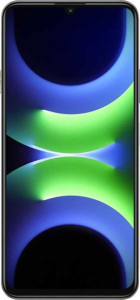
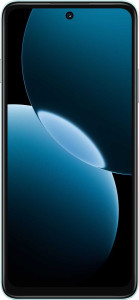
Both phones share the same general design philosophy — flat, non-folding slabs without a rugged build — so the real story here is in the subtle but meaningful dimensional differences. The Nova Y73 is slightly more compact across every measurable dimension: it is 2.2 mm shorter, 1.1 mm narrower, and critically 0.6 mm thinner than the Nova Y63. While these gaps may sound minor on paper, the combined effect on in-hand feel is noticeable, particularly the slimmer profile which translates to a sleeker, more pocketable device.

The weight gap reinforces this: the Y73 comes in at 203 g versus the Y63's 207 g. A 4 g difference is essentially imperceptible in a direct comparison, but the Y73's advantage becomes clearer when you factor in its smaller volume — 105.6 cm³ compared to 116.4 cm³ for the Y63. This means the Y73 achieves a similar mass in a more condensed form, resulting in a slightly denser, tighter build that many users associate with a premium feel.

In the Design category, the Nova Y73 holds a clear edge. It is more compact, thinner, and more efficiently packaged than the Y63. For users who prioritize a comfortable single-handed grip or a slimmer silhouette in the pocket, the Y73 is the stronger choice based purely on these specs.

Display:
Display type LCD, IPS LCD, IPS
screen size 6.75" 6.67"
pixel density 260 ppi 264 ppi
resolution 720 x 1600 px 720 x 1604 px
refresh rate 90Hz 90Hz
has branded damage-resistant glass
supports HDR10
supports HDR10+
Always-On Display
supports Dolby Vision
Has a secondary screen
has a touch screen

At their core, these two displays are nearly identical in technology and capability — both use an LCD IPS panel, run at a 90Hz refresh rate, share the same HD+ resolution tier, and lack any HDR support or damage-resistant glass. For everyday use like browsing, social media, and video streaming, neither screen will feel meaningfully different from the other in terms of smoothness or color rendering.

The most tangible distinction is screen size. The Y63 offers a slightly larger 6.75-inch panel versus the Y73's 6.67 inches — an 0.08-inch gap that gives the Y63 a modest advantage for media consumption and reading. Interestingly, despite the smaller screen, the Y73 achieves a marginally higher pixel density of 264 ppi compared to 260 ppi on the Y63, though this 4 ppi difference is well below the threshold of human perception and is irrelevant in practice.

The one genuinely meaningful differentiator is the Always-On Display feature, available on the Y63 but absent on the Y73. This allows the Y63 to passively show time, notifications, or status information without fully waking the screen — a convenience feature that reduces the need to repeatedly tap the phone awake. For the Display category, the Nova Y63 holds a narrow but real edge, pairing a larger screen with the practical Always-On functionality.

Performance:
internal storage 128GB 256GB
RAM 4GB 8GB
Chipset (SoC) name Qualcomm Snapdragon 680 4G HiSilicon Kirin 710A
CPU speed 4 x 2.4 & 4 x 1.9 GHz 4 x 2.2 & 4 x 1.7 GHz
Geekbench 6 result (multi) 1466 1125
Geekbench 6 result (single) 416 319
Geekbench 5 result (multi) 1550 1149
Geekbench 5 result (single) 385 316
GPU clock speed 845 MHz 650 MHz
Has integrated LTE
RAM speed 2133 MHz 2200 MHz
semiconductor size 6 nm 12 nm
Supports 64-bit
DirectX version DirectX 12 DirectX 12
Has integrated graphics
Uses big.LITTLE technology
CPU threads 8 threads 8 threads
Has NX bit
Has TrustZone
memory channels 2 2
VFP version 4 4
maximum memory amount 8GB 6GB

The chipset contrast here is the headline story. The Snapdragon 680 in the Y63 is built on a modern 6nm process, while the Y73 runs on the Kirin 710A at 12nm — a full process node generation behind. That gap shows up decisively in the benchmark results: the Y63 scores approximately 30% higher in both single-core and multi-core Geekbench 6 tests. In practice, this translates to snappier app launches, smoother UI navigation, and better sustained performance under load. The Y63 also carries a notably faster GPU clock — 845 MHz versus 650 MHz — giving it a tangible advantage in graphics-intensive tasks and casual gaming.

Where the Y73 pushes back is on memory and storage. It ships with 8GB of RAM and 256GB of internal storage, doubling both figures compared to the Y63's 4GB RAM and 128GB. More RAM directly benefits heavy multitaskers who keep many apps open simultaneously, reducing the frequency of background app reloads. The extra storage is similarly practical for users with large media libraries or who prefer not to rely on cloud storage. Somewhat ironically, the Y63 supports a higher maximum memory ceiling of 8GB versus the Y73's 6GB, suggesting its platform has more long-term headroom if expanded RAM configurations become available.

This category comes down to what you value more. The Nova Y63 holds a clear edge in raw processing and graphics power, and its newer, more efficient chip positions it better for performance-sensitive workloads. The Y73's larger RAM and storage make it more capable out of the box for storage-heavy users, but it cannot match the Y63's processing throughput. On balance, the Y63 wins the Performance category — raw compute power and GPU speed are harder bottlenecks to work around than storage constraints.

Cameras:
megapixels (main camera) 50 & 2 MP 50 MP
wide aperture (main camera) 2f 1.8f
Has a dual-lens (or multi-lens) main camera
megapixels (front camera) 8MP 8MP
has built-in optical image stabilization
video recording (main camera) 1080 x 30 fps 1080 x 30 fps
Has a dual-tone LED flash
number of flash LEDs 1 1
has a BSI sensor
has a CMOS sensor
has continuous autofocus when recording movies
Has phase-detection autofocus for photos
supports slow-motion video recording
has a built-in HDR mode
has manual exposure
has a flash
optical zoom 0x 0x
has manual ISO
has a serial shot mode
has manual focus
has a front camera
Has laser autofocus
Shoots 360° panorama
has manual white balance
shoots raw
has touch autofocus
has manual shutter speed
can create panoramas in-camera
wide aperture (front camera) 2f 2f
Has a front-facing LED flash
has a dual-lens (or multi-lens) front camera
supports HDR10 recording
supports Dolby Vision recording
has a front-facing camera under the display
Has a RGB LED flash
has 3D photo/video recording capabilities

On the surface, both phones share a 50 MP primary sensor, identical 8 MP front cameras, and the same video ceiling of 1080p at 30fps. The manual controls roster — ISO, exposure, white balance, focus — is also mirrored across both devices. However, two differences meaningfully separate them in real-world shooting conditions.

The more impactful distinction is aperture. The Y73's main lens opens to f/1.8 compared to the Y63's f/2.0. A wider aperture admits significantly more light per frame, which directly improves low-light and indoor photography — producing brighter images with less noise when lighting conditions are poor. Paired with a confirmed CMOS sensor (the Y63's sensor type is unspecified in the data), the Y73's main camera has a credible edge in image quality fundamentals. The Y63 counters with a dual-lens setup, adding a 2 MP secondary camera, but at that resolution the second lens functions primarily as a depth assistant for portrait-mode bokeh — a feature whose practical value is limited and heavily software-dependent.

For the Cameras category, the Nova Y73 holds the advantage. Its wider f/1.8 aperture is a genuine optical benefit that impacts everyday shooting, particularly in challenging light — outweighing the Y63's secondary 2 MP lens, which adds minimal versatility at that resolution.

Operating system:
Android version Android 12 Android 12
has clipboard warnings
has location privacy options
has camera/microphone privacy options
has Mail Privacy Protection
has theme customization
can block app tracking
blocks cross-site tracking
has on-device machine learning
has notification permissions
has media picker
Can play games while they download
has dark mode
has Wi-Fi password sharing
has battery health check
has an extra dim mode
has focus modes
has dynamic theming
can offload apps
Has customizable notifications
has Live Text
has full-page screenshots
supports split screen
gets direct OS updates
has PiP
Can be used as a PC
Has sharing intents
has a child lock
Supports widgets
Is free and open source
Has offline voice recognition
has voice commands
Tracks the current position of a mobile device
is a multi-user system
has Quick Start

This is a rare case where the data tells a completely flat story: every single operating system spec is identical across the Nova Y63 and Nova Y73. Both run Android 12, carry the same privacy controls, support the same productivity features — split screen, Picture-in-Picture, widgets, dynamic theming — and share the same omissions, including no direct OS updates, no Wi-Fi password sharing, and no battery health check.

The feature set they do share is reasonably capable for the Android 12 tier: on-device machine learning, offline voice recognition, Live Text, full-page screenshots, and customizable notifications cover most everyday user needs. The absence of direct OS updates on both devices is worth flagging — it means neither phone is guaranteed timely Android version upgrades, which has long-term security and feature implications for both equally.

For the Operating System category, this is an unambiguous tie. There is no basis in the provided data to give either device an edge — the software experience is, by every available metric, identical.

Battery:
battery power 6000 mAh 6620 mAh
has wireless charging
Supports fast charging
charging speed 22.5W 40W
has a removable battery
has a battery level indicator
has a rechargeable battery

Battery is one of the most decisive categories in this comparison, and the Nova Y73 wins it on both key dimensions. Its 6620 mAh cell is notably larger than the Y63's already-generous 6000 mAh — a 620 mAh gap that, at this capacity tier, can realistically translate to several additional hours of screen-on time before needing a charge. Both phones already sit well above the mainstream 5000 mAh benchmark, so endurance is a strength of the lineup as a whole, but the Y73 extends that advantage further.

Charging speed is where the gap widens even more meaningfully. The Y73 supports 40W fast charging versus the Y63's 22.5W — nearly double the wattage. In practical terms, this means the Y73 can replenish its larger battery significantly faster, reducing the time tethered to a wall outlet. For users who rely on quick top-ups between activities, this is a tangible quality-of-life difference. Neither device supports wireless charging, so wired speed is the only charging variable in play.

The Nova Y73 takes a clear and convincing win in the Battery category. It offers more capacity and charges faster — a combination that is strictly superior to the Y63's battery configuration by every metric provided.

Audio:
has a socket for a 3.5 mm audio jack
has stereo speakers
has aptX
has LDAC
has aptX HD
has aptX Adaptive
has aptX Lossless
Has a radio

The audio specs for both devices tell the same story: a shared set of omissions with no differentiators between them. Neither the Nova Y63 nor the Nova Y73 includes a 3.5mm headphone jack, stereo speakers, a radio, or any high-resolution Bluetooth audio codec — no aptX, LDAC, or any of their variants.

The absence of a headphone jack means both phones rely entirely on Bluetooth or USB-C for audio output, which shifts the listening experience onto the quality of whatever wireless earbuds or adapter the user brings. The lack of stereo speakers is similarly notable — mono audio is a real limitation for media consumption without headphones, producing a flatter, less immersive soundstage. These are not unusual omissions at this price segment, but they are worth flagging for audio-conscious buyers considering either device.

This category is a complete tie — the data provides no basis to favor one phone over the other. Both share identical audio hardware limitations, and neither offers any feature that compensates for what the other lacks.

Connectivity & Features:
release date May 2025 May 2025
has 5G support
Wi-Fi version Wi-Fi 4 (802.11n), Wi-Fi 5 (802.11ac) Wi-Fi 4 (802.11n)
SIM cards 2 SIM 2 SIM
Bluetooth version 5 5.1
has an external memory slot
Has USB Type-C
USB version 2 2
has NFC
download speed 390 MBits/s 600 MBits/s
upload speed 150 MBits/s 150 MBits/s
Has a fingerprint scanner
has emergency SOS via satellite
has crash detection
is DLNA-certified
has a gyroscope
supports ANT+
Has a heart rate monitor
has GPS
has a compass
supports Wi-Fi
Has an infrared sensor
has an accelerometer
has a cellular module
Has a barometer
has an HDMI output
Uses 3D facial recognition
Has an iris scanner
Stylus included
supports Galileo
Has motion tracking
Has optical tracking
Has a built-in projector

Connectivity is where these two phones trade punches rather than one decisively outclassing the other. The Nova Y63 supports both Wi-Fi 4 and Wi-Fi 5, giving it access to faster, less congested wireless networks — a meaningful everyday advantage for streaming and downloads at home. The Y73, by contrast, is limited to Wi-Fi 4 only, which caps its wireless throughput. Somewhat paradoxically, the Y73 posts a higher cellular download speed of 600 Mbps versus the Y63's 390 Mbps, so on a strong LTE connection the Y73 can pull data faster — but this advantage only applies when away from Wi-Fi.

The sensor loadout splits the two phones in different directions. The Y63 includes a gyroscope, which the Y73 lacks — a relevant omission for users who play motion-sensitive games or use augmented reality applications, as those features depend on gyroscopic input. The Y73 counters with an infrared sensor, absent on the Y63, which allows it to function as a universal remote control for TVs and other IR-compatible appliances — a niche but genuinely useful convenience feature. Bluetooth favors the Y73 marginally at version 5.1 versus 5.0, offering slightly improved connection accuracy, though the practical difference in daily use is minimal.

This category does not have a clean winner — it depends on the user's priorities. For better home Wi-Fi performance and gaming sensor support, the Y63 has the edge. For faster LTE speeds and the flexibility of an infrared remote, the Y73 pulls ahead. Shared fundamentals like NFC, dual SIM, USB-C, GPS, and fingerprint scanner mean neither phone is lacking in core connectivity.
Miscellaneous:
has a video light
Has sapphire glass display
Has a curved display
Has an e-paper display

The Miscellaneous category offers nothing to differentiate the two devices. Every spec listed here — video light presence, sapphire glass display, curved display, and e-paper display — returns the exact same value for both the Nova Y63 and the Nova Y73. Both have a video light and share the same absence of premium or specialty display materials and form factors.

This is a complete tie. With only four data points in this group and all four identical, there is simply no basis in the provided specs to give either phone an advantage here.

Comparison Summary & Verdict

After examining every specification, it is clear that both phones serve distinct audiences. The Huawei Nova Y63 stands out with its stronger CPU and GPU performance — backed by a Qualcomm Snapdragon 680 on a 6nm process — plus Wi-Fi 5 support, a gyroscope, an Always-On Display, and a dual-lens rear camera, making it a solid pick for users who value raw processing power and versatile connectivity. The Huawei Nova Y73, on the other hand, offers more RAM (8GB) and internal storage (256GB), a significantly larger 6620 mAh battery with 40W fast charging, a wider f/1.8 main camera aperture, an infrared sensor, and a higher download speed — appealing to users who prioritize endurance, storage headroom, and everyday camera quality. Neither device is a clear-cut winner; your ideal choice depends entirely on whether you lean toward performance and features or capacity and longevity.

Huawei Nova Y63
Buy Huawei Nova Y63 if...

Buy the Huawei Nova Y63 if you prioritize stronger processing performance, Wi-Fi 5 support, a gyroscope, and an Always-On Display for day-to-day versatility.

Huawei Nova Y73
Buy Huawei Nova Y73 if...

Buy the Huawei Nova Y73 if you want more RAM and storage, a larger battery with faster 40W charging, and a wider camera aperture for better low-light photography.