Huawei Nova Y63
Samsung Galaxy A26 5G

Huawei Nova Y63 Samsung Galaxy A26 5G

Overview

Welcome to our in-depth spec comparison between the Huawei Nova Y63 and the Samsung Galaxy A26 5G. These two mid-range smartphones take notably different approaches across some of the most important buying criteria, including display technology, raw processing power, camera versatility, and battery capacity. Whether you care most about screen quality, day-to-day performance, or how long your phone lasts between charges, this comparison breaks down every key specification to help you make the right choice.

Common Features

  • Neither product has a rugged build.
  • Neither product can be folded.
  • HDR10 support is not available on either product.
  • HDR10+ support is not available on either product.
  • Always-On Display is available on both products.
  • Dolby Vision support is not available on either product.
  • Neither product has a secondary screen.
  • Both products have a touch screen.
  • Both products have integrated LTE.
  • Both products support 64-bit processing.
  • Both products support DirectX 12.
  • Both products have integrated graphics.
  • Both products use big.LITTLE technology.
  • Both products have 8 CPU threads.
  • Both products have a dual-lens or multi-lens main camera.
  • Neither product has a dual-tone LED flash.
  • Both products have one flash LED.
  • Both products support continuous autofocus when recording movies.
  • Both products have phase-detection autofocus for photos.
  • Both products support slow-motion video recording.
  • Both products have a built-in HDR mode.
  • Both products have clipboard warnings.
  • Both products have location privacy options.
  • Both products have camera and microphone privacy options.
  • Mail Privacy Protection is not available on either product.
  • Both products support theme customization.
  • Both products can block app tracking.
  • Cross-site tracking blocking is not available on either product.
  • Both products have on-device machine learning.
  • Neither product supports wireless charging.
  • Both products support fast charging.
  • Neither product has a removable battery.
  • Both products have a battery level indicator.
  • Both products have a rechargeable battery.
  • Neither product has a 3.5 mm audio jack.
  • Neither product has stereo speakers.
  • Neither product supports aptX.
  • Neither product supports LDAC.
  • Neither product has a radio.
  • Both products support Wi-Fi 4 (802.11n) and Wi-Fi 5 (802.11ac).
  • Both products support dual SIM cards.
  • Both products have a USB Type-C connector.
  • Both products use USB version 2.
  • Both products have NFC.
  • Both products have a fingerprint scanner.
  • Neither product has emergency SOS via satellite.
  • Neither product has crash detection.
  • Both products have a video light.
  • Neither product has a sapphire glass display.
  • Neither product has a curved display.
  • Neither product has an e-paper display.

Main Differences

  • Weight is 207 g on Huawei Nova Y63 and 200 g on Samsung Galaxy A26 5G.
  • Thickness is 8.9 mm on Huawei Nova Y63 and 7.7 mm on Samsung Galaxy A26 5G.
  • Width is 77.7 mm on Huawei Nova Y63 and 77.5 mm on Samsung Galaxy A26 5G.
  • Height is 168.3 mm on Huawei Nova Y63 and 164 mm on Samsung Galaxy A26 5G.
  • Volume is 116.38 cm³ on Huawei Nova Y63 and 97.87 cm³ on Samsung Galaxy A26 5G.
  • The display type is LCD IPS on Huawei Nova Y63 and OLED/AMOLED on Samsung Galaxy A26 5G.
  • Screen size is 6.75″ on Huawei Nova Y63 and 6.7″ on Samsung Galaxy A26 5G.
  • Pixel density is 260 ppi on Huawei Nova Y63 and 385 ppi on Samsung Galaxy A26 5G.
  • Resolution is 720 x 1600 px on Huawei Nova Y63 and 1080 x 2340 px on Samsung Galaxy A26 5G.
  • Refresh rate is 90Hz on Huawei Nova Y63 and 120Hz on Samsung Galaxy A26 5G.
  • Damage-resistant glass is present on Samsung Galaxy A26 5G but not available on Huawei Nova Y63.
  • Internal storage is 128GB on Huawei Nova Y63 and 256GB on Samsung Galaxy A26 5G.
  • RAM is 4GB on Huawei Nova Y63 and 8GB on Samsung Galaxy A26 5G.
  • The chipset is Qualcomm Snapdragon 680 4G on Huawei Nova Y63 and Samsung Exynos 1380 on Samsung Galaxy A26 5G.
  • The GPU is Adreno 610 on Huawei Nova Y63 and Mali G68 MP5 on Samsung Galaxy A26 5G.
  • CPU speed is 4 x 2.4 & 4 x 1.9 GHz on Huawei Nova Y63 and 4 x 2.4 & 4 x 2 GHz on Samsung Galaxy A26 5G.
  • Geekbench 6 multi-core score is 1466 on Huawei Nova Y63 and 2758 on Samsung Galaxy A26 5G.
  • Geekbench 6 single-core score is 416 on Huawei Nova Y63 and 1007 on Samsung Galaxy A26 5G.
  • Geekbench 5 multi-core score is 1550 on Huawei Nova Y63 and 2634 on Samsung Galaxy A26 5G.
  • Geekbench 5 single-core score is 385 on Huawei Nova Y63 and 780 on Samsung Galaxy A26 5G.
  • GPU clock speed is 845 MHz on Huawei Nova Y63 and 950 MHz on Samsung Galaxy A26 5G.
  • RAM speed is 2133 MHz on Huawei Nova Y63 and 3200 MHz on Samsung Galaxy A26 5G.
  • Semiconductor size is 6 nm on Huawei Nova Y63 and 5 nm on Samsung Galaxy A26 5G.
  • The main camera has 50 & 2 MP on Huawei Nova Y63 and 50 & 8 & 2 MP on Samsung Galaxy A26 5G.
  • Main camera wide aperture is f/2 on Huawei Nova Y63 and f/1.8, f/2.2 & f/2.4 on Samsung Galaxy A26 5G.
  • Front camera resolution is 8 MP on Huawei Nova Y63 and 13 MP on Samsung Galaxy A26 5G.
  • Optical image stabilization is present on Samsung Galaxy A26 5G but not available on Huawei Nova Y63.
  • Main camera video recording is 1080p at 30 fps on Huawei Nova Y63 and 2160p at 30 fps on Samsung Galaxy A26 5G.
  • A CMOS sensor is present on Samsung Galaxy A26 5G but not on Huawei Nova Y63.
  • Front camera wide aperture is f/2 on Huawei Nova Y63 and f/2.2 on Samsung Galaxy A26 5G.
  • Android version is 12 on Huawei Nova Y63 and 15 on Samsung Galaxy A26 5G.
  • Notification permissions are available on Samsung Galaxy A26 5G but not on Huawei Nova Y63.
  • A media picker is available on Samsung Galaxy A26 5G but not on Huawei Nova Y63.
  • A battery health check feature is available on Samsung Galaxy A26 5G but not on Huawei Nova Y63.
  • The ability to offload apps is available on Samsung Galaxy A26 5G but not on Huawei Nova Y63.
  • Battery capacity is 6000 mAh on Huawei Nova Y63 and 5000 mAh on Samsung Galaxy A26 5G.
  • Charging speed is 22.5W on Huawei Nova Y63 and 25W on Samsung Galaxy A26 5G.
  • A charger is included with Huawei Nova Y63 but not with Samsung Galaxy A26 5G.
  • 5G support is available on Samsung Galaxy A26 5G but not on Huawei Nova Y63.
  • Bluetooth version is 5 on Huawei Nova Y63 and 5.3 on Samsung Galaxy A26 5G.
  • An external memory slot is available on Samsung Galaxy A26 5G but not on Huawei Nova Y63.
  • Download speed is 390 Mbit/s on Huawei Nova Y63 and 3790 Mbit/s on Samsung Galaxy A26 5G.
  • Upload speed is 150 Mbit/s on Huawei Nova Y63 and 1280 Mbit/s on Samsung Galaxy A26 5G.
Specs Comparison
Huawei Nova Y63

Huawei Nova Y63

Samsung Galaxy A26 5G

Samsung Galaxy A26 5G

Design:
weight 207 g 200 g
thickness 8.9 mm 7.7 mm
width 77.7 mm 77.5 mm
height 168.3 mm 164 mm
volume 116.384499 cm³ 97.867 cm³
has a rugged build
can be folded

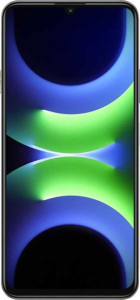
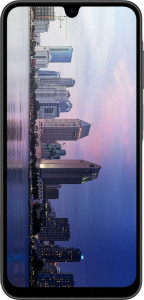
In terms of overall footprint, these two phones are remarkably close in width — 77.7 mm vs 77.5 mm — meaning they fill your hand almost identically from side to side. The more meaningful distinction lies in height and, especially, thickness. The Samsung Galaxy A26 5G is noticeably shorter at 164 mm compared to the Nova Y63's 168.3 mm, and that 4+ mm difference does translate into a slightly easier one-handed reach to the top of the screen in daily use.

The sharpest design divergence is thickness: the Galaxy A26 5G measures just 7.7 mm thin, versus the Nova Y63's 8.9 mm — a 1.2 mm gap that represents roughly 15% more bulk on the Huawei. While that may sound marginal, it has a cascading effect: the A26's total displaced volume is approximately 97.9 cm³ against the Nova Y63's 116.4 cm³, making the Samsung meaningfully more pocket-friendly and less imposing in the hand. The A26 is also 7 g lighter (200 g vs 207 g), which compounds the perception of a sleeker, less hefty device during extended use.

Neither phone offers a rugged build or a foldable form factor, so on those fronts they are evenly matched. Overall, the Samsung Galaxy A26 5G holds a clear design edge — it is slimmer, shorter, lighter, and physically smaller in volume, all of which contribute to a more refined and pocketable everyday carry compared to the bulkier Nova Y63.

Display:
Display type LCD, IPS OLED/AMOLED
screen size 6.75" 6.7"
pixel density 260 ppi 385 ppi
resolution 720 x 1600 px 1080 x 2340 px
refresh rate 90Hz 120Hz
has branded damage-resistant glass
supports HDR10
supports HDR10+
Always-On Display
supports Dolby Vision
Has a secondary screen
has a touch screen

The display category is where the gap between these two phones becomes most pronounced. The Samsung Galaxy A26 5G uses an OLED/AMOLED panel, while the Huawei Nova Y63 relies on an LCD IPS screen — a fundamental technology difference that goes beyond any single number. AMOLED delivers true blacks (each pixel turns off individually), richer contrast, and more vibrant colors, whereas IPS LCD produces a more uniform but flatter image. For media consumption, dark-mode app usage, and general visual quality, the A26's panel type is a substantial real-world upgrade.

Pixel density reinforces that advantage further. The A26's 1080 x 2340 resolution yields 385 ppi, versus the Nova Y63's 720 x 1600 at just 260 ppi — a difference of nearly 50% more pixels per inch. At typical viewing distances, text and fine detail on the A26 appear noticeably sharper and crisper, while the Nova Y63's HD+ resolution is merely adequate. The A26 also steps up to a 120Hz refresh rate against the Y63's 90Hz, resulting in smoother scrolling and more fluid animations. Additionally, the Galaxy A26 5G includes branded damage-resistant glass, offering a meaningful layer of scratch and drop protection absent on the Nova Y63.

Both screens share Always-On Display support and neither covers Dolby Vision or HDR10+, so those traits are a wash. Still, the Samsung Galaxy A26 5G wins this category decisively — its AMOLED technology, sharply higher pixel density, faster refresh rate, and screen protection combine to deliver a comprehensively superior display experience compared to the Nova Y63.

Performance:
internal storage 128GB 256GB
RAM 4GB 8GB
Chipset (SoC) name Qualcomm Snapdragon 680 4G Samsung Exynos 1380
GPU name Adreno 610 Mali G68 MP5
CPU speed 4 x 2.4 & 4 x 1.9 GHz 4 x 2.4 & 4 x 2 GHz
Geekbench 6 result (multi) 1466 2758
Geekbench 6 result (single) 416 1007
Geekbench 5 result (multi) 1550 2634
Geekbench 5 result (single) 385 780
GPU clock speed 845 MHz 950 MHz
Has integrated LTE
RAM speed 2133 MHz 3200 MHz
semiconductor size 6 nm 5 nm
Supports 64-bit
DirectX version DirectX 12 DirectX 12
Has integrated graphics
Uses big.LITTLE technology
CPU threads 8 threads 8 threads
Has NX bit
Has TrustZone
maximum memory bandwidth 14.9 GB/s 51.2 GB/s
OpenCL version 2 2
memory channels 2 4
maximum memory amount 8GB 8GB
Thermal Design Power (TDP) 6W 5W
DDR memory version 4 5

Under the hood, the performance gap between these two devices is substantial. The Huawei Nova Y63 is powered by a Qualcomm Snapdragon 680 built on a 6 nm process, while the Samsung Galaxy A26 5G runs on a Samsung Exynos 1380 at 5 nm — the smaller node translating to better power efficiency and more transistor density. The benchmark numbers make the real-world difference concrete: the A26 scores 2758 vs 1466 in Geekbench 6 multi-core and 1007 vs 416 in single-core, meaning it is roughly double the processing power of the Nova Y63 in both threaded and single-task workloads. That margin shows up as faster app launches, snappier UI responsiveness, and a noticeably more capable experience under load.

Memory tells a similar story. The A26 ships with 8 GB of RAM at DDR5 / 3200 MHz across 4 memory channels, yielding a peak bandwidth of 51.2 GB/s. The Nova Y63 offers only 4 GB of RAM at DDR4 / 2133 MHz through 2 channels, capped at 14.9 GB/s — less than a third of the A26's memory throughput. In practice, the A26 keeps more apps alive in the background without reloading and handles memory-intensive tasks like photo editing or multitasking far more fluidly. The A26 also doubles the base storage at 256 GB versus 128 GB on the Y63.

Notably, the A26 achieves all of this at a slightly lower TDP of 5W versus 6W on the Y63, suggesting the more modern chip is also the more efficient one — a rare combination of power and frugality. The Samsung Galaxy A26 5G wins this category convincingly across every meaningful axis: raw CPU speed, GPU clock, memory bandwidth, RAM capacity, storage, and power efficiency all favor the A26.

Cameras:
megapixels (main camera) 50 & 2 MP 50 & 8 & 2 MP
wide aperture (main camera) 2f 1.8 & 2.2 & 2.4f
Has a dual-lens (or multi-lens) main camera
megapixels (front camera) 8MP 13MP
has built-in optical image stabilization
video recording (main camera) 1080 x 30 fps 2160 x 30 fps
Has a dual-tone LED flash
number of flash LEDs 1 1
has a BSI sensor
has a CMOS sensor
has continuous autofocus when recording movies
Has phase-detection autofocus for photos
supports slow-motion video recording
has a built-in HDR mode
has manual exposure
has a flash
optical zoom 0x 0x
has manual ISO
has a serial shot mode
has manual focus
has a front camera
Has laser autofocus
Shoots 360° panorama
has manual white balance
shoots raw
has touch autofocus
has manual shutter speed
can create panoramas in-camera
wide aperture (front camera) 2f 2.2f
Has timelapse function
Has a front-facing LED flash
has a dual-lens (or multi-lens) front camera
supports HDR10 recording
supports Dolby Vision recording
has a front-facing camera under the display
Has a RGB LED flash
has 3D photo/video recording capabilities

Both phones share a 50 MP primary sensor at their core, but the Samsung Galaxy A26 5G builds a meaningfully more capable camera system around it. Where the Nova Y63 pairs its main lens with only a 2 MP depth sensor, the A26 adds a genuine 8 MP ultrawide lens alongside its 2 MP depth unit — giving it a third compositional perspective that the Y63 simply cannot match. The aperture advantage compounds this: the A26's main lens opens to f/1.8 versus the Y63's f/2.0, admitting more light and producing shallower depth of field, which is particularly impactful in low-light and portrait shooting.

Two further differentiators tilt the balance decisively toward the A26. First, it includes optical image stabilization (OIS) on the main camera — a hardware feature absent on the Nova Y63 — which physically counteracts hand shake during photos and video, resulting in sharper stills and smoother footage. Second, the A26 is capable of 4K (2160p) video recording at 30 fps, compared to the Y63's ceiling of 1080p at 30 fps. For anyone shooting video, that is a fundamental resolution difference. The A26 also carries a CMOS sensor designation and a 13 MP front camera against the Y63's 8 MP selfie shooter, offering more detail for selfies and video calls.

Manual controls, autofocus behavior, slow-motion, HDR mode, and panorama support are evenly matched across both devices, so the shared feature set is solid on either phone for casual shooting. Nevertheless, the Samsung Galaxy A26 5G wins this category clearly — the ultrawide lens, wider aperture, OIS, 4K video capability, and higher-resolution front camera collectively represent a more versatile and capable imaging package than what the Nova Y63 offers.
Operating system:
Android version Android 12 Android 15
has clipboard warnings
has location privacy options
has camera/microphone privacy options
has Mail Privacy Protection
has theme customization
can block app tracking
blocks cross-site tracking
has on-device machine learning
has notification permissions
has media picker
Can play games while they download
has dark mode
has Wi-Fi password sharing
has battery health check
has an extra dim mode
has focus modes
has dynamic theming
can offload apps
Has customizable notifications
has Live Text
has full-page screenshots
supports split screen
gets direct OS updates
has PiP
Can be used as a PC
Has sharing intents
has a child lock
Supports widgets
Is free and open source
Has offline voice recognition
has voice commands
Tracks the current position of a mobile device
is a multi-user system
has Quick Start

The most consequential difference here is the Android version each phone ships with. The Huawei Nova Y63 runs Android 12, while the Samsung Galaxy A26 5G launches on Android 15 — three major versions ahead. That gap matters beyond just feature novelty: newer Android versions carry cumulative security patches, refined permission models, and updated privacy frameworks. For a user concerned about longevity and security exposure, starting three versions behind is a notable disadvantage out of the box.

A handful of practical features further separate the two. The A26 includes battery health check, allowing users to monitor cell degradation over time — a genuinely useful tool for managing long-term device health that the Nova Y63 lacks entirely. The A26 also supports a media picker (granting apps access to selected photos rather than the full library) and notification permissions (requiring apps to explicitly request permission to send alerts), both of which are meaningful privacy and control improvements absent on the Y63. The ability to offload apps on the A26 adds further flexibility for managing storage without permanent deletion.

Outside of these distinctions, the two phones are broadly aligned — both support dark mode, dynamic theming, split-screen, PiP, widgets, offline voice recognition, and a comprehensive suite of privacy controls. The shared feature parity is strong, but the Samsung Galaxy A26 5G holds the clear edge in this category, led by its significantly newer OS version and a set of quality-of-life additions that the Nova Y63 does not offer.

Battery:
battery power 6000 mAh 5000 mAh
has wireless charging
Supports fast charging
charging speed 22.5W 25W
comes with a charger
has a removable battery
has a battery level indicator
has a rechargeable battery

Battery capacity is the one spec category where the Huawei Nova Y63 holds a clear numerical lead. Its 6000 mAh cell is significantly larger than the Samsung Galaxy A26 5G's 5000 mAh — a 20% difference that, all else being equal, translates to meaningfully more time between charges. For users who prioritize endurance above all else, that extra 1000 mAh can represent several additional hours of screen-on time over a full day.

Charging speed is closely matched, though the A26 edges ahead slightly at 25W versus the Y63's 22.5W. The practical difference in charge time between those two figures is modest. More notable is the fact that the Nova Y63 includes a charger in the box, while the Galaxy A26 5G does not — a tangible out-of-pocket consideration for buyers who do not already own a compatible fast charger. Neither phone supports wireless charging, and both feature non-removable, rechargeable batteries, so those traits are evenly matched.

This category is a genuine split verdict. The Nova Y63 wins on raw endurance thanks to its larger battery and also delivers added convenience by bundling a charger. The A26 counters with a marginally faster charging speed, but that advantage is too slim to offset the Y63's capacity lead. For users who spend long days away from an outlet, the Nova Y63's battery is a compelling differentiator — and arguably the strongest argument in its favor across the entire comparison.

Audio:
has a socket for a 3.5 mm audio jack
has stereo speakers
has aptX
has LDAC
has aptX HD
has aptX Adaptive
has aptX Lossless
Has a radio

Audio is the rare category where a comparison yields no winner — because both phones are identically constrained. Neither the Huawei Nova Y63 nor the Samsung Galaxy A26 5G includes a 3.5 mm headphone jack, stereo speakers, a built-in radio, or any high-resolution Bluetooth audio codec such as aptX, LDAC, or their variants. This is a complete spec-for-spec tie, and not a particularly flattering one for either device.

The absence of stereo speakers is the most impactful shared omission for everyday use — mono output limits the immersiveness of media playback compared to dual-speaker setups common in more premium devices. The lack of any high-fidelity wireless audio codec means neither phone can deliver lossless or high-res audio to compatible Bluetooth headphones, capping wireless listening quality at standard SBC/AAC levels. And without a headphone jack, wired listening requires a USB-C adapter on both phones.

Based strictly on the provided data, this category is a complete tie — every specified audio feature is absent on both devices equally. Buyers with strong audio priorities will find neither phone offers a meaningful advantage over the other in this area.

Connectivity & Features:
release date May 2025 March 2025
has 5G support
Wi-Fi version Wi-Fi 4 (802.11n), Wi-Fi 5 (802.11ac) Wi-Fi 4 (802.11n), Wi-Fi 5 (802.11ac)
SIM cards 2 SIM 2 SIM
Bluetooth version 5 5.3
has an external memory slot
Has USB Type-C
USB version 2 2
has NFC
download speed 390 MBits/s 3790 MBits/s
upload speed 150 MBits/s 1280 MBits/s
Has a fingerprint scanner
has emergency SOS via satellite
has crash detection
is DLNA-certified
has a gyroscope
supports ANT+
Has a heart rate monitor
has GPS
has a compass
supports Wi-Fi
Has an infrared sensor
has an accelerometer
has a cellular module
Has a barometer
has an HDMI output
Uses 3D facial recognition
Has an iris scanner
Stylus included
supports Galileo
Has motion tracking
Has optical tracking
Has a built-in projector

Cellular connectivity is where the Samsung Galaxy A26 5G asserts one of its most future-relevant advantages: it supports 5G, while the Huawei Nova Y63 is limited to 4G LTE. This is reflected starkly in their peak speeds — the A26 reaches a theoretical download of 3790 Mbits/s versus just 390 Mbits/s on the Y63, and upload speeds of 1280 Mbits/s versus 150 Mbits/s. In 5G-covered areas, that translates to dramatically faster file transfers, smoother cloud streaming, and lower latency — and perhaps more importantly, the A26 is built to remain network-relevant for years to come as 4G infrastructure is gradually phased down.

Two further connectivity distinctions favor the A26. Its Bluetooth 5.3 implementation is more current than the Y63's Bluetooth 5.0, offering incremental improvements in connection stability and energy efficiency for wireless peripherals. The A26 also includes an external memory card slot, allowing users to expand storage beyond the built-in 256 GB — a flexibility the Nova Y63 entirely lacks despite its more modest 128 GB base storage. Both phones share Wi-Fi 5, USB-C 2.0, NFC, dual-SIM support, and an identical sensor suite including GPS, gyroscope, accelerometer, and compass, so the common ground is solid.

The Samsung Galaxy A26 5G wins this category decisively. The 5G capability alone is a fundamental connectivity upgrade, and it is further reinforced by a newer Bluetooth version and the added flexibility of expandable storage — all of which the Nova Y63 cannot match.

Miscellaneous:
has a video light
Has sapphire glass display
Has a curved display
Has an e-paper display

The Miscellaneous category offers no differentiating data between these two phones. Every specified attribute — video light presence, sapphire glass display, curved display, and e-paper display — is identical across the Huawei Nova Y63 and the Samsung Galaxy A26 5G. Both include a video light and both lack the remaining three features.

This is a complete tie by the provided data. Neither phone distinguishes itself here, and no purchase decision can be meaningfully informed by this spec group alone.

Comparison Summary & Verdict

After reviewing every specification, a clear picture emerges for each device. The Samsung Galaxy A26 5G is the stronger all-around performer: it wins on display quality with its OLED screen at 385 ppi and 120Hz, delivers roughly double the processing performance, offers more RAM and storage, shoots 4K video, includes optical image stabilization, and adds 5G connectivity. It also runs the significantly newer Android 15. The Huawei Nova Y63, on the other hand, makes a compelling case for users who want a larger 6000 mAh battery and do not need 5G, while also coming with a charger in the box. In short, choose the Samsung Galaxy A26 5G if you want a future-ready, high-performance device with a superior screen; opt for the Huawei Nova Y63 if maximum battery endurance and a lower total cost of ownership are your top priorities.

Huawei Nova Y63
Buy Huawei Nova Y63 if...

Buy the Huawei Nova Y63 if you prioritize a large 6000 mAh battery for extended use and want a charger included in the box without needing 5G connectivity.

Samsung Galaxy A26 5G
Buy Samsung Galaxy A26 5G if...

Buy the Samsung Galaxy A26 5G if you want a superior OLED display, significantly better performance, 5G support, a versatile triple-lens camera with 4K video, and the latest Android 15 software.