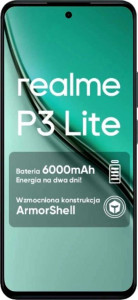
Three differences stand out in this category. First, the Realme P3 Lite 4G supports Wi-Fi 6 (802.11ax) in addition to Wi-Fi 4 and 5, while the Huawei Nova Y72S tops out at Wi-Fi 5. Wi-Fi 6 delivers better throughput, lower latency, and improved performance in congested environments — such as apartments with many competing networks — making it a future-proof advantage the Nova Y72S lacks. Second, the P3 Lite uses Bluetooth 5.2 versus the Nova Y72S's Bluetooth 5.0, a modest but meaningful step up that brings improved connection stability and more efficient audio streaming, particularly relevant for wireless earbuds.
Storage expandability is another win for the P3 Lite: it includes an external memory slot, while the Nova Y72S does not. Given that the Nova Y72S ships with 256 GB internally (as seen in the performance specs), the lack of expansion is less painful than it might otherwise be — but the P3 Lite's 128 GB base storage paired with expandable memory gives users a flexible and cost-effective path to more space. On cellular data speeds, the Nova Y72S posts a slightly higher download ceiling at 390 Mbits/s versus 300 Mbits/s, though real-world speeds are governed largely by network conditions rather than theoretical maximums.
Shared features are extensive: both phones support dual SIM, USB Type-C, NFC, GPS with Galileo, a fingerprint scanner, gyroscope, accelerometer, and compass — a well-rounded foundation for connectivity and location services. Neither supports 5G. On balance, the Realme P3 Lite 4G edges ahead in this category, with its Wi-Fi 6 support, newer Bluetooth version, and expandable storage forming a collectively stronger connectivity package.