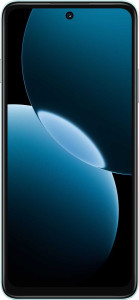
Huawei Nova Y73
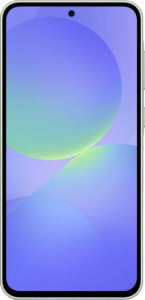
Samsung Galaxy A36 5G

Huawei Nova Y73 Samsung Galaxy A36 5G

Overview

Welcome to our in-depth comparison of the Huawei Nova Y73 and the Samsung Galaxy A36 5G. These two smartphones occupy a closely contested space, yet they take notably different approaches across key areas including display quality, raw performance, camera versatility, and connectivity. Whether you prioritize endurance or cutting-edge processing power, this side-by-side breakdown will help you decide which device truly fits your needs.

Common Features

  • Neither product has a rugged build.
  • Neither product can be folded.
  • Both products support touch screens.
  • Neither product supports Dolby Vision.
  • Neither product has a secondary screen.
  • Both products have 256GB of internal storage.
  • Both products have integrated LTE.
  • Both products support 64-bit processing.
  • Both products use DirectX 12.
  • Both products have integrated graphics.
  • Both products use big.LITTLE technology.
  • Both products have 8 CPU threads.
  • Both products have the NX bit.
  • Neither product has a dual-tone LED flash.
  • Both products have a CMOS sensor.
  • Both products support continuous autofocus when recording movies.
  • Both products have phase-detection autofocus for photos.
  • Both products support slow-motion video recording.
  • Both products have a built-in HDR mode.
  • Both products run on Android.
  • Neither product supports wireless charging.
  • Both products support fast charging.
  • Neither product has a removable battery.
  • Both products have a battery level indicator.
  • Both products have a rechargeable battery.
  • Neither product has a 3.5mm audio jack.
  • Neither product has LDAC support.
  • Neither product has aptX Lossless support.
  • Neither product has a built-in radio.
  • Neither product has an external memory slot.
  • Both products have USB Type-C with USB version 2.
  • Both products support NFC.
  • Both products have a fingerprint scanner.
  • Neither product supports emergency SOS via satellite.
  • Neither product has crash detection.
  • Neither product is DLNA-certified.
  • Both products have clipboard warnings.
  • Both products have location privacy options.
  • Both products have camera and microphone privacy options.
  • Neither product has Mail Privacy Protection.
  • Both products support theme customization.
  • Both products can block app tracking.
  • Neither product blocks cross-site tracking.
  • Both products have on-device machine learning.
  • Both products have a video light.
  • Neither product has a sapphire glass display.
  • Neither product has a curved display.
  • Neither product has an e-paper display.

Main Differences

  • Water resistance is rated as water resistant on Huawei Nova Y73 and waterproof on Samsung Galaxy A36 5G.
  • IP rating is IP64 on Huawei Nova Y73 and IP67 on Samsung Galaxy A36 5G.
  • Weight is 203g on Huawei Nova Y73 and 195g on Samsung Galaxy A36 5G.
  • Thickness is 8.3mm on Huawei Nova Y73 and 7.4mm on Samsung Galaxy A36 5G.
  • Width is 76.6mm on Huawei Nova Y73 and 78.2mm on Samsung Galaxy A36 5G.
  • Height is 166.1mm on Huawei Nova Y73 and 162.9mm on Samsung Galaxy A36 5G.
  • Volume is 105.60 cm³ on Huawei Nova Y73 and 94.27 cm³ on Samsung Galaxy A36 5G.
  • Display type is LCD IPS on Huawei Nova Y73 and OLED/AMOLED on Samsung Galaxy A36 5G.
  • Screen size is 6.67″ on Huawei Nova Y73 and 6.7″ on Samsung Galaxy A36 5G.
  • Pixel density is 264 ppi on Huawei Nova Y73 and 385 ppi on Samsung Galaxy A36 5G.
  • Resolution is 720 x 1604 px on Huawei Nova Y73 and 1080 x 2340 px on Samsung Galaxy A36 5G.
  • Refresh rate is 90Hz on Huawei Nova Y73 and 120Hz on Samsung Galaxy A36 5G.
  • Damage-resistant glass is present on Samsung Galaxy A36 5G but not available on Huawei Nova Y73.
  • HDR10 support is present on Samsung Galaxy A36 5G but not available on Huawei Nova Y73.
  • HDR10+ support is present on Samsung Galaxy A36 5G but not available on Huawei Nova Y73.
  • Always-On Display is available on Samsung Galaxy A36 5G but not on Huawei Nova Y73.
  • RAM is 8GB on Huawei Nova Y73 and 12GB on Samsung Galaxy A36 5G.
  • Chipset is HiSilicon Kirin 710A on Huawei Nova Y73 and Qualcomm Snapdragon 6 Gen 3 on Samsung Galaxy A36 5G.
  • CPU speed is 4 x 2.2 & 4 x 1.7 GHz on Huawei Nova Y73 and 4 x 2.4 & 4 x 1.8 GHz on Samsung Galaxy A36 5G.
  • Geekbench 6 multi-core score is 1125 on Huawei Nova Y73 and 2917 on Samsung Galaxy A36 5G.
  • Geekbench 6 single-core score is 319 on Huawei Nova Y73 and 1007 on Samsung Galaxy A36 5G.
  • GPU clock speed is 650 MHz on Huawei Nova Y73 and 800 MHz on Samsung Galaxy A36 5G.
  • RAM speed is 2200 MHz on Huawei Nova Y73 and 2750 MHz on Samsung Galaxy A36 5G.
  • Semiconductor size is 12nm on Huawei Nova Y73 and 4nm on Samsung Galaxy A36 5G.
  • Maximum memory amount is 6GB on Huawei Nova Y73 and 12GB on Samsung Galaxy A36 5G.
  • Main camera is a single 50MP lens on Huawei Nova Y73 and a multi-lens 50MP, 8MP, and 5MP setup on Samsung Galaxy A36 5G.
  • Multi-lens main camera is present on Samsung Galaxy A36 5G but not available on Huawei Nova Y73.
  • Front camera is 8MP on Huawei Nova Y73 and 12MP on Samsung Galaxy A36 5G.
  • Optical image stabilization is present on Samsung Galaxy A36 5G but not available on Huawei Nova Y73.
  • Main camera video recording is 1080p at 30fps on Huawei Nova Y73 and 2160p at 30fps on Samsung Galaxy A36 5G.
  • Front camera aperture is f/2.0 on Huawei Nova Y73 and f/2.2 on Samsung Galaxy A36 5G.
  • Android version is Android 12 on Huawei Nova Y73 and Android 15 on Samsung Galaxy A36 5G.
  • Notification permissions are available on Samsung Galaxy A36 5G but not on Huawei Nova Y73.
  • Media picker is available on Samsung Galaxy A36 5G but not on Huawei Nova Y73.
  • Battery health check is available on Samsung Galaxy A36 5G but not on Huawei Nova Y73.
  • App offloading is supported on Samsung Galaxy A36 5G but not on Huawei Nova Y73.
  • Battery capacity is 6620 mAh on Huawei Nova Y73 and 5000 mAh on Samsung Galaxy A36 5G.
  • Charging speed is 40W on Huawei Nova Y73 and 45W on Samsung Galaxy A36 5G.
  • Stereo speakers are present on Samsung Galaxy A36 5G but not available on Huawei Nova Y73.
  • 5G support is available on Samsung Galaxy A36 5G but not on Huawei Nova Y73.
  • Wi-Fi support covers only Wi-Fi 4 on Huawei Nova Y73 and Wi-Fi 4, Wi-Fi 5, and Wi-Fi 6 on Samsung Galaxy A36 5G.
  • SIM card options are dual SIM only on Huawei Nova Y73, while Samsung Galaxy A36 5G supports 1 SIM, 1 eSIM, 2 SIM, or 2 eSIM configurations.
  • Bluetooth version is 5.1 on Huawei Nova Y73 and 5.3 on Samsung Galaxy A36 5G.
  • Download speed is 600 Mbit/s on Huawei Nova Y73 and 2900 Mbit/s on Samsung Galaxy A36 5G.
  • Upload speed is 150 Mbit/s on Huawei Nova Y73 and 1600 Mbit/s on Samsung Galaxy A36 5G.
  • A gyroscope is present on Samsung Galaxy A36 5G but not available on Huawei Nova Y73.
  • An infrared sensor is present on Huawei Nova Y73 but not available on Samsung Galaxy A36 5G.
Specs Comparison
Huawei Nova Y73

Huawei Nova Y73

Samsung Galaxy A36 5G

Samsung Galaxy A36 5G

Design:
water resistance Water resistant Waterproof
weight 203 g 195 g
thickness 8.3 mm 7.4 mm
width 76.6 mm 78.2 mm
height 166.1 mm 162.9 mm
volume 105.603058 cm³ 94.266972 cm³
Ingress Protection (IP) rating IP64 IP67
has a rugged build
can be folded

The most consequential design difference between these two phones lies in their water protection. The Huawei Nova Y73 carries an IP64 rating, meaning it is dust-tight and can handle splashes or rain from any direction — but it cannot survive submersion. The Samsung Galaxy A36 5G steps up to IP67, which adds the ability to withstand immersion in up to 1 metre of water for 30 minutes. In practice, this means the A36 offers genuine peace of mind around pools, sinks, or in heavy rain, whereas the Nova Y73 is really only safe in incidental moisture situations.

In terms of physical form, the A36 is the more compact and refined device despite having a slightly wider frame (78.2 mm vs 76.6 mm). It is meaningfully thinner at 7.4 mm compared to the Nova Y73's 8.3 mm, lighter at 195 g versus 203 g, and has a noticeably smaller overall volume — 94.3 cm³ against 105.6 cm³. The 0.9 mm thickness gap is perceptible in-hand and in a pocket, and the 8 g weight difference, while modest on paper, contributes to a less fatiguing grip over extended use.

Both phones share a standard rectangular, non-foldable form factor with no rugged reinforcement. However, the Samsung Galaxy A36 5G holds a clear overall edge in this category: it is slimmer, lighter, more volume-efficient, and — most importantly — offers a materially stronger water-resistance rating that translates to real-world durability advantages the Nova Y73 simply cannot match.

Display:
Display type LCD, IPS OLED/AMOLED
screen size 6.67" 6.7"
pixel density 264 ppi 385 ppi
resolution 720 x 1604 px 1080 x 2340 px
refresh rate 90Hz 120Hz
has branded damage-resistant glass
supports HDR10
supports HDR10+
Always-On Display
supports Dolby Vision
Has a secondary screen
has a touch screen

The display gap between these two phones is substantial, and it starts with the panel technology. The Nova Y73 uses an LCD IPS screen, while the Galaxy A36 5G features an OLED/AMOLED panel — a fundamental difference that affects contrast, color depth, and black levels. OLED displays produce true blacks by switching pixels off entirely, resulting in far richer visuals and better battery efficiency when rendering dark content. For everyday use — scrolling social media, watching video, or simply reading — the A36's screen will simply look more vivid and polished.

Sharpness tells an equally one-sided story. The A36 resolves at 1080 x 2340 px with a pixel density of 385 ppi, versus the Nova Y73's 720 x 1604 px at just 264 ppi. That 121 ppi gap is clearly visible: text edges appear crisper and fine detail in photos is noticeably more defined on the A36. Add a 120Hz refresh rate versus 90Hz, and animations and scrolling feel measurably smoother on the Samsung as well. The A36 also supports HDR10+ and features an Always-On Display, neither of which the Nova Y73 offers, further widening the gap for media consumption and daily convenience.

The Samsung Galaxy A36 5G wins this category decisively. Superior panel technology, significantly higher resolution, a faster refresh rate, HDR support, and branded damage-resistant glass combine to make it a comprehensively better display in virtually every measurable dimension. The Nova Y73's screen is functional, but it competes in an entirely different tier.

Performance:
internal storage 256GB 256GB
RAM 8GB 12GB
Chipset (SoC) name HiSilicon Kirin 710A Qualcomm Snapdragon 6 Gen 3
CPU speed 4 x 2.2 & 4 x 1.7 GHz 4 x 2.4 & 4 x 1.8 GHz
Geekbench 6 result (multi) 1125 2917
Geekbench 6 result (single) 319 1007
GPU clock speed 650 MHz 800 MHz
Has integrated LTE
RAM speed 2200 MHz 2750 MHz
semiconductor size 12 nm 4 nm
Supports 64-bit
DirectX version DirectX 12 DirectX 12
Has integrated graphics
Uses big.LITTLE technology
CPU threads 8 threads 8 threads
Has NX bit
Has TrustZone
memory channels 2 2
maximum memory amount 6GB 12GB

The chipset difference here is generational in the most literal sense. The Nova Y73 runs on the HiSilicon Kirin 710A, built on an aging 12 nm process, while the Galaxy A36 5G uses the Snapdragon 6 Gen 3 on a modern 4 nm node. A smaller semiconductor process means more transistors in less space, translating directly to better power efficiency and thermal performance — the A36's chip can sustain heavier workloads without throttling or draining the battery as aggressively.

Benchmark results make the performance chasm concrete. The A36 scores 2917 in Geekbench 6 multi-core and 1007 single-core, versus the Nova Y73's 1125 and 319 respectively. That is roughly a 2.6× advantage in multi-threaded tasks and over 3× in single-core performance — the metric most relevant to everyday responsiveness like app launches and UI interactions. The A36 also pairs its chip with 12 GB of RAM at 2750 MHz, against the Nova Y73's 8 GB at 2200 MHz, which means more apps stay loaded in the background and data moves to the CPU faster. Graphics capability follows the same pattern, with the A36's GPU clocked at 800 MHz versus 650 MHz on the Nova Y73.

Storage capacity is identical at 256 GB on both, and shared features like big.LITTLE architecture and 64-bit support are table stakes at this level. But on every meaningful performance metric, the Samsung Galaxy A36 5G holds an unambiguous and commanding advantage — this is not a marginal difference but a fundamental leap in processing capability that will be felt daily.

Cameras:
megapixels (main camera) 50 MP 50 & 8 & 5 MP
wide aperture (main camera) 1.8f 1.8 & 2.2 & 2.4f
Has a dual-lens (or multi-lens) main camera
megapixels (front camera) 8MP 12MP
has built-in optical image stabilization
video recording (main camera) 1080 x 30 fps 2160 x 30 fps
Has a dual-tone LED flash
number of flash LEDs 1 1
has a BSI sensor
has a CMOS sensor
has continuous autofocus when recording movies
Has phase-detection autofocus for photos
supports slow-motion video recording
has a built-in HDR mode
has manual exposure
has a flash
optical zoom 0x 0x
has manual ISO
has a serial shot mode
has manual focus
has a front camera
Has laser autofocus
Shoots 360° panorama
has manual white balance
shoots raw
has touch autofocus
has manual shutter speed
can create panoramas in-camera
wide aperture (front camera) 2f 2.2f
Has a front-facing LED flash
has a dual-lens (or multi-lens) front camera
supports HDR10 recording
supports Dolby Vision recording
has a front-facing camera under the display
Has a RGB LED flash
has 3D photo/video recording capabilities

Both phones share a 50 MP primary sensor with an f/1.8 aperture, so the main lens starts on equal footing. Where they diverge sharply is system depth and stabilization. The Galaxy A36 5G fields a triple-camera array — 50 MP main, 8 MP ultrawide, and 5 MP macro — giving users compositional flexibility the Nova Y73 simply cannot match with its single rear lens. Versatility in photography is largely determined by having the right focal length for the moment, and the A36 covers significantly more ground.

Two other differences carry real-world weight. The A36 includes optical image stabilization (OIS) on the main camera, which physically compensates for hand movement during shots — particularly valuable in low light or when shooting video. The Nova Y73 has no OIS, meaning stabilization relies entirely on software, which is a meaningful disadvantage for handheld video or night photography. On video capability, the gap is equally clear: the A36 records at 4K (2160p) at 30 fps, while the Nova Y73 tops out at 1080p at 30 fps — a two-resolution-tier difference that matters for anyone who wants future-proof footage or detailed video content. The A36 also offers a higher-resolution 12 MP front camera versus 8 MP on the Nova Y73.

Given the broader lens system, OIS, superior video resolution, and higher front camera megapixel count, the Samsung Galaxy A36 5G holds a clear and well-rounded advantage in this category. The Nova Y73's single-camera setup is adequate for straightforward snapshots, but it lacks the tools to compete across diverse shooting conditions.

Operating system:
Android version Android 12 Android 15
has clipboard warnings
has location privacy options
has camera/microphone privacy options
has Mail Privacy Protection
has theme customization
can block app tracking
blocks cross-site tracking
has on-device machine learning
has notification permissions
has media picker
Can play games while they download
has dark mode
has Wi-Fi password sharing
has battery health check
has an extra dim mode
has focus modes
has dynamic theming
can offload apps
Has customizable notifications
has Live Text
has full-page screenshots
supports split screen
gets direct OS updates
has PiP
Can be used as a PC
Has sharing intents
has a child lock
Supports widgets
Is free and open source
Has offline voice recognition
has voice commands
Tracks the current position of a mobile device
is a multi-user system
has Quick Start

Android version is the headline differentiator here. The Nova Y73 ships on Android 12, while the Galaxy A36 5G runs Android 15 — a three-generation gap that is significant in terms of security patches, privacy architecture, and access to newer platform features. Older Android versions eventually fall outside Google's active security update window, making the Nova Y73 a less future-proof choice from day one. Neither phone receives direct OS updates according to the provided data, which means both depend on their manufacturer's update cadence, but starting three versions ahead gives the A36 a meaningful longevity buffer.

Beyond the version gap, the A36 adds a handful of practical features the Nova Y73 lacks. Battery health check lets users monitor degradation over time — a useful tool for managing long-term device performance. The media picker provides more granular control over which photos and files apps can access, a meaningful privacy refinement. The ability to offload apps frees up storage without losing app data, and notification permissions give users finer control over which apps can interrupt them. None of these are dramatic individually, but together they reflect a more polished and privacy-conscious software experience.

The vast majority of features — dark mode, dynamic theming, split screen, PiP, widgets, on-device ML, and voice commands — are present on both devices, confirming a solid shared baseline. Still, the Samsung Galaxy A36 5G earns a clear edge in this category through its substantially newer OS version and the additional user-facing features that come with it.

Battery:
battery power 6620 mAh 5000 mAh
has wireless charging
Supports fast charging
charging speed 40W 45W
has a removable battery
has a battery level indicator
has a rechargeable battery

Raw capacity is where the Nova Y73 makes its strongest argument in this entire comparison. Its 6620 mAh battery dwarfs the Galaxy A36 5G's 5000 mAh cell — a 32% larger reservoir that, all else being equal, translates to meaningfully more screen time between charges. For users who prioritize going a full day or more without reaching for a charger, that gap is hard to ignore.

The crucial caveat, however, is that battery life is not determined by capacity alone. Power consumption matters equally, and the A36 carries significant efficiency advantages from other categories: its 4 nm Snapdragon 6 Gen 3 chip is far more power-efficient than the Nova Y73's 12 nm Kirin 710A, and its OLED display consumes less power than the Nova Y73's LCD panel when rendering dark content. These factors can meaningfully offset the raw mAh gap in real-world endurance. On charging speed, the two are nearly level — the A36 edges ahead at 45W versus 40W — a difference too small to be practically significant. Neither phone supports wireless charging.

This category presents a genuine trade-off rather than a clean winner. The Huawei Nova Y73 holds an unambiguous advantage in battery capacity on paper, but the A36's system-level efficiency may compensate in everyday use. Users who prioritize maximum charge reserves — heavy travelers, light users who rarely charge — will appreciate the Nova Y73's larger tank, while those whose usage patterns favor efficiency over raw capacity may find the A36 keeps up more than the numbers suggest.

Audio:
has a socket for a 3.5 mm audio jack
has stereo speakers
has LDAC
has aptX Lossless
Has a radio

Audio is a short story with one meaningful plot point. Both phones drop the 3.5 mm headphone jack, pushing users toward Bluetooth or USB-C audio, and neither supports advanced wireless codecs like LDAC or aptX Lossless — so wired and high-fidelity wireless listeners are equally underserved on both devices. There is no radio on either phone.

The single differentiator is that the Galaxy A36 5G features stereo speakers, while the Nova Y73 makes do with a mono speaker. For media consumption — watching videos, gaming, or listening to music without headphones — stereo output creates a noticeably wider soundstage and more immersive experience. Mono speakers collapse all audio into a single channel, which sounds comparatively flat and can be easily muffled depending on how the phone is held.

With so few data points in this category, the conclusion is straightforward: the Samsung Galaxy A36 5G has a clear edge solely on the strength of its stereo speaker setup. It is the only hardware distinction the specs reveal, but it is a practical one that affects everyday listening in a tangible way.

Connectivity & Features:
release date May 2025 March 2025
has 5G support
Wi-Fi version Wi-Fi 4 (802.11n) Wi-Fi 4 (802.11n), Wi-Fi 5 (802.11ac), Wi-Fi 6 (802.11ax)
SIM cards 2 SIM 1 SIM, 1 eSIM, 2 SIM, 2 eSIM
Bluetooth version 5.1 5.3
has an external memory slot
Has USB Type-C
USB version 2 2
has NFC
download speed 600 MBits/s 2900 MBits/s
upload speed 150 MBits/s 1600 MBits/s
Has a fingerprint scanner
has emergency SOS via satellite
has crash detection
is DLNA-certified
has a gyroscope
supports ANT+
Has a heart rate monitor
has GPS
has a compass
supports Wi-Fi
Has an infrared sensor
has an accelerometer
has a cellular module
Has a barometer
has an HDMI output
Uses 3D facial recognition
Has an iris scanner
Stylus included
supports Galileo
Has motion tracking
Has optical tracking
Has a built-in projector

Cellular and wireless connectivity is where the Galaxy A36 5G pulls decisively ahead. Most obviously, it supports 5G — the Nova Y73 does not, topping out at 4G LTE with a maximum download speed of 600 Mbits/s versus the A36's 2900 Mbits/s. That is nearly a 5× gap in peak download throughput, and the upload difference is even more dramatic: 1600 Mbits/s on the A36 against just 150 Mbits/s on the Nova Y73. For users in 5G-covered areas, this translates to faster file transfers, smoother streaming at high quality, and more responsive cloud-dependent apps. The A36 also supports Wi-Fi 6 (802.11ax) alongside Wi-Fi 5 and Wi-Fi 4, while the Nova Y73 is limited to Wi-Fi 4 (802.11n) — a standard that predates modern router capabilities and will bottleneck speeds on any current home or office network.

SIM flexibility and Bluetooth also favor the A36. It supports up to two physical SIMs or two eSIMs in various combinations, offering considerably more flexibility for travelers or dual-SIM users than the Nova Y73's fixed 2 SIM tray with no eSIM support. Bluetooth 5.3 on the A36 versus 5.1 on the Nova Y73 is a minor but real improvement in connection stability and efficiency. The A36 also includes a gyroscope, which the Nova Y73 lacks — relevant for gaming, AR applications, and accurate motion-based navigation.

The Nova Y73 counters with one unique feature: an infrared sensor, which allows it to function as a universal remote for TVs and appliances — a niche but genuinely useful tool the A36 does not offer. Shared features include NFC, GPS, USB Type-C, accelerometer, and compass. Despite the IR advantage, the Samsung Galaxy A36 5G holds a commanding overall edge in this category, with 5G support, superior Wi-Fi, eSIM capability, and a gyroscope making it the substantially more connected and future-ready device.
Miscellaneous:
has a video light
Has sapphire glass display
Has a curved display
Has an e-paper display

The miscellaneous spec group for these two phones is, in short, a dead heat. Every attribute listed — video light presence, absence of sapphire glass, flat display, and no e-paper screen — is identical across both devices. There are no differentiators here, meaningful or otherwise.

This is a complete tie. Neither the Huawei Nova Y73 nor the Samsung Galaxy A36 5G holds any advantage based on the provided data for this category, and users should look to the other specification groups to inform their decision.

Comparison Summary & Verdict

After examining every specification, a clear picture emerges for each device. The Huawei Nova Y73 stands out for users who value exceptional battery endurance, thanks to its massive 6620 mAh battery, and those who want a built-in infrared sensor for remote-control functionality. However, the Samsung Galaxy A36 5G pulls ahead in almost every other category: it offers a superior OLED display with 120Hz refresh rate and 385 ppi, a far more powerful Snapdragon 6 Gen 3 chipset, a versatile multi-lens camera with OIS, 5G connectivity, broader Wi-Fi support, a higher IP67 waterproof rating, Android 15, and stereo speakers. The Galaxy A36 5G is the stronger all-round choice for users who want a future-proof, high-performance device, while the Nova Y73 remains a practical pick for those prioritizing long battery life on a more basic connectivity budget.

Huawei Nova Y73
Buy Huawei Nova Y73 if...

Buy the Huawei Nova Y73 if you prioritize an exceptionally large 6620 mAh battery for extended usage between charges and want a built-in infrared sensor to use your phone as a universal remote.

Samsung Galaxy A36 5G
Buy Samsung Galaxy A36 5G if...

Buy the Samsung Galaxy A36 5G if you want a future-ready device with 5G support, a vivid OLED display, significantly stronger performance, a versatile multi-lens camera with optical image stabilization, and a higher IP67 waterproof rating.