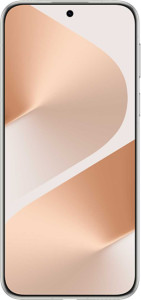
For still photography, the Huawei Pura 80 Pro Plus presents a compelling set of specs. Its triple-camera system resolves at 50, 48, and 40 MP across all three lenses, compared to Samsung's 50, 12, and 10 MP — meaning Huawei's secondary and tertiary cameras retain far more detail for cropping and post-processing. Huawei also benefits from wider apertures across the board, with its main lens at f/1.6 versus Samsung's f/1.8, allowing more light in low-light scenes. Add a longer 4x optical zoom against Samsung's 3x, plus laser autofocus for faster and more precise subject locking, and the Huawei reads as the stronger stills-oriented system on paper.
The video story, however, flips decisively in Samsung's favor. The Galaxy S25 Plus captures up to 4320p (8K) at 30fps, while the Huawei tops out at 2160p (4K). That is a fourfold increase in resolution ceiling — significant for creators who want maximum flexibility in post-production. Samsung also supports HDR10 video recording, enabling richer dynamic range in compatible footage, a feature Huawei lacks entirely. Additionally, Samsung's BSI sensor improves light capture efficiency at the hardware level, which complements its video pipeline.
This category is genuinely split by use case. The Huawei Pura 80 Pro Plus edges ahead for photographers prioritizing resolution, zoom reach, and low-light aperture in stills, while the Samsung Galaxy S25 Plus is the stronger choice for videographers who need higher recording resolution and HDR-capable footage. Neither product dominates outright — the right pick depends on whether your lens points more at photos or video.