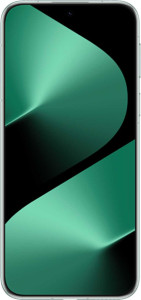
Huawei Pura 80 Pro
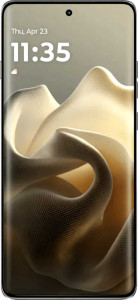
Motorola Edge 60 Pro

Huawei Pura 80 Pro Motorola Edge 60 Pro

Overview

Welcome to our in-depth spec comparison between the Huawei Pura 80 Pro and the Motorola Edge 60 Pro. Both flagship contenders share a solid IP68-rated waterproof build, OLED displays with 120Hz refresh rates, and versatile multi-lens camera systems, but they diverge sharply when it comes to charging capabilities, chipset architecture, and a range of connectivity features. Read on to see how every specification stacks up before making your decision.

Common Features

  • Both phones are waterproof with an IP68 ingress protection rating.
  • Neither phone has a rugged build.
  • Neither phone can be folded.
  • Both phones feature an OLED/AMOLED display.
  • Both phones support a 120Hz refresh rate.
  • Both phones have branded damage-resistant glass.
  • Neither phone supports Dolby Vision.
  • Neither phone has a secondary screen.
  • Both phones have a touchscreen.
  • Both phones come with 12GB of RAM.
  • Both phones support integrated LTE and 5G connectivity.
  • Both phones support 64-bit processing and use big.LITTLE technology.
  • Both phones have a multi-lens main camera with built-in optical image stabilization.
  • Both phones support 4K video recording at 30fps on the main camera.
  • Both phones support slow-motion video recording and continuous autofocus when recording.
  • Both phones have phase-detection autofocus for photos.
  • Both phones offer camera and microphone privacy options, dark mode, and theme customization.
  • Both phones support wireless charging and fast charging, and come with a charger included.
  • Neither phone has a removable battery.
  • Both phones have stereo speakers but no 3.5mm audio jack and no radio.
  • Both phones support NFC, USB Type-C, fingerprint scanning, a gyroscope, and 5G.
  • Neither phone has an external memory slot.

Main Differences

  • Weight is 219g on Huawei Pura 80 Pro and 186g on Motorola Edge 60 Pro.
  • Screen size is 6.8″ on Huawei Pura 80 Pro and 6.7″ on Motorola Edge 60 Pro.
  • Pixel density is 459 ppi on Huawei Pura 80 Pro and 444 ppi on Motorola Edge 60 Pro.
  • Typical brightness is 2500 nits on Huawei Pura 80 Pro and 4500 nits on Motorola Edge 60 Pro.
  • HDR10 and HDR10+ support is present on Motorola Edge 60 Pro but not available on Huawei Pura 80 Pro.
  • Internal storage is 1024GB on Huawei Pura 80 Pro and 512GB on Motorola Edge 60 Pro.
  • The chipset is HiSilicon Kirin 9010 on Huawei Pura 80 Pro and MediaTek Dimensity 8350 on Motorola Edge 60 Pro.
  • Semiconductor size is 7nm on Huawei Pura 80 Pro and 4nm on Motorola Edge 60 Pro.
  • CPU speed is 1x2.3 & 4x2.18 & 3x1.55 GHz on Huawei Pura 80 Pro and 1x3.35 & 3x3.2 & 4x2.2 GHz on Motorola Edge 60 Pro.
  • RAM speed is 2750 MHz on Huawei Pura 80 Pro and 8533 MHz on Motorola Edge 60 Pro.
  • Maximum memory bandwidth is 44 GB/s on Huawei Pura 80 Pro and 68.2 GB/s on Motorola Edge 60 Pro.
  • Main camera megapixels are 50 & 48 & 40 MP on Huawei Pura 80 Pro and 50 & 50 & 10 MP on Motorola Edge 60 Pro.
  • Front camera resolution is 13MP on Huawei Pura 80 Pro and 50MP on Motorola Edge 60 Pro.
  • Optical zoom is 4x on Huawei Pura 80 Pro and 3x on Motorola Edge 60 Pro.
  • Laser autofocus and manual shutter speed are available on Huawei Pura 80 Pro but not on Motorola Edge 60 Pro.
  • Battery capacity is 5700 mAh on Huawei Pura 80 Pro and 6000 mAh on Motorola Edge 60 Pro.
  • Wired charging speed is 100W on Huawei Pura 80 Pro and 90W on Motorola Edge 60 Pro.
  • Wireless charging speed is 80W on Huawei Pura 80 Pro and 15W on Motorola Edge 60 Pro.
  • Reverse wireless charging is available on Huawei Pura 80 Pro but not on Motorola Edge 60 Pro.
  • aptX Adaptive audio support is present on Motorola Edge 60 Pro but not on Huawei Pura 80 Pro.
  • USB version is 3.1 on Huawei Pura 80 Pro and 2.0 on Motorola Edge 60 Pro.
  • Emergency SOS via satellite, an infrared sensor, and a barometer are available on Huawei Pura 80 Pro but not on Motorola Edge 60 Pro.
  • PC mode is available on Motorola Edge 60 Pro but not on Huawei Pura 80 Pro.
  • A curved display is featured on Motorola Edge 60 Pro but not on Huawei Pura 80 Pro.
  • Wi-Fi 7 (802.11be) support is available on Huawei Pura 80 Pro, while Motorola Edge 60 Pro supports up to Wi-Fi 6E (802.11ax).
  • SIM configuration is dual physical SIM on Huawei Pura 80 Pro and one physical SIM plus one eSIM on Motorola Edge 60 Pro.
Specs Comparison
Huawei Pura 80 Pro

Huawei Pura 80 Pro

Motorola Edge 60 Pro

Motorola Edge 60 Pro

Design:
water resistance Waterproof Waterproof
weight 219 g 186 g
thickness 8.3 mm 8.2 mm
width 76.1 mm 73.1 mm
height 163 mm 160.7 mm
volume 102.95569 cm³ 96.326794 cm³
Ingress Protection (IP) rating IP68 IP68
has a rugged build
can be folded

Both the Huawei Pura 80 Pro and the Motorola Edge 60 Pro share the same IP68 waterproof rating, meaning both can withstand submersion in fresh water and offer equivalent protection against dust and moisture in everyday use. Neither features a rugged build or a foldable form factor, so they sit in the same category of standard premium slabs.

Where the two diverge meaningfully is in physical footprint and weight. The Motorola Edge 60 Pro is noticeably more compact across every dimension — shorter, narrower, thinner, and with a smaller overall volume (96.3 cm³ vs 103.0 cm³). Most importantly, it is 33 grams lighter (186 g vs 219 g), a difference that is very tangible during extended one-handed use or when the phone sits in a shirt pocket. The Pura 80 Pro's extra mass is not dramatic by itself, but over a long day it adds up to noticeable hand fatigue.

The Edge 60 Pro holds a clear design advantage here: it is more compact and significantly lighter while offering identical durability credentials. Users who prioritize comfortable daily handling will prefer the Motorola; the Pura 80 Pro's larger frame may appeal to those who simply want a bigger device, but on pure ergonomics the Edge 60 Pro wins this category.

Display:
Display type OLED/AMOLED OLED/AMOLED
screen size 6.8" 6.7"
pixel density 459 ppi 444 ppi
resolution 1276 x 2848 px 1220 x 2712 px
refresh rate 120Hz 120Hz
brightness (typical) 2500 nits 4500 nits
has branded damage-resistant glass
supports HDR10
supports HDR10+
supports Dolby Vision
Has a secondary screen
has a touch screen

On the fundamentals, these two displays are closely matched: both use OLED/AMOLED panels, both refresh at 120Hz, and both feature branded damage-resistant glass. The screen size difference (6.8″ vs 6.7″) and pixel density gap (459 ppi vs 444 ppi) are negligible in practice — sharpness is excellent on both, and no human eye will distinguish the two at normal viewing distances.

The decisive split comes down to brightness and HDR support. The Motorola Edge 60 Pro reaches a peak of 4500 nits compared to the Pura 80 Pro's 2500 nits — an 80% advantage that translates directly into far superior outdoor legibility on sunny days. Beyond raw brightness, the Edge 60 Pro also supports both HDR10 and HDR10+, enabling richer contrast and more accurate color grading when streaming compatible content. The Pura 80 Pro supports none of the major HDR standards, which is a notable omission at this tier.

The Motorola Edge 60 Pro wins this category clearly. Its dramatic brightness lead makes it the more versatile screen in varied lighting conditions, and its HDR10/HDR10+ support adds meaningful value for media consumption. The Pura 80 Pro's marginally higher pixel density does not come close to offsetting those two advantages.

Performance:
internal storage 1024GB 512GB
RAM 12GB 12GB
Chipset (SoC) name HiSilicon Kirin 9010 MediaTek Dimensity 8350
GPU name Mali-G57 Mali G615 MC6
CPU speed 1 x 2.3 & 4 x 2.18 & 3 x 1.55 GHz 1 x 3.35 & 3 x 3.2 & 4 x 2.2 GHz
Has integrated LTE
RAM speed 2750 MHz 8533 MHz
semiconductor size 7 nm 4 nm
Supports 64-bit
DirectX version DirectX 12 DirectX 12
Has integrated graphics
Uses big.LITTLE technology
Has TrustZone
maximum memory bandwidth 44 GB/s 68.2 GB/s
OpenCL version 2 2
L3 core 2 MB/core 4 MB/core
L3 cache 4 MB 4 MB

The silicon gap between these two phones is substantial. The Motorola Edge 60 Pro runs on the MediaTek Dimensity 8350, built on a modern 4 nm process, while the Huawei Pura 80 Pro relies on the HiSilicon Kirin 9010 at 7 nm. That three-generation gap in fabrication technology means the Dimensity 8350 achieves more transistors per unit area, translating into better power efficiency and thermal headroom. The CPU clock speeds reinforce this: the Edge 60 Pro's prime core hits 3.35 GHz versus the Pura 80 Pro's 2.3 GHz, with every performance cluster also clocked significantly higher on the Motorola side.

Memory performance tells a similar story. Both phones carry 12 GB of RAM, but the Edge 60 Pro's RAM runs at 8533 MHz compared to 2750 MHz on the Pura 80 Pro — over three times faster. This is reflected in maximum memory bandwidth: 68.2 GB/s versus 44 GB/s. In practice, faster memory bandwidth accelerates everything from app launches to gaming frame pacing to computational photography pipelines. The Pura 80 Pro does counter with double the internal storage — 1024 GB versus 512 GB — which is a genuine advantage for power users who store large files locally.

Raw processing performance clearly favors the Motorola Edge 60 Pro: its newer process node, higher CPU clocks, and dramatically faster memory subsystem add up to a meaningful real-world performance lead. The Pura 80 Pro's storage generosity is a worthwhile consolation for heavy users, but it does not offset the chipset disadvantage in compute-intensive tasks.

Cameras:
megapixels (main camera) 50 & 48 & 40 MP 50 & 50 & 10 MP
wide aperture (main camera) 1.6 & 2.1 & 2.2f 1.8 & 2 & 2f
Has a dual-lens (or multi-lens) main camera
megapixels (front camera) 13MP 50MP
has built-in optical image stabilization
video recording (main camera) 2160 x 30 fps 2160 x 30 fps
Has a dual-tone LED flash
number of flash LEDs 2 1
has a BSI sensor
has a CMOS sensor
has continuous autofocus when recording movies
Has phase-detection autofocus for photos
supports slow-motion video recording
has a built-in HDR mode
has manual exposure
has a flash
optical zoom 4x 3x
has manual ISO
has a serial shot mode
has manual focus
has a front camera
Has laser autofocus
Shoots 360° panorama
has manual white balance
has touch autofocus
has manual shutter speed
can create panoramas in-camera
wide aperture (front camera) 2f 2f
Has timelapse function
Has a front-facing LED flash
has a dual-lens (or multi-lens) front camera
supports HDR10 recording
supports Dolby Vision recording
has a front-facing camera under the display
Has a RGB LED flash
has 3D photo/video recording capabilities

Rear camera specs tip noticeably in favor of the Huawei Pura 80 Pro. Its widest main aperture of f/1.6 beats the Edge 60 Pro's f/1.8, which means more light hits the sensor in dim conditions — a tangible low-light advantage. The Pura 80 Pro also extends to 4x optical zoom versus 3x on the Motorola, giving it a longer reach for telephoto shots without digital degradation. Add in exclusive laser autofocus and the ability to set a manual shutter speed — absent on the Edge 60 Pro — and the Pura 80 Pro clearly targets users who want granular control over their photography.

The selfie situation reverses things dramatically. The Motorola packs a 50 MP front camera against the Pura 80 Pro's comparatively modest 13 MP. That near-four-times resolution difference means the Edge 60 Pro can capture significantly more detail in selfies and video calls, and offers much more flexibility for cropping. For users who prioritize front-facing photography, this gap is hard to ignore.

Choosing a winner depends on shooting priorities. The Huawei Pura 80 Pro holds the stronger rear camera package — better low-light aperture, greater optical zoom range, and richer manual controls. But if selfies are a primary use case, the Motorola Edge 60 Pro's front camera is in a different league. Overall, the Pura 80 Pro edges ahead on versatility across the full camera system.

Operating system:
has camera/microphone privacy options
has theme customization
has dark mode
has battery health check
Has customizable notifications
supports split screen
gets direct OS updates
Can be used as a PC
Has sharing intents
has a child lock
Supports widgets
has voice commands
Tracks the current position of a mobile device
is a multi-user system

Across nearly every software feature listed, these two phones are identical: both offer dark mode, split-screen multitasking, customizable notifications, widget support, child lock, voice commands, multi-user profiles, and camera/microphone privacy controls. Neither receives direct OS updates, which is worth noting for users who prioritize long-term software support. In short, the day-to-day software experience as defined by these specs is a functional tie.

The single differentiator is the Motorola Edge 60 Pro's ability to be used as a PC — a desktop mode feature that the Huawei Pura 80 Pro lacks entirely. This capability allows the Edge 60 Pro to connect to an external display and function like a traditional desktop environment, which can meaningfully expand the phone's utility for users who want a lightweight productivity setup without carrying a laptop.

Given how closely matched everything else is, that one distinction hands the Motorola Edge 60 Pro a clear, if narrow, edge in this category. For most users the difference will be academic, but for anyone who values desktop mode as part of their workflow, the Motorola is the only viable choice between the two.

Battery:
battery power 5700 mAh 6000 mAh
has wireless charging
Supports fast charging
charging speed 100W 90W
wireless charging speed 80W 15W
has reverse wireless charging
comes with a charger
has a removable battery
has a battery level indicator
has a rechargeable battery

Raw capacity is close but favors the Motorola: 6000 mAh versus 5700 mAh on the Pura 80 Pro. That 300 mAh gap is modest and unlikely to translate into dramatically different screen-on time, but it does give the Edge 60 Pro a marginal endurance advantage on paper. Both phones support fast wired charging and ship with a charger included, so neither user is left waiting at the box.

Where the two diverge sharply is wireless charging. The Huawei Pura 80 Pro supports wireless charging at a blazing 80W — nearly on par with its 100W wired speed — making it one of the fastest wireless charging implementations available. The Motorola Edge 60 Pro, by contrast, tops out at just 15W wirelessly, which is a significant step down and will result in much longer pad-charging times. The Pura 80 Pro also adds reverse wireless charging, letting it top up accessories like earbuds or a smartwatch — a feature the Edge 60 Pro omits entirely.

This category is genuinely split. The Motorola Edge 60 Pro wins on raw capacity and wired charging is close, but the Huawei Pura 80 Pro dominates the wireless charging dimension with a speed advantage that is hard to overstate. Users who rely on wireless pads daily will find the Pura 80 Pro's ecosystem far more capable; those who always plug in and simply want the largest cell should lean toward the Edge 60 Pro.

Audio:
has a socket for a 3.5 mm audio jack
has stereo speakers
has aptX Adaptive
Has a radio

Both the Huawei Pura 80 Pro and Motorola Edge 60 Pro lack a 3.5 mm audio jack socket, meaning users will need to use wireless or USB-C audio solutions. Both phones feature stereo speakers for a more immersive audio experience. However, the Huawei Pura 80 Pro does not support aptX Adaptive, while the Motorola Edge 60 Pro includes this feature, which can offer better wireless audio quality when paired with compatible headphones.

Neither device has an FM radio, which means users will need to rely on streaming services for music or radio content.

Connectivity & Features:
release date June 2025 April 2025
has 5G support
Wi-Fi version Wi-Fi 4 (802.11n), Wi-Fi 5 (802.11ac), Wi-Fi 6 (802.11ax), Wi-Fi 7 (802.11be) Wi-Fi 6E (802.11ax)
SIM cards 2 SIM 1 SIM, 1 eSIM
has an external memory slot
Has USB Type-C
USB version 3.1 2
has NFC
Has a fingerprint scanner
has emergency SOS via satellite
has crash detection
is DLNA-certified
has a gyroscope
supports ANT+
Has a heart rate monitor
has GPS
has a compass
supports Wi-Fi
Has an infrared sensor
has an accelerometer
has a cellular module
Has a barometer
has an HDMI output
Uses 3D facial recognition
Has an iris scanner
Stylus included
supports Galileo
Has motion tracking
Has optical tracking
Has a built-in projector

Shared ground here includes 5G, NFC, fingerprint scanning, GPS with Galileo support, and USB Type-C — a solid common baseline. The differences, however, stack up decisively in one direction. The Huawei Pura 80 Pro supports Wi-Fi 7, the latest wireless standard offering lower latency and higher throughput, while the Motorola Edge 60 Pro tops out at Wi-Fi 6E — capable, but a generation behind. More impactful for data transfers is the USB gap: the Pura 80 Pro uses USB 3.1, which is dramatically faster for moving large files to a PC, while the Edge 60 Pro is limited to USB 2.0 speeds — a notable constraint for a premium device.

The Pura 80 Pro also pulls ahead on sensors and safety features. It includes an infrared sensor for controlling TVs and appliances, a barometer for altitude and weather sensing, and critically, emergency SOS via satellite — the ability to send distress signals in areas without cellular coverage. The Edge 60 Pro offers none of these three. The satellite SOS feature in particular is a meaningful safety differentiator for travelers or outdoor users. On the SIM side, the Motorola offers a dual SIM setup via eSIM, which some users may prefer for flexibility without a physical second card, while the Pura 80 Pro uses two physical SIM slots.

The Huawei Pura 80 Pro wins this category by a comfortable margin. Faster Wi-Fi, significantly faster USB, satellite emergency connectivity, an IR blaster, and a barometer collectively represent a richer and more future-ready feature set than the Edge 60 Pro can match here.
Miscellaneous:
has a video light
Has sapphire glass display
Has a curved display
Has an e-paper display

This spec group is intentionally sparse, and most of it is a wash: both phones include a video light, neither uses sapphire glass, and neither has an e-paper display. The only meaningful differentiator is the curved display on the Motorola Edge 60 Pro, which the Huawei Pura 80 Pro does not have.

A curved screen is a matter of personal preference more than objective advantage. It can lend a premium, edge-to-edge aesthetic and make swipe gestures from the sides feel more natural, but it also makes screen protectors harder to fit and can introduce accidental touches along the edges. The Pura 80 Pro's flat panel avoids those trade-offs and tends to be preferred by users who prioritize practicality and accessory compatibility.

With so few data points separating them here, this category is essentially a tie on substance. The curved display gives the Edge 60 Pro a slight stylistic distinction, but whether that counts as an advantage depends entirely on the individual user's preference — there is no clear functional winner.

Comparison Summary & Verdict

After examining every specification, it is clear that these two phones target distinct types of users. The Huawei Pura 80 Pro stands out with its superior 80W wireless charging, reverse wireless charging, 4x optical zoom, laser autofocus, emergency SOS via satellite, USB 3.1, and a generous 1TB of internal storage, making it the stronger pick for power users who demand versatile connectivity and advanced camera controls. The Motorola Edge 60 Pro, on the other hand, wins on raw performance thanks to its 4nm Dimensity 8350 chipset, higher RAM speeds, and a much brighter 4500-nit display with HDR10+ support, while also offering a larger 6000 mAh battery, a 50MP front camera, PC mode, and a lighter, more pocket-friendly form factor. Choose the Huawei if camera versatility and charging speed are priorities; choose the Motorola if display quality and processing power matter most.

Huawei Pura 80 Pro
Buy Huawei Pura 80 Pro if...

Buy the Huawei Pura 80 Pro if you want faster wireless charging, greater optical zoom, more internal storage, and a richer set of connectivity features like satellite SOS and USB 3.1.

Motorola Edge 60 Pro
Buy Motorola Edge 60 Pro if...

Buy the Motorola Edge 60 Pro if you prioritize a brighter HDR10+ display, stronger chipset performance, a higher-resolution front camera, and a lighter design with a larger battery.