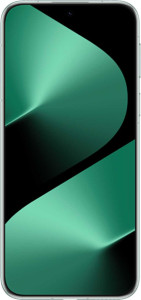
Huawei Pura 80 Pro
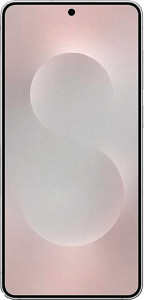
Samsung Galaxy S25 Edge

Huawei Pura 80 Pro Samsung Galaxy S25 Edge

Overview

Welcome to our in-depth spec comparison between the Huawei Pura 80 Pro and the Samsung Galaxy S25 Edge. Both phones share a premium IP68-rated waterproof build and OLED displays with 120Hz refresh rates, but they take sharply different paths when it comes to battery capacity and charging, raw processing power, and camera philosophy. Read on to see how these two flagship contenders stack up across every major category.

Common Features

  • Both phones are waterproof with an IP68 ingress protection rating.
  • Neither phone has a rugged build.
  • Neither phone can be folded.
  • Both phones feature an OLED/AMOLED display with a 120Hz refresh rate.
  • Both phones have branded damage-resistant glass on the display.
  • Always-On Display is available on both phones.
  • Dolby Vision support is not available on either phone.
  • Neither phone has a secondary screen.
  • Both phones have a touchscreen.
  • Both phones come with 12GB of RAM.
  • Both phones have integrated LTE and 5G support.
  • Both phones support 64-bit processing and DirectX 12.
  • Both phones use big.LITTLE CPU technology.
  • Both phones have a multi-lens main camera with built-in optical image stabilization.
  • Both phones have a CMOS sensor and support phase-detection autofocus for photos.
  • Both phones support slow-motion video recording and have a built-in HDR mode.
  • Both phones support continuous autofocus when recording movies.
  • Both phones have wireless charging and fast charging support.
  • Neither phone has a removable battery.
  • Both phones lack a 3.5mm audio jack but feature stereo speakers and LDAC support.
  • Both phones have 5G, NFC, USB Type-C, Wi-Fi 7, a fingerprint scanner, and a gyroscope.
  • Neither phone has an external memory slot or is DLNA-certified.
  • Both phones offer camera and microphone privacy options, dark mode, theme customization, battery health check, customizable notifications, split screen, and sharing intents.
  • Neither phone receives direct OS updates.
  • Both phones have a video light but lack sapphire glass, a curved display, and an e-paper display.

Main Differences

  • Weight is 219g on Huawei Pura 80 Pro and 163g on Samsung Galaxy S25 Edge.
  • Thickness is 8.3mm on Huawei Pura 80 Pro and 5.8mm on Samsung Galaxy S25 Edge.
  • Volume is 102.96 cm³ on Huawei Pura 80 Pro and 69.37 cm³ on Samsung Galaxy S25 Edge.
  • Screen size is 6.8″ on Huawei Pura 80 Pro and 6.7″ on Samsung Galaxy S25 Edge.
  • Pixel density is 459 ppi on Huawei Pura 80 Pro and 513 ppi on Samsung Galaxy S25 Edge.
  • Resolution is 1276 x 2848 px on Huawei Pura 80 Pro and 1440 x 3120 px on Samsung Galaxy S25 Edge.
  • Touch sampling rate is 300Hz on Huawei Pura 80 Pro and 240Hz on Samsung Galaxy S25 Edge.
  • HDR10 and HDR10+ support is present on Samsung Galaxy S25 Edge but not available on Huawei Pura 80 Pro.
  • The chipset is HiSilicon Kirin 9010 on Huawei Pura 80 Pro and Qualcomm Snapdragon 8 Elite on Samsung Galaxy S25 Edge.
  • Semiconductor size is 7nm on Huawei Pura 80 Pro and 3nm on Samsung Galaxy S25 Edge.
  • Maximum memory bandwidth is 44 GB/s on Huawei Pura 80 Pro and 85.1 GB/s on Samsung Galaxy S25 Edge.
  • Internal storage is 1024GB on Huawei Pura 80 Pro and 512GB on Samsung Galaxy S25 Edge.
  • Main camera resolution is 50 & 48 & 40 MP on Huawei Pura 80 Pro and 200 & 12 MP on Samsung Galaxy S25 Edge.
  • Video recording goes up to 2160p at 30fps on Huawei Pura 80 Pro and 4320p at 30fps on Samsung Galaxy S25 Edge.
  • Optical zoom is 4x on Huawei Pura 80 Pro, while Samsung Galaxy S25 Edge has no optical zoom.
  • Laser autofocus is available on Huawei Pura 80 Pro but not on Samsung Galaxy S25 Edge.
  • Manual shutter speed is supported on Huawei Pura 80 Pro but not on Samsung Galaxy S25 Edge.
  • Battery capacity is 5700 mAh on Huawei Pura 80 Pro and 3900 mAh on Samsung Galaxy S25 Edge.
  • Wired charging speed is 100W on Huawei Pura 80 Pro and 25W on Samsung Galaxy S25 Edge.
  • Wireless charging speed is 80W on Huawei Pura 80 Pro and 15W on Samsung Galaxy S25 Edge.
  • Reverse wireless charging is available on Huawei Pura 80 Pro but not on Samsung Galaxy S25 Edge.
  • A charger is included in the box with Huawei Pura 80 Pro but not with Samsung Galaxy S25 Edge.
  • Emergency SOS via satellite is available on Huawei Pura 80 Pro but not on Samsung Galaxy S25 Edge.
  • An infrared sensor is present on Huawei Pura 80 Pro but not on Samsung Galaxy S25 Edge.
  • PC mode is supported on Samsung Galaxy S25 Edge but not on Huawei Pura 80 Pro.
  • Wi-Fi 6E support is available on Samsung Galaxy S25 Edge but not on Huawei Pura 80 Pro.
  • Bluetooth version is 5.2 on Huawei Pura 80 Pro and 5.4 on Samsung Galaxy S25 Edge.
  • SIM support is dual physical SIM on Huawei Pura 80 Pro and dual physical SIM plus dual eSIM on Samsung Galaxy S25 Edge.
  • aptX support is available on Samsung Galaxy S25 Edge but not on Huawei Pura 80 Pro.
Specs Comparison
Huawei Pura 80 Pro

Huawei Pura 80 Pro

Samsung Galaxy S25 Edge

Samsung Galaxy S25 Edge

Design:
water resistance Waterproof Waterproof
weight 219 g 163 g
thickness 8.3 mm 5.8 mm
width 76.1 mm 75.6 mm
height 163 mm 158.2 mm
volume 102.95569 cm³ 69.367536 cm³
Ingress Protection (IP) rating IP68 IP68
has a rugged build
can be folded

Both the Huawei Pura 80 Pro and the Samsung Galaxy S25 Edge share an IP68 waterproof rating, meaning neither has an advantage in water resistance — both can handle submersion under the same standardized conditions. Where these two phones diverge dramatically, however, is in their physical footprint. The S25 Edge is a remarkably thin device at just 5.8 mm, compared to the Pura 80 Pro's 8.3 mm — a 43% difference in thickness that is immediately noticeable in-hand and in-pocket. Combined with a significantly lower weight of 163 g versus 219 g, the S25 Edge is a considerably lighter and more compact device despite having a broadly similar width and height.

The volume figures underscore just how substantial this difference is: the Pura 80 Pro displaces roughly 103 cm³ to the S25 Edge's 69 cm³ — about 48% more total volume. In real-world terms, the S25 Edge will feel noticeably more pocketable and less fatiguing during extended one-handed use, while the Pura 80 Pro's extra mass is something users will feel over the course of a full day. Neither phone has a rugged build or foldable form factor, so those traits do not factor into differentiation here.

In the Design category, the Samsung Galaxy S25 Edge holds a clear advantage. Its industry-leading thinness and dramatically lower weight make it the better choice for users who prioritize comfort, portability, and a premium slim aesthetic — all without sacrificing waterproofing parity.

Display:
Display type OLED/AMOLED OLED/AMOLED
screen size 6.8" 6.7"
pixel density 459 ppi 513 ppi
resolution 1276 x 2848 px 1440 x 3120 px
refresh rate 120Hz 120Hz
touch sampling rate 300Hz 240Hz
has branded damage-resistant glass
supports HDR10
supports HDR10+
Always-On Display
supports Dolby Vision
Has a secondary screen
has a touch screen

Both phones use OLED/AMOLED panels with a 120Hz refresh rate and Always-On Display support, so the baseline viewing experience is competitive. The meaningful distinctions emerge when looking at resolution and pixel density. The Samsung Galaxy S25 Edge packs a 1440 x 3120 px resolution at 513 ppi onto a slightly smaller 6.7″ screen, while the Huawei Pura 80 Pro spreads a 1276 x 2848 px resolution across a 6.8″ panel, yielding 459 ppi. The 54 ppi gap is perceptible — text edges and fine detail render more crisply on the S25 Edge, which matters for reading-heavy users and anyone viewing high-resolution media up close.

HDR support is another area where the two phones diverge. The S25 Edge supports both HDR10 and HDR10+, enabling dynamic tone-mapping for compatible video content — streaming platforms like Amazon Prime Video can deliver richer highlights and shadow detail on a scene-by-scene basis. The Pura 80 Pro supports neither standard, which is a notable omission at this price tier. On the other hand, the Pura 80 Pro edges ahead with a higher touch sampling rate of 300Hz versus 240Hz on the S25 Edge, translating to marginally more responsive input — a distinction that primarily benefits mobile gamers rather than everyday users.

Taken together, the Samsung Galaxy S25 Edge holds the stronger display profile. Its higher pixel density and full HDR10+ support give it a tangible advantage for media consumption and visual clarity, while the Pura 80 Pro's touch sampling lead is a narrower, more situational benefit.

Performance:
internal storage 1024GB 512GB
RAM 12GB 12GB
Chipset (SoC) name HiSilicon Kirin 9010 Qualcomm Snapdragon 8 Elite
GPU name Mali-G57 Adreno 830
CPU speed 1 x 2.3 & 4 x 2.18 & 3 x 1.55 GHz 2 x 4.32 & 6 x 3.53 GHz
Has integrated LTE
RAM speed 2750 MHz 5300 MHz
semiconductor size 7 nm 3 nm
Supports 64-bit
DirectX version DirectX 12 DirectX 12
Has integrated graphics
OpenGL ES version 3.2 3.2
Uses big.LITTLE technology
Has TrustZone
maximum memory bandwidth 44 GB/s 85.1 GB/s
OpenCL version 2 3
L2 cache 0.512 MB 12 MB
Supports ECC memory
L1 cache 64 KB 192 KB
Thermal Design Power (TDP) 6W 8.2W
L3 cache 4 MB 8 MB

The chipset gap here is substantial. The Samsung Galaxy S25 Edge runs on the Qualcomm Snapdragon 8 Elite, built on a cutting-edge 3 nm process, while the Huawei Pura 80 Pro uses the HiSilicon Kirin 9010 on an older 7 nm node. A smaller semiconductor process generally means more transistors per unit area, translating to greater computational efficiency and better performance-per-watt. This generational gap is further reflected in the CPU configurations: the Snapdragon 8 Elite's cores clock up to 4.32 GHz, compared to the Kirin 9010's peak of 2.3 GHz — a stark difference that points to significantly higher peak processing throughput on the S25 Edge.

Memory performance tells a similar story. Both phones carry 12GB of RAM, but the S25 Edge's RAM runs at 5300 MHz versus the Pura 80 Pro's 2750 MHz, and its maximum memory bandwidth reaches 85.1 GB/s compared to just 44 GB/s — nearly double. This matters for tasks like gaming, video editing, and AI workloads, where data needs to move rapidly between the processor and memory. The S25 Edge also features a far larger L2 cache of 12 MB versus 0.512 MB and an L3 cache of 8 MB versus 4 MB, meaning it can serve more data to the CPU without hitting slower memory — reducing latency in demanding workloads. Where the Pura 80 Pro does lead is in raw internal storage, offering up to 1024GB versus 512GB on the S25 Edge, which is a practical advantage for users who store large amounts of media locally.

The Samsung Galaxy S25 Edge wins the Performance category decisively. Its newer silicon, dramatically faster memory subsystem, and larger cache hierarchy put it in a different league for compute-intensive tasks. The Pura 80 Pro's storage capacity advantage is real, but it does not offset the processing gap for users who prioritize raw performance.

Cameras:
megapixels (main camera) 50 & 48 & 40 MP 200 & 12 MP
wide aperture (main camera) 1.6 & 2.1 & 2.2f 2.2 & 1.7f
Has a dual-lens (or multi-lens) main camera
megapixels (front camera) 13MP 12MP
has built-in optical image stabilization
video recording (main camera) 2160 x 30 fps 4320 x 30 fps
Has a dual-tone LED flash
number of flash LEDs 2 1
has a BSI sensor
has a CMOS sensor
has continuous autofocus when recording movies
Has phase-detection autofocus for photos
supports slow-motion video recording
has a built-in HDR mode
has manual exposure
has a flash
optical zoom 4x 0x
has manual ISO
has a serial shot mode
has manual focus
has a front camera
Has laser autofocus
Shoots 360° panorama
has manual white balance
shoots raw
has touch autofocus
has manual shutter speed
can create panoramas in-camera
wide aperture (front camera) 2f 2.2f
Has timelapse function
Has a front-facing LED flash
has a dual-lens (or multi-lens) front camera
supports HDR10 recording
supports Dolby Vision recording
has a front-facing camera under the display
Has a RGB LED flash
has 3D photo/video recording capabilities

The camera systems here reflect two genuinely different philosophies. The Huawei Pura 80 Pro deploys a triple-lens setup — 50, 48, and 40 MP — with 4x optical zoom, giving it meaningful telephoto reach without digital quality loss. The Samsung Galaxy S25 Edge counters with a dual-lens configuration anchored by a staggering 200 MP primary sensor, but lists 0x optical zoom, meaning all zoom is digital. For users who regularly shoot subjects at a distance, the Pura 80 Pro's optical zoom is a tangible, real-world advantage that no amount of pixel-cropping on the S25 Edge can fully replicate.

Where the S25 Edge pulls decisively ahead is video. It supports 8K recording at 4320p, a full two resolution tiers above the Pura 80 Pro's 4K at 2160p ceiling — a meaningful distinction for videographers who want maximum detail or plan to reframe footage in post. The Pura 80 Pro answers with a few feature advantages of its own: it includes laser autofocus for faster, more reliable subject locking, a dual-tone LED flash for more natural-looking artificial lighting, and manual shutter speed control — a spec the S25 Edge lacks — giving photographers finer creative control over exposure in challenging conditions.

The camera category is genuinely split depending on use case. The Huawei Pura 80 Pro has the edge for photography versatility — three lenses, real optical zoom, and more manual controls make it the stronger stills-oriented system. The Samsung Galaxy S25 Edge leads on video resolution and raw megapixel capture. Users who prioritize zoom and photographic flexibility should lean toward the Pura 80 Pro; dedicated videographers or those who value high-resolution cropping will find the S25 Edge more compelling.

Operating system:
has camera/microphone privacy options
has theme customization
has dark mode
has battery health check
Has customizable notifications
supports split screen
gets direct OS updates
Can be used as a PC
Has sharing intents
has a child lock
Supports widgets
has voice commands
Tracks the current position of a mobile device
is a multi-user system

Across the operating system feature set, these two phones are remarkably well-matched. Both offer the full suite of modern software conveniences — dark mode, customizable notifications, split-screen multitasking, widgets, voice commands, child lock, and camera/microphone privacy controls. Neither receives direct OS updates according to the provided data, which means both rely on manufacturer-mediated update pipelines rather than getting patches straight from the platform developer.

The single differentiating feature in this category is the Samsung Galaxy S25 Edge's ability to function as a PC — a capability the Huawei Pura 80 Pro lacks. This means the S25 Edge can connect to an external display and input devices to deliver a desktop-like computing experience directly from the phone. For users who travel frequently or want to consolidate their devices, this is a genuinely practical advantage that extends the phone's utility well beyond a typical smartphone use case.

Given how closely aligned the two phones are across every other software feature, the Samsung Galaxy S25 Edge takes a narrow but meaningful edge in this category solely on the strength of its PC mode capability. For the majority of everyday software interactions, users of either phone will find a comparable experience — but the S25 Edge offers a layer of desktop productivity that the Pura 80 Pro simply cannot match.

Battery:
battery power 5700 mAh 3900 mAh
has wireless charging
Supports fast charging
charging speed 100W 25W
wireless charging speed 80W 15W
has reverse wireless charging
comes with a charger
has a removable battery
has a battery level indicator
has a rechargeable battery

Battery is one of the most lopsided categories in this comparison. The Huawei Pura 80 Pro houses a 5700 mAh cell versus the Samsung Galaxy S25 Edge's 3900 mAh — a 46% capacity advantage that, all else being equal, translates directly into significantly more screen-on time between charges. For heavy users who regularly push their phone through a full day of navigation, streaming, and communication, that gap is meaningful and difficult to offset through software optimization alone.

The charging picture is equally one-sided. The Pura 80 Pro supports 100W wired charging and 80W wireless charging, both of which rank among the fastest available on any smartphone. The S25 Edge caps out at 25W wired and 15W wireless — substantially slower across the board. In practice, a depleted Pura 80 Pro will return to full charge in a fraction of the time it takes the S25 Edge, which is a daily quality-of-life advantage for anyone who charges opportunistically rather than overnight. The Pura 80 Pro also supports reverse wireless charging, allowing it to top up accessories like earbuds or a smartwatch — a feature entirely absent on the S25 Edge. Adding to the gap, the Pura 80 Pro comes with a charger in the box, while the S25 Edge does not.

The Huawei Pura 80 Pro wins the Battery category comprehensively. It holds more charge, replenishes faster by a wide margin — both wired and wirelessly — and offers reverse wireless charging that the S25 Edge cannot match. For users who consider battery endurance and charging flexibility a priority, this is one of the clearest advantages in the entire comparison.

Audio:
has a socket for a 3.5 mm audio jack
has stereo speakers
has aptX
has LDAC
has aptX HD
has aptX Adaptive
has aptX Lossless
Has a radio

The audio profiles of these two phones are nearly identical, and neither breaks new ground for the category. Both drop the 3.5mm headphone jack in favor of wireless-only audio, feature stereo speakers for spatial sound output, and support LDAC — Sony's high-resolution Bluetooth codec that enables near-lossless wireless audio streaming to compatible headphones. For users with LDAC-capable earphones or headphones, both phones can deliver meaningfully higher audio fidelity over Bluetooth than standard codecs allow.

The sole differentiator is the Samsung Galaxy S25 Edge's additional support for aptX, a Qualcomm codec that offers lower-latency wireless audio and broader compatibility with a wide range of Bluetooth headphones and speakers. While aptX does not match LDAC's peak audio quality ceiling, it expands the S25 Edge's codec compatibility — meaning it can negotiate a higher-quality connection with more devices than the Pura 80 Pro, which is limited to LDAC for high-quality wireless output.

This category is close, but the Samsung Galaxy S25 Edge holds a slim edge by virtue of its broader codec support. For most users the practical difference will be marginal, since LDAC handles the high-fidelity use case on both phones — but the S25 Edge's aptX compatibility gives it slightly wider reach across the wireless audio ecosystem.

Connectivity & Features:
release date June 2025 May 2025
has 5G support
Wi-Fi version Wi-Fi 4 (802.11n), Wi-Fi 5 (802.11ac), Wi-Fi 6 (802.11ax), Wi-Fi 7 (802.11be) Wi-Fi 4 (802.11n), Wi-Fi 5 (802.11ac), Wi-Fi 6 (802.11ax), Wi-Fi 7 (802.11be), Wi-Fi 6E (802.11ax)
SIM cards 2 SIM 2 SIM, 2 eSIM
Bluetooth version 5.2 5.4
has an external memory slot
Has USB Type-C
USB version 3.1 3.2
has NFC
Has a fingerprint scanner
has emergency SOS via satellite
is DLNA-certified
has a gyroscope
supports ANT+
Has a heart rate monitor
has GPS
has a compass
supports Wi-Fi
Has an infrared sensor
has an accelerometer
has a cellular module
Has a barometer
has an HDMI output
Uses 3D facial recognition
Has an iris scanner
Stylus included
supports Galileo
Has motion tracking
Has optical tracking
Has a built-in projector

Across the core connectivity stack, these phones are well-aligned — both support 5G, Wi-Fi 7, NFC, USB-C, GPS, and Galileo positioning. Digging deeper, though, reveals meaningful differences. The Samsung Galaxy S25 Edge runs Bluetooth 5.4 versus the Huawei Pura 80 Pro's 5.2, offering incremental improvements in connection stability and efficiency. Its USB 3.2 interface also enables faster wired data transfers compared to the Pura 80 Pro's USB 3.1. On SIM flexibility, the S25 Edge supports 2 physical SIMs plus 2 eSIMs, a notably more versatile configuration than the Pura 80 Pro's dual physical SIM setup — a genuine advantage for frequent travelers who juggle multiple carriers without swapping physical cards. The S25 Edge also adds Wi-Fi 6E support alongside Wi-Fi 7, broadening its compatibility with 6GHz band routers.

The Pura 80 Pro strikes back with two exclusive features. Its built-in infrared sensor lets it act as a universal remote for home appliances — a niche but genuinely useful capability that disappears on most flagships. More significantly, it supports emergency SOS via satellite, enabling distress communication even without cellular coverage — a potentially life-saving feature that the S25 Edge entirely lacks. The Pura 80 Pro also supports ANT+... wait, actually it's the S25 Edge that supports ANT+, not the Pura 80 Pro. ANT+ compatibility on the S25 Edge broadens its integration with fitness accessories like heart rate straps and cycling sensors.

This category is a genuine split. The Samsung Galaxy S25 Edge leads on modern connectivity — newer Bluetooth, faster USB, more eSIM slots, and ANT+ support. But the Huawei Pura 80 Pro holds two compelling real-world advantages: the infrared blaster for device control and, most critically, satellite SOS for off-grid safety. Users who prioritize connectivity breadth and ecosystem integration will favor the S25 Edge; those who value practical utility features and emergency preparedness will find the Pura 80 Pro's additions harder to overlook.
Miscellaneous:
has a video light
Has sapphire glass display
Has a curved display
Has an e-paper display

The Miscellaneous category offers no basis for differentiation whatsoever. Both the Huawei Pura 80 Pro and the Samsung Galaxy S25 Edge share an identical profile across every provided spec: both include a video light, and neither features sapphire glass, a curved display, or an e-paper display.

This is a complete tie. Based strictly on the data provided, no advantage can be assigned to either phone in this category.

Comparison Summary & Verdict

After comparing every spec category, a clear picture emerges for each device. The Huawei Pura 80 Pro is the stronger pick for users who demand exceptional battery endurance, thanks to its massive 5700 mAh cell, blazing 100W wired and 80W wireless charging, and versatile camera system with 4x optical zoom and laser autofocus. It also ships with a charger included and adds handy extras like an infrared sensor and emergency SOS via satellite. The Samsung Galaxy S25 Edge, on the other hand, wins on sheer performance with its cutting-edge Snapdragon 8 Elite chipset built on a 3nm process, a sharper 513 ppi display with HDR10+ support, and an ultra-slim 5.8mm frame at just 163g. It also supports PC mode and offers broader connectivity with Wi-Fi 6E and dual eSIM. Your ideal choice ultimately comes down to whether you prioritize battery and zoom versatility or benchmark-leading performance and a sleeker form factor.

Huawei Pura 80 Pro
Buy Huawei Pura 80 Pro if...

Buy the Huawei Pura 80 Pro if you prioritize a larger battery with faster wired and wireless charging, a versatile telephoto camera with optical zoom, and handy extras like an infrared sensor and satellite SOS.

Samsung Galaxy S25 Edge
Buy Samsung Galaxy S25 Edge if...

Buy the Samsung Galaxy S25 Edge if you want a slim, lightweight flagship with top-tier Snapdragon 8 Elite performance, a sharper HDR10+ display, and a sleek ultra-thin design.