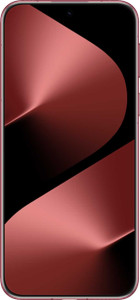
Huawei Pura 80 Ultra
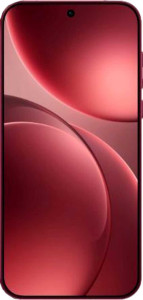
Oppo Find X9 Pro

Huawei Pura 80 Ultra Oppo Find X9 Pro

Overview

When two flagship smartphones go head-to-head, the details matter. In this in-depth comparison between the Huawei Pura 80 Ultra and the Oppo Find X9 Pro, we examine how these two premium Android powerhouses stack up across key battlegrounds including display brightness and HDR support, raw chipset performance, camera versatility, and battery endurance versus charging speed — helping you decide which device truly fits your lifestyle.

Common Features

  • Both phones are waterproof with no rugged build and cannot be folded.
  • Both devices share a thickness of 8.3 mm.
  • Both feature an OLED/AMOLED display with a 120Hz refresh rate.
  • Both displays include branded damage-resistant glass.
  • Always-On Display is available on both phones.
  • Neither phone has a secondary screen.
  • Both phones come with 16GB of RAM and 1024GB of internal storage.
  • Both support integrated LTE, 64-bit processing, integrated graphics, and big.LITTLE technology.
  • Both feature a multi-lens main camera with built-in optical image stabilization.
  • Both cameras use a CMOS sensor and support phase-detection autofocus for photos.
  • Continuous autofocus during video recording is supported on both devices.
  • Slow-motion video recording and built-in HDR mode are available on both phones.
  • Both operating systems offer camera and microphone privacy options, theme customization, dark mode, battery health check, customizable notifications, and split-screen support.
  • Neither phone receives direct OS updates or can be used as a PC.
  • Both phones support wireless charging, fast charging, and reverse wireless charging.
  • Both come with a charger included and have a non-removable rechargeable battery with a battery level indicator.
  • Neither phone has a 3.5 mm audio jack, but both feature stereo speakers and LDAC support.
  • Neither phone supports aptX Adaptive, aptX Lossless, or a built-in radio.
  • Both support 5G, dual SIM cards, USB Type-C, NFC, a fingerprint scanner, and emergency SOS via satellite.
  • Neither phone has an external memory slot or crash detection.
  • Both phones have a video light, no sapphire glass display, no curved display, and no e-paper display.

Main Differences

  • Weight is 233.5 g on Huawei Pura 80 Ultra and 224 g on Oppo Find X9 Pro.
  • Width is 76.1 mm on Huawei Pura 80 Ultra and 76.5 mm on Oppo Find X9 Pro.
  • Height is 163 mm on Huawei Pura 80 Ultra and 161.3 mm on Oppo Find X9 Pro.
  • Volume is 102.96 cm³ on Huawei Pura 80 Ultra and 102.42 cm³ on Oppo Find X9 Pro.
  • The IP rating is IP68 on Huawei Pura 80 Ultra and IP69 on Oppo Find X9 Pro.
  • Screen size is 6.8″ on Huawei Pura 80 Ultra and 6.78″ on Oppo Find X9 Pro.
  • Pixel density is 459 ppi on Huawei Pura 80 Ultra and 450 ppi on Oppo Find X9 Pro.
  • Resolution is 1276 x 2848 px on Huawei Pura 80 Ultra and 1272 x 2772 px on Oppo Find X9 Pro.
  • Touch sampling rate is 300Hz on Huawei Pura 80 Ultra and 240Hz on Oppo Find X9 Pro.
  • Typical brightness is 2500 nits on Huawei Pura 80 Ultra and 800 nits on Oppo Find X9 Pro.
  • HDR10, HDR10+, and Dolby Vision support are present on Oppo Find X9 Pro but not available on Huawei Pura 80 Ultra.
  • The AnTuTu benchmark score is 1,160,268 on Huawei Pura 80 Ultra and 3,649,108 on Oppo Find X9 Pro.
  • The chipset is HiSilicon Kirin 9010 on Huawei Pura 80 Ultra and MediaTek Dimensity 9500 on Oppo Find X9 Pro.
  • The semiconductor size is 7 nm on Huawei Pura 80 Ultra and 3 nm on Oppo Find X9 Pro.
  • Maximum memory bandwidth is 44 GB/s on Huawei Pura 80 Ultra and 85.3 GB/s on Oppo Find X9 Pro.
  • The main camera setup is 50 & 50 & 40 & 12.5 MP on Huawei Pura 80 Ultra and 200 & 50 & 50 MP on Oppo Find X9 Pro.
  • The front camera is 13 MP on Huawei Pura 80 Ultra and 50 MP on Oppo Find X9 Pro.
  • Main camera video recording goes up to 2160p at 30 fps on Huawei Pura 80 Ultra and 2160p at 60 fps on Oppo Find X9 Pro.
  • Optical zoom is 9.4x on Huawei Pura 80 Ultra and 3x on Oppo Find X9 Pro.
  • A dual-tone LED flash with 2 LEDs is present on Huawei Pura 80 Ultra, while Oppo Find X9 Pro has a single-LED flash without dual-tone.
  • HDR10 video recording is supported on Oppo Find X9 Pro but not on Huawei Pura 80 Ultra.
  • Battery capacity is 5700 mAh on Huawei Pura 80 Ultra and 7500 mAh on Oppo Find X9 Pro.
  • Wired charging speed is 100W on Huawei Pura 80 Ultra and 80W on Oppo Find X9 Pro.
  • Wireless charging speed is 80W on Huawei Pura 80 Ultra and 50W on Oppo Find X9 Pro.
  • Reverse wireless charging speed is 20W on Huawei Pura 80 Ultra and 10W on Oppo Find X9 Pro.
  • aptX and aptX HD support are present on Oppo Find X9 Pro but not available on Huawei Pura 80 Ultra.
  • Bluetooth version is 5.2 on Huawei Pura 80 Ultra and 6 on Oppo Find X9 Pro.
  • A barometer is included on Huawei Pura 80 Ultra but not on Oppo Find X9 Pro.
Specs Comparison
Huawei Pura 80 Ultra

Huawei Pura 80 Ultra

Oppo Find X9 Pro

Oppo Find X9 Pro

Design:
water resistance Waterproof Waterproof
weight 233.5 g 224 g
thickness 8.3 mm 8.3 mm
width 76.1 mm 76.5 mm
height 163 mm 161.3 mm
volume 102.95569 cm³ 102.417435 cm³
Ingress Protection (IP) rating IP68 IP69
has a rugged build
can be folded

Both the Huawei Pura 80 Ultra and the Oppo Find X9 Pro share the same 8.3 mm thickness and virtually identical overall volume — around 102–103 cm³ — making them near twins in terms of how they sit in the hand or pocket. Neither is foldable or ruggedized, so they occupy the same category: slim, premium slabs designed for everyday carry.

The most meaningful differentiator in this group is protection rating. The Oppo Find X9 Pro carries an IP69 rating, which goes beyond the Pura 80 Ultra's IP68. In practical terms, IP68 covers sustained submersion in water, while IP69 additionally certifies resistance to high-pressure, high-temperature water jets — a meaningful step up if you ever rinse your phone under a tap forcefully or use it in harsh wet environments. For most users IP68 is more than sufficient, but IP69 offers a genuine extra layer of confidence.

On weight, the Oppo Find X9 Pro is noticeably lighter at 224 g versus 233.5 g for the Pura 80 Ultra — a difference of nearly 9.5 g. That gap is perceptible during extended one-handed use. Combined with the superior IP69 rating, the Oppo Find X9 Pro holds a clear edge in this design group: it is lighter to hold and better protected against water ingress.

Display:
Display type OLED/AMOLED OLED/AMOLED
screen size 6.8" 6.78"
pixel density 459 ppi 450 ppi
resolution 1276 x 2848 px 1272 x 2772 px
refresh rate 120Hz 120Hz
touch sampling rate 300Hz 240Hz
brightness (typical) 2500 nits 800 nits
has branded damage-resistant glass
supports HDR10
supports HDR10+
Always-On Display
supports Dolby Vision
Has a secondary screen
has a touch screen

Both screens are OLED/AMOLED panels of nearly identical size — 6.8″ on the Pura 80 Ultra versus 6.78″ on the Find X9 Pro — and both run at a 120Hz refresh rate, so day-to-day scrolling fluidity is on equal footing. Sharpness is also comparable, with the Pura 80 Ultra at 459 ppi and the Find X9 Pro at 450 ppi; that 9 ppi gap is invisible to the naked eye at typical viewing distances.

Where the two diverge sharply is brightness and HDR support. The Pura 80 Ultra's 2500 nits typical brightness dwarfs the Find X9 Pro's 800 nits — a more than three-fold difference. In direct sunlight, this translates to dramatically better legibility on the Pura 80 Ultra. On the flip side, the Find X9 Pro supports HDR10, HDR10+, and Dolby Vision, while the Pura 80 Ultra supports none of these standards. For streaming HDR content from platforms like Netflix or Amazon Prime, the Find X9 Pro will render tone-mapped, certified high dynamic range video; the Pura 80 Ultra cannot, regardless of how bright its panel is. The Find X9 Pro also has a lower touch sampling rate at 240Hz versus 300Hz on the Pura 80 Ultra, which gives the latter a slight edge in touch responsiveness for gaming.

The verdict here depends entirely on use case. For outdoor visibility and gaming responsiveness, the Pura 80 Ultra holds a commanding lead. For media consumption and HDR streaming, the Find X9 Pro is the clear winner. Neither product dominates across the board, making this group a genuine trade-off rather than a clean sweep.

Performance:
internal storage 1024GB 1024GB
RAM 16GB 16GB
AnTuTu benchmark score 1160268 3649108
Chipset (SoC) name HiSilicon Kirin 9010 MediaTek Dimensity 9500
GPU name Mali-G57 Mali G1 Ultra MP12
CPU speed 1 x 2.3 & 4 x 2.18 & 3 x 1.55 GHz 1 x 4.21 & 3 x 3.5 & 4 x 2.7 GHz
Has integrated LTE
RAM speed 2750 MHz 5333 MHz
semiconductor size 7 nm 3 nm
Supports 64-bit
Has integrated graphics
Uses big.LITTLE technology
maximum memory bandwidth 44 GB/s 85.3 GB/s
OpenCL version 2 3
L3 cache 4 MB 16 MB

On paper, both phones arrive with matching 16GB RAM and 1TB storage, but the silicon underneath tells two very different stories. The Oppo Find X9 Pro runs on the MediaTek Dimensity 9500 built on a cutting-edge 3 nm process, while the Pura 80 Ultra relies on the HiSilicon Kirin 9010 at 7 nm. A smaller node generally means more transistors per unit area, translating into better performance-per-watt — the Find X9 Pro's chip can do more work while consuming less power and generating less heat.

The benchmark gap is stark. The Find X9 Pro's AnTuTu score of 3,649,108 is more than three times the Pura 80 Ultra's 1,160,268. Supporting data reinforces this: the Find X9 Pro's peak CPU core runs at 4.21 GHz versus 2.3 GHz on the Kirin, its RAM operates at 5333 MHz compared to 2750 MHz, its memory bandwidth reaches 85.3 GB/s against 44 GB/s, and its L3 cache is 16 MB versus just 4 MB. Together, these figures point to a chip that is substantially faster at moving and processing data — noticeable in demanding workloads like video editing, AI tasks, and high-fidelity gaming.

The Oppo Find X9 Pro is the unambiguous winner in this group, and it is not a close call. Across every meaningful performance metric — raw benchmark score, CPU clock speed, memory throughput, and process node — it outclasses the Pura 80 Ultra by a wide margin. Users who prioritize computational performance will find the Find X9 Pro in a different tier entirely.
Cameras:
megapixels (main camera) 50 & 50 & 40 & 12.5 MP 200 & 50 & 50 MP
wide aperture (main camera) 1.6 & 2.4 & 2.2 & 3.6f 2.1 & 1.5 & 2f
Has a dual-lens (or multi-lens) main camera
megapixels (front camera) 13MP 50MP
has built-in optical image stabilization
video recording (main camera) 2160 x 30 fps 2160 x 60 fps
Has a dual-tone LED flash
number of flash LEDs 2 1
has a BSI sensor
has a CMOS sensor
has continuous autofocus when recording movies
Has phase-detection autofocus for photos
supports slow-motion video recording
has a built-in HDR mode
has manual exposure
has a flash
optical zoom 9.4x 3x
has manual ISO
has a serial shot mode
has manual focus
has a front camera
Has laser autofocus
Shoots 360° panorama
has manual white balance
shoots raw
has touch autofocus
has manual shutter speed
can create panoramas in-camera
wide aperture (front camera) 2f 2f
Has timelapse function
Has a front-facing LED flash
has a dual-lens (or multi-lens) front camera
supports HDR10 recording
supports Dolby Vision recording
has a front-facing camera under the display
Has a RGB LED flash
has 3D photo/video recording capabilities

The rear camera systems take opposite philosophical approaches. The Pura 80 Ultra deploys a four-lens array (50+50+40+12.5 MP) with a remarkable 9.4x optical zoom, making it a clear choice for telephoto and long-range photography. The Find X9 Pro counters with a three-lens setup anchored by a 200 MP primary sensor paired with a wide f/1.5 aperture — the highest resolution and widest main aperture in this comparison. That combination favors low-light, high-detail close-range shots, while the Pura 80 Ultra's zoom reach is nearly unmatched for a smartphone in this class.

Video is another area of divergence. The Find X9 Pro records 4K at 60 fps versus the Pura 80 Ultra's 30 fps ceiling — a meaningful difference for anyone shooting action footage or wanting smoother cinematic output. The Find X9 Pro also supports HDR10 video recording, which the Pura 80 Ultra lacks entirely. For selfies, the gap is equally wide: the Find X9 Pro's 50 MP front camera more than triples the Pura 80 Ultra's 13 MP, giving it a significant edge for portrait and video calling quality.

This group has no single winner — it is a genuine trade-off defined by shooting priority. The Pura 80 Ultra is the stronger choice for zoom and versatile multi-focal photography. The Find X9 Pro leads in primary sensor resolution, low-light aperture, video quality, and selfie capability. Photographers who shoot distant subjects should lean toward the Pura 80 Ultra; those who prioritize video and close-range image quality will find the Find X9 Pro more capable.

Operating system:
has camera/microphone privacy options
has theme customization
has dark mode
has battery health check
Has customizable notifications
supports split screen
gets direct OS updates
Can be used as a PC
Has sharing intents
has a child lock
Supports widgets
has voice commands
Tracks the current position of a mobile device
is a multi-user system

Across every data point in this group, the Huawei Pura 80 Ultra and the Oppo Find X9 Pro are in complete lockstep. Both support the full suite of modern OS features: split-screen multitasking, widgets, customizable notifications, dark mode, theme customization, child lock, voice commands, and device tracking. For the vast majority of users, this means the day-to-day software experience — in terms of these capabilities — will feel functionally equivalent on either device.

One shared limitation worth flagging is that neither phone receives direct OS updates in the conventional sense. This is a relevant consideration for long-term ownership, as it may affect how quickly security patches and feature updates reach users compared to devices that do get direct updates. Additionally, neither device supports desktop PC mode, so users who want to connect their phone to a monitor and use it as a computer will need to look elsewhere.

This group is an absolute tie. There is not a single differentiating data point between the two products here. Buyers for whom OS feature parity is the deciding factor will find no reason to favor one over the other based solely on this specification group.

Battery:
battery power 5700 mAh 7500 mAh
has wireless charging
Supports fast charging
charging speed 100W 80W
wireless charging speed 80W 50W
has reverse wireless charging
reverse wireless charging speed 20W 10W
comes with a charger
has a removable battery
has a battery level indicator
has a rechargeable battery

Battery capacity is where the Oppo Find X9 Pro makes its most emphatic statement in this comparison. Its 7500 mAh cell is a full 1800 mAh larger than the Pura 80 Ultra's already-generous 5700 mAh — a roughly 32% increase. In practical terms, that gap is substantial: it translates to meaningfully longer usage between charges, particularly under heavy workloads like gaming, video streaming, or navigation. For users who prioritize all-day or multi-day endurance, the Find X9 Pro holds a clear structural advantage.

The trade-off comes at the charger. The Pura 80 Ultra reclaims ground with faster wired charging at 100W versus 80W on the Find X9 Pro, and its wireless charging speed of 80W significantly outpaces the Find X9 Pro's 50W. Reverse wireless charging also favors the Pura 80 Ultra at 20W versus 10W. In short, when the Pura 80 Ultra does need to charge, it does so considerably faster across all three charging methods — which partially offsets its smaller battery for users near a power source.

The overall edge in this group belongs to the Oppo Find X9 Pro. A 7500 mAh battery is an exceptional capacity for a non-rugged flagship, and the longevity advantage it provides outweighs the Pura 80 Ultra's faster charging speeds for most usage patterns. That said, users who frequently top up throughout the day and value wireless charging speed may find the Pura 80 Ultra's charging ecosystem more convenient in practice.

Audio:
has a socket for a 3.5 mm audio jack
has stereo speakers
has aptX
has LDAC
has aptX HD
has aptX Adaptive
has aptX Lossless
Has a radio

Shared ground first: neither phone includes a 3.5mm headphone jack, both feature stereo speakers, and both support LDAC — Sony's high-resolution Bluetooth codec that transmits audio at up to 990 kbps, making it the gold standard for wireless listening quality. For users with LDAC-compatible headphones, both phones can deliver near-lossless wireless audio on equal footing.

The Find X9 Pro pulls ahead with its additional support for aptX and aptX HD. These Qualcomm codecs matter specifically for users whose wireless headphones or earbuds are aptX-certified rather than LDAC-compatible — a common scenario with many popular audio brands. Having both codec families covered means the Find X9 Pro is compatible with a broader ecosystem of Bluetooth audio hardware, and aptX HD in particular offers high-resolution transmission as a genuine alternative to LDAC where the latter is unsupported. The Pura 80 Ultra's LDAC-only approach is not limiting for Sony-ecosystem users, but it narrows wireless compatibility compared to the Find X9 Pro.

The Oppo Find X9 Pro takes a narrow but real edge here. Both phones are well-equipped for high-quality wireless audio, but the Find X9 Pro's broader codec support — aptX, aptX HD, and LDAC — makes it the more versatile option across a wider range of premium headphones and earbuds.

Connectivity & Features:
release date June 2025 October 2025
has 5G support
Wi-Fi version Wi-Fi 4 (802.11n), Wi-Fi 5 (802.11ac), Wi-Fi 6 (802.11ax), Wi-Fi 7 (802.11be) Wi-Fi 4 (802.11n), Wi-Fi 6 (802.11ax), Wi-Fi 5 (802.11ac), Wi-Fi 7 (802.11be)
SIM cards 2 SIM 2 SIM
Bluetooth version 5.2 6
has an external memory slot
Has USB Type-C
has NFC
Has a fingerprint scanner
has emergency SOS via satellite
has crash detection
is DLNA-certified
has a gyroscope
supports ANT+
Has a heart rate monitor
has GPS
has a compass
supports Wi-Fi
Has an infrared sensor
has an accelerometer
has a cellular module
Has a barometer
has an HDMI output
Uses 3D facial recognition
Has an iris scanner
Stylus included
supports Galileo
Has motion tracking
Has optical tracking
Has a built-in projector

The connectivity foundation is remarkably similar: both phones offer 5G, Wi-Fi 7, dual SIM, USB-C, NFC, GPS with Galileo support, an infrared sensor, and emergency SOS via satellite. For most users, this means identical day-to-day connectivity capability, from contactless payments to smart home control to off-grid emergency signaling.

Two specs separate them. The Find X9 Pro features Bluetooth 6.0 against the Pura 80 Ultra's Bluetooth 5.2. Bluetooth 6.0 introduces channel sounding for more precise distance and location awareness, along with improvements to connection efficiency and reliability — meaningful for users invested in a modern Bluetooth audio or wearables ecosystem. Going the other direction, the Pura 80 Ultra includes a barometer while the Find X9 Pro does not. A barometer enables accurate altitude readings and can enhance weather awareness and outdoor navigation — a subtle but genuine advantage for hikers or users who rely on fitness tracking elevation data.

This group ends in a near-tie with two offsetting differentiators. The Find X9 Pro holds the edge for wireless connectivity with its newer Bluetooth 6.0, while the Pura 80 Ultra counters with a barometer that the Find X9 Pro lacks. Which advantage matters more depends entirely on the user's priorities — neither difference is significant enough to declare a clear overall winner in this group.

Miscellaneous:
has a video light
Has sapphire glass display
Has a curved display
Has an e-paper display

The Miscellaneous group offers no differentiation whatsoever between these two devices. Both include a video light, and neither features sapphire glass, a curved display, or an e-paper display. Every data point is identical.

This is a clear tie. Based strictly on the provided specs, there is no basis to favor one phone over the other in this category.

Comparison Summary & Verdict

After a thorough look at the specs, both phones excel in their own right but appeal to very different users. The Huawei Pura 80 Ultra stands out with its exceptional 2500-nit peak brightness, impressive 9.4x optical zoom, faster 100W wired and 80W wireless charging, and a higher touch sampling rate of 300Hz — making it an outstanding choice for photography enthusiasts and power users who prioritize charging speed and outdoor visibility. On the other hand, the Oppo Find X9 Pro dominates in raw performance thanks to its Dimensity 9500 chipset and an AnTuTu score nearly three times higher, pairs that with a much larger 7500 mAh battery, a 50MP front camera, HDR10+ and Dolby Vision support, and a higher IP69 ingress protection rating. Gamers, heavy multitaskers, and users who value all-day battery life will find the Oppo the more compelling package.

Huawei Pura 80 Ultra
Buy Huawei Pura 80 Ultra if...

Buy the Huawei Pura 80 Ultra if you prioritize superior outdoor brightness, a versatile telephoto system with 9.4x optical zoom, and faster wired and wireless charging speeds.

Oppo Find X9 Pro
Buy Oppo Find X9 Pro if...

Buy the Oppo Find X9 Pro if you want top-tier chipset performance, a significantly larger battery for all-day use, a high-resolution 50MP selfie camera, and full HDR10+ and Dolby Vision display support.