Huawei Pura 80 Ultra
Samsung Galaxy S25 Ultra

Huawei Pura 80 Ultra Samsung Galaxy S25 Ultra

Overview

When two flagship smartphones go head-to-head, every detail matters. In this comparison between the Huawei Pura 80 Ultra and the Samsung Galaxy S25 Ultra, we put two of the most capable Android flagships under the microscope, examining their distinct philosophies across battery and charging performance, raw processing power, camera versatility, and everyday connectivity. Whether you prioritize endurance or speed, zoom range or video resolution, this breakdown will help you find the right fit.

Common Features

  • Both phones are waterproof with an IP68 ingress protection rating.
  • Neither phone has a rugged build.
  • Neither phone can be folded.
  • Both phones feature an OLED/AMOLED display with a 120Hz refresh rate.
  • Both phones have branded damage-resistant glass on the display.
  • Always-On Display is available on both phones.
  • Dolby Vision support is not available on either phone.
  • Neither phone has a secondary screen.
  • Both phones have a touchscreen.
  • Both phones come with 1024GB of internal storage.
  • Both phones have integrated LTE and support 64-bit processing.
  • Both phones support DirectX 12 and OpenGL ES 3.2.
  • Both phones use big.LITTLE technology and have TrustZone security.
  • Both phones have a multi-lens main camera with built-in optical image stabilization.
  • Both phones have a dual-tone LED flash with 2 LEDs.
  • Both phones have a CMOS sensor and support phase-detection autofocus and continuous autofocus during video recording.
  • Both phones support slow-motion video recording.
  • Both phones offer camera and microphone privacy options, theme customization, dark mode, battery health check, customizable notifications, and split screen.
  • Neither phone receives direct OS updates.
  • Both phones support wireless charging, fast charging, and reverse wireless charging, and have a non-removable rechargeable battery with a battery level indicator.
  • Neither phone has a 3.5mm audio jack, but both have stereo speakers and LDAC support.
  • Neither phone supports aptX Adaptive or aptX Lossless.
  • Neither phone has a radio.
  • Both phones support 5G, have no external memory slot, include USB Type-C, NFC, and a fingerprint scanner.
  • Neither phone has crash detection or DLNA certification, but both have a gyroscope.
  • Both phones support Wi-Fi 4, Wi-Fi 5, Wi-Fi 6, and Wi-Fi 7.
  • Both phones have dual SIM card slots.
  • Both phones have a video light, no sapphire glass display, no curved display, and no e-paper display.

Main Differences

  • Weight is 233.5 g on Huawei Pura 80 Ultra and 218 g on Samsung Galaxy S25 Ultra.
  • Thickness is 8.3 mm on Huawei Pura 80 Ultra and 8.2 mm on Samsung Galaxy S25 Ultra.
  • Width is 76.1 mm on Huawei Pura 80 Ultra and 77.6 mm on Samsung Galaxy S25 Ultra.
  • Screen size is 6.8″ on Huawei Pura 80 Ultra and 6.9″ on Samsung Galaxy S25 Ultra.
  • Pixel density is 459 ppi on Huawei Pura 80 Ultra and 498 ppi on Samsung Galaxy S25 Ultra.
  • Resolution is 1276 x 2848 px on Huawei Pura 80 Ultra and 1440 x 3120 px on Samsung Galaxy S25 Ultra.
  • Touch sampling rate is 300Hz on Huawei Pura 80 Ultra and 240Hz on Samsung Galaxy S25 Ultra.
  • Typical brightness is 2500 nits on Huawei Pura 80 Ultra and 2600 nits on Samsung Galaxy S25 Ultra.
  • HDR10 and HDR10+ support is present on Samsung Galaxy S25 Ultra but not available on Huawei Pura 80 Ultra.
  • RAM is 16GB on Huawei Pura 80 Ultra and 12GB on Samsung Galaxy S25 Ultra.
  • AnTuTu benchmark score is 1,160,268 on Huawei Pura 80 Ultra and 2,207,809 on Samsung Galaxy S25 Ultra.
  • The chipset is HiSilicon Kirin 9010 on Huawei Pura 80 Ultra and Qualcomm Snapdragon 8 Elite on Samsung Galaxy S25 Ultra.
  • The semiconductor size is 7 nm on Huawei Pura 80 Ultra and 3 nm on Samsung Galaxy S25 Ultra.
  • Maximum memory bandwidth is 44 GB/s on Huawei Pura 80 Ultra and 85.1 GB/s on Samsung Galaxy S25 Ultra.
  • Main camera megapixels are 50 & 50 & 40 & 12.5 MP on Huawei Pura 80 Ultra and 200 & 50 & 50 & 10 MP on Samsung Galaxy S25 Ultra.
  • Maximum video recording resolution is 2160x30 fps on Huawei Pura 80 Ultra and 4320x30 fps on Samsung Galaxy S25 Ultra.
  • Optical zoom is 9.4x on Huawei Pura 80 Ultra and 5x on Samsung Galaxy S25 Ultra.
  • A BSI sensor is present on Samsung Galaxy S25 Ultra but not on Huawei Pura 80 Ultra.
  • HDR10 video recording is supported on Samsung Galaxy S25 Ultra but not on Huawei Pura 80 Ultra.
  • PC mode is available on Samsung Galaxy S25 Ultra but not on Huawei Pura 80 Ultra.
  • Battery capacity is 5700 mAh on Huawei Pura 80 Ultra and 5000 mAh on Samsung Galaxy S25 Ultra.
  • Wired charging speed is 100W on Huawei Pura 80 Ultra and 45W on Samsung Galaxy S25 Ultra.
  • Wireless charging speed is 80W on Huawei Pura 80 Ultra and 15W on Samsung Galaxy S25 Ultra.
  • Reverse wireless charging speed is 20W on Huawei Pura 80 Ultra and 4.5W on Samsung Galaxy S25 Ultra.
  • A charger is included in the box with Huawei Pura 80 Ultra but not with Samsung Galaxy S25 Ultra.
  • aptX and aptX HD support is present on Samsung Galaxy S25 Ultra but not available on Huawei Pura 80 Ultra.
  • Wi-Fi 6E support is present on Samsung Galaxy S25 Ultra but not on Huawei Pura 80 Ultra.
  • eSIM support is available on Samsung Galaxy S25 Ultra (2 eSIMs) but not on Huawei Pura 80 Ultra.
  • Bluetooth version is 5.2 on Huawei Pura 80 Ultra and 5.4 on Samsung Galaxy S25 Ultra.
  • USB version is 3.1 on Huawei Pura 80 Ultra and 3.2 on Samsung Galaxy S25 Ultra.
  • Emergency SOS via satellite is available on Huawei Pura 80 Ultra but not on Samsung Galaxy S25 Ultra.
  • An infrared sensor is present on Huawei Pura 80 Ultra but not on Samsung Galaxy S25 Ultra.
  • A stylus is included with Samsung Galaxy S25 Ultra but not with Huawei Pura 80 Ultra.
Specs Comparison
Huawei Pura 80 Ultra

Huawei Pura 80 Ultra

Samsung Galaxy S25 Ultra

Samsung Galaxy S25 Ultra

Design:
water resistance Waterproof Waterproof
weight 233.5 g 218 g
thickness 8.3 mm 8.2 mm
width 76.1 mm 77.6 mm
height 163 mm 162.8 mm
volume 102.95569 cm³ 103.592896 cm³
Ingress Protection (IP) rating IP68 IP68
has a rugged build
can be folded

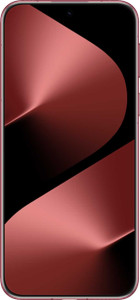
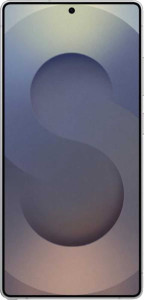
In terms of overall form factor, these two flagships are remarkably close. Both share identical IP68 waterproofing, meaning neither has an edge in water or dust protection — submersion resistance is equivalent on paper and in practice. Their footprints are nearly indistinguishable: the Pura 80 Ultra measures 163 × 76.1 × 8.3 mm while the Galaxy S25 Ultra comes in at 162.8 × 77.6 × 8.2 mm, making the Samsung fractionally thinner and slightly wider, but the differences are imperceptible in daily use.

Where a meaningful gap does emerge is weight. The Huawei Pura 80 Ultra tips the scale at 233.5 g, compared to the Samsung's 218 g — a difference of 15.5 g. That may sound minor on paper, but for a device held for hours each day, that extra mass is noticeable, particularly during one-handed use or extended reading sessions. The Samsung's lighter build translates to reduced wrist fatigue over time, a tangible ergonomic advantage.

Overall, the Samsung Galaxy S25 Ultra holds a clear edge in this category, driven entirely by its lower weight. Both phones are non-folding, non-rugged slabs with equivalent protection ratings and near-identical dimensions — but the S25 Ultra's 15.5 g weight advantage makes it the more comfortable device to carry and use all day.

Display:
Display type OLED/AMOLED OLED/AMOLED
screen size 6.8" 6.9"
pixel density 459 ppi 498 ppi
resolution 1276 x 2848 px 1440 x 3120 px
refresh rate 120Hz 120Hz
touch sampling rate 300Hz 240Hz
brightness (typical) 2500 nits 2600 nits
has branded damage-resistant glass
supports HDR10
supports HDR10+
Always-On Display
supports Dolby Vision
Has a secondary screen
has a touch screen

The Huawei Pura 80 Ultra and the Samsung Galaxy S25 Ultra both feature OLED/AMOLED displays, offering vibrant and sharp visuals. The Huawei Pura 80 Ultra has a 6.8″ screen with a pixel density of 459 ppi, while the Samsung Galaxy S25 Ultra is slightly larger, at 6.9″, with a higher pixel density of 498 ppi. The resolution of the Huawei is 1276 x 2848 px, while the Samsung offers a higher resolution of 1440 x 3120 px, providing sharper detail on the S25 Ultra.

Both devices have a 120Hz refresh rate, ensuring smooth scrolling and gaming experiences. However, the Huawei Pura 80 Ultra has a touch sampling rate of 300Hz, which is higher than the 240Hz of the Samsung Galaxy S25 Ultra, potentially making the Huawei more responsive to touch inputs. In terms of brightness, the Huawei reaches 2500 nits, while the Samsung achieves 2600 nits, making the Samsung display slightly brighter in typical usage.

Both smartphones come with branded damage-resistant glass and support Always-On Display, allowing for quick information visibility without fully waking the screen. The Huawei Pura 80 Ultra does not support HDR10 or HDR10+, whereas the Samsung Galaxy S25 Ultra supports both HDR10 and HDR10+, offering a broader range of colors and improved contrast for compatible content. Neither device supports Dolby Vision, and neither has a secondary screen. Both devices also feature touch screens.

Performance:
internal storage 1024GB 1024GB
RAM 16GB 12GB
AnTuTu benchmark score 1160268 2207809
Chipset (SoC) name HiSilicon Kirin 9010 Qualcomm Snapdragon 8 Elite
GPU name Mali-G57 Adreno 830
CPU speed 1 x 2.3 & 4 x 2.18 & 3 x 1.55 GHz 2 x 4.47 & 6 x 3.53 GHz
Has integrated LTE
RAM speed 2750 MHz 5300 MHz
semiconductor size 7 nm 3 nm
Supports 64-bit
DirectX version DirectX 12 DirectX 12
Has integrated graphics
OpenGL ES version 3.2 3.2
Uses big.LITTLE technology
Has TrustZone
maximum memory bandwidth 44 GB/s 85.1 GB/s
OpenCL version 2 3
L2 cache 0.512 MB 12 MB
Supports ECC memory
L1 cache 64 KB 192 KB
Thermal Design Power (TDP) 6W 8.2W
L3 cache 4 MB 8 MB

The Huawei Pura 80 Ultra and the Samsung Galaxy S25 Ultra both offer impressive performance specifications. Both devices feature 1024GB of internal storage, ensuring ample space for apps, media, and data. The Huawei Pura 80 Ultra is equipped with 16GB of RAM, while the Samsung Galaxy S25 Ultra has 12GB of RAM, providing a slight difference in memory capacity.

In terms of processing power, the Huawei Pura 80 Ultra is powered by the HiSilicon Kirin 9010 chipset, with a CPU clocked at 2.3 GHz (1 core), 2.18 GHz (4 cores), and 1.55 GHz (3 cores). On the other hand, the Samsung Galaxy S25 Ultra uses the Qualcomm Snapdragon 8 Elite, with a faster CPU clocked at 4.47 GHz (2 cores) and 3.53 GHz (6 cores). The Huawei’s chipset is based on a 7 nm semiconductor size, while the Samsung’s chipset benefits from a more advanced 3 nm process, contributing to better power efficiency and performance.

For graphics, the Huawei Pura 80 Ultra uses the Mali-G57 GPU, while the Samsung Galaxy S25 Ultra is equipped with the more powerful Adreno 830 GPU. The Huawei’s RAM operates at a speed of 2750 MHz, whereas the Samsung’s RAM is faster at 5300 MHz. The Huawei Pura 80 Ultra has a maximum memory bandwidth of 44 GB/s, while the Samsung Galaxy S25 Ultra offers a significantly higher 85.1 GB/s. The Huawei device has 0.512 MB of L2 cache and 64 KB of L1 cache, while the Samsung has a more substantial 12 MB of L2 cache and 192 KB of L1 cache. The Huawei Pura 80 Ultra has a lower thermal design power (TDP) of 6W, while the Samsung Galaxy S25 Ultra’s TDP is 8.2W. Both devices support 64-bit architecture, integrated LTE, big.LITTLE technology, TrustZone, OpenGL ES 3.2, and integrated graphics. The Huawei Pura 80 Ultra has a 0 MB L3 cache, while the Samsung has a larger 8 MB L3 cache. The Samsung also supports ECC memory, which the Huawei does not.
Cameras:
megapixels (main camera) 50 & 50 & 40 & 12.5 MP 200 & 50 & 50 & 10 MP
wide aperture (main camera) 1.6 & 2.4 & 2.2 & 3.6f 1.7 & 3.4 & 1.9 & 2.4f
Has a dual-lens (or multi-lens) main camera
megapixels (front camera) 13MP 12MP
has built-in optical image stabilization
video recording (main camera) 2160 x 30 fps 4320 x 30 fps
Has a dual-tone LED flash
number of flash LEDs 2 2
has a BSI sensor
has a CMOS sensor
has continuous autofocus when recording movies
Has phase-detection autofocus for photos
supports slow-motion video recording
has a built-in HDR mode
has manual exposure
has a flash
optical zoom 9.4x 5x
has manual ISO
has a serial shot mode
has manual focus
has a front camera
Has laser autofocus
Shoots 360° panorama
has manual white balance
shoots raw
has touch autofocus
has manual shutter speed
can create panoramas in-camera
wide aperture (front camera) 2f 2.2f
Has timelapse function
Has a front-facing LED flash
has a dual-lens (or multi-lens) front camera
supports HDR10 recording
supports Dolby Vision recording
has a front-facing camera under the display
Has a RGB LED flash
has 3D photo/video recording capabilities

The Huawei Pura 80 Ultra and the Samsung Galaxy S25 Ultra both feature multi-lens main cameras, but with different configurations. The Huawei Pura 80 Ultra offers a 50 MP + 50 MP + 40 MP + 12.5 MP setup, while the Samsung Galaxy S25 Ultra has a 200 MP + 50 MP + 50 MP + 10 MP configuration. The wide apertures on the Huawei range from f/1.6 to f/3.6, while the Samsung's wide apertures are slightly different, ranging from f/1.7 to f/2.4.

For video recording, the Huawei supports 2160 x 30 fps, whereas the Samsung can record at a higher resolution of 4320 x 30 fps. Both devices feature built-in optical image stabilization, phase-detection autofocus for photos, and continuous autofocus for video recording. Both also support slow-motion video recording, have a flash with dual-tone LED and two flash LEDs, and support shooting raw images.

On the front, the Huawei Pura 80 Ultra has a 13 MP camera with a wide aperture of f/2.0, while the Samsung Galaxy S25 Ultra offers a slightly lower 12 MP front camera with an aperture of f/2.2. Neither device has a front-facing LED flash. Both devices offer manual exposure, manual ISO, manual shutter speed, and the ability to create panoramas in-camera. The Huawei Pura 80 Ultra supports HDR and laser autofocus, while the Samsung supports HDR10 recording but lacks HDR10+ or Dolby Vision recording capabilities. The Samsung also supports HDR10 recording, but neither device supports 3D photo/video recording or a front-facing camera under the display.

Operating system:
has camera/microphone privacy options
has theme customization
has dark mode
has battery health check
Has customizable notifications
supports split screen
gets direct OS updates
Can be used as a PC
Has sharing intents
has a child lock
Supports widgets
has voice commands
Tracks the current position of a mobile device
is a multi-user system

The Huawei Pura 80 Ultra and the Samsung Galaxy S25 Ultra both feature a rich set of software options aimed at enhancing the user experience. Both devices support camera and microphone privacy options, theme customization, dark mode, battery health checks, customizable notifications, split-screen functionality, sharing intents, a child lock, widgets, voice commands, and tracking the current position of the device. Additionally, both support a multi-user system, allowing for multiple user profiles on the device.

However, there is a key difference in the PC functionality: the Huawei Pura 80 Ultra cannot be used as a PC, while the Samsung Galaxy S25 Ultra supports this feature, allowing the device to function more like a desktop computer when connected to a monitor or other peripherals.

Both devices do not receive direct OS updates, which means users will need to rely on manufacturer-driven update cycles for major OS releases and security patches.

Battery:
battery power 5700 mAh 5000 mAh
has wireless charging
Supports fast charging
charging speed 100W 45W
wireless charging speed 80W 15W
has reverse wireless charging
reverse wireless charging speed 20W 4.5W
comes with a charger
has a removable battery
has a battery level indicator
has a rechargeable battery

The Huawei Pura 80 Ultra and the Samsung Galaxy S25 Ultra both come equipped with rechargeable batteries, with the Huawei sporting a 5700 mAh battery and the Samsung featuring a 5000 mAh battery, providing a slight difference in capacity. Both devices support wireless charging, but the Huawei supports faster wireless charging at 80W, while the Samsung offers 15W wireless charging. Additionally, the Huawei supports a much faster wired charging speed of 100W, compared to the 45W charging speed of the Samsung.

Both devices also feature reverse wireless charging. The Huawei can charge other devices at a rate of 20W, while the Samsung provides a slower reverse charging speed of 4.5W. The Huawei Pura 80 Ultra comes with a charger in the box, while the Samsung Galaxy S25 Ultra does not.

Both phones have non-removable, rechargeable batteries, and include a battery level indicator for convenience. Neither device offers a removable battery, but both provide the option for battery management and charging flexibility.

Audio:
has a socket for a 3.5 mm audio jack
has stereo speakers
has aptX
has LDAC
has aptX HD
has aptX Adaptive
has aptX Lossless
Has a radio

Both the Huawei Pura 80 Ultra and the Samsung Galaxy S25 Ultra lack a 3.5 mm audio jack, so users will need to rely on wireless or USB-C headphones. Both devices are equipped with stereo speakers for an enhanced audio experience. The Huawei Pura 80 Ultra supports LDAC for high-quality wireless audio, but does not support aptX, aptX HD, aptX Adaptive, or aptX Lossless. In contrast, the Samsung Galaxy S25 Ultra supports not only LDAC but also aptX, aptX HD, and aptX Adaptive, offering a broader range of high-quality audio codecs for wireless listening.

Neither device has a built-in radio, so users will need to rely on streaming services for audio content.

Overall, while both phones offer stereo speakers and LDAC support, the Samsung Galaxy S25 Ultra provides additional support for more audio codecs, including aptX and aptX HD, which may offer better wireless audio quality for compatible devices.

Connectivity & Features:
release date June 2025 January 2025
has 5G support
Wi-Fi version Wi-Fi 4 (802.11n), Wi-Fi 5 (802.11ac), Wi-Fi 6 (802.11ax), Wi-Fi 7 (802.11be) Wi-Fi 4 (802.11n), Wi-Fi 6 (802.11ax), Wi-Fi 5 (802.11ac), Wi-Fi 7 (802.11be), Wi-Fi 6E (802.11ax)
SIM cards 2 SIM 2 SIM, 2 eSIM
Bluetooth version 5.2 5.4
has an external memory slot
Has USB Type-C
USB version 3.1 3.2
has NFC
Has a fingerprint scanner
has emergency SOS via satellite
has crash detection
is DLNA-certified
has a gyroscope
supports ANT+
Has a heart rate monitor
has GPS
has a compass
supports Wi-Fi
Has an infrared sensor
has an accelerometer
has a cellular module
Has a barometer
has an HDMI output
Uses 3D facial recognition
Has an iris scanner
Stylus included
supports Galileo
Has motion tracking
Has optical tracking
Has a built-in projector

Both the Huawei Pura 80 Ultra and the Samsung Galaxy S25 Ultra support 5G connectivity, ensuring fast mobile data speeds. Both phones also feature Wi-Fi 4, Wi-Fi 5, Wi-Fi 6, and Wi-Fi 7 support, though the Samsung additionally supports Wi-Fi 6E, offering enhanced Wi-Fi performance in crowded networks. Both devices support dual SIM cards, but the Huawei Pura 80 Ultra uses two physical SIMs, while the Samsung Galaxy S25 Ultra also offers dual eSIM support in addition to physical SIMs.

In terms of Bluetooth, the Huawei Pura 80 Ultra has Bluetooth version 5.2, while the Samsung Galaxy S25 Ultra is equipped with the slightly newer Bluetooth version 5.4. Both phones have NFC, USB Type-C, and USB 3.1 (Huawei) or USB 3.2 (Samsung), allowing for fast data transfer and charging. Both devices include a fingerprint scanner for added security, GPS, a compass, and support for Galileo. The Huawei also includes an infrared sensor, while the Samsung does not.

The Samsung Galaxy S25 Ultra has support for ANT+, which the Huawei Pura 80 Ultra lacks. Additionally, the Samsung includes a stylus, a feature not present on the Huawei. Both phones have similar sensors such as a gyroscope, accelerometer, and barometer. Neither device includes a built-in projector or optical tracking, and neither has an iris scanner or 3D facial recognition. Notably, the Huawei supports emergency SOS via satellite, whereas the Samsung does not.

Miscellaneous:
has a video light
Has sapphire glass display
Has a curved display
Has an e-paper display

Both the Huawei Pura 80 Ultra and the Samsung Galaxy S25 Ultra are equipped with a video light, providing users with additional lighting for photos and videos in low-light conditions. Neither phone features sapphire glass displays, curved displays, or e-paper displays, meaning they both rely on standard display technology without the specialized benefits that these features would offer.

In summary, the two devices are quite similar in this category, with no notable differences in their display characteristics or additional features like sapphire glass, curves, or e-paper technology.

Comparison Summary & Verdict

After a thorough look at the specs, both phones excel in different ways. The Huawei Pura 80 Ultra stands out with its larger 5700 mAh battery, blazing 100W wired and 80W wireless charging, impressive 9.4x optical zoom, built-in infrared sensor, satellite SOS support, and a bundled charger — making it an excellent choice for power users who demand endurance and versatile connectivity. The Samsung Galaxy S25 Ultra, on the other hand, dominates in raw performance thanks to its Snapdragon 8 Elite chipset, delivers superior display quality with HDR10+ and a higher pixel density, supports 8K video recording, and includes a stylus plus PC mode — making it the go-to for professionals who need cutting-edge processing, productivity features, and multimedia excellence.

Huawei Pura 80 Ultra
Buy Huawei Pura 80 Ultra if...

Buy the Huawei Pura 80 Ultra if you want a larger battery with significantly faster wired and wireless charging, a greater optical zoom range, an included charger, and extras like an infrared sensor and satellite SOS.

Samsung Galaxy S25 Ultra
Buy Samsung Galaxy S25 Ultra if...

Buy the Samsung Galaxy S25 Ultra if you prioritize top-tier processing performance, a higher-resolution display with HDR10+ support, 8K video recording, a built-in stylus, and productivity features like PC mode.