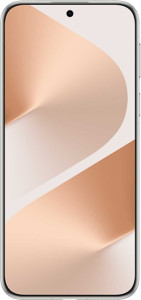
Huawei Pura 80
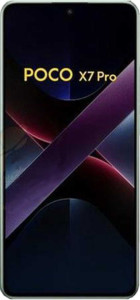
Xiaomi Poco X7 Pro

Huawei Pura 80 Xiaomi Poco X7 Pro

Overview

Choosing between the Huawei Pura 80 and the Xiaomi Poco X7 Pro is no easy task — both are feature-packed smartphones that share a surprising amount of common ground, including IP68 waterproofing, OLED displays, and 120Hz refresh rates. Yet beneath the surface, these two devices take distinctly different approaches to camera versatility, raw processing power, and battery strategy, making the right choice highly dependent on what matters most to you.

Common Features

  • Both phones are waterproof with an IP68 ingress protection rating.
  • Neither phone has a rugged build.
  • Neither phone can be folded.
  • Both phones feature an OLED/AMOLED display.
  • Both phones support a 120Hz refresh rate.
  • Both phones have branded damage-resistant glass.
  • Always-On Display is available on both phones.
  • Neither phone has a secondary screen.
  • Both phones have a touchscreen.
  • Both phones come with 12GB of RAM.
  • Both phones support 64-bit processing.
  • Both phones use big.LITTLE technology.
  • Both phones have integrated graphics.
  • Both phones support DirectX 12.
  • Both phones have a multi-lens main camera.
  • Both phones have built-in optical image stabilization.
  • Both phones have a CMOS sensor.
  • Both phones support continuous autofocus when recording video.
  • Both phones support phase-detection autofocus for photos.
  • Both phones support slow-motion video recording.
  • Both phones support fast charging and come with a charger in the box.
  • Neither phone has a removable battery.
  • Both phones have stereo speakers.
  • Neither phone has a 3.5mm audio jack.
  • LDAC audio support is available on both phones.
  • aptX Adaptive support is not available on either phone.
  • aptX Lossless support is not available on either phone.
  • Neither phone has a radio.
  • Both phones support 5G connectivity.
  • Both phones have dual SIM card slots.
  • Neither phone has an external memory slot.
  • Both phones have USB Type-C with USB 2.0.
  • Both phones have NFC.
  • Both phones have a fingerprint scanner.
  • Crash detection is not available on either phone.
  • Both phones have camera and microphone privacy options.
  • Both phones support theme customization and dark mode.
  • Both phones have a battery health check feature.
  • Both phones support split screen and customizable notifications.
  • Neither phone gets direct OS updates.
  • Neither phone can be used as a PC.
  • Neither phone has sapphire glass.
  • Neither phone has a curved or e-paper display.
  • Both phones have a video light.

Main Differences

  • Weight is 211g on Huawei Pura 80 and 198g on Xiaomi Poco X7 Pro.
  • Thickness is 8.2mm on Huawei Pura 80 and 8.3mm on Xiaomi Poco X7 Pro.
  • Width is 74.4mm on Huawei Pura 80 and 75.2mm on Xiaomi Poco X7 Pro.
  • Height is 157.7mm on Huawei Pura 80 and 160.8mm on Xiaomi Poco X7 Pro.
  • Volume is 96.21 cm³ on Huawei Pura 80 and 100.36 cm³ on Xiaomi Poco X7 Pro.
  • Screen size is 6.6″ on Huawei Pura 80 and 6.67″ on Xiaomi Poco X7 Pro.
  • Pixel density is 459 ppi on Huawei Pura 80 and 446 ppi on Xiaomi Poco X7 Pro.
  • Resolution is 1256 x 2760 px on Huawei Pura 80 and 1220 x 2712 px on Xiaomi Poco X7 Pro.
  • Touch sampling rate is 300Hz on Huawei Pura 80 and 480Hz on Xiaomi Poco X7 Pro.
  • Typical brightness is 2500 nits on Huawei Pura 80 and 1400 nits on Xiaomi Poco X7 Pro.
  • HDR10 support is present on Xiaomi Poco X7 Pro but not available on Huawei Pura 80.
  • HDR10+ support is present on Xiaomi Poco X7 Pro but not available on Huawei Pura 80.
  • Dolby Vision support is present on Xiaomi Poco X7 Pro but not available on Huawei Pura 80.
  • Internal storage is 1024GB on Huawei Pura 80 and 512GB on Xiaomi Poco X7 Pro.
  • The chipset is HiSilicon Kirin 9010 on Huawei Pura 80 and MediaTek Dimensity 8400 on Xiaomi Poco X7 Pro.
  • The GPU is Mali-G57 on Huawei Pura 80 and Mali G720 MC7 on Xiaomi Poco X7 Pro.
  • CPU speed is 1 x 2.3 & 4 x 2.18 & 3 x 1.55 GHz on Huawei Pura 80 and 1 x 3.25 & 3 x 3 & 4 x 2.15 GHz on Xiaomi Poco X7 Pro.
  • RAM speed is 2750 MHz on Huawei Pura 80 and 4267 MHz on Xiaomi Poco X7 Pro.
  • Semiconductor size is 7nm on Huawei Pura 80 and 4nm on Xiaomi Poco X7 Pro.
  • Maximum memory bandwidth is 44 GB/s on Huawei Pura 80 and 68.2 GB/s on Xiaomi Poco X7 Pro.
  • L2 cache is 0.512 MB on Huawei Pura 80 and 1 MB on Xiaomi Poco X7 Pro.
  • L3 cache is 4 MB on Huawei Pura 80 and 6 MB on Xiaomi Poco X7 Pro.
  • Main camera megapixels are 50, 13, and 12 MP on Huawei Pura 80 and 50 and 8 MP on Xiaomi Poco X7 Pro.
  • Main camera wide aperture is f/1.4, f/2.2, and f/3.4 on Huawei Pura 80 and f/2.2 and f/1.5 on Xiaomi Poco X7 Pro.
  • Front camera megapixels are 13 MP on Huawei Pura 80 and 20 MP on Xiaomi Poco X7 Pro.
  • Front camera aperture is f/2.0 on Huawei Pura 80 and f/2.5 on Xiaomi Poco X7 Pro.
  • Main camera video recording goes up to 2160p at 30fps on Huawei Pura 80 and up to 2160p at 60fps on Xiaomi Poco X7 Pro.
  • Dual-tone LED flash is present on Huawei Pura 80 but not available on Xiaomi Poco X7 Pro.
  • Optical zoom is 5x on Huawei Pura 80 while Xiaomi Poco X7 Pro has no optical zoom.
  • Manual shutter speed is supported on Huawei Pura 80 but not on Xiaomi Poco X7 Pro.
  • HDR10 video recording is supported on Xiaomi Poco X7 Pro but not on Huawei Pura 80.
  • Battery capacity is 5600 mAh on Huawei Pura 80 and 6000 mAh on Xiaomi Poco X7 Pro.
  • Wireless charging is available on Huawei Pura 80 but not on Xiaomi Poco X7 Pro.
  • Wired charging speed is 66W on Huawei Pura 80 and 90W on Xiaomi Poco X7 Pro.
  • aptX support is present on Xiaomi Poco X7 Pro but not available on Huawei Pura 80.
  • aptX HD support is present on Xiaomi Poco X7 Pro but not available on Huawei Pura 80.
  • Wi-Fi 7 (802.11be) support is present on Huawei Pura 80 but not available on Xiaomi Poco X7 Pro.
  • Bluetooth version is 5.2 on Huawei Pura 80 and 6.0 on Xiaomi Poco X7 Pro.
  • Emergency SOS via satellite is available on Huawei Pura 80 but not on Xiaomi Poco X7 Pro.
Specs Comparison
Huawei Pura 80

Huawei Pura 80

Xiaomi Poco X7 Pro

Xiaomi Poco X7 Pro

Design:
water resistance Waterproof Waterproof
weight 211 g 198 g
thickness 8.2 mm 8.3 mm
width 74.4 mm 75.2 mm
height 157.7 mm 160.8 mm
volume 96.209616 cm³ 100.364928 cm³
Ingress Protection (IP) rating IP68 IP68
has a rugged build
can be folded

Both the Huawei Pura 80 and the Xiaomi Poco X7 Pro share a solid design foundation: full IP68 waterproofing and nearly identical thickness (8.2 mm vs 8.3 mm), meaning neither offers a meaningfully slimmer profile. IP68 on both translates to submersion protection in real-world conditions — a genuine everyday advantage over phones with lesser or no water resistance ratings.

Where the two diverge more noticeably is in weight and overall footprint. The Poco X7 Pro is 13 g lighter at 198 g versus the Pura 80's 211 g, a difference that becomes perceptible during extended one-handed use or long calls. However, the Pura 80 is more compact in terms of physical dimensions — shorter (157.7 mm vs 160.8 mm) and narrower (74.4 mm vs 75.2 mm), resulting in a meaningfully smaller overall volume (96.2 cm³ vs 100.4 cm³). This suggests the Poco X7 Pro houses more internal space — likely for a larger battery or display — at the cost of a taller, wider chassis.

In terms of design edge, there is a genuine trade-off: the Poco X7 Pro wins on raw weight, making it feel lighter in hand, while the Huawei Pura 80 wins on compactness, fitting more naturally into smaller hands or tight pockets. Neither has a rugged build or foldable form factor. For users prioritizing one-handed reachability and pocket comfort, the Pura 80 holds a slight structural advantage; for those who notice device heft over time, the Poco X7 Pro's lighter frame gives it the edge.

Display:
Display type OLED/AMOLED OLED/AMOLED
screen size 6.6" 6.67"
pixel density 459 ppi 446 ppi
resolution 1256 x 2760 px 1220 x 2712 px
refresh rate 120Hz 120Hz
touch sampling rate 300Hz 480Hz
brightness (typical) 2500 nits 1400 nits
has branded damage-resistant glass
supports HDR10
supports HDR10+
Always-On Display
supports Dolby Vision
Has a secondary screen
has a touch screen

At a glance, these two displays look nearly identical — both are OLED/AMOLED panels at 6.6–6.67 inches, running at 120Hz with Always-On Display support and damage-resistant glass. The pixel density gap (459 ppi vs 446 ppi) is negligible in practice; both screens will appear razor-sharp to the naked eye at normal viewing distances.

The real divergence lies in two opposing strengths. The Huawei Pura 80 delivers a staggering 2500 nits of typical brightness — nearly double the Poco X7 Pro's 1400 nits. This is not a marginal difference; it translates directly to far superior outdoor legibility under direct sunlight, where 1400 nits can start to struggle. On the other side, the Poco X7 Pro counters with a richer HDR ecosystem, supporting HDR10, HDR10+, and Dolby Vision — all absent on the Pura 80. This means streaming content from compatible platforms will render with greater contrast, color depth, and dynamic range on the Poco. Its touch sampling rate of 480Hz versus the Pura 80's 300Hz also gives it a marginal edge in responsiveness during fast-paced gaming, though the real-world feel of this difference is subtle for everyday use.

The display verdict depends heavily on use case. For outdoor users or those who frequently view screens in bright environments, the Pura 80's brightness advantage is decisive. For media enthusiasts who consume HDR content from streaming services, the Poco X7 Pro's broad HDR support makes it the more capable screen. Overall, the Pura 80 holds the stronger single-metric lead — raw brightness — while the Poco X7 Pro offers a more rounded content-consumption display.

Performance:
internal storage 1024GB 512GB
RAM 12GB 12GB
Chipset (SoC) name HiSilicon Kirin 9010 MediaTek Dimensity 8400
GPU name Mali-G57 Mali G720 MC7
CPU speed 1 x 2.3 & 4 x 2.18 & 3 x 1.55 GHz 1 x 3.25 & 3 x 3 & 4 x 2.15 GHz
RAM speed 2750 MHz 4267 MHz
semiconductor size 7 nm 4 nm
Supports 64-bit
DirectX version DirectX 12 DirectX 12
Has integrated graphics
OpenGL ES version 3.2 3.2
Uses big.LITTLE technology
Has TrustZone
maximum memory bandwidth 44 GB/s 68.2 GB/s
OpenCL version 2 2
L2 cache 0.512 MB 1 MB
L3 core 2 MB/core 6 MB/core
L3 cache 4 MB 6 MB

The silicon gap here is substantial. The Poco X7 Pro runs on a MediaTek Dimensity 8400 built on a 4 nm process, while the Huawei Pura 80 relies on the HiSilicon Kirin 9010 at 7 nm. A smaller process node generally means greater transistor density, better power efficiency, and more thermal headroom — a three-generation manufacturing gap that compounds across nearly every performance metric in this group.

Digging into the specifics confirms the pattern. The Poco's peak CPU core hits 3.25 GHz versus the Pura 80's 2.3 GHz, and its RAM operates at 4267 MHz compared to 2750 MHz — translating to snappier app launches and faster data throughput from memory. Maximum memory bandwidth tells a similar story: 68.2 GB/s on the Poco versus 44 GB/s on the Pura 80, a 55% advantage that matters most during GPU-intensive tasks and multitasking. The Poco also carries larger L2 and L3 caches, which reduces how often the CPU stalls waiting on slower memory. Both phones share the same RAM capacity at 12 GB, so day-to-day multitasking headroom is equivalent.

The Pura 80's one concrete win in this group is storage: it tops out at 1024 GB versus the Poco's 512 GB, which is a meaningful advantage for power users who store large media libraries locally. On raw computational performance, however, the Poco X7 Pro holds a clear and well-rounded edge — faster CPU clocks, faster RAM, higher memory bandwidth, and a more modern fabrication process all point in the same direction.

Cameras:
megapixels (main camera) 50 & 13 & 12 MP 50 & 8 MP
wide aperture (main camera) 1.4 & 2.2 & 3.4f 2.2 & 1.5f
Has a dual-lens (or multi-lens) main camera
megapixels (front camera) 13MP 20MP
has built-in optical image stabilization
video recording (main camera) 2160 x 30 fps 2160 x 60 fps
Has a dual-tone LED flash
number of flash LEDs 2 2
has a BSI sensor
has a CMOS sensor
has continuous autofocus when recording movies
Has phase-detection autofocus for photos
supports slow-motion video recording
has a built-in HDR mode
has manual exposure
has a flash
optical zoom 5x 0x
has manual ISO
has a serial shot mode
has manual focus
has a front camera
Has laser autofocus
Shoots 360° panorama
has manual white balance
shoots raw
has touch autofocus
has manual shutter speed
can create panoramas in-camera
wide aperture (front camera) 2f 2.5f
Has timelapse function
Has a front-facing LED flash
has a dual-lens (or multi-lens) front camera
supports HDR10 recording
supports Dolby Vision recording
has a front-facing camera under the display
Has a RGB LED flash
has 3D photo/video recording capabilities

Camera system architecture is where these two phones diverge most decisively. The Huawei Pura 80 fields a triple-lens rear setup — 50 MP + 13 MP + 12 MP — anchored by an exceptionally wide f/1.4 primary aperture and, crucially, 5x optical zoom. The Poco X7 Pro, by contrast, carries only a dual-lens system with no optical zoom whatsoever. In practice, this means the Pura 80 can capture genuinely magnified distant subjects without the image degradation of digital zoom, while the Poco is limited to cropping and interpolation beyond its native focal length — a meaningful gap for travel, sports, or any photography requiring reach.

The Poco X7 Pro punches back in video and selfie capability. Its main camera records 4K at 60 fps versus the Pura 80's 4K at 30 fps — double the frame rate, which produces noticeably smoother footage and more usable slow-motion source material. It also supports HDR10 video recording, which the Pura 80 lacks, adding dynamic range benefits to its video output. Up front, the Poco's 20 MP selfie camera outresolves the Pura 80's 13 MP sensor, though the Pura 80's front aperture of f/2.0 is wider than the Poco's f/2.5, letting in more light for selfies in dim conditions. For control enthusiasts, the Pura 80 also includes manual shutter speed — absent on the Poco — alongside RAW capture on both sides.

Overall, the Huawei Pura 80 holds the stronger camera edge for still photography, driven by its versatile triple-lens system, superior primary aperture, and dedicated optical zoom — features the Poco simply cannot replicate. The Poco X7 Pro is the better video phone, with its 60 fps 4K recording and HDR10 support. Photographers who prioritize zoom and low-light stills should lean toward the Pura 80; videographers and selfie-focused users will find the Poco more compelling.
Operating system:
has camera/microphone privacy options
has theme customization
has dark mode
has battery health check
Has customizable notifications
supports split screen
gets direct OS updates
Can be used as a PC
Has sharing intents
has a child lock
Supports widgets
has voice commands
Tracks the current position of a mobile device
is a multi-user system

Across every feature tracked in this group, the Huawei Pura 80 and the Xiaomi Poco X7 Pro are in complete lockstep. Both offer the same set of software capabilities: privacy controls for camera and microphone, dark mode, theme customization, split-screen multitasking, widgets, customizable notifications, child lock, voice commands, multi-user support, and device tracking. There is no feature present on one that is absent on the other.

One shared limitation worth flagging is that neither phone receives direct OS updates — meaning neither gets updates pushed straight from the core OS developer. This is a notable long-term consideration for users who prioritize staying current with security patches and platform features, as both will depend on their respective manufacturers' own update pipelines rather than a more direct channel.

This group is a complete tie. Based strictly on the provided specs, no advantage can be assigned to either device — the operating system feature sets are identical point for point. Users should factor in other spec groups to differentiate between these two phones.

Battery:
battery power 5600 mAh 6000 mAh
has wireless charging
Supports fast charging
charging speed 66W 90W
comes with a charger
has a removable battery
has a battery level indicator
has a rechargeable battery

Battery capacity and charging speed are where these two phones make different but deliberate trade-offs. The Poco X7 Pro carries a larger 6000 mAh cell versus the Pura 80's 5600 mAh — a 400 mAh difference that, while not dramatic, does represent a modest but real buffer toward longer time between charges under equivalent usage patterns. The Poco also wins on wired charging speed at 90W versus the Pura 80's 66W, meaning it can recover from a low battery meaningfully faster when plugged in.

The Huawei Pura 80 counters with one exclusive capability: wireless charging, which the Poco X7 Pro entirely lacks. For users with wireless pads at their desk, nightstand, or in their car, this is a genuine convenience advantage — the ability to top up without ever reaching for a cable adds day-to-day flexibility that raw wattage numbers cannot capture.

Neither phone has a removable battery, and both ship with a charger included. The verdict here hinges on lifestyle: users who prioritize charging convenience and cable-free topping up will prefer the Pura 80, while those who want maximum capacity and the fastest possible wired recharge will find the Poco X7 Pro the stronger choice. On purely quantitative battery terms — bigger cell, faster charging — the Poco has the edge, but the Pura 80's wireless charging support keeps it firmly competitive.

Audio:
has a socket for a 3.5 mm audio jack
has stereo speakers
has aptX
has LDAC
has aptX HD
has aptX Adaptive
has aptX Lossless
Has a radio

The shared foundations here are solid: both phones drop the 3.5 mm headphone jack, offer stereo speakers, and support LDAC — Sony's high-resolution Bluetooth audio codec that transmits up to three times the data of standard Bluetooth audio. For wireless headphone users with LDAC-compatible cans, both phones can deliver near-lossless audio quality over Bluetooth, which is a meaningful baseline capability.

Where the Poco X7 Pro pulls ahead is in codec breadth. Beyond LDAC, it also supports aptX and aptX HD — Qualcomm's family of Bluetooth audio codecs widely used in a large range of wireless headphones and speakers. This matters in practice because different headphones and audio devices support different codecs; wider codec compatibility means the Poco is more likely to establish a high-quality wireless connection with any given pair of headphones, not just those specifically tuned for LDAC. The Huawei Pura 80, supporting only LDAC among high-quality codecs, is more narrowly compatible by comparison.

Neither phone supports aptX Adaptive, aptX Lossless, or FM radio, so those are non-factors in the decision. The Poco X7 Pro holds a clear edge in this group — its broader Bluetooth audio codec support makes it the more versatile choice for wireless audio across a wider range of devices, while the Pura 80 is competitive only if the user's headphones happen to support LDAC specifically.

Connectivity & Features:
release date June 2025 January 2025
has 5G support
Wi-Fi version Wi-Fi 4 (802.11n), Wi-Fi 5 (802.11ac), Wi-Fi 6 (802.11ax), Wi-Fi 7 (802.11be) Wi-Fi 4 (802.11n), Wi-Fi 5 (802.11ac), Wi-Fi 6 (802.11ax)
SIM cards 2 SIM 2 SIM
Bluetooth version 5.2 6
has an external memory slot
Has USB Type-C
USB version 2 2
has NFC
Has a fingerprint scanner
has emergency SOS via satellite
has crash detection
is DLNA-certified
has a gyroscope
supports ANT+
Has a heart rate monitor
has GPS
has a compass
supports Wi-Fi
Has an infrared sensor
has an accelerometer
has a cellular module
Has a barometer
has an HDMI output
Uses 3D facial recognition
Has an iris scanner
Stylus included
supports Galileo
Has motion tracking
Has optical tracking
Has a built-in projector

Connectivity tells an interesting story of competing strengths. The Poco X7 Pro steps ahead with Bluetooth 6.0 versus the Pura 80's Bluetooth 5.2 — a newer standard that brings improvements in connection reliability, direction-finding accuracy, and energy efficiency. On Wi-Fi, however, the positions reverse: the Huawei Pura 80 supports Wi-Fi 7 (802.11be) while the Poco tops out at Wi-Fi 6 (802.11ax). Wi-Fi 7 delivers substantially higher theoretical throughput and lower latency, particularly on congested networks — a tangible advantage for users with compatible routers, and a future-proofing benefit as Wi-Fi 7 infrastructure becomes more widespread.

The Pura 80's most distinctive exclusive feature in this group is emergency SOS via satellite — a capability the Poco X7 Pro entirely lacks. This allows the phone to send distress signals in areas with no cellular coverage, which is a potentially life-critical advantage for users who travel to remote or rural locations. Beyond this, both phones share a near-identical feature set: 5G, NFC, dual SIM, USB Type-C, infrared sensor, fingerprint scanner, GPS with Galileo support, gyroscope, and accelerometer. Notably, both are capped at USB 2.0 speeds, meaning neither can leverage the faster data transfer or display output that higher USB versions enable.

This group splits along clear lines. The Poco X7 Pro wins on Bluetooth currency, while the Huawei Pura 80 wins on Wi-Fi generation and carries the uniquely significant addition of satellite emergency SOS. For most urban users the practical day-to-day experience will be nearly identical, but the Pura 80's Wi-Fi 7 support and satellite SOS capability give it a meaningful overall edge in this category — particularly for anyone who values cutting-edge wireless performance or ventures off the grid.

Miscellaneous:
has a video light
Has sapphire glass display
Has a curved display
Has an e-paper display

The miscellaneous spec group offers no grounds for differentiation between these two phones. The Huawei Pura 80 and the Xiaomi Poco X7 Pro match each other exactly across every tracked attribute: both include a video light, and neither features a sapphire glass display, a curved display, or an e-paper display.

This is a complete tie. No advantage can be assigned to either device based on the data in this group. Users should weigh the other specification categories to inform their decision.

Comparison Summary & Verdict

After a thorough side-by-side analysis, both phones prove to be strong contenders, but each excels in different areas. The Huawei Pura 80 stands out for its superior camera system, offering a versatile triple-lens setup with 5x optical zoom, manual shutter control, a dual-tone flash, and wireless charging — making it the go-to choice for photography enthusiasts. Its brighter 2500-nit display and Wi-Fi 7 support further strengthen its premium appeal. The Xiaomi Poco X7 Pro, on the other hand, dominates in raw performance thanks to its 4nm Dimensity 8400 chipset, faster RAM, higher memory bandwidth, and a higher 90W wired charging speed. Its larger 6000 mAh battery, 480Hz touch sampling rate, and full HDR10+ and Dolby Vision support make it a compelling pick for gamers and media consumers who want smooth, immersive experiences without breaking the bank.

Huawei Pura 80
Buy Huawei Pura 80 if...

Buy the Huawei Pura 80 if you prioritize a versatile camera experience with 5x optical zoom and wireless charging, and want a brighter display with Wi-Fi 7 connectivity.

Xiaomi Poco X7 Pro
Buy Xiaomi Poco X7 Pro if...

Buy the Xiaomi Poco X7 Pro if you want stronger raw performance, a larger battery with faster 90W wired charging, and full HDR10+ and Dolby Vision support for gaming and media.