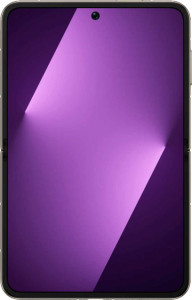
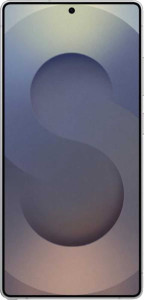
Both devices share a strong connectivity foundation — 5G, Wi-Fi 7, NFC, USB Type-C, dual SIM, and GPS are common to both. However, the S25 Ultra's wireless stack goes slightly further with Wi-Fi 6E support (in addition to the shared Wi-Fi 7), adding access to the less-congested 6 GHz band for improved throughput in dense environments. Its Bluetooth 5.4 also nudges ahead of the Pura X's 5.2, offering incremental improvements in connection reliability and energy efficiency. More practically, the S25 Ultra supports 2 eSIMs alongside its 2 physical SIM slots, giving it considerably more SIM flexibility — useful for frequent travelers managing multiple carriers without swapping physical cards. Its USB 3.2 standard also beats the Pura X's USB 3.1, enabling faster data transfers to external devices.
The unique features each device brings reflect quite different design philosophies. The S25 Ultra includes a built-in stylus, a barometer for environmental sensing, and ANT+ support for connecting fitness accessories like heart rate straps and cycling sensors — all of which extend its utility for productivity and health-focused users. The Pura X counters with an infrared sensor, enabling it to function as a universal remote for TVs and appliances, and crucially offers emergency SOS via satellite — a potentially life-saving feature that allows distress signals to be sent even without cellular coverage, which the S25 Ultra entirely lacks.
Determining an overall winner here depends heavily on use case. The S25 Ultra is better equipped for power users, productivity workflows, and fitness tracking, while the Pura X's satellite SOS and IR blaster address different but equally practical real-world needs. On sheer breadth of connectivity and feature depth — particularly the stylus, eSIM support, and sensor suite — the S25 Ultra holds a slight overall edge, but the Pura X's satellite emergency capability is a uniquely significant differentiator that no spec comparison can fully reduce to a tie-breaker.