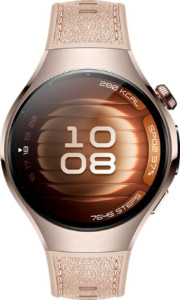
Huawei Watch 5 42mm
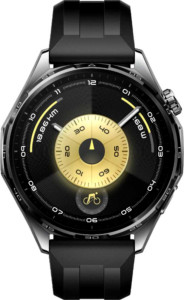
Huawei Watch GT 6

Huawei Watch 5 42mm Huawei Watch GT 6

Overview

When choosing between the Huawei Watch 5 42mm and the Huawei Watch GT 6, buyers face a genuinely close contest between two capable smartwatches from the same family. Both share a strong foundation of health sensors, activity tracking, and smart features, yet they diverge in meaningful ways across connectivity, health monitoring depth, and overall form factor. This comparison breaks down exactly where each model pulls ahead.

Common Features

  • Both watches feature an OLED/AMOLED display type.
  • Both watches are waterproof with a 5 ATM rating.
  • Always-On Display is available on both watches.
  • Both watches share the same resolution of 466 x 466 px.
  • The watch band is replaceable on both models.
  • Branded damage-resistant glass is not present on either watch.
  • Both watches monitor blood oxygenation levels.
  • A heart rate monitor is available on both watches.
  • GPS is built into both watches.
  • Both watches include an accelerometer, gyroscope, compass, barometer, and temperature sensor.
  • Sleep tracking and sleep reports are supported on both watches.
  • Both watches track distance, steps taken, pace, elevation, and routes.
  • Activity auto-detection is available on both watches.
  • Both watches are compatible with iOS and Android.
  • NFC is supported on both watches.
  • Galileo satellite navigation is supported on both watches.
  • ANT+ is not supported on either watch.
  • Wireless charging is available on both watches, and neither has a removable or solar-powered battery.
  • Both watches support HRV tracking, VO2 max measurement, resting heart rate measurement, and fast/slow heart rate notifications.
  • Call answering, call control, and phone locating are available on both watches.
  • Both watches provide activity reports, inactivity alerts, calorie tracking, goal setting, achievements, an exercise diary, and a free ad-free app.
  • Both watches include a battery level indicator, auto pause, passcode protection, and compatibility with smart scales and external heart rate monitors.
  • Neither watch has an external memory slot or a 3.5 mm audio jack.

Main Differences

  • Screen size is 1.38″ on the Huawei Watch 5 42mm and 1.47″ on the Huawei Watch GT 6.
  • IP rating is IP68 on the Huawei Watch 5 42mm and IP69 on the Huawei Watch GT 6.
  • Pixel density is 338 ppi on the Huawei Watch 5 42mm and 317 ppi on the Huawei Watch GT 6.
  • Thickness is 10.5 mm on the Huawei Watch 5 42mm and 11 mm on the Huawei Watch GT 6.
  • Weight is 51 g on the Huawei Watch 5 42mm and 51.3 g on the Huawei Watch GT 6.
  • Height is 42.5 mm on the Huawei Watch 5 42mm and 46 mm on the Huawei Watch GT 6.
  • Width is 42 mm on the Huawei Watch 5 42mm and 46 mm on the Huawei Watch GT 6.
  • Volume is 18.7425 cm³ on the Huawei Watch 5 42mm and 23.276 cm³ on the Huawei Watch GT 6.
  • A stroke counter for swimming is present on the Huawei Watch 5 42mm but not available on the Huawei Watch GT 6.
  • Golf-specific features are present on the Huawei Watch 5 42mm but not available on the Huawei Watch GT 6.
  • A cellular module is present on the Huawei Watch 5 42mm but not available on the Huawei Watch GT 6.
  • Bluetooth version is 5.2 on the Huawei Watch 5 42mm and 6 on the Huawei Watch GT 6.
  • Wi-Fi support is present on the Huawei Watch 5 42mm but not available on the Huawei Watch GT 6.
  • Battery capacity is 540 mAh on the Huawei Watch 5 42mm and 867 mAh on the Huawei Watch GT 6.
  • ECG technology is present on the Huawei Watch 5 42mm but not available on the Huawei Watch GT 6.
  • Fall detection is present on the Huawei Watch 5 42mm but not available on the Huawei Watch GT 6.
  • Faster GPS acquisition is supported on the Huawei Watch 5 42mm but not on the Huawei Watch GT 6.
Specs Comparison
Huawei Watch 5 42mm

Huawei Watch 5 42mm

Huawei Watch GT 6

Huawei Watch GT 6

Design:
screen size 1.38" 1.47"
Display type OLED/AMOLED OLED/AMOLED
water resistance Waterproof Waterproof
ATM rating 5 ATM 5 ATM
Ingress Protection (IP) rating IP68 IP69
Always-On Display
pixel density 338 ppi 317 ppi
resolution 466 x 466 px 466 x 466 px
Watch band is replaceable
has branded damage-resistant glass
thickness 10.5 mm 11 mm
weight 51 g 51.3 g
height 42.5 mm 46 mm
width 42 mm 46 mm
Has a display
has a touch screen
Has sapphire glass display
volume 18.7425 cm³ 23.276 cm³
is designed for kids

The most immediate design distinction between these two watches is their physical footprint. The Huawei Watch 5 42mm measures 42 x 42.5 mm with a 10.5 mm thickness, while the Huawei Watch GT 6 spans a larger 46 x 46 mm with an 11 mm profile. This translates to a meaningful volume difference — 18.74 cm³ versus 23.28 cm³ — meaning the GT 6 occupies roughly 24% more space on the wrist. For users with smaller wrists or those prioritizing a discreet, everyday look, the Watch 5 42mm holds a clear ergonomic advantage. The GT 6's larger case does, however, accommodate a bigger 1.47″ display versus the Watch 5's 1.38″ panel, which can improve readability and interaction comfort for users with larger hands.

Despite the GT 6's size advantage in raw screen area, the Watch 5 42mm counters with a noticeably sharper image: its 338 ppi pixel density outpaces the GT 6's 317 ppi, even though both share the same 466 x 466 px resolution. This is simply the geometry of fitting identical pixel counts into a smaller screen — the Watch 5's visuals will appear crisper up close. Both watches use OLED/AMOLED panels with Always-On Display and sapphire glass protection, so display technology and durability are evenly matched at a foundational level.

On water resistance, both carry a 5 ATM rating and waterproofing, but the GT 6 adds an IP69 rating compared to the Watch 5's IP68 — meaning the GT 6 is also rated to withstand high-pressure, high-temperature water jets, a meaningful edge for users in more demanding environments. Weight is essentially a non-factor at 51 g versus 51.3 g. Overall, the Watch 5 42mm is the stronger pick for compactness and display sharpness, while the GT 6 offers a larger viewing area and superior ingress protection.

Sensors:
Monitors blood oxygenation levels
Has a heart rate monitor
has GPS
has an accelerometer
Has a temperature sensor
has a compass
Has a barometer
has a gyroscope
Has a cadence sensor
Monitors perspiration

Across every sensor listed, the Huawei Watch 5 42mm and the Huawei Watch GT 6 are in complete lockstep. Both carry the full core suite expected of a capable fitness and health wearable: heart rate monitor, SpO2 blood oxygen tracking, GPS, accelerometer, gyroscope, barometer, compass, and a temperature sensor. This is a well-rounded combination that covers the fundamentals of outdoor navigation, sleep tracking, workout detection, and continuous health monitoring without gaps on either side.

The barometer and compass together make both watches genuinely useful for hiking and trail activities — altitude changes and directional orientation can be tracked natively without relying on a paired phone. The temperature sensor adds a layer of body and ambient condition awareness that cheaper wearables often omit. Neither watch monitors perspiration or includes a cadence sensor, so dedicated runners looking for stride-rate data or sweat-based hydration metrics will find the same limitation on both devices.

This group is a clear tie. There is not a single sensor present on one watch that is absent on the other, and the shared omissions are equally consistent. A buyer choosing between these two models will experience an identical sensor ecosystem regardless of which they pick — the decision should rest entirely on the differences found in other specification groups.

Activity tracking:
Tracks your sleep
Tracks distance
Tracks steps taken
Measures pace
Provides sleep reports
Detects activities automatically
Has a route tracker
Tracks elevation
Has exercise tagging
Has a stroke counter for swimming
Tracks calorie intake
Designed for diving
Designed for golf

For the vast majority of everyday athletes, both watches deliver an equally comprehensive activity tracking foundation — sleep monitoring with reports, step and distance counting, pace measurement, elevation tracking, automatic activity detection, route tracking, exercise tagging, calorie intake logging, and diving support are all present on both the Huawei Watch 5 42mm and the Huawei Watch GT 6. Automatic activity detection is worth highlighting here: it removes the friction of manually starting a workout, which in practice means more complete and accurate training histories over time.

Where the two diverge is in sport-specific features tailored to niche but dedicated user bases. The Watch 5 42mm includes a stroke counter for swimming and is designed for golf — two capabilities entirely absent on the GT 6. A swim stroke counter is genuinely useful for competitive or technique-focused swimmers, as it enables stroke efficiency analysis rather than just lap counting. Golf mode typically provides course mapping, shot tracking, and distance-to-green data, making it a meaningful differentiator for golfers who want a single device for both fitness and on-course performance.

The verdict here favors the Watch 5 42mm. It covers every activity tracking feature the GT 6 offers, and then extends its reach to swimmers and golfers — two groups who would find the GT 6 notably limited by comparison. For general-purpose users the gap is irrelevant, but for anyone active in those specific sports, the Watch 5 42mm is the only viable choice between the two.

Connectivity:
has a cellular module
Is compatible with iOS
Is compatible with Android
Bluetooth version 5.2 6
supports Wi-Fi
supports ANT+
has NFC
supports Galileo

The single most impactful connectivity difference between these two watches is cellular. The Huawei Watch 5 42mm includes a cellular module, meaning it can make calls, stream data, and receive notifications entirely independently of a paired smartphone. The Huawei Watch GT 6 has no such capability — it must remain within Bluetooth range of a phone to stay connected. For users who run, cycle, or travel without their phone, this is not a minor distinction; it fundamentally changes how independently the watch can operate day-to-day.

The GT 6 counters with a newer Bluetooth 6 implementation versus the Watch 5's Bluetooth 5.2. In practice, Bluetooth 6 brings improvements in connection efficiency and positioning accuracy, which can translate to more stable audio streaming and slightly better responsiveness when paired to a phone. The Watch 5, on the other hand, adds Wi-Fi support — absent on the GT 6 — which becomes relevant for over-the-air updates, faster data sync when on a home network, and certain streaming scenarios that Bluetooth alone cannot efficiently handle. Both watches share NFC for contactless payments and Galileo satellite support for enhanced positioning accuracy, so those bases are equally covered.

Connectivity as a whole gives a clear edge to the Watch 5 42mm. Cellular independence and Wi-Fi together represent a substantially more versatile connected experience, and those advantages outweigh the GT 6's Bluetooth version lead for most users. The GT 6's newer Bluetooth is a nice refinement, but it does not compensate for the absence of standalone connectivity and Wi-Fi in any practical sense.

Battery:
battery power 540 mAh 867 mAh
has wireless charging
has a rechargeable battery
Has a solar power battery
has a removable battery

Battery capacity is where the Huawei Watch GT 6 asserts a substantial advantage. Its 867 mAh cell is roughly 60% larger than the 540 mAh unit in the Huawei Watch 5 42mm. Raw mAh figures do not directly translate to proportional battery life — power consumption depends heavily on features like cellular usage, display brightness, and GPS activity — but a gap of this magnitude is too large to be fully offset by software efficiency alone. In practical terms, users can reasonably expect the GT 6 to go meaningfully longer between charges under comparable usage patterns.

This gap takes on added significance when considered alongside what was found in the connectivity group: the Watch 5 42mm carries a cellular module, which is one of the most battery-intensive components a smartwatch can run. A smaller battery powering a more demanding feature set is a combination that will likely put noticeable pressure on the Watch 5's endurance, particularly on days with heavy cellular or GPS use. The GT 6, without cellular to drain, gets to apply its larger reserve to a less demanding workload.

Both watches support wireless charging and use sealed, non-removable rechargeable batteries — so charging convenience is equal across the board. On battery capacity alone, the edge belongs clearly to the GT 6. Whether that translates into a decisive real-world advantage will depend on individual usage intensity, but on the spec data provided, it represents the GT 6's most concrete and quantifiable lead of any group analyzed so far.

Features:
release date May 2025 September 2025
has HRV tracking
measures VO2 max
measures resting heart rate
has fast/slow heart rate notifications
shows readiness level
Can be used to answer calls
Locates your phone
Has call control
Has notifications
has irregular heart rate warnings
Has ECG technology
Has silent alarm
Has vibrating alerts
has fall detection
Has a stopwatch
Has smart alarm
has voice commands
Has a built-in camera remote control function
Acquires GPS faster
warranty period 1 years 1 years
number of microphones 1 1
has a front camera

Shared features between these two watches are extensive — HRV tracking, VO2 max measurement, resting heart rate, fast/slow heart rate notifications, irregular heart rate warnings, readiness level, call answering and control, notifications, silent and vibrating alerts, stopwatch, voice commands, and camera remote control are all present on both. This is a genuinely capable feature set that covers health monitoring, communication, and convenience in equal measure for either device. That common ground established, the meaningful differences are concentrated in three specific areas.

Most significantly, the Huawei Watch 5 42mm includes ECG technology, which the Huawei Watch GT 6 lacks entirely. ECG — electrocardiogram — allows the watch to generate a single-lead heart rhythm reading that can help detect signs of atrial fibrillation and other irregularities that standard heart rate monitoring alone cannot identify. For users with cardiac health concerns, or those who simply want a deeper layer of cardiovascular insight, this is a clinically meaningful distinction. The Watch 5 42mm also adds fall detection, which can automatically trigger an alert or emergency contact if a hard fall is sensed — a feature with obvious relevance for older users or those in high-risk physical environments. Rounding out its exclusive capabilities, the Watch 5 42mm offers faster GPS acquisition, which in practice means less time standing still waiting for a signal lock before a run or outdoor session begins.

The GT 6 holds no exclusive features in this group — every capability it carries is also present on the Watch 5 42mm. The verdict is unambiguous: the Watch 5 42mm has a clear advantage in Features, driven by the addition of ECG monitoring, fall detection, and quicker GPS locking — three additions that meaningfully expand what the watch can do for health-conscious and active users alike.
App & Software:
Provides activity reports
Has inactivity alerts
Counts how many calories you've burned
Has goal setting
Has achievements
Free app
Has exercise diary
Ad-free
Has coaching
Has temperature tracking
Has period notifications
Supports routes
Has voice feedback
Has music playback
Displays fertile window notifications
Includes maps
Predicts ovulation
Predicts start date
Supports widgets
Can be personalised
Has barcode scanner on app
Tracks water intake
Has weight tracking
Has live tracking
Tracks BMI

When it comes to app and software capabilities, the Huawei Watch 5 42mm and the Huawei Watch GT 6 are identical in every measurable way. All 25 listed attributes — from activity reports, goal setting, and coaching to music playback, live tracking, and maps — are present on both, and the single shared omission (barcode scanner) applies equally to each. This is a remarkably deep and consistent software offering across the board.

Worth noting is the breadth of what both watches cover. Beyond standard fitness features like calorie counting, exercise diary, and BMI tracking, the companion app on both devices extends into women's health — offering period notifications, fertile window alerts, and ovulation and cycle start date predictions. Combined with water intake tracking, weight monitoring, temperature tracking, and inactivity alerts, these watches are positioned as holistic daily wellness tools rather than pure sport trackers. The inclusion of live tracking and maps also adds a practical safety and navigation dimension for outdoor users. Both apps are free and ad-free, removing any friction or cost barrier to accessing the full feature set.

This group is a complete tie. Not a single software or app feature separates these two products. Buyers who prioritize ecosystem depth and companion app richness will find no basis for preference here — the decision, once again, must come from the differences identified in other specification groups.

Miscellaneous:
has a battery level indicator
Has auto pause
Has passcode
Compatible with smart scales
Compatible with external heart rate monitors
has an external memory slot
has a socket for a 3.5 mm audio jack

The Miscellaneous group offers no points of differentiation whatsoever between these two watches. The Huawei Watch 5 42mm and the Huawei Watch GT 6 share identical results across every listed attribute — both include a battery level indicator, auto pause, passcode protection, smart scale compatibility, and external heart rate monitor support, and both omit an external memory slot and a 3.5mm audio jack.

The shared absence of a 3.5mm audio jack is worth a brief mention: neither watch can connect wired headphones directly, which is now a standard expectation for this category of wearable. Wireless audio via Bluetooth remains the assumed path for both. The lack of an external memory slot on either device means onboard storage cannot be expanded, which could be a minor limitation for users wanting to store large offline music libraries, though it is a common constraint across modern smartwatches.

As with the Sensors and App & Software groups before it, this group is a definitive tie. There is simply no spec here that advantages one watch over the other, and no meaningful basis for preference within this category alone. Buyers should weigh this group as neutral and continue to look at the distinctions surfaced in Design, Features, Connectivity, and Battery to inform their final decision.

Comparison Summary & Verdict

After examining every specification, the two watches cater to distinct user profiles. The Huawei Watch 5 42mm is the more feature-packed option, offering cellular connectivity, ECG technology, fall detection, Wi-Fi, a stroke counter for swimming, and golf-specific features — all in a more compact, lighter chassis with a higher pixel density. It suits users who want a capable, independent smartwatch with advanced health monitoring. The Huawei Watch GT 6, on the other hand, compensates with a significantly larger 867 mAh battery, a newer Bluetooth 6 radio, a larger 1.47″ screen, and a higher IP69 ingress protection rating. It is the better pick for those who prioritize endurance and a roomier display over advanced connectivity and health extras.

Huawei Watch 5 42mm
Buy Huawei Watch 5 42mm if...

Buy the Huawei Watch 5 42mm if you need cellular connectivity, ECG monitoring, fall detection, and a more compact design with a sharper display.

Huawei Watch GT 6
Buy Huawei Watch GT 6 if...

Buy the Huawei Watch GT 6 if you prioritize a larger screen, longer battery life, and a higher IP69 water resistance rating over advanced health and connectivity features.