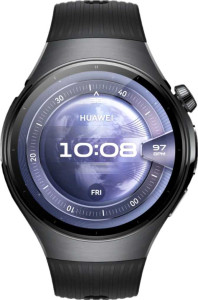
Huawei Watch 5
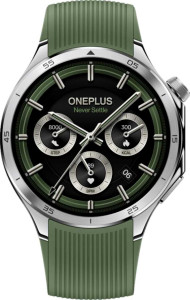
OnePlus Watch 3

Huawei Watch 5 OnePlus Watch 3

Overview

Welcome to our in-depth spec comparison between the Huawei Watch 5 and the OnePlus Watch 3. Both smartwatches share a strong foundation — identical 1.5″ AMOLED displays, comprehensive health sensors, and robust fitness tracking — yet they diverge in meaningful ways across connectivity, battery performance, and advanced health features. Read on to discover which watch best aligns with your lifestyle and priorities.

Common Features

  • Both watches feature a 1.5″ screen size.
  • Both use an OLED/AMOLED display type.
  • Both carry a 5 ATM water resistance rating.
  • Both have an IP68 ingress protection rating.
  • Always-On Display is available on both watches.
  • Both share a resolution of 466 x 466 px.
  • The watch band is replaceable on both models.
  • Branded damage-resistant glass is not present on either watch.
  • Blood oxygenation level monitoring is available on both watches.
  • A heart rate monitor is present on both watches.
  • GPS is available on both watches.
  • An accelerometer is present on both watches.
  • A temperature sensor is included on both watches.
  • A compass is present on both watches.
  • A barometer is available on both watches.
  • A gyroscope is present on both watches.
  • Both watches track sleep and provide sleep reports.
  • Both watches track distance, steps taken, pace, elevation, and include a route tracker.
  • Automatic activity detection is available on both watches.
  • Both watches are compatible with Android, support Bluetooth 5.2, Wi-Fi, NFC, and Galileo, but do not support ANT+.
  • Neither watch has a solar power battery or a removable battery, but both have a rechargeable battery.
  • HRV tracking, VO2 max measurement, resting heart rate measurement, fast/slow heart rate notifications, readiness level, call answering, phone locating, and call control are all available on both watches.
  • Both watches provide activity reports, inactivity alerts, calorie tracking, goal setting, achievements, an exercise diary, a free app, and are ad-free.
  • Both watches have a battery level indicator and a passcode feature.
  • Neither watch has an external memory slot or a 3.5 mm audio jack socket.

Main Differences

  • Water resistance is rated as Waterproof on Huawei Watch 5 and Water resistant on OnePlus Watch 3.
  • Waterproof depth rating is 40 m on Huawei Watch 5 and 50 m on OnePlus Watch 3.
  • Pixel density is 310 ppi on Huawei Watch 5 and 439 ppi on OnePlus Watch 3.
  • Thickness is 11.3 mm on Huawei Watch 5 and 11.8 mm on OnePlus Watch 3.
  • Weight is 63 g on Huawei Watch 5 and 81 g on OnePlus Watch 3.
  • Height is 46.7 mm on Huawei Watch 5 and 47.6 mm on OnePlus Watch 3.
  • Width is 46 mm on Huawei Watch 5 and 46.6 mm on OnePlus Watch 3.
  • Maximum operating temperature is 55 °C on Huawei Watch 5 and 70 °C on OnePlus Watch 3.
  • Lowest potential operating temperature is -20 °C on Huawei Watch 5 and -40 °C on OnePlus Watch 3.
  • Volume is 24.27466 cm³ on Huawei Watch 5 and 26.174288 cm³ on OnePlus Watch 3.
  • A cadence sensor is present on OnePlus Watch 3 but not available on Huawei Watch 5.
  • Golf mode is designed into Huawei Watch 5 but is not available on OnePlus Watch 3.
  • A cellular module is present on Huawei Watch 5 but not available on OnePlus Watch 3.
  • iOS compatibility is available on Huawei Watch 5 but not on OnePlus Watch 3.
  • Wi-Fi versions supported are Wi-Fi 4, Wi-Fi 5, and Wi-Fi 6 on Huawei Watch 5, and only Wi-Fi 4 on OnePlus Watch 3.
  • Battery life is 4.5 days on Huawei Watch 5 and 5 days on OnePlus Watch 3.
  • Battery power is 867 mAh on Huawei Watch 5 and 631 mAh on OnePlus Watch 3.
  • Charge time is 1.5 hours on Huawei Watch 5 and 1 hour on OnePlus Watch 3.
  • Wireless charging is available on Huawei Watch 5 but not on OnePlus Watch 3.
  • Irregular heart rate warnings are available on Huawei Watch 5 but not on OnePlus Watch 3.
  • ECG technology is present on Huawei Watch 5 but not available on OnePlus Watch 3.
  • In-app coaching is available on Huawei Watch 5 but not on OnePlus Watch 3.
  • Period notifications are available on Huawei Watch 5 but not on OnePlus Watch 3.
  • Route support in the app is available on Huawei Watch 5 but not on OnePlus Watch 3.
Specs Comparison
Huawei Watch 5

Huawei Watch 5

OnePlus Watch 3

OnePlus Watch 3

Design:
screen size 1.5" 1.5"
Display type OLED/AMOLED OLED/AMOLED
water resistance Waterproof Water resistant
ATM rating 5 ATM 5 ATM
Ingress Protection (IP) rating IP68 IP68
waterproof depth rating 40 m 50 m
Always-On Display
pixel density 310 ppi 439 ppi
resolution 466 x 466 px 466 x 466 px
Watch band is replaceable
has branded damage-resistant glass
thickness 11.3 mm 11.8 mm
weight 63 g 81 g
height 46.7 mm 47.6 mm
width 46 mm 46.6 mm
maximum operating temperature 55 °C 70 °C
lowest potential operating temperature -20 °C -40 °C
Has a display
has a touch screen
Has sapphire glass display
volume 24.27466 cm³ 26.174288 cm³
is designed for kids
width of band 22 mm 22 mm

Both the Huawei Watch 5 and OnePlus Watch 3 share a solid design foundation: identical 1.5″ OLED/AMOLED panels, the same 466 × 466 px resolution, sapphire glass protection, Always-On Display, and a standard 22 mm replaceable band. Where they diverge meaningfully is in pixel density — the OnePlus Watch 3 delivers a noticeably sharper 439 ppi versus the Huawei Watch 5's 310 ppi. On a small watch face, that gap is genuinely visible: text, icons, and complications will appear crisper on the OnePlus, which matters for readability at a glance.

On the wearability front, the Huawei Watch 5 holds a real advantage with a 63 g body — nearly 18 g lighter than the OnePlus Watch 3's 81 g. That difference is perceptible over a full day, especially during workouts or sleep tracking. The Huawei is also marginally slimmer at 11.3 mm versus 11.8 mm. Both watches carry 5 ATM / IP68 ratings, but the OnePlus is rated to a deeper 50 m versus 40 m, a minor but tangible edge for swimmers. The OnePlus also handles a wider operating temperature range (-40 °C to 70 °C versus -20 °C to 55 °C), making it more resilient in extreme environments.

Overall, neither watch dominates outright — the choice hinges on priorities. The OnePlus Watch 3 wins on display sharpness and environmental durability, while the Huawei Watch 5 wins on lightweight comfort and slimmer form factor. Users who wear their watch around the clock and value wrist comfort will lean toward the Huawei; those who prioritize display clarity and wider operating conditions will find the OnePlus more compelling.

Sensors:
Monitors blood oxygenation levels
Has a heart rate monitor
has GPS
has an accelerometer
Has a temperature sensor
has a compass
Has a barometer
has a gyroscope
Has a cadence sensor
Monitors perspiration

The sensor suites of the Huawei Watch 5 and OnePlus Watch 3 are remarkably similar, and for most users, either watch covers all the essentials. Both pack heart rate monitoring, SpO2 tracking, GPS, accelerometer, gyroscope, compass, barometer, and a temperature sensor — a comprehensive set that supports health tracking, navigation, altitude awareness, and detailed motion analysis without any gaps in day-to-day use.

The single differentiator in this group is the cadence sensor, which the OnePlus Watch 3 includes and the Huawei Watch 5 does not. Cadence — measuring steps per minute for runners or pedal strokes per minute for cyclists — is a meaningful metric for athletes looking to optimize their form and training efficiency. Its absence on the Huawei is a minor but real omission for dedicated runners and cyclists who rely on that data.

For the majority of users, this category is effectively a tie. However, for fitness-focused users — particularly runners or cyclists who actively monitor cadence as part of their training — the OnePlus Watch 3 holds a narrow but concrete edge.

Activity tracking:
Tracks your sleep
Tracks distance
Tracks steps taken
Measures pace
Provides sleep reports
Detects activities automatically
Has a route tracker
Tracks elevation
Has exercise tagging
Tracks calorie intake
Designed for golf

Activity tracking is one area where these two watches are almost perfectly matched. Both the Huawei Watch 5 and OnePlus Watch 3 cover the full spectrum of everyday fitness needs — sleep tracking with reports, step and distance counting, pace measurement, elevation tracking, route logging, automatic activity detection, exercise tagging, and calorie tracking. That last point is worth noting: calorie intake tracking, as opposed to just burn estimation, positions both watches as more holistic wellness tools rather than simple fitness counters.

The only differentiator in this group is golf mode, which the Huawei Watch 5 supports and the OnePlus Watch 3 does not. Golf-specific features on smartwatches typically include course mapping, shot tracking, and distance-to-pin data — functionality that is highly niche but genuinely valuable to golfers who want a single device on the course.

For the vast majority of users, this category is a dead heat. The Huawei Watch 5 claims the edge exclusively for golfers, where its dedicated golf support makes it the clear choice. Everyone else will find both watches equally capable across all tracked activities.

Connectivity:
has a cellular module
Is compatible with iOS
Is compatible with Android
Bluetooth version 5.2 5.2
supports Wi-Fi
Wi-Fi version Wi-Fi 4 (802.11n), Wi-Fi 5 (802.11ac), Wi-Fi 6 (802.11ax) Wi-Fi 4 (802.11n)
supports ANT+
has NFC
supports Galileo

Connectivity is where these two watches diverge most sharply. The Huawei Watch 5 includes a cellular module, meaning it can make calls, stream data, and receive notifications independently of a paired phone — a significant lifestyle upgrade for users who want to leave their phone behind during runs or workouts. The OnePlus Watch 3 has no cellular capability, keeping it fully tethered to a smartphone at all times. Equally important, the Huawei supports both iOS and Android, while the OnePlus is Android-only — a hard limitation that immediately rules it out for iPhone users.

The Wi-Fi gap is also worth flagging. The Huawei Watch 5 supports Wi-Fi 6 (802.11ax) alongside older standards, offering faster and more efficient wireless connectivity for tasks like app syncing, firmware updates, and music streaming. The OnePlus Watch 3 is limited to Wi-Fi 4 (802.11n), which is functional but noticeably behind in throughput and network efficiency, particularly in congested environments. Both watches share Bluetooth 5.2, NFC for contactless payments, and Galileo satellite support, so those bases are equally covered.

This group has a clear winner: the Huawei Watch 5 leads on every meaningful axis — cellular independence, cross-platform compatibility, and superior Wi-Fi. For users who value standalone functionality or own an iPhone, the Huawei is the only option here. The OnePlus Watch 3 is a capable companion watch, but strictly within the Android ecosystem and always dependent on a nearby phone.

Battery:
battery life 4.5 days 5 days
battery power 867 mAh 631 mAh
charge time 1.5 hours 1 hours
has wireless charging
has a rechargeable battery
Has a solar power battery
has a removable battery

The battery story here is a counterintuitive one. Despite packing a significantly larger 867 mAh cell, the Huawei Watch 5 delivers only 4.5 days of battery life — while the OnePlus Watch 3, running on a smaller 631 mAh battery, manages 5 days. This suggests the OnePlus is meaningfully more power-efficient in its hardware or software, squeezing more runtime out of less capacity. In practical terms, the half-day difference is modest, but it does mean the OnePlus edges toward a full weekly charge cycle while the Huawei falls short.

Charging dynamics add another layer to the comparison. The OnePlus Watch 3 reaches a full charge in just 1 hour, versus 1.5 hours for the Huawei — a 30-minute advantage that compounds over frequent charging sessions. However, the Huawei Watch 5 supports wireless charging, which the OnePlus does not. For users who already have Qi chargers on their nightstand or desk, the convenience of drop-and-charge without fumbling for a cable is a genuine quality-of-life benefit that partially offsets the slower charge time.

Taken together, this group is a genuine trade-off rather than a clean win. The OnePlus Watch 3 holds the practical edge in day-to-day use — longer life and faster wired charging — but the Huawei Watch 5 counters with wireless charging convenience that some users will value highly. Priorities decide the winner here.

Features:
release date May 2025 February 2025
has HRV tracking
measures VO2 max
measures resting heart rate
has fast/slow heart rate notifications
shows readiness level
Can be used to answer calls
Locates your phone
Has call control
Has notifications
has irregular heart rate warnings
Has ECG technology
Has silent alarm
Has vibrating alerts
has fall detection
Has a stopwatch
Has smart alarm
has voice commands
Has a built-in camera remote control function
Acquires GPS faster
warranty period 1 years 1 years
has a front camera

Across the broad features landscape, these two watches share a strong common core: HRV tracking, VO2 max estimation, resting heart rate monitoring, fast/slow heart rate notifications, readiness scores, call answering and control, notifications, fall detection, voice commands, camera remote, and fast GPS acquisition. That is a genuinely capable feature set on both sides, covering the needs of most health-conscious and connected users without compromise.

The gap opens up in cardiac health monitoring. The Huawei Watch 5 adds ECG technology and irregular heart rate warnings — two features absent on the OnePlus Watch 3. ECG capability allows the watch to generate an electrocardiogram reading on demand, which can help detect conditions like atrial fibrillation. Irregular heart rate warnings complement this by passively flagging anomalies in the background. Together, these features position the Huawei as a more medically oriented device, and for users with cardiac concerns or those who simply want a deeper health safety net, their presence is a meaningful distinction.

This group has a clear edge for the Huawei Watch 5. The OnePlus Watch 3 is well-featured for everyday smartwatch use, but the addition of ECG and passive arrhythmia detection on the Huawei represents a substantive health-monitoring advantage that goes beyond convenience into genuine wellness utility.

App & Software:
Provides activity reports
Has inactivity alerts
Counts how many calories you've burned
Has goal setting
Has achievements
Free app
Has exercise diary
Ad-free
Has coaching
Has temperature tracking
Has period notifications
Supports routes
Has voice feedback
Has music playback
Supports widgets
Can be personalised
Has barcode scanner on app
Tracks water intake
Has weight tracking

On the software and app side, both watches share a well-rounded foundation: activity reports, inactivity alerts, calorie burn tracking, goal setting, achievements, exercise diary, temperature tracking, water intake, weight tracking, voice feedback, music playback, widgets, and personalisation — all delivered through a free, ad-free app. That is a polished, complete package for general health and fitness management on either device.

Three features tip the balance toward the Huawei Watch 5. First, in-app coaching provides guided feedback to help users improve their training — something the OnePlus Watch 3 app lacks entirely. Second, route support in the app lets users plan, follow, and review mapped routes, which is a meaningful addition for outdoor runners and cyclists; the OnePlus app does not offer this. Third, period notifications add a layer of women's health tracking that the OnePlus app omits — a gap that will matter to a significant portion of users.

The Huawei Watch 5 takes this category clearly. Each of its three exclusive features — coaching, route support, and period tracking — addresses a distinct user need, and together they make Huawei's companion app a noticeably more comprehensive platform than what the OnePlus Watch 3 offers.

Miscellaneous:
has a battery level indicator
Has passcode
has an external memory slot
has a socket for a 3.5 mm audio jack

The miscellaneous specs for the Huawei Watch 5 and OnePlus Watch 3 are identical across every data point in this group. Both include a battery level indicator and passcode protection, and neither offers an external memory slot or a 3.5 mm audio jack — the latter being standard practice for modern smartwatches, which handle audio entirely over Bluetooth.

This is a complete tie. There are no differentiators here, and neither watch gains or loses any ground in this category. Users can set this group aside entirely when making their decision between the two.

Comparison Summary & Verdict

After examining every specification, these two watches serve notably different audiences. The Huawei Watch 5 stands out for users who need a feature-rich companion: it offers iOS compatibility, a built-in cellular module, ECG technology, irregular heart rate warnings, wireless charging, and broader Wi-Fi support — all in a lighter 63 g body with faster 1.5-hour charging. It is particularly well-suited for health-conscious users and those deeply invested in the Huawei ecosystem. The OnePlus Watch 3, on the other hand, appeals to Android-only users who prioritize a sharper 439 ppi display, a slightly longer 5-day battery life, a wider operating temperature range down to -40 °C, and a cadence sensor for serious runners. Neither watch is a clear all-around winner — your ideal choice depends on whether advanced health features and cross-platform flexibility or a crisper screen and endurance matter most to you.

Huawei Watch 5
Buy Huawei Watch 5 if...

Buy the Huawei Watch 5 if you want iOS compatibility, a cellular module for standalone calls, ECG and irregular heart rate monitoring, wireless charging, and a lighter build.

OnePlus Watch 3
Buy OnePlus Watch 3 if...

Buy the OnePlus Watch 3 if you are an Android user who values a sharper high-density display, longer battery life, a cadence sensor for running, and a wider operating temperature range.