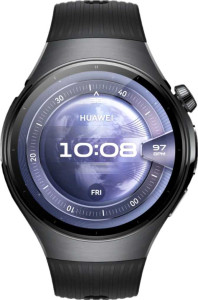
Huawei Watch 5
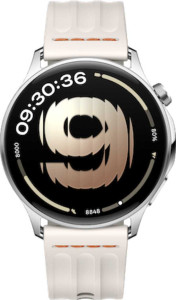
Oppo Watch S

Huawei Watch 5 Oppo Watch S

Overview

When choosing between the Huawei Watch 5 and the Oppo Watch S, shoppers are faced with two capable smartwatches that share a strong sensor suite and broad activity tracking, yet diverge sharply in areas like connectivity, design philosophy, and battery strategy. Both target active users who want health insights on their wrist, but each takes a distinctly different approach to features, form factor, and endurance that could make one a far better fit than the other for your lifestyle.

Common Features

  • Both watches feature an OLED/AMOLED display.
  • Both watches are waterproof with a 5 ATM rating and an IP68 ingress protection rating.
  • Watch band is replaceable on both products.
  • Neither watch features branded damage-resistant glass.
  • Both watches have a touchscreen display.
  • Both watches monitor blood oxygenation levels.
  • Both watches include a heart rate monitor.
  • Both watches have built-in GPS.
  • Both watches include an accelerometer, gyroscope, compass, barometer, and temperature sensor.
  • Sleep tracking and sleep reports are available on both watches.
  • Both watches track distance, steps taken, pace, elevation, and include a route tracker.
  • Both watches detect activities automatically.
  • Both watches are compatible with iOS and Android.
  • Both watches use Bluetooth 5.2.
  • Neither watch supports ANT+, but both support Galileo.
  • Both watches have a rechargeable, non-removable battery with no solar charging capability.
  • HRV tracking, VO2 max measurement, resting heart rate measurement, and fast/slow heart rate notifications are available on both watches.
  • Both watches can be used to answer calls and have call control and notifications.
  • Both watches provide activity reports, inactivity alerts, calorie tracking, goal setting, achievements, an exercise diary, and a free ad-free app.
  • Both watches have a battery level indicator and passcode support, but neither has an external memory slot.

Main Differences

  • Screen size is 1.5″ on the Huawei Watch 5 and 1.46″ on the Oppo Watch S.
  • Waterproof depth rating is 40 m on the Huawei Watch 5 and 1.5 m on the Oppo Watch S.
  • Always-On Display is present on the Huawei Watch 5 but not available on the Oppo Watch S.
  • Pixel density is 310 ppi on the Huawei Watch 5 and 317 ppi on the Oppo Watch S.
  • Resolution is 466 x 466 px on the Huawei Watch 5 and 464 x 464 px on the Oppo Watch S.
  • Thickness is 11.3 mm on the Huawei Watch 5 and 8.9 mm on the Oppo Watch S.
  • Weight is 63 g on the Huawei Watch 5 and 35 g on the Oppo Watch S.
  • Height is 46.7 mm on the Huawei Watch 5 and 45 mm on the Oppo Watch S.
  • Width is 46 mm on the Huawei Watch 5 and 45 mm on the Oppo Watch S.
  • Sapphire glass display is present on the Huawei Watch 5 but not available on the Oppo Watch S.
  • Volume is 24.27 cm³ on the Huawei Watch 5 and 18.02 cm³ on the Oppo Watch S.
  • Diving design is supported on the Huawei Watch 5 but not on the Oppo Watch S.
  • Golf design is supported on the Huawei Watch 5 but not on the Oppo Watch S.
  • Cellular module is present on the Huawei Watch 5 but not available on the Oppo Watch S.
  • Wi-Fi support is present on the Huawei Watch 5 but not available on the Oppo Watch S.
  • NFC is present on the Huawei Watch 5 but not available on the Oppo Watch S.
  • Battery life is 4.5 days on the Huawei Watch 5 and 7 days on the Oppo Watch S.
  • Battery power is 867 mAh on the Huawei Watch 5 and 339 mAh on the Oppo Watch S.
  • Wireless charging is supported on the Huawei Watch 5 but not available on the Oppo Watch S.
  • Phone locating, fall detection, and a built-in microphone are present on the Huawei Watch 5 but none of these features are available on the Oppo Watch S.
  • Coaching and route support in the companion app are available on the Huawei Watch 5 but not on the Oppo Watch S.
  • A 3.5 mm audio jack socket is present on the Oppo Watch S but not available on the Huawei Watch 5.
Specs Comparison
Huawei Watch 5

Huawei Watch 5

Oppo Watch S

Oppo Watch S

Design:
screen size 1.5" 1.46"
Display type OLED/AMOLED OLED/AMOLED
water resistance Waterproof Waterproof
ATM rating 5 ATM 5 ATM
Ingress Protection (IP) rating IP68 IP68
waterproof depth rating 40 m 1.5 m
Always-On Display
pixel density 310 ppi 317 ppi
resolution 466 x 466 px 464 x 464 px
Watch band is replaceable
has branded damage-resistant glass
thickness 11.3 mm 8.9 mm
weight 63 g 35 g
height 46.7 mm 45 mm
width 46 mm 45 mm
Has a display
has a touch screen
Has sapphire glass display
volume 24.27466 cm³ 18.0225 cm³
is designed for kids
width of band 22 mm 22 mm

Both watches share a solid design foundation — OLED/AMOLED panels, identical 5 ATM / IP68 ratings, touch screens, and a standard 22 mm replaceable band. Their resolutions and pixel densities are virtually identical (466 × 466 px at 310 ppi vs 464 × 464 px at 317 ppi), meaning sharpness will be indistinguishable in daily use. Where they diverge meaningfully is in physical form factor and a handful of premium features that noticeably affect the ownership experience.

The most striking difference is wearability comfort: the Oppo Watch S weighs just 35 g and is only 8.9 mm thick, compared to the Huawei Watch 5's 63 g and 11.3 mm. That is nearly half the weight and a significantly slimmer profile — a real-world advantage for all-day and sleep tracking, where a heavier, bulkier watch becomes noticeable on the wrist. The Oppo's smaller volume (18 cm³ vs 24.3 cm³) also makes it sit lower and less obtrusively under a sleeve.

However, the Huawei Watch 5 counters with two meaningful design-tier advantages. First, it features a sapphire glass display — one of the hardest materials used in watch faces, far more scratch-resistant than standard glass — while the Oppo Watch S does not. Second, its Always-On Display allows the time to be visible at a glance without a wrist raise, a convenience the Oppo Watch S lacks entirely. Its waterproof depth rating is also dramatically higher (40 m vs 1.5 m), making it genuinely suited for swimming and water sports rather than just splash resistance. Overall, the Oppo Watch S has the edge in everyday comfort and discretion, but the Huawei Watch 5 is the stronger choice for users who prioritize durability, screen protection, and always-on visibility.

Sensors:
Monitors blood oxygenation levels
Has a heart rate monitor
has GPS
has an accelerometer
Has a temperature sensor
has a compass
Has a barometer
has a gyroscope
Has a cadence sensor
Monitors perspiration

Across every sensor listed, the Huawei Watch 5 and Oppo Watch S are in complete lockstep. Both pack the full core suite: heart rate monitor, SpO2 (blood oxygen), GPS, accelerometer, gyroscope, barometer, compass, and a temperature sensor. This is a strong lineup for a smartwatch at this tier — the barometer enables elevation tracking and weather trend detection, the compass supports navigation, and the temperature sensor adds a layer of passive health monitoring that budget wearables often omit.

Neither watch includes a cadence sensor or perspiration monitoring, which keeps both positioned as general-purpose health and fitness trackers rather than specialist athletic tools. The absence of a cadence sensor, for instance, means cyclists and runners relying on step cadence metrics would need to pair with an external accessory — but this limitation applies equally to both devices.

With every spec in this group a mirror image, the verdict is a complete tie. Neither watch holds any sensor-based advantage over the other; the differentiating factors between these two products will need to be found in other specification groups.

Activity tracking:
Tracks your sleep
Tracks distance
Tracks steps taken
Measures pace
Provides sleep reports
Detects activities automatically
Has a route tracker
Tracks elevation
Has exercise tagging
Has a stroke counter for swimming
Tracks calorie intake
Designed for diving
Designed for golf

For the vast majority of users, these two watches are functionally identical in activity tracking. Both cover the full everyday spectrum — sleep tracking with reports, step counting, distance, pace, elevation, route tracking, automatic activity detection, exercise tagging, calorie tracking, and even a stroke counter for swimming. Automatic activity detection is worth highlighting: it means the watch recognizes workouts without the user manually starting a session, which is a meaningful convenience feature for casual athletes who don't want to interact with the watch before every run or gym session.

The only divergence in this group comes down to two specialized sport modes: diving and golf. The Huawei Watch 5 supports both; the Oppo Watch S supports neither. Golf mode typically offers features like course mapping, shot distance tracking, and stroke counting — tools that are genuinely useful on the course but irrelevant off it. Diving support, meanwhile, aligns with the Huawei Watch 5's significantly deeper water resistance rating noted in its design specs, extending its utility for underwater activities beyond casual swimming.

For general fitness and wellness tracking, this is a tie. But for users with a specific interest in golf or water sports beyond surface swimming, the Huawei Watch 5 holds a clear and exclusive advantage in this group.

Connectivity:
has a cellular module
Is compatible with iOS
Is compatible with Android
Bluetooth version 5.2 5.2
supports Wi-Fi
supports ANT+
has NFC
supports Galileo

Shared ground first: both watches run Bluetooth 5.2 and are compatible with both iOS and Android, making either a viable daily companion regardless of which phone ecosystem the user is in. Both also support the Galileo satellite navigation system, contributing to more accurate positioning. Neither supports ANT+, which rules out both for users who rely on that protocol to connect with third-party fitness accessories like power meters or cycling sensors.

The connectivity gap opens up decisively when looking at what the Huawei Watch 5 adds on top. It includes a cellular module, Wi-Fi, and NFC — three features the Oppo Watch S lacks entirely. Cellular means the Huawei Watch 5 can make calls, stream music, and receive notifications independently of a paired phone, which is a transformative difference for users who want to leave their phone behind during workouts or commutes. Wi-Fi enables faster data syncing and software updates without relying on a Bluetooth connection. NFC enables contactless payments directly from the wrist — a daily convenience that removes the need to carry a card or phone for small transactions.

This group has a clear and decisive winner: the Huawei Watch 5. Its cellular, Wi-Fi, and NFC capabilities represent a fundamentally higher tier of standalone functionality. The Oppo Watch S, by comparison, operates strictly as a companion device — useful only when tethered to a smartphone.

Battery:
battery life 4.5 days 7 days
battery power 867 mAh 339 mAh
has wireless charging
has a rechargeable battery
Has a solar power battery
has a removable battery

At first glance, the battery specs here seem contradictory: the Huawei Watch 5 carries a much larger 867 mAh cell, yet delivers only 4.5 days of battery life, while the Oppo Watch S achieves 7 days on a far smaller 339 mAh battery. This is not an anomaly — it reflects the power cost of the Huawei Watch 5's feature set. Its cellular radio, Wi-Fi, Always-On Display, and larger screen all draw significantly more power, meaning the bigger battery is working harder just to keep pace. The Oppo Watch S, being a leaner companion-only device with no cellular or AOD, can stretch its smaller cell considerably further.

The practical implication is real: 7 days means most users charge the Oppo Watch S roughly once a week, which fits naturally into a routine. At 4.5 days, the Huawei Watch 5 demands charging mid-week — a more frequent interruption that becomes especially noticeable for users who wear their watch overnight for sleep tracking. The Huawei Watch 5 does recover ground with wireless charging, which the Oppo Watch S lacks; the convenience of dropping the watch on a pad rather than fumbling with a magnetic cable is a quality-of-life advantage that partially offsets the more frequent charging requirement.

On raw longevity between charges, the Oppo Watch S has a clear edge. But the winner here depends on priorities: users who value charging convenience and can tolerate a shorter cycle will appreciate the Huawei Watch 5's wireless charging, while those who prioritize going longer between charges — particularly for uninterrupted sleep tracking — will find the Oppo Watch S's 7-day endurance the more practical outcome.

Features:
release date May 2025 October 2025
has HRV tracking
measures VO2 max
measures resting heart rate
has fast/slow heart rate notifications
shows readiness level
Can be used to answer calls
Locates your phone
Has call control
Has notifications
has irregular heart rate warnings
Has ECG technology
Has silent alarm
Has vibrating alerts
has fall detection
Has a stopwatch
Has smart alarm
has voice commands
Has a built-in camera remote control function
Acquires GPS faster
warranty period 1 years 1 years
number of microphones 1 0
has a front camera

The feature overlap between these two watches is substantial. Both offer a genuinely impressive health monitoring stack — ECG, HRV tracking, VO2 max, resting heart rate, irregular heart rate warnings, and a readiness score — alongside practical smartwatch staples like call answering, call control, notifications, voice commands, vibrating alerts, silent alarm, stopwatch, and a camera remote. For the majority of users, this shared core will cover virtually every day-to-day need without distinction.

The differences are few but pointed. The Huawei Watch 5 includes a built-in microphone (1 mic), while the Oppo Watch S has none — a meaningful gap given that both watches list call answering as a supported feature. In practice, taking calls directly from the wrist requires a microphone, so the Oppo Watch S's call functionality may be limited to audio output or control only rather than full two-way conversations. The Huawei Watch 5 also adds fall detection and a phone locator function, neither of which the Oppo Watch S supports. Fall detection in particular carries real safety value for older users or those in physically demanding environments, as it can trigger emergency alerts automatically.

With a microphone enabling true on-wrist calls, fall detection for personal safety, and the ability to locate a misplaced phone, the Huawei Watch 5 takes this group. These are not obscure edge-case features — each addresses a practical scenario the Oppo Watch S simply cannot handle, making the Huawei Watch 5 the more self-sufficient and safety-oriented device of the two.

App & Software:
Provides activity reports
Has inactivity alerts
Counts how many calories you've burned
Has goal setting
Has achievements
Free app
Has exercise diary
Ad-free
Has coaching
Has temperature tracking
Has period notifications
Supports routes
Has music playback
Supports widgets
Can be personalised
Has barcode scanner on app
Tracks water intake
Has weight tracking

The software ecosystem for both watches is well-rounded and largely identical. Free, ad-free companion apps with activity reports, goal setting, exercise diary, inactivity alerts, calorie tracking, water intake, weight tracking, temperature tracking, period notifications, music playback, widgets, and personalization — this is a genuinely capable feature set that competes comfortably above the budget tier. Users of either watch will find the app experience comprehensive for everyday health and fitness management.

Two features separate them. The Huawei Watch 5 app includes in-app coaching and route support, neither of which is available on the Oppo Watch S. Coaching adds structured, guided workout guidance directly through the app — valuable for users who want more than passive data logging and prefer direction during training sessions. Route support means users can plan, follow, or review mapped routes within the app, extending the utility of the watch's GPS for outdoor activities like running, hiking, or cycling.

Neither gap is a dealbreaker for casual users, but for anyone who trains with intent — following a plan, tracking outdoor routes, or progressing toward structured goals — the Huawei Watch 5's app edges ahead. It offers a more guided and navigation-aware experience, giving it the advantage in this group.

Miscellaneous:
has a battery level indicator
Has passcode
has an external memory slot
has a socket for a 3.5 mm audio jack

This is a compact spec group with limited ground to cover. Both watches share a battery level indicator and passcode security, and neither offers an external memory slot — standard expectations at this product tier that neither advantage nor disadvantage either device.

The sole differentiator is the 3.5 mm audio jack, present on the Oppo Watch S and absent on the Huawei Watch 5. On a smartwatch, a headphone jack is an uncommon inclusion that allows wired earphones to be plugged directly into the watch — useful when listening to music stored or streamed on the device without needing a wireless connection. For users who prefer wired audio or find themselves in situations where Bluetooth pairing is inconvenient, this is a tangible functional addition.

Given that it is the only point of difference, the Oppo Watch S takes this group by default. That said, the significance of a headphone jack on a wrist-worn device is niche — most users will rely on Bluetooth audio — so while it is a real advantage, it is unlikely to be a decisive factor for the majority of buyers.

Comparison Summary & Verdict

After examining every specification, it is clear that these two watches serve different kinds of users. The Huawei Watch 5 is the more feature-complete device, bringing cellular connectivity, NFC, Wi-Fi, sapphire glass, Always-On Display, fall detection, and coaching to users who want a premium, self-sufficient smartwatch capable of handling calls, payments, and advanced sports tracking including diving and golf. Its larger battery capacity and wireless charging add convenience, though its 4.5-day battery life and greater weight of 63 g are trade-offs to consider. The Oppo Watch S, on the other hand, wins on battery longevity at 7 days, a slimmer 8.9 mm profile, and a lighter 35 g build, making it ideal for users who prioritize comfort and endurance over connectivity bells and whistles. Choose the Huawei Watch 5 for a fully connected, feature-rich experience; choose the Oppo Watch S if lightweight everyday wear and longer battery life matter most.

Huawei Watch 5
Buy Huawei Watch 5 if...

Buy the Huawei Watch 5 if you want a fully connected smartwatch with cellular, NFC, Wi-Fi, sapphire glass, Always-On Display, fall detection, and advanced sport modes like diving and golf.

Oppo Watch S
Buy Oppo Watch S if...

Buy the Oppo Watch S if you prioritize a lighter, slimmer watch with longer 7-day battery life and a comfortable everyday form factor over advanced connectivity features.