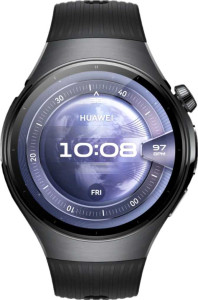
Huawei Watch 5
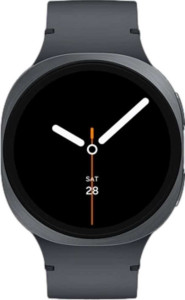
Samsung Galaxy Watch8 LTE 44mm

Huawei Watch 5 Samsung Galaxy Watch8 LTE 44mm

Overview

When choosing between the Huawei Watch 5 and the Samsung Galaxy Watch8 LTE 44mm, shoppers face a compelling contest of priorities. Both smartwatches share a strong foundation — OLED displays, built-in GPS, comprehensive health sensors, and LTE connectivity — yet they diverge notably in areas like battery endurance, physical dimensions, activity-specific features, and cross-platform compatibility. Read on to see how these two capable wearables stack up across every key specification.

Common Features

  • Both watches feature an OLED/AMOLED display type.
  • Both watches have a 5 ATM water resistance rating.
  • Both watches carry an IP68 ingress protection rating.
  • Always-On Display is available on both watches.
  • The watch band is replaceable on both watches.
  • Neither watch features branded damage-resistant glass.
  • Both watches have a touchscreen display.
  • Both watches monitor blood oxygenation levels.
  • Both watches include a heart rate monitor.
  • Both watches have built-in GPS.
  • Both watches include an accelerometer, gyroscope, compass, barometer, and temperature sensor.
  • Both watches track sleep and provide sleep reports.
  • Both watches track distance, steps taken, pace, elevation, and include a route tracker.
  • Both watches automatically detect activities.
  • Both watches have a cellular module with 1 eSIM support.
  • Both watches are compatible with Android.
  • Both watches support Wi-Fi and NFC.
  • Neither watch supports ANT+.
  • Both watches support the Galileo satellite navigation system.
  • Both watches support wireless charging and have a rechargeable, non-removable battery.
  • Neither watch has a solar power battery.
  • Both watches feature HRV tracking, VO2 max measurement, resting heart rate measurement, and fast/slow heart rate notifications.
  • Both watches can be used to answer calls and have call control.
  • Both watches can locate the paired phone.
  • Both watches show a readiness level.
  • Both watches provide activity reports, have inactivity alerts, count calories burned, support goal setting, and include an exercise diary.
  • Both watch companion apps are free and ad-free.
  • Both watches have a battery level indicator, auto pause, passcode protection, and are compatible with smart scales and external heart rate monitors.
  • Neither watch has an external memory slot or a 3.5 mm audio jack socket.

Main Differences

  • Screen size is 1.5″ on Huawei Watch 5 and 1.47″ on Samsung Galaxy Watch8 LTE 44mm.
  • Huawei Watch 5 is rated as waterproof, while Samsung Galaxy Watch8 LTE 44mm is rated as water resistant.
  • Waterproof depth rating is 40 m on Huawei Watch 5 and 50 m on Samsung Galaxy Watch8 LTE 44mm.
  • Pixel density is 310 ppi on Huawei Watch 5 and 327 ppi on Samsung Galaxy Watch8 LTE 44mm.
  • Resolution is 466 x 466 px on Huawei Watch 5 and 480 x 480 px on Samsung Galaxy Watch8 LTE 44mm.
  • Thickness is 11.3 mm on Huawei Watch 5 and 8.6 mm on Samsung Galaxy Watch8 LTE 44mm.
  • Weight is 63 g on Huawei Watch 5 and 34 g on Samsung Galaxy Watch8 LTE 44mm.
  • Height is 46.7 mm on Huawei Watch 5 and 46 mm on Samsung Galaxy Watch8 LTE 44mm.
  • Width is 46 mm on Huawei Watch 5 and 43.7 mm on Samsung Galaxy Watch8 LTE 44mm.
  • Maximum operating temperature is 55 °C on Huawei Watch 5 and 35 °C on Samsung Galaxy Watch8 LTE 44mm.
  • Lowest potential operating temperature is -20 °C on Huawei Watch 5 and 0 °C on Samsung Galaxy Watch8 LTE 44mm.
  • Volume is 24.27466 cm³ on Huawei Watch 5 and 17.28772 cm³ on Samsung Galaxy Watch8 LTE 44mm.
  • Diving-specific design is present on Huawei Watch 5 but not available on Samsung Galaxy Watch8 LTE 44mm.
  • Golf-specific design is present on Huawei Watch 5 but not available on Samsung Galaxy Watch8 LTE 44mm.
  • iOS compatibility is supported on Huawei Watch 5 but not available on Samsung Galaxy Watch8 LTE 44mm.
  • Bluetooth version is 5.2 on Huawei Watch 5 and 5.3 on Samsung Galaxy Watch8 LTE 44mm.
  • Huawei Watch 5 supports Wi-Fi 4, Wi-Fi 5, and Wi-Fi 6, while Samsung Galaxy Watch8 LTE 44mm supports Wi-Fi 4 only.
  • Battery life is 4.5 days on Huawei Watch 5 and 2 days on Samsung Galaxy Watch8 LTE 44mm.
  • Battery power is 867 mAh on Huawei Watch 5 and 435 mAh on Samsung Galaxy Watch8 LTE 44mm.
Specs Comparison
Huawei Watch 5

Huawei Watch 5

Samsung Galaxy Watch8 LTE 44mm

Samsung Galaxy Watch8 LTE 44mm

Design:
screen size 1.5" 1.47"
Display type OLED/AMOLED OLED/AMOLED
water resistance Waterproof Water resistant
ATM rating 5 ATM 5 ATM
Ingress Protection (IP) rating IP68 IP68
waterproof depth rating 40 m 50 m
Always-On Display
pixel density 310 ppi 327 ppi
resolution 466 x 466 px 480 x 480 px
Watch band is replaceable
has branded damage-resistant glass
thickness 11.3 mm 8.6 mm
weight 63 g 34 g
height 46.7 mm 46 mm
width 46 mm 43.7 mm
maximum operating temperature 55 °C 35 °C
lowest potential operating temperature -20 °C 0 °C
Has a display
has a touch screen
Has sapphire glass display
volume 24.27466 cm³ 17.28772 cm³
is designed for kids
width of band 22 mm 20 mm

Both watches share a strong design foundation: OLED/AMOLED displays with Always-On support, sapphire glass protection, IP68 and 5 ATM water resistance, and replaceable bands. However, the similarities largely end there. The most striking physical difference is weight and bulk: the Huawei Watch 5 weighs 63 g and measures 11.3 mm thick, while the Samsung Galaxy Watch8 44mm comes in at just 34 g and 8.6 mm thick. That is nearly half the weight and a significantly slimmer profile — a difference that is immediately felt during all-day wear, particularly during sleep tracking or workouts.

On the display front, the Samsung holds a slight edge in sharpness: 327 ppi at 480 × 480 px versus 310 ppi at 466 × 466 px on the Huawei. The Huawei does offer a marginally larger 1.5″ screen versus 1.47″, but the Samsung's higher pixel density means text and graphics will appear marginally crisper. Both use a 22 mm and 20 mm band width respectively, which affects accessory compatibility. One noteworthy spec favoring the Huawei is its operating temperature range: -20 °C to 55 °C versus Samsung's 0 °C to 35 °C — a meaningful advantage for users in extreme cold or heat environments.

Overall, the Samsung Galaxy Watch8 has a clear design edge for everyday wearability thanks to its dramatically lower weight and slimmer build, plus a marginally sharper display. The Huawei Watch 5 counters with a larger screen and a far wider operational temperature range, making it the stronger choice for harsh-environment use cases. For most users prioritizing comfort and aesthetics, the Samsung's form factor is the standout.

Sensors:
Monitors blood oxygenation levels
Has a heart rate monitor
has GPS
has an accelerometer
Has a temperature sensor
has a compass
Has a barometer
has a gyroscope
Has a cadence sensor
Monitors perspiration

Across the full sensor suite provided, the Huawei Watch 5 and Samsung Galaxy Watch8 44mm are in complete lockstep. Both carry the core health triumvirate — heart rate monitor, blood oxygen (SpO2), and temperature sensor — alongside a full motion and navigation stack: GPS, accelerometer, gyroscope, compass, and barometer. Neither watch includes a cadence sensor or perspiration monitor.

The practical implication of this parity is significant: users of either watch will have access to the same categories of biometric and environmental data. The barometer enables elevation tracking and weather awareness; the combined accelerometer and gyroscope allow accurate activity and gesture detection; and GPS means route tracking without a paired phone. The temperature sensor on both devices supports ambient or wrist-skin temperature monitoring, useful for cycle tracking and general wellness insights.

This group is a complete tie. Every sensor present on one watch is present on the other, and both share the same two omissions. The differentiator between these two watches in real-world health and navigation capability will come down to software and algorithm quality — not hardware sensor availability.

Activity tracking:
Tracks your sleep
Tracks distance
Tracks steps taken
Measures pace
Provides sleep reports
Detects activities automatically
Has a route tracker
Tracks elevation
Has exercise tagging
Has a stroke counter for swimming
Tracks calorie intake
Designed for diving
Designed for golf

For the vast majority of activity tracking use cases, these two watches are identical. Sleep tracking with reports, step and distance counting, pace measurement, elevation tracking, automatic activity detection, route tracking, exercise tagging, swim stroke counting, and calorie tracking — all present on both the Huawei Watch 5 and the Samsung Galaxy Watch8 44mm. Any everyday athlete, swimmer, hiker, or fitness enthusiast will find the same core feature set on either wrist.

The sole — but meaningful — split comes from two sport-specific modes: diving and golf. The Huawei Watch 5 supports both; the Samsung supports neither. Dedicated dive mode typically implies depth tracking, dive log recording, and underwater navigation assistance — features that go well beyond standard waterproofing. Golf mode usually provides course mapping, shot distance measurement, and stroke counting. These are niche but high-value capabilities for users who participate in those activities.

The Huawei Watch 5 takes a clear edge in this category. For general fitness users, the tie is essentially complete. But for divers or golfers, the Huawei is the only option of the two — its sport-specific tracking coverage is simply broader based on the provided data.

Connectivity:
has a cellular module
Is compatible with iOS
Is compatible with Android
Bluetooth version 5.2 5.3
supports Wi-Fi
Wi-Fi version Wi-Fi 4 (802.11n), Wi-Fi 5 (802.11ac), Wi-Fi 6 (802.11ax) Wi-Fi 4 (802.11n)
supports ANT+
SIM cards 1 eSIM 1 eSIM
has NFC
supports Galileo

Shared connectivity ground is solid between these two: both carry LTE via eSIM, NFC, Wi-Fi, and Galileo GNSS support, and both pair over Bluetooth. For standalone calls, contactless payments, and independent navigation, neither watch holds a structural disadvantage. That said, the differences hiding beneath the surface are worth examining closely.

The Huawei Watch 5 pulls ahead on two fronts. First, it supports Wi-Fi 5 (802.11ac) and Wi-Fi 6 (802.11ax) in addition to Wi-Fi 4, while the Samsung Galaxy Watch8 is limited to Wi-Fi 4 (802.11n) only. On a modern router, this means the Huawei can leverage faster, less congested channels for syncing and over-the-air updates. Second — and more decisively — the Huawei is compatible with both iOS and Android, whereas the Samsung is Android-only. For iPhone users, this is a hard blocker; the Samsung Galaxy Watch8 simply cannot be used with iOS based on the provided data. The Samsung counters with a marginally newer Bluetooth 5.3 versus the Huawei's Bluetooth 5.2, though the practical difference between these adjacent versions is minimal for most users.

The Huawei Watch 5 holds the clear connectivity edge. Its broader iOS and Android compatibility makes it accessible to a much wider audience, and its superior Wi-Fi standard support adds a practical, future-facing advantage. The Samsung's Bluetooth 5.3 is a marginal win that does not offset these gaps.

Battery:
battery life 4.5 days 2 days
battery power 867 mAh 435 mAh
has wireless charging
has a rechargeable battery
Has a solar power battery
has a removable battery

Battery is where the Huawei Watch 5 asserts its most quantifiable advantage of the entire comparison. Its 867 mAh cell is exactly double the 435 mAh found in the Samsung Galaxy Watch8, and the rated battery life reflects that directly: 4.5 days versus 2 days. In practical terms, Samsung users will be reaching for the charger roughly every other night, while Huawei users can comfortably go four to five days between charges — a meaningful difference for travelers, heavy sleepers tracking overnight data, or anyone who simply finds frequent charging inconvenient.

The one area where the two watches are fully equal is charging method: both support wireless charging with non-removable, rechargeable batteries, and neither offers solar power. So while the charging experience is comparable in convenience, the frequency with which the Samsung demands it is notably higher.

The Huawei Watch 5 wins this category decisively. A battery that lasts more than twice as long — backed by a cell twice the capacity — is a straightforward, real-world advantage. The only tradeoff, as noted in the Design group, is the additional weight and thickness that accommodating that larger battery requires. For users who prioritize charging-free endurance, the Huawei is the clear choice.

Features:
release date May 2025 July 2025
has HRV tracking
measures VO2 max
measures resting heart rate
has fast/slow heart rate notifications
shows readiness level
Can be used to answer calls
Locates your phone
Has call control
Has notifications
has irregular heart rate warnings
Has ECG technology
Has silent alarm
Has vibrating alerts
has fall detection
Has a stopwatch
Has smart alarm
has voice commands
Has a built-in camera remote control function
Acquires GPS faster

Feature parity in this group is total. Every capability listed — from advanced cardiac tools like ECG, HRV tracking, and irregular heart rate warnings, to fitness metrics like VO2 max and readiness level, to utility features like fall detection, voice commands, and camera remote control — is present on both the Huawei Watch 5 and the Samsung Galaxy Watch8 44mm. Neither watch has a single feature advantage over the other based on the provided data.

It is worth noting the quality of what both watches share. ECG technology and fall detection sit at the premium end of smartwatch health capabilities, making both devices genuinely competitive in the health-monitoring space. Faster GPS acquisition on both watches means quicker lock-on before outdoor workouts, and the combination of call answering, notifications, and voice commands ensures a full standalone smartwatch experience on either device.

This group is an unambiguous tie. With every feature matched identically and the same single omission — no smart alarm — on both sides, the feature set provides no basis for choosing one watch over the other. Buyers should weigh decisions on this front entirely based on how these features are implemented in software, which falls outside the scope of the provided specs.

App & Software:
Provides activity reports
Has inactivity alerts
Counts how many calories you've burned
Has goal setting
Has achievements
Free app
Has exercise diary
Ad-free
Has coaching
Has temperature tracking
Has period notifications
Supports routes
Has voice feedback
Has music playback
Includes maps
Predicts start date
Supports widgets
Can be personalised
Has barcode scanner on app
Tracks water intake
Has weight tracking
Tracks BMI

When it comes to app and software capabilities, the Huawei Watch 5 and Samsung Galaxy Watch8 44mm are mirror images of each other. Every single feature in the provided data is shared identically — from wellness staples like calorie tracking, water intake, weight tracking, and BMI, to more sophisticated offerings like coaching, voice feedback, maps with route support, and cycle tracking with start date prediction. Both apps are free and ad-free, removing any cost or experience friction on that front.

The breadth of what both platforms offer is genuinely impressive at this tier. Onboard music playback, widget and personalisation support, and a full exercise diary with goal-setting and achievements round out a comprehensive ecosystem on both sides. The one shared gap — no barcode scanner for food logging — is equally absent from both, so it creates no competitive imbalance.

This is another complete tie. With 22 out of 22 data points matching exactly, the app and software layer offers no differentiation between these two watches. Users invested in a particular ecosystem — Huawei Health versus Samsung Health — will find their decision driven by platform preference and ecosystem lock-in rather than any objective feature gap.

Miscellaneous:
has a battery level indicator
Has auto pause
Has passcode
Compatible with smart scales
Compatible with external heart rate monitors
has an external memory slot
has a socket for a 3.5 mm audio jack

The miscellaneous spec group wraps up this comparison on a familiar note: the Huawei Watch 5 and Samsung Galaxy Watch8 44mm are identical across every data point provided. Both include a battery level indicator, auto pause, and passcode security, and both are compatible with smart scales and external heart rate monitors — the latter being useful for athletes who prefer chest strap accuracy over wrist-based optical readings during intense workouts.

The two shared omissions — no external memory slot and no 3.5 mm audio jack — are entirely expected at this product tier and in line with broader smartwatch industry norms. Neither absence creates a meaningful disadvantage for either device relative to the other.

This group is a complete tie with no differentiators in either direction. As a closing note across the full comparison sequence, the watches diverge meaningfully only in Design (Samsung's lighter, slimmer build vs. Huawei's larger display and wider temperature range), Battery (Huawei's decisive endurance advantage), Activity Tracking (Huawei's exclusive dive and golf modes), and Connectivity (Huawei's iOS compatibility and superior Wi-Fi support). All other groups — Sensors, Features, App and Software, and Miscellaneous — are exact ties.

Comparison Summary & Verdict

After a thorough comparison, each watch reveals a distinct identity. The Huawei Watch 5 stands out for users who demand longevity and versatility: its 4.5-day battery life, broader Wi-Fi support (including Wi-Fi 6), iOS compatibility, and dedicated diving and golf modes make it a compelling choice for travellers, multi-sport athletes, and iPhone users. The Samsung Galaxy Watch8 LTE 44mm, on the other hand, wins on wearability and refinement — at just 34 g and 8.6 mm thick, it is significantly lighter and slimmer, while delivering a slightly sharper display. It is the smarter pick for Android-first users who value a discreet, everyday wearable with a comfortable fit over extended battery runtime or specialist activity tracking.

Huawei Watch 5
Buy Huawei Watch 5 if...

Buy the Huawei Watch 5 if you want a longer battery life, broader Wi-Fi and iOS compatibility, or need dedicated diving and golf tracking features.

Samsung Galaxy Watch8 LTE 44mm
Buy Samsung Galaxy Watch8 LTE 44mm if...

Buy the Samsung Galaxy Watch8 LTE 44mm if you prioritize a lighter, slimmer design for all-day comfort and are an Android user who values a sleek everyday wearable.