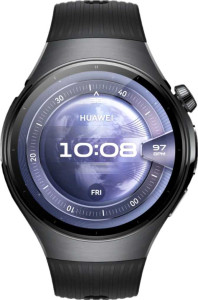
Huawei Watch 5
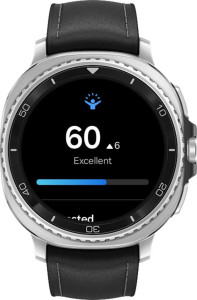
Samsung Galaxy Watch8 LTE Classic

Huawei Watch 5 Samsung Galaxy Watch8 LTE Classic

Overview

Welcome to our detailed specification comparison between the Huawei Watch 5 and the Samsung Galaxy Watch8 LTE Classic. Both smartwatches bring a strong set of features to the table, but they diverge meaningfully when it comes to battery endurance, platform compatibility, and activity-tracking scope. Whether you are after a watch built for diverse outdoor pursuits or one focused on a refined, connected Android experience, this head-to-head will help you find the right fit.

Common Features

  • Both watches feature an OLED/AMOLED display type.
  • Both watches have a 5 ATM water resistance rating.
  • Both watches carry an IP68 ingress protection rating.
  • Always-On Display is available on both watches.
  • The watch band is replaceable on both watches.
  • Branded damage-resistant glass is not present on either watch.
  • Both watches have a touchscreen display.
  • Both watches monitor blood oxygenation levels.
  • Both watches include a heart rate monitor.
  • Both watches have built-in GPS.
  • Both watches include an accelerometer, gyroscope, compass, barometer, and temperature sensor.
  • Both watches track sleep and provide sleep reports.
  • Both watches track steps, distance, pace, elevation, and include a route tracker.
  • Both watches automatically detect activities.
  • Both watches support cellular connectivity via one eSIM.
  • Both watches are compatible with Android.
  • Both watches support Wi-Fi and NFC.
  • ANT+ is not supported on either watch.
  • Both watches support the Galileo satellite system.
  • Both watches offer wireless charging and have a non-removable rechargeable battery.
  • A solar power battery is not available on either watch.
  • Both watches include HRV tracking, VO2 max measurement, resting heart rate measurement, and fast/slow heart rate notifications.
  • Both watches can be used to answer calls and include call control.
  • Both watches can locate the paired phone.
  • Both watches show a readiness level.
  • Both watches provide activity reports, inactivity alerts, calorie tracking, goal setting, achievements, an exercise diary, and are ad-free with a free companion app.
  • Both watches have a battery level indicator, auto pause, passcode protection, and compatibility with smart scales and external heart rate monitors.
  • Neither watch has an external memory slot or a 3.5 mm audio jack socket.

Main Differences

  • Screen size is 1.5″ on Huawei Watch 5 and 1.34″ on Samsung Galaxy Watch8 LTE Classic.
  • Huawei Watch 5 is rated as waterproof, while Samsung Galaxy Watch8 LTE Classic is rated as water resistant.
  • Waterproof depth rating is 40 m on Huawei Watch 5 and 50 m on Samsung Galaxy Watch8 LTE Classic.
  • Pixel density is 310 ppi on Huawei Watch 5 and 327 ppi on Samsung Galaxy Watch8 LTE Classic.
  • Resolution is 466 x 466 px on Huawei Watch 5 and 438 x 438 px on Samsung Galaxy Watch8 LTE Classic.
  • Thickness is 11.3 mm on Huawei Watch 5 and 10.6 mm on Samsung Galaxy Watch8 LTE Classic.
  • Weight is 63 g on Huawei Watch 5 and 63.5 g on Samsung Galaxy Watch8 LTE Classic.
  • Height is 46.7 mm on Huawei Watch 5 and 46.4 mm on Samsung Galaxy Watch8 LTE Classic.
  • Width is 46 mm on Huawei Watch 5 and 46.4 mm on Samsung Galaxy Watch8 LTE Classic.
  • Maximum operating temperature is 55 °C on Huawei Watch 5 and 35 °C on Samsung Galaxy Watch8 LTE Classic.
  • Lowest potential operating temperature is -20 °C on Huawei Watch 5 and 0 °C on Samsung Galaxy Watch8 LTE Classic.
  • Volume is 24.27 cm³ on Huawei Watch 5 and 22.82 cm³ on Samsung Galaxy Watch8 LTE Classic.
  • Diving mode is available on Huawei Watch 5 but not on Samsung Galaxy Watch8 LTE Classic.
  • Golf tracking is available on Huawei Watch 5 but not on Samsung Galaxy Watch8 LTE Classic.
  • iOS compatibility is present on Huawei Watch 5 but not available on Samsung Galaxy Watch8 LTE Classic.
  • Bluetooth version is 5.2 on Huawei Watch 5 and 5.3 on Samsung Galaxy Watch8 LTE Classic.
  • Wi-Fi support covers Wi-Fi 4, Wi-Fi 5, and Wi-Fi 6 on Huawei Watch 5, while Samsung Galaxy Watch8 LTE Classic supports Wi-Fi 4 only.
  • Battery life is 4.5 days on Huawei Watch 5 and 2 days on Samsung Galaxy Watch8 LTE Classic.
  • Battery capacity is 867 mAh on Huawei Watch 5 and 445 mAh on Samsung Galaxy Watch8 LTE Classic.
Specs Comparison
Huawei Watch 5

Huawei Watch 5

Samsung Galaxy Watch8 LTE Classic

Samsung Galaxy Watch8 LTE Classic

Design:
screen size 1.5" 1.34"
Display type OLED/AMOLED OLED/AMOLED
water resistance Waterproof Water resistant
ATM rating 5 ATM 5 ATM
Ingress Protection (IP) rating IP68 IP68
waterproof depth rating 40 m 50 m
Always-On Display
pixel density 310 ppi 327 ppi
resolution 466 x 466 px 438 x 438 px
Watch band is replaceable
has branded damage-resistant glass
thickness 11.3 mm 10.6 mm
weight 63 g 63.5 g
height 46.7 mm 46.4 mm
width 46 mm 46.4 mm
maximum operating temperature 55 °C 35 °C
lowest potential operating temperature -20 °C 0 °C
Has a display
has a touch screen
Has sapphire glass display
volume 24.27466 cm³ 22.821376 cm³
is designed for kids
width of band 22 mm 20 mm

Both watches share a strong design foundation: OLED/AMOLED panels, sapphire glass, always-on display support, and replaceable bands — making them competitive on the fundamentals. The Huawei Watch 5 opts for a larger 1.5″ screen against the Galaxy Watch8 Classic's 1.34″, which translates to more visible content and easier interaction at a glance. However, Samsung counters with a slightly higher pixel density of 327 ppi versus 310 ppi, meaning its smaller canvas is marginally sharper. In practice, both exceed the threshold where individual pixels become indistinguishable to the naked eye, so this difference is minor day-to-day.

On physical form, the two watches are near-identical in footprint and weight — both around 46 mm wide and 63 g — but the Galaxy Watch8 Classic is noticeably slimmer at 10.6 mm thick versus 11.3 mm, giving it a slightly more refined wrist profile. The Huawei's wider 22 mm band (vs. 20 mm) means a broader strap selection but also a chunkier overall feel. Samsung also edges ahead on rated waterproof depth at 50 m versus 40 m, though both carry IP68 and 5 ATM ratings suitable for swimming.

The most striking divergence lies in operating temperature range: the Huawei Watch 5 is rated from -20 °C to 55 °C, while the Galaxy Watch8 Classic operates only within 0 °C to 35 °C. For users in cold climates or physically demanding outdoor environments, this is a meaningful real-world advantage for Huawei. Overall, the Huawei Watch 5 holds the edge in screen size and environmental resilience, while Samsung's appeal lies in its slimmer profile and marginally sharper display.

Sensors:
Monitors blood oxygenation levels
Has a heart rate monitor
has GPS
has an accelerometer
Has a temperature sensor
has a compass
Has a barometer
has a gyroscope
Has a cadence sensor
Monitors perspiration

Across every sensor listed, the Huawei Watch 5 and Samsung Galaxy Watch8 Classic are in complete lockstep. Both pack a comprehensive suite including heart rate monitoring, SpO2 (blood oxygen), GPS, accelerometer, gyroscope, barometer, compass, and a temperature sensor — the core set a serious health and fitness tracker needs. Neither watch includes a cadence sensor or perspiration monitor, so those looking for advanced running cadence data or sweat-based hydration tracking will find the same gap in both.

The presence of a barometer on both is worth highlighting for outdoor enthusiasts: it enables altitude tracking and weather trend detection beyond what GPS alone can provide. Combined with GPS and compass, both watches are credibly equipped for hiking and navigation use cases. The temperature sensor, shared by both, typically enables wrist skin temperature monitoring — useful for tracking wellness trends and menstrual cycle insights, depending on the platform's software implementation.

This group is a clear tie. There is no differentiating factor between the two watches based solely on the provided sensor specifications. A buyer's decision here should rest entirely on other factors such as software ecosystem, sensor accuracy in practice, or the health features each platform unlocks from the same underlying hardware.

Activity tracking:
Tracks your sleep
Tracks distance
Tracks steps taken
Measures pace
Provides sleep reports
Detects activities automatically
Has a route tracker
Tracks elevation
Has exercise tagging
Has a stroke counter for swimming
Tracks calorie intake
Designed for diving
Designed for golf

For everyday and general fitness use, these two watches are functionally identical. Sleep tracking with reports, step counting, pace measurement, route tracking, elevation, automatic activity detection, exercise tagging, swim stroke counting, and calorie intake tracking — all present on both. This is a well-rounded feature set that covers the needs of most users from casual walkers to regular swimmers and runners.

The only divergence in this group is meaningful for niche audiences: the Huawei Watch 5 is rated as designed for diving and includes golf mode, while the Samsung Galaxy Watch8 Classic supports neither. Dive mode on a smartwatch typically implies depth tracking, dive logging, and pressure-aware metrics beyond standard waterproofing — a genuine functional advantage for underwater sports enthusiasts, not just a marketing label. Golf mode, meanwhile, usually brings course mapping and shot tracking, making the Huawei a more compelling companion for golfers.

The Huawei Watch 5 takes a clear edge in this category. For the majority of users the two watches are evenly matched, but Huawei's support for diving and golf extends its activity tracking reach into specialized territory that the Galaxy Watch8 Classic simply does not cover based on the provided specs.

Connectivity:
has a cellular module
Is compatible with iOS
Is compatible with Android
Bluetooth version 5.2 5.3
supports Wi-Fi
Wi-Fi version Wi-Fi 4 (802.11n), Wi-Fi 5 (802.11ac), Wi-Fi 6 (802.11ax) Wi-Fi 4 (802.11n)
supports ANT+
SIM cards 1 eSIM 1 eSIM
has NFC
supports Galileo

Shared infrastructure is solid on both sides: LTE via eSIM, NFC, Wi-Fi, Galileo satellite support, and Bluetooth are all present. The cellular capability means both watches can operate independently of a paired phone for calls and data — a meaningful convenience for workouts or situations where carrying a phone is impractical. NFC enables contactless payments on both devices.

The differences, however, are pointed. The Huawei Watch 5 supports Wi-Fi 5 (802.11ac) and Wi-Fi 6 (802.11ax) in addition to Wi-Fi 4, while the Galaxy Watch8 Classic is limited to Wi-Fi 4 (802.11n) only. In practice this matters most for speed when syncing large workouts, downloading updates, or streaming music directly from the watch — Huawei's faster Wi-Fi standards will handle these tasks more efficiently on modern networks. Samsung counters with a marginally newer Bluetooth 5.3 versus Huawei's 5.2, though the real-world difference between these two versions is negligible for typical headphone or phone pairing use.

The most consequential divide is smartphone compatibility: the Huawei Watch 5 works with both Android and iOS, while the Galaxy Watch8 Classic is Android-only. For iPhone users, this is a hard stop for Samsung — the Huawei is the only viable option between the two. Combined with its superior Wi-Fi support, the Huawei Watch 5 holds a clear connectivity edge, particularly for users not already committed to the Android ecosystem.

Battery:
battery life 4.5 days 2 days
battery power 867 mAh 445 mAh
has wireless charging
has a rechargeable battery
Has a solar power battery
has a removable battery

Battery is where the gap between these two watches becomes impossible to ignore. The Huawei Watch 5 packs an 867 mAh cell rated for 4.5 days of use, while the Galaxy Watch8 Classic carries a 445 mAh battery with a rated life of just 2 days. That is nearly half the capacity and less than half the endurance — meaning Samsung users will be reaching for the charger roughly twice as often. For anyone who travels, sleeps with their watch for sleep tracking, or simply dislikes the daily charging habit, this distinction has a direct and recurring impact on usability.

The 2-day ceiling of the Galaxy Watch8 Classic is a particularly tight margin in practice. Factoring in heavier days with GPS workouts, LTE usage, or always-on display enabled, real-world battery life can fall short of even that rated figure. The Huawei's 4.5-day rating provides considerably more buffer for power-intensive use without anxiety about running dry mid-day.

Both watches support wireless charging and neither offers solar charging or a removable battery, so the charging experience itself is equivalent. But given the stark difference in capacity and endurance, the Huawei Watch 5 has a decisive battery advantage — this is one of the most impactful differentiators across the entire comparison for users who prioritize independence from the charger.

Features:
release date May 2025 July 2025
has HRV tracking
measures VO2 max
measures resting heart rate
has fast/slow heart rate notifications
shows readiness level
Can be used to answer calls
Locates your phone
Has call control
Has notifications
has irregular heart rate warnings
Has ECG technology
Has silent alarm
Has vibrating alerts
has fall detection
Has a stopwatch
Has smart alarm
has voice commands
Has a built-in camera remote control function
Acquires GPS faster

Feature parity here is total. Every capability listed — from advanced health tools like ECG, HRV tracking, VO2 max, and irregular heart rate warnings, to practical conveniences like call handling, notifications, fall detection, voice commands, and a camera remote — is identically present on both the Huawei Watch 5 and the Samsung Galaxy Watch8 Classic. Neither watch includes a smart alarm, and both share that omission equally.

The health monitoring suite both watches carry is worth contextualizing: ECG capability elevates these beyond fitness trackers into genuinely medical-adjacent territory, enabling atrial fibrillation screening on the wrist. HRV tracking and readiness scores add a recovery and wellness dimension useful for athletes managing training load. The fact that both deliver this full tier of health intelligence means the choice between them cannot be made on features alone.

This group is an unambiguous tie. With every single feature aligned across both products, prospective buyers should look to other specification groups — battery life, connectivity, design, or platform ecosystem — to drive their decision. No advantage exists here for either watch based strictly on the provided data.

App & Software:
Provides activity reports
Has inactivity alerts
Counts how many calories you've burned
Has goal setting
Has achievements
Free app
Has exercise diary
Ad-free
Has coaching
Has temperature tracking
Has period notifications
Supports routes
Has voice feedback
Has music playback
Includes maps
Predicts start date
Supports widgets
Can be personalised
Has barcode scanner on app
Tracks water intake
Has weight tracking
Tracks BMI

Rarely does a spec group align this completely, but the app and software offering for both watches is identical across all 22 data points. The Huawei Watch 5 and Samsung Galaxy Watch8 Classic both deliver a free, ad-free companion app with a comprehensive health and wellness toolkit — covering everything from calorie tracking, BMI, and water intake to cycle prediction, temperature tracking, and coaching. Neither app includes a barcode scanner, and that gap is shared equally.

The depth of what both platforms offer here is genuinely impressive. On-watch maps and route support, combined with voice feedback during workouts and music playback, means these are not simple companion apps but full-featured fitness ecosystems. The inclusion of cycle tracking with period notifications and start date prediction speaks to a broad user base beyond performance athletes. Widgets and personalization support round out a platform that users can tailor to their habits rather than adapting to a rigid interface.

This is a complete tie with no distinguishing factor between the two products based solely on the provided data. Buyers who weigh software richness heavily will find no reason to choose one over the other on this basis alone — the decision remains with other categories where real differences exist.

Miscellaneous:
has a battery level indicator
Has auto pause
Has passcode
Compatible with smart scales
Compatible with external heart rate monitors
has an external memory slot
has a socket for a 3.5 mm audio jack

The miscellaneous spec group yields no surprises: the Huawei Watch 5 and Samsung Galaxy Watch8 Classic are perfectly matched across every data point. Both include a battery level indicator, auto pause, and passcode protection, and both are compatible with smart scales and external heart rate monitors — useful for users who want their watch to sit at the center of a broader connected health ecosystem rather than operate in isolation.

The compatibility with external heart rate monitors is worth noting for serious athletes: chest straps typically offer more accurate readings during high-intensity exercise than optical wrist sensors, and both watches accommodate that workflow. Smart scale integration similarly allows body composition data to feed into the same platform as activity and sleep metrics, giving a more holistic health picture without manual data entry.

Neither watch offers an external memory slot or a 3.5 mm audio jack — omissions that are standard across modern smartwatches and carry no practical consequence given wireless audio is the norm. With every spec landing identically, this group is a clear tie, contributing no differentiating factor to the overall comparison between the two products.

Comparison Summary & Verdict

After reviewing every specification, both watches prove to be capable, feature-rich companions — yet they clearly target different users. The Huawei Watch 5 stands out with its exceptional 4.5-day battery life, broader Wi-Fi support (including Wi-Fi 6), a wider operating temperature range, iOS compatibility, and dedicated diving and golf tracking modes, making it the stronger choice for adventurers and multi-platform users. The Samsung Galaxy Watch8 LTE Classic, on the other hand, offers a slimmer, slightly lighter build, a higher pixel density display, and the latest Bluetooth 5.3, appealing to Android loyalists who prioritize a polished everyday aesthetic. Choose the Huawei Watch 5 if longevity, versatility, and cross-platform support are your priorities; opt for the Samsung Galaxy Watch8 LTE Classic if you value a compact, refined design tightly integrated with the Android ecosystem.

Huawei Watch 5
Buy Huawei Watch 5 if...

Buy the Huawei Watch 5 if you need a longer-lasting battery, iOS compatibility, wider Wi-Fi support, or dedicated diving and golf tracking modes for a more versatile outdoor lifestyle.

Samsung Galaxy Watch8 LTE Classic
Buy Samsung Galaxy Watch8 LTE Classic if...

Buy the Samsung Galaxy Watch8 LTE Classic if you are an Android user who prefers a slimmer, more compact design with a sharper display and the latest Bluetooth 5.3.