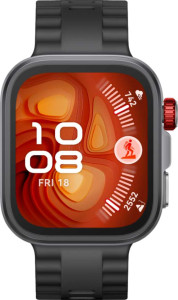
Huawei Watch Fit 4 Pro
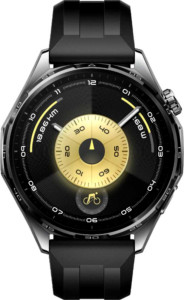
Huawei Watch GT 6

Huawei Watch Fit 4 Pro Huawei Watch GT 6

Overview

Welcome to our in-depth spec comparison of the Huawei Watch Fit 4 Pro and the Huawei Watch GT 6. Both smartwatches share a strong foundation — OLED displays, GPS, NFC, and comprehensive health tracking — yet they diverge in meaningful ways. From battery capacity and weight to specialized features like ECG and golf mode, this comparison breaks down exactly where these two wearables part ways to help you find your ideal match.

Common Features

  • Both watches feature an OLED/AMOLED display.
  • Both watches are waterproof with a 5 ATM rating.
  • Always-On Display is available on both watches.
  • The watch band is replaceable on both models.
  • Neither watch features branded damage-resistant glass.
  • Both watches have a touchscreen display.
  • Blood oxygenation level monitoring is available on both watches.
  • A heart rate monitor is present on both watches.
  • GPS is available on both watches.
  • Both watches include an accelerometer, gyroscope, compass, barometer, and temperature sensor.
  • Sleep tracking and sleep reports are available on both watches.
  • Both watches track distance, steps taken, pace, elevation, and routes.
  • Automatic activity detection is available on both watches.
  • Neither watch has a cellular module or Wi-Fi support.
  • Both watches are compatible with iOS and Android.
  • NFC is available on both watches.
  • Galileo satellite system support is present on both watches.
  • Both watches support wireless charging and have a rechargeable battery.
  • Neither watch has a solar power battery or a removable battery.
  • HRV tracking, VO2 max measurement, resting heart rate measurement, and fast/slow heart rate notifications are available on both watches.
  • Both watches can be used to answer calls and have call control.
  • Activity reports, inactivity alerts, calorie tracking, goal setting, achievements, exercise diary, and an ad-free free app are available on both watches.
  • Both watches have a battery level indicator, auto pause, passcode, and are compatible with smart scales and external heart rate monitors.
  • Neither watch is compatible with Windows or Mac OS X, and neither has an external memory slot.

Main Differences

  • Screen size is 1.82″ on the Huawei Watch Fit 4 Pro and 1.47″ on the Huawei Watch GT 6.
  • Ingress Protection rating is IP68 on the Huawei Watch Fit 4 Pro and IP69 on the Huawei Watch GT 6.
  • Pixel density is 347 ppi on the Huawei Watch Fit 4 Pro and 317 ppi on the Huawei Watch GT 6.
  • Resolution is 408 x 480 px on the Huawei Watch Fit 4 Pro and 466 x 466 px on the Huawei Watch GT 6.
  • Thickness is 9.3 mm on the Huawei Watch Fit 4 Pro and 11 mm on the Huawei Watch GT 6.
  • Weight is 30.4 g on the Huawei Watch Fit 4 Pro and 51.3 g on the Huawei Watch GT 6.
  • Height is 44.5 mm on the Huawei Watch Fit 4 Pro and 46 mm on the Huawei Watch GT 6.
  • Width is 40 mm on the Huawei Watch Fit 4 Pro and 46 mm on the Huawei Watch GT 6.
  • Volume is 16.554 cm³ on the Huawei Watch Fit 4 Pro and 23.276 cm³ on the Huawei Watch GT 6.
  • A cadence sensor is present on the Huawei Watch Fit 4 Pro but not available on the Huawei Watch GT 6.
  • A stroke counter for swimming is available on the Huawei Watch Fit 4 Pro but not on the Huawei Watch GT 6.
  • Golf mode is available on the Huawei Watch Fit 4 Pro but not on the Huawei Watch GT 6.
  • Bluetooth version is 5.2 on the Huawei Watch Fit 4 Pro and 6 on the Huawei Watch GT 6.
  • Battery power is 400 mAh on the Huawei Watch Fit 4 Pro and 867 mAh on the Huawei Watch GT 6.
  • ECG technology is present on the Huawei Watch Fit 4 Pro but not available on the Huawei Watch GT 6.
  • Voice commands are available on the Huawei Watch GT 6 but not on the Huawei Watch Fit 4 Pro.
Specs Comparison
Huawei Watch Fit 4 Pro

Huawei Watch Fit 4 Pro

Huawei Watch GT 6

Huawei Watch GT 6

Design:
screen size 1.82" 1.47"
Display type OLED/AMOLED OLED/AMOLED
water resistance Waterproof Waterproof
ATM rating 5 ATM 5 ATM
Ingress Protection (IP) rating IP68 IP69
Always-On Display
pixel density 347 ppi 317 ppi
resolution 408 x 480 px 466 x 466 px
Watch band is replaceable
has branded damage-resistant glass
thickness 9.3 mm 11 mm
weight 30.4 g 51.3 g
height 44.5 mm 46 mm
width 40 mm 46 mm
Has a display
has a touch screen
Has sapphire glass display
volume 16.554 cm³ 23.276 cm³
is designed for kids

The most striking design difference between these two watches is their form factor and wearability. The Huawei Watch Fit 4 Pro uses a rectangular case measuring 44.5 × 40 mm and weighing just 30.4 g, while the Huawei Watch GT 6 adopts a traditional round-square case at 46 × 46 mm and a noticeably heavier 51.3 g. That near 21 g weight difference is substantial in practice — the Fit 4 Pro will feel almost invisible on the wrist during workouts or sleep tracking, whereas the GT 6's heft is more reminiscent of a conventional watch. The Fit 4 Pro is also slimmer at 9.3 mm versus the GT 6's 11 mm, and its overall volume (16.6 cm³ vs 23.3 cm³) confirms it is a considerably more compact device.

On the display side, the Fit 4 Pro actually delivers a larger screen at 1.82″ compared to the GT 6's 1.47″, which is a meaningful advantage given the Fit 4 Pro's smaller overall footprint — the rectangular shape simply allows for a higher screen-to-body ratio. The Fit 4 Pro also edges ahead on sharpness with 347 ppi versus 317 ppi, meaning text and graphics will appear slightly crisper. Both watches use OLED/AMOLED panels with Always-On Display, sapphire glass protection, and replaceable bands, so those features are evenly matched.

The one area where the GT 6 holds a marginal edge is water resistance: it carries an IP69 rating versus the Fit 4 Pro's IP68, meaning the GT 6 can withstand high-pressure water jets in addition to submersion — a minor but real distinction for users with more demanding water exposure needs. Both share the same 5 ATM rating for swimming. Overall, however, the Fit 4 Pro has a clear design advantage for users who prioritize a lighter, thinner, and larger-screened wearable, while the GT 6 appeals more to those who prefer a classic round-case aesthetic and can tolerate the extra bulk.

Sensors:
Monitors blood oxygenation levels
Has a heart rate monitor
has GPS
has an accelerometer
Has a temperature sensor
has a compass
Has a barometer
has a gyroscope
Has a cadence sensor
Monitors perspiration

Both the Huawei Watch Fit 4 Pro and the Huawei Watch GT 6 share a robust and nearly identical sensor suite, covering the core bases that active users and health-conscious wearers expect: heart rate monitoring, SpO2 (blood oxygen) tracking, GPS, accelerometer, gyroscope, barometer, compass, and a temperature sensor. In practical terms, this means both watches are well-equipped for outdoor navigation, altitude-aware activity tracking, and continuous health monitoring without meaningful compromise on either side.

The single differentiator in this category is the cadence sensor, present on the Fit 4 Pro but absent on the GT 6. For runners and cyclists, cadence — measuring steps per minute or pedal revolutions — is a meaningful training metric that helps optimize efficiency and reduce injury risk. Its inclusion on the Fit 4 Pro signals a slightly stronger orientation toward structured athletic performance tracking.

Overall, the sensor gap between these two watches is narrow. The GT 6 covers everything a general fitness and wellness user needs, but the Fit 4 Pro holds a modest edge for sport-focused users who actively use cadence data in their training.

Activity tracking:
Tracks your sleep
Tracks distance
Tracks steps taken
Measures pace
Provides sleep reports
Detects activities automatically
Has a route tracker
Tracks elevation
Has multi-sport mode
Has exercise tagging
Has a stroke counter for swimming
Tracks calorie intake
Designed for diving
Designed for golf

For the vast majority of activities, these two watches are effectively identical in what they track. Both cover the full range of everyday and athletic monitoring — sleep, steps, distance, pace, elevation, routes, automatic activity detection, calorie intake, and multi-sport modes. That shared foundation is strong, and most users will find neither watch lacking in day-to-day tracking breadth.

Where the Huawei Watch Fit 4 Pro pulls ahead is in two specific sport niches. Its stroke counter for swimming adds genuine value for pool swimmers who want to analyze technique and training load — something the GT 6 simply cannot offer. More distinctively, the Fit 4 Pro also includes golf mode, which caters to a sport with a dedicated and growing wearable user base. The GT 6, by contrast, supports diving but stops short of golf tracking, making it the narrower option for land-based sport variety despite its larger physical footprint.

Taking the full picture into account, the Fit 4 Pro holds a clear edge in activity tracking. Its two additional sport-specific features — swimming stroke analysis and golf support — meaningfully extend its appeal beyond what the GT 6 offers, particularly for users who participate in either of those activities. For purely general fitness tracking, both watches are evenly matched.

Connectivity:
has a cellular module
Is compatible with iOS
Is compatible with Android
Bluetooth version 5.2 6
supports Wi-Fi
supports ANT+
has NFC
supports Galileo

Connectivity between these two watches is largely aligned: both support iOS and Android, include NFC for contactless payments, support the Galileo satellite navigation system, and lack cellular, Wi-Fi, and ANT+ — so neither can operate independently of a phone or pair with third-party fitness equipment like heart rate chest straps.

The one meaningful differentiator is the Bluetooth version. The Huawei Watch GT 6 comes equipped with Bluetooth 6, a step ahead of the Fit 4 Pro's Bluetooth 5.2. In practical terms, Bluetooth 6 brings improvements in connection precision, reduced latency, and more efficient energy use during data transfer. For most casual users the difference will be subtle, but it can translate to a more stable and responsive link to the paired phone, particularly in congested wireless environments.

The GT 6 holds a narrow edge in connectivity purely on the strength of its newer Bluetooth standard. Everything else in this category is identical, so the advantage is real but limited in scope — it matters most to users who prioritize a rock-solid, future-proof wireless connection.

Battery:
battery power 400 mAh 867 mAh
has wireless charging
has a rechargeable battery
Has a solar power battery
has a removable battery

Battery capacity is where the Huawei Watch GT 6 asserts its most decisive advantage in this entire comparison. At 867 mAh, it carries more than double the battery of the Fit 4 Pro's 400 mAh. Raw capacity does not translate 1:1 to battery life — a larger, brighter display and more active sensors can offset a bigger cell — but a gap of this magnitude is hard to neutralize through efficiency alone, and users should expect meaningfully longer time between charges on the GT 6.

For context, the Fit 4 Pro's smaller battery is a direct consequence of its compact, lightweight design. Squeezing a slim 9.3 mm case down to 30.4 g leaves less physical room for a large cell. The GT 6's bulkier form factor, by contrast, accommodates the larger battery comfortably. It is a classic wearable trade-off: portability versus endurance.

Both watches share wireless charging as their replenishment method, so the charging experience is equally convenient on either side. That parity aside, the GT 6 holds a clear and significant battery edge — a key consideration for travelers, outdoor adventurers, or anyone who dislikes frequent charging.

Features:
release date May 2025 September 2025
has HRV tracking
measures VO2 max
measures resting heart rate
has fast/slow heart rate notifications
shows readiness level
Can be used to answer calls
Locates your phone
Has call control
Has notifications
has irregular heart rate warnings
Has ECG technology
Has silent alarm
Has vibrating alerts
has fall detection
Has a stopwatch
Has smart alarm
has voice commands
Has a built-in camera remote control function
warranty period 1 years 1 years
number of microphones 1 1
has a front camera

Across the broad sweep of features, these two watches are remarkably well-matched. Both offer a comprehensive health monitoring stack — HRV tracking, VO2 max, resting heart rate, irregular heart rate warnings, and readiness scores — alongside a full suite of smart features including call answering, notifications, call control, phone finder, camera remote, silent alarm, stopwatch, and vibrating alerts. For the vast majority of daily use cases, neither watch leaves the user wanting.

The two genuine differentiators cut in opposite directions. The Huawei Watch Fit 4 Pro includes ECG technology, which allows it to generate an electrocardiogram reading directly from the wrist — a meaningful health tool for users monitoring heart rhythm conditions or those who simply want a deeper layer of cardiac insight beyond standard heart rate data. The Huawei Watch GT 6 counters with voice commands, enabling hands-free control of watch functions without touching the screen — a convenience feature that adds practical value during workouts or when hands are occupied.

Weighing these two exclusive features, the Fit 4 Pro's ECG capability carries greater significance for health-focused users, as it addresses a more substantive need than voice control. That gives the Fit 4 Pro a narrow but meaningful edge in this category — particularly for anyone with a cardiovascular health interest — while the GT 6 remains a compelling choice for users who prioritize interaction convenience over advanced cardiac monitoring.

App & Software:
Provides activity reports
Has inactivity alerts
Counts how many calories you've burned
Has goal setting
Has achievements
Free app
Has exercise diary
Ad-free
Has coaching
Has temperature tracking
Has period notifications
Supports routes
Has voice feedback
Has music playback
Displays fertile window notifications
Includes maps
Predicts ovulation
Predicts start date
Supports widgets
Can be personalised
Has barcode scanner on app
Tracks water intake
Has weight tracking
Has live tracking
Tracks BMI

In the App & Software category, the Huawei Watch Fit 4 Pro and the Huawei Watch GT 6 are in a category of their own: a complete tie. Every single feature across this group is identical — from fitness staples like activity reports, calorie tracking, goal setting, and exercise diary, to more advanced offerings like live tracking, maps with route support, music playback, and voice feedback.

Notably, both watches also deliver a remarkably comprehensive women's health suite, covering period notifications, fertile window alerts, ovulation prediction, and cycle start date forecasting — features that are far from universal in this product category and represent genuine added value for relevant users. Body composition tracking through BMI, weight, and water intake logging further rounds out an app ecosystem that punches well above the typical smartwatch tier.

With no differentiating spec across all 25 data points, the verdict here is a dead heat. A user's choice between these two watches should rest entirely on the hardware and feature distinctions explored in other categories — the software experience will be the same on either wrist.

Miscellaneous:
has a battery level indicator
Has auto pause
Has passcode
Compatible with smart scales
Compatible with external heart rate monitors
Is compatible with Windows
has an external memory slot
Is compatible with Mac OS X
has a socket for a 3.5 mm audio jack

The Miscellaneous category produces another clean sweep of parity: the Huawei Watch Fit 4 Pro and the Huawei Watch GT 6 are identical across every spec in this group. Both include useful practical touches — auto pause for workout tracking, a passcode for security, a battery level indicator, and compatibility with both smart scales and external heart rate monitors. The last point is worth noting given that neither watch supports ANT+ (as seen in the Connectivity group); compatibility with external heart rate monitors here implies support through alternative means, and it applies equally to both devices.

On the limitations side, neither watch supports Windows or Mac OS X desktop connectivity, has an external memory slot, or includes a 3.5 mm audio jack. None of these absences are unusual for modern smartwatches, which have broadly moved toward phone-centric ecosystems and wireless audio — so these shared omissions are unlikely to be deciding factors for most buyers.

With every data point in this group matching exactly, the result is a complete tie. As with the App & Software category, users comparing these two watches should look to other specification groups — particularly Design, Battery, and Features — to inform their decision.

Comparison Summary & Verdict

After examining the full spec sheets, both watches prove to be capable wearables, but they serve different types of users. The Huawei Watch Fit 4 Pro stands out for its lighter 30.4 g build, slimmer 9.3 mm profile, and a richer feature set that includes ECG technology, a cadence sensor, a stroke counter for swimming, and a dedicated golf mode — making it the stronger companion for fitness enthusiasts and multi-sport athletes. The Huawei Watch GT 6, on the other hand, wins on battery capacity with its 867 mAh cell, a newer Bluetooth 6 standard, a higher IP69 ingress protection rating, and the convenience of voice commands — making it a better fit for everyday users who want longer autonomy and a more conversational smartwatch experience. Choose the Fit 4 Pro for sport-focused depth; choose the GT 6 for endurance and daily practicality.

Huawei Watch Fit 4 Pro
Buy Huawei Watch Fit 4 Pro if...

Buy the Huawei Watch Fit 4 Pro if you want a lighter, slimmer smartwatch packed with sport-specific features like ECG, cadence tracking, swim stroke counting, and golf mode.

Huawei Watch GT 6
Buy Huawei Watch GT 6 if...

Buy the Huawei Watch GT 6 if you prioritize a larger battery, the latest Bluetooth 6, a higher IP69 rating, and the convenience of built-in voice commands for everyday use.