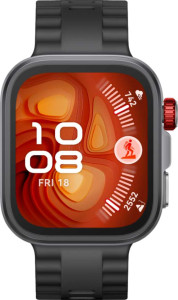
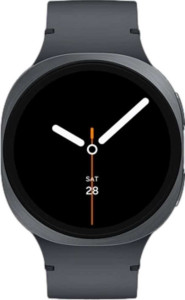
The most immediately striking design difference is screen size: the Huawei Watch Fit 4 Pro sports a 1.82″ OLED display versus the Samsung Galaxy Watch8 44mm's 1.47″ panel. That 0.35-inch gap is significant on a wrist device — the Huawei offers meaningfully more visible area for glanceability, workout metrics, and navigation. Interestingly, despite this larger canvas, the Huawei is actually lighter at 30.4 g compared to Samsung's 34 g, suggesting a more efficient use of materials. The Samsung is marginally thinner (8.6 mm vs 9.3 mm) and slightly wider (43.7 mm vs 40 mm), giving it a squatter, rounder profile, while the Huawei is taller and narrower — a shape that tends to feel less bulky on smaller wrists. Both share the same 20 mm band width and replaceable straps, and critically, both feature sapphire glass displays, offering strong scratch resistance in daily use.
Water resistance specs are nominally identical on paper — 5 ATM, IP68, 50 m — but the Huawei is labeled ″Waterproof″ while the Samsung is listed as ″Water resistant,″ which may reflect a difference in how aggressively each brand certifies real-world submersion. A more concrete and practically important gap emerges in operating temperature range: the Huawei tolerates conditions from -20 °C to 45 °C, whereas the Samsung is rated only from 0 °C to 35 °C. For users who ski, work outdoors in winter, or live in extreme climates, the Huawei's thermal resilience is a tangible real-world advantage.
Overall, the Huawei Watch Fit 4 Pro holds the design edge for most users: it delivers a larger, slightly sharper display (347 ppi vs 327 ppi), a lighter build, and a far wider operational temperature range — all while matching the Samsung on durability fundamentals like sapphire glass and water resistance. The Samsung's slim profile and wider body may appeal to those preferring a more traditional round-ish watch aesthetic, but on the balance of specs provided, the Huawei offers more display real estate and greater environmental versatility in a lighter package.