Huawei Watch Fit 4 Pro
Xiaomi Watch S4 41mm

Huawei Watch Fit 4 Pro Xiaomi Watch S4 41mm

Overview

Welcome to our in-depth specification comparison of the Huawei Watch Fit 4 Pro and the Xiaomi Watch S4 41mm. Both smartwatches share a strong foundation — AMOLED displays, NFC, GPS, and comprehensive health tracking — yet they diverge in meaningful ways across battery capacity, health sensors, connectivity, and onboard storage. Whether you prioritize endurance and advanced cardiac monitoring or cellular independence and a larger internal drive, this comparison will help you find your perfect match.

Common Features

  • Both watches feature an OLED/AMOLED display.
  • Both watches are waterproof with a 5 ATM rating.
  • Always-On Display is available on both watches.
  • The watch band is replaceable on both models.
  • Neither watch has branded damage-resistant glass.
  • Both watches have a touchscreen display.
  • Both watches monitor blood oxygenation levels.
  • Both watches include a heart rate monitor.
  • Both watches have built-in GPS.
  • Both watches include an accelerometer, gyroscope, compass, barometer, and temperature sensor.
  • Both watches track sleep and provide sleep reports.
  • Both watches track steps, distance, pace, elevation, and include a route tracker.
  • Both watches automatically detect activities.
  • Both watches are compatible with iOS and Android.
  • Neither watch supports Wi-Fi or ANT+.
  • NFC is available on both watches.
  • Both watches support the Galileo satellite system.
  • Both watches support wireless charging and have a rechargeable battery.
  • Neither watch has a solar power battery or a removable battery.
  • Both watches offer HRV tracking, VO2 max measurement, resting heart rate measurement, and fast/slow heart rate notifications.
  • Both watches can be used to answer calls and support call control.
  • Both watches can locate your phone.
  • Both watches show a readiness level.
  • Both watches provide activity reports, inactivity alerts, calorie tracking, goal setting, achievements, an exercise diary, and a free ad-free app.
  • Both watches have a battery level indicator and passcode support.
  • Neither watch is compatible with Windows or Mac OS X.
  • Neither watch has an external memory slot or a 3.5 mm audio jack.

Main Differences

  • Screen size is 1.82″ on Huawei Watch Fit 4 Pro and 1.32″ on Xiaomi Watch S4 41mm.
  • Pixel density is 347 ppi on Huawei Watch Fit 4 Pro and 320 ppi on Xiaomi Watch S4 41mm.
  • Resolution is 408 x 480 px on Huawei Watch Fit 4 Pro and 466 x 466 px on Xiaomi Watch S4 41mm.
  • Thickness is 9.3 mm on Huawei Watch Fit 4 Pro and 9.5 mm on Xiaomi Watch S4 41mm.
  • Weight is 30.4 g on Huawei Watch Fit 4 Pro and 32 g on Xiaomi Watch S4 41mm.
  • Height is 44.5 mm on Huawei Watch Fit 4 Pro and 41.2 mm on Xiaomi Watch S4 41mm.
  • Width is 40 mm on Huawei Watch Fit 4 Pro and 41.2 mm on Xiaomi Watch S4 41mm.
  • Volume is 16.554 cm³ on Huawei Watch Fit 4 Pro and 16.12568 cm³ on Xiaomi Watch S4 41mm.
  • A cadence sensor is present on Huawei Watch Fit 4 Pro but not available on Xiaomi Watch S4 41mm.
  • Diving mode is supported on Huawei Watch Fit 4 Pro but not available on Xiaomi Watch S4 41mm.
  • A cellular module is present on Xiaomi Watch S4 41mm but not available on Huawei Watch Fit 4 Pro.
  • Bluetooth version is 5.2 on Huawei Watch Fit 4 Pro and 5.4 on Xiaomi Watch S4 41mm.
  • Battery life is 10 days on Huawei Watch Fit 4 Pro and 8 days on Xiaomi Watch S4 41mm.
  • Battery power is 400 mAh on Huawei Watch Fit 4 Pro and 320 mAh on Xiaomi Watch S4 41mm.
  • Irregular heart rate warnings are available on Huawei Watch Fit 4 Pro but not on Xiaomi Watch S4 41mm.
  • ECG technology is present on Huawei Watch Fit 4 Pro but not available on Xiaomi Watch S4 41mm.
  • Fall detection is available on Xiaomi Watch S4 41mm but not on Huawei Watch Fit 4 Pro.
  • Voice commands are supported on Xiaomi Watch S4 41mm but not on Huawei Watch Fit 4 Pro.
  • Internal storage is 4GB on Huawei Watch Fit 4 Pro and 32GB on Xiaomi Watch S4 41mm.
  • Coaching is available in the app on Huawei Watch Fit 4 Pro but not on Xiaomi Watch S4 41mm.
  • Route support in the app is present on Huawei Watch Fit 4 Pro but not available on Xiaomi Watch S4 41mm.
Specs Comparison
Huawei Watch Fit 4 Pro

Huawei Watch Fit 4 Pro

Xiaomi Watch S4 41mm

Xiaomi Watch S4 41mm

Design:
screen size 1.82" 1.32"
Display type OLED/AMOLED OLED/AMOLED
water resistance Waterproof Waterproof
ATM rating 5 ATM 5 ATM
Always-On Display
pixel density 347 ppi 320 ppi
resolution 408 x 480 px 466 x 466 px
Watch band is replaceable
has branded damage-resistant glass
thickness 9.3 mm 9.5 mm
weight 30.4 g 32 g
height 44.5 mm 41.2 mm
width 40 mm 41.2 mm
Has a display
has a touch screen
Has sapphire glass display
volume 16.554 cm³ 16.12568 cm³
is designed for kids

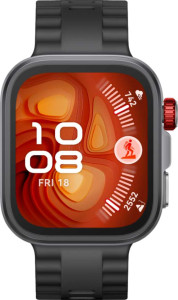
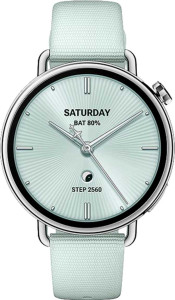
The most striking design difference between these two watches is the screen size. The Huawei Watch Fit 4 Pro sports a notably larger 1.82″ display compared to the 1.32″ panel on the Xiaomi Watch S4 41mm. In real-world use, that extra screen real estate translates to more readable workout metrics, larger map tiles during navigation, and a more immersive overall experience — especially for users with larger wrists. The tradeoff is form factor: the Huawei is taller at 44.5 mm and uses a rectangular footprint (40 × 44.5 mm), while the Xiaomi adopts a more traditional circular, near-square shape at 41.2 × 41.2 mm, which tends to sit more neutrally on the wrist for everyday wear.

Despite the larger display, the Huawei actually edges out the Xiaomi in sharpness with 347 ppi versus 320 ppi, meaning text and graphics will appear marginally crisper. Both use OLED/AMOLED panels and both support Always-On Display, so power-efficiency and ambient visibility are comparable on paper. Both watches also feature sapphire glass — a genuine differentiator over standard mineral glass — offering meaningful scratch resistance during daily wear and outdoor activity, without either brand providing additional branded damage-resistant glass on top of that.

On wearability, the Huawei is slightly lighter at 30.4 g versus 32 g and marginally thinner at 9.3 mm versus 9.5 mm, though these margins are small enough to be imperceptible in daily use. Both watches share 5 ATM water resistance and replaceable bands. Overall, the Huawei Watch Fit 4 Pro holds a clear design edge for users who prioritize screen size and pixel density, while the Xiaomi Watch S4 41mm is the better fit for those who prefer a rounder, more watch-like silhouette.

Sensors:
Monitors blood oxygenation levels
Has a heart rate monitor
has GPS
has an accelerometer
Has a temperature sensor
has a compass
Has a barometer
has a gyroscope
Has a cadence sensor
Monitors perspiration

Both watches arrive with a well-rounded sensor suite that covers the essentials for fitness and outdoor use: heart rate, SpO2, GPS, accelerometer, gyroscope, compass, barometer, and temperature sensor. For most users — whether tracking runs, hikes, or sleep — this shared foundation means neither watch leaves you short on health or navigation data in everyday scenarios.

The single differentiator in this group is the cadence sensor, present on the Huawei Watch Fit 4 Pro but absent on the Xiaomi Watch S4 41mm. Cadence — the number of steps or pedal strokes per minute — is a metric particularly valued by serious runners and cyclists, as it directly informs training efficiency and injury prevention. Its inclusion on the Huawei means that athletes optimizing their stride rate or pedaling rhythm get actionable, real-time feedback without relying on a paired phone or external device.

Neither watch monitors perspiration, so sweat-based stress or hydration metrics are off the table for both. Overall, the Huawei Watch Fit 4 Pro holds a narrow but meaningful edge in this category — the cadence sensor is a niche but genuinely useful addition for performance-oriented users, while the Xiaomi Watch S4 41mm matches it on every other sensor and remains a capable choice for general health and fitness tracking.

Activity tracking:
Tracks your sleep
Tracks distance
Tracks steps taken
Measures pace
Provides sleep reports
Detects activities automatically
Has a route tracker
Tracks elevation
Has exercise tagging
Has a stroke counter for swimming
Tracks calorie intake
Designed for diving

Activity tracking is a near-perfect tie between these two watches. Both cover the full spectrum of everyday and athletic monitoring — sleep tracking with reports, step and distance counting, pace measurement, elevation tracking, route recording, automatic activity detection, exercise tagging, swim stroke counting, and calorie intake logging. For the vast majority of users, from casual walkers to dedicated swimmers and trail runners, neither watch leaves a meaningful gap in the data it can collect.

The one feature that separates them is dive mode, supported by the Huawei Watch Fit 4 Pro but not the Xiaomi Watch S4 41mm. This is a functionally significant distinction for underwater enthusiasts: a watch designed for diving can track depth, dive time, and withstand the pressure conditions associated with recreational diving — going well beyond the standard water-resistance use case of swimming or showering. For non-divers, this difference is irrelevant, but for anyone who spends time underwater beyond the pool, it is a hard requirement that only one of these watches satisfies.

In summary, the Huawei Watch Fit 4 Pro has a clear edge in this category, but only for a specific audience. If diving is part of your lifestyle, the choice is straightforward. For everyone else, both watches are functionally equivalent in activity tracking, and the Xiaomi Watch S4 41mm concedes nothing in day-to-day athletic and wellness monitoring.

Connectivity:
has a cellular module
Is compatible with iOS
Is compatible with Android
Bluetooth version 5.2 5.4
supports Wi-Fi
supports ANT+
has NFC
supports Galileo

Connectivity is where these two watches diverge most consequentially. The Xiaomi Watch S4 41mm includes a cellular module, meaning it can make calls, receive notifications, and stream data independently — without a paired smartphone nearby. For users who want to leave their phone behind during runs or workouts while staying reachable, this is a transformative capability. The Huawei Watch Fit 4 Pro lacks cellular entirely, tethering it to a phone for any live data or communication functions.

On Bluetooth, the Xiaomi also pulls ahead with version 5.4 versus 5.2 on the Huawei. While both are modern implementations, 5.4 offers incremental improvements in connection stability and energy efficiency — a modest but real advantage, particularly relevant given the Xiaomi's cellular demands on battery. Both watches support NFC for contactless payments and share iOS and Android compatibility, Galileo satellite support, and a notable absence of Wi-Fi and ANT+ — so accessory pairing with third-party fitness hardware like chest straps is off the table for both.

The verdict in this category is clear: the Xiaomi Watch S4 41mm holds a significant edge. Cellular connectivity is a premium feature that fundamentally expands what a smartwatch can do independently, and combined with the newer Bluetooth version, the Xiaomi is the stronger connected device of the two. The Huawei's omission of cellular makes it a companion device by design, which is a meaningful limitation for users who value standalone functionality.

Battery:
battery life 10 days 8 days
battery power 400 mAh 320 mAh
has wireless charging
has a rechargeable battery
Has a solar power battery
has a removable battery

Battery life is one area where the Huawei Watch Fit 4 Pro pulls ahead meaningfully. Its 400 mAh cell is rated for 10 days of use, compared to the 320 mAh and 8 days on the Xiaomi Watch S4 41mm. That two-day gap is practically significant — for travelers, frequent campers, or anyone who simply dislikes the charging routine, the Huawei stretches further between top-ups. It is also worth noting that the Xiaomi's cellular module, highlighted in the connectivity category, will draw additional power in real-world use, likely compressing that 8-day estimate more than the rated figure suggests.

Where the two watches align is in charging convenience: both support wireless charging, eliminating the need for proprietary pins or cables. Neither offers solar charging or a removable battery, so the charging infrastructure is effectively identical — the Huawei just needs to use it less often.

The Huawei Watch Fit 4 Pro has a clear edge in battery endurance, backed by both a larger capacity and a longer rated lifespan. For users who prioritize going as long as possible between charges, this is a genuine differentiator. The Xiaomi's 8-day rating is still competitive by smartwatch standards, but it starts from a lower baseline and faces greater real-world drain from its cellular connectivity.

Features:
release date May 2025 June 2025
has HRV tracking
measures VO2 max
measures resting heart rate
has fast/slow heart rate notifications
shows readiness level
Can be used to answer calls
Locates your phone
Has call control
Has notifications
has irregular heart rate warnings
Has ECG technology
Has silent alarm
Has vibrating alerts
has fall detection
Has a stopwatch
Has smart alarm
has voice commands
internal storage 4GB 32GB
Has a built-in camera remote control function
warranty period 1 years 1 years
number of microphones 1 1
has a front camera

Both watches share a strong common feature set — HRV tracking, VO2 max, readiness scores, call management, notifications, and camera remote control are all present on each. The meaningful divergence comes down to four specific capabilities that split along two distinct user profiles. The Huawei Watch Fit 4 Pro includes ECG technology and irregular heart rate warnings, making it the more clinically oriented of the two. ECG on a wrist-worn device allows users to capture a single-lead electrocardiogram on demand — a tool with real value for those monitoring cardiac health or flagging anomalies for a physician.

The Xiaomi Watch S4 41mm counters with fall detection and voice commands, two features absent on the Huawei. Fall detection is particularly meaningful for older users or those engaging in high-risk activities, as it can trigger emergency alerts automatically. Voice commands add a layer of hands-free convenience for everyday interactions. On storage, the gap is stark: the Xiaomi offers 32GB of internal storage versus just 4GB on the Huawei — an 8x difference that matters significantly if the watch is used to store music or other media for phone-free listening, especially relevant given the Xiaomi's cellular capability.

This category is genuinely split by use case rather than by one product being comprehensively superior. The Huawei Watch Fit 4 Pro has the edge for health-focused users who value cardiac monitoring depth, while the Xiaomi Watch S4 41mm is the stronger choice for those who prioritize safety features, voice interaction, and standalone media storage. Neither watch dominates outright — the right pick depends on which feature subset aligns with the user's primary needs.

App & Software:
Provides activity reports
Has inactivity alerts
Counts how many calories you've burned
Has goal setting
Has achievements
Free app
Has exercise diary
Ad-free
Has coaching
Has temperature tracking
Has period notifications
Supports routes
Has music playback
Includes maps
Predicts ovulation
Predicts start date
Supports widgets
Can be personalised
Has barcode scanner on app
Tracks water intake
Has weight tracking

From a software and app perspective, these two watches are closely matched across a broad and genuinely useful feature set. Both companion apps are free, ad-free, and cover the full wellness spectrum — activity reports, calorie tracking, goal setting, exercise diary, water and weight tracking, temperature monitoring, music playback, maps, cycle tracking with ovulation and period predictions, and full personalization with widget support. For the overwhelming majority of users, neither app leaves a noticeable gap in day-to-day functionality.

Two features tip the balance toward the Huawei Watch Fit 4 Pro. First, it offers in-app coaching, which provides structured, guided training feedback — a meaningful differentiator for users who want their watch to actively inform how they should train, rather than simply record what they did. Second, it supports route tracking within the app, allowing users to plan, follow, and review mapped routes. The Xiaomi Watch S4 41mm lacks both, which is a tangible gap for runners or cyclists who rely on route-based training.

The Huawei Watch Fit 4 Pro holds a clear edge in this category. While the shared feature base is strong on both sides, coaching and route support represent the kind of value-added software depth that elevates a fitness tracker into a more proactive training tool. The Xiaomi's app is capable and polished, but it is more passive by comparison — recording and reporting rather than guiding.
Miscellaneous:
has a battery level indicator
Has passcode
Is compatible with Windows
has an external memory slot
Is compatible with Mac OS X
has a socket for a 3.5 mm audio jack

The Miscellaneous category is a complete draw. Every spec in this group is identical across the Huawei Watch Fit 4 Pro and the Xiaomi Watch S4 41mm — both include a battery level indicator and passcode protection, and neither supports Windows or Mac OS X compatibility, external memory expansion, or a 3.5mm audio jack.

The shared absence of desktop OS compatibility is standard for smartwatches of this class, which are designed to pair with mobile devices rather than computers. The lack of a 3.5mm jack is equally expected given the form factor, and the absence of expandable storage is consistent with the sealed, wearable-first design philosophy both watches follow.

This group offers no basis for differentiation — the two watches are entirely evenly matched here. Users evaluating these products can set this category aside and focus their decision on the more substantive differences found in connectivity, features, and battery life.

Comparison Summary & Verdict

After examining every specification, both watches prove to be capable companions, but they serve different needs. The Huawei Watch Fit 4 Pro stands out with its larger screen, superior battery life of 10 days, ECG technology, irregular heart rate warnings, cadence sensor, diving support, and in-app coaching with route guidance — making it the stronger choice for health-focused users and endurance athletes. The Xiaomi Watch S4 41mm, on the other hand, counters with a built-in cellular module, a significantly larger 32 GB internal storage, fall detection, voice commands, and the newer Bluetooth 5.4 — making it ideal for users who want smartphone independence and a more feature-rich connected experience. Choose the Huawei if advanced health monitoring and battery stamina are your top priorities; choose the Xiaomi if staying connected without your phone matters most.

Huawei Watch Fit 4 Pro
Buy Huawei Watch Fit 4 Pro if...

Buy the Huawei Watch Fit 4 Pro if you want longer battery life, ECG monitoring, and advanced health tracking features like a cadence sensor and diving support.

Xiaomi Watch S4 41mm
Buy Xiaomi Watch S4 41mm if...

Buy the Xiaomi Watch S4 41mm if you need cellular connectivity for phone-free use, 32 GB of internal storage, or features like fall detection and voice commands.