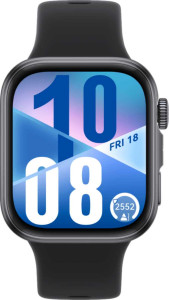
Huawei Watch Fit 4
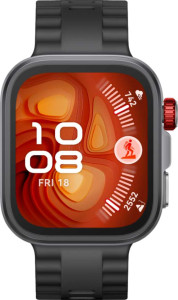
Huawei Watch Fit 4 Pro

Huawei Watch Fit 4 Huawei Watch Fit 4 Pro

Overview

When choosing between the Huawei Watch Fit 4 and the Huawei Watch Fit 4 Pro, you are looking at two fitness-focused smartwatches that share a strong common foundation yet diverge in meaningful ways. Both deliver the same vibrant 1.82″ AMOLED display, comprehensive sensor suite, and 10-day battery life, but key questions arise around build quality, advanced health monitoring, and sport-specific tracking capabilities. This comparison breaks down exactly where the two models align and where the Pro earns its premium designation.

Common Features

  • Both watches feature a 1.82″ screen size.
  • Both use an OLED/AMOLED display type.
  • Both have a pixel density of 347 ppi.
  • Both are waterproof with a 5 ATM rating and IP68 ingress protection, rated to a depth of 50 m.
  • Always-On Display is available on both watches.
  • Both monitors blood oxygenation levels.
  • Both have a heart rate monitor.
  • Both have GPS, an accelerometer, a compass, a barometer, a gyroscope, and a cadence sensor.
  • Both track sleep and provide sleep reports.
  • Both track distance, steps taken, pace, elevation, and have a route tracker.
  • Automatic activity detection is available on both watches.
  • Neither watch has a cellular module or Wi-Fi support.
  • Both are compatible with iOS and Android.
  • Both use Bluetooth version 5.2.
  • NFC is available on both watches.
  • Galileo satellite system is supported on both watches.
  • Both have a 400 mAh battery with a 10-day battery life and a charge time of 0.75 hours.
  • Wireless charging is available on both watches, though neither supports solar power or has a removable battery.
  • Both measure VO2 max, resting heart rate, and provide fast/slow heart rate notifications.
  • Both support call answering, call control, phone locating, and notifications.
  • Both provide activity reports, inactivity alerts, calorie tracking, goal setting, achievements, an exercise diary, and use a free, ad-free app.
  • Both have a battery level indicator, auto pause, passcode protection, and are compatible with smart scales and external heart rate monitors.
  • Neither watch is compatible with Windows or Mac OS X, and neither has an external memory slot.

Main Differences

  • Thickness is 9.5 mm on Huawei Watch Fit 4 and 9.3 mm on Huawei Watch Fit 4 Pro.
  • Weight is 27 g on Huawei Watch Fit 4 and 30.4 g on Huawei Watch Fit 4 Pro.
  • Height is 43 mm on Huawei Watch Fit 4 and 44.5 mm on Huawei Watch Fit 4 Pro.
  • Width is 38 mm on Huawei Watch Fit 4 and 40 mm on Huawei Watch Fit 4 Pro.
  • Volume is 15.523 cm³ on Huawei Watch Fit 4 and 16.554 cm³ on Huawei Watch Fit 4 Pro.
  • Lowest potential operating temperature is -10 °C on Huawei Watch Fit 4 and -20 °C on Huawei Watch Fit 4 Pro.
  • Sapphire glass display is present on Huawei Watch Fit 4 Pro but not available on Huawei Watch Fit 4.
  • A temperature sensor is present on Huawei Watch Fit 4 Pro but not available on Huawei Watch Fit 4.
  • Dive activity tracking is supported on Huawei Watch Fit 4 Pro but not available on Huawei Watch Fit 4.
  • Golf activity tracking is supported on Huawei Watch Fit 4 Pro but not available on Huawei Watch Fit 4.
  • ECG technology is present on Huawei Watch Fit 4 Pro but not available on Huawei Watch Fit 4.
  • Temperature tracking in the app is available on Huawei Watch Fit 4 Pro but not available on Huawei Watch Fit 4.
Specs Comparison
Huawei Watch Fit 4

Huawei Watch Fit 4

Huawei Watch Fit 4 Pro

Huawei Watch Fit 4 Pro

Design:
screen size 1.82" 1.82"
Display type OLED/AMOLED OLED/AMOLED
water resistance Waterproof Waterproof
ATM rating 5 ATM 5 ATM
Ingress Protection (IP) rating IP68 IP68
waterproof depth rating 50 m 50 m
Always-On Display
pixel density 347 ppi 347 ppi
resolution 408 x 480 px 408 x 480 px
Watch band is replaceable
has branded damage-resistant glass
thickness 9.5 mm 9.3 mm
weight 27 g 30.4 g
height 43 mm 44.5 mm
width 38 mm 40 mm
maximum operating temperature 45 °C 45 °C
lowest potential operating temperature -10 °C -20 °C
Has a display
has a touch screen
Has sapphire glass display
volume 15.523 cm³ 16.554 cm³
is designed for kids
maximum altitude 164 feet 164 feet
width of band 20 mm 20 mm

Both the Huawei Watch Fit 4 and Watch Fit 4 Pro share the same 1.82″ OLED/AMOLED display with identical 408 x 480 px resolution and 347 ppi pixel density, so neither has a visual edge in terms of screen quality or sharpness. They also match on water resistance — both rated 5 ATM / IP68 with a 50 m depth rating — and both support Always-On Display and a replaceable 20 mm band.

Where the two diverge is in physical build and materials. The standard Fit 4 is measurably lighter at 27 g versus the Pro's 30.4 g, and slightly more compact (43 × 38 mm vs 44.5 × 40 mm). For all-day wear, that 3+ gram difference and smaller footprint can matter on smaller wrists. The Pro, however, counters with a sapphire glass display — a significantly harder material that resists scratches from everyday objects like keys and metal surfaces — something the standard Fit 4 entirely lacks. The Pro is also marginally thinner at 9.3 mm vs 9.5 mm, though that difference is negligible in practice.

The Pro also extends its cold-weather tolerance to -20 °C compared to the Fit 4's -10 °C, which could matter for winter outdoor sports. Overall, the standard Fit 4 has a slight wearability edge thanks to its lower weight and smaller footprint, but the Pro holds a clear durability advantage with its sapphire glass — making the choice a trade-off between comfort on the wrist and long-term screen protection.

Sensors:
Monitors blood oxygenation levels
Has a heart rate monitor
has GPS
has an accelerometer
Has a temperature sensor
has a compass
Has a barometer
has a gyroscope
Has a cadence sensor
Monitors perspiration

The sensor suites of the Huawei Watch Fit 4 and Fit 4 Pro are nearly identical across the board. Both pack a strong foundation for fitness and outdoor tracking: heart rate monitor, SpO2 (blood oxygen), GPS, accelerometer, gyroscope, barometer, compass, and cadence sensor. For runners, cyclists, and hikers, this shared core delivers reliable motion tracking, elevation data, and navigation support without either model falling short.

The sole differentiator is the temperature sensor present on the Fit 4 Pro but absent on the standard Fit 4. A wrist-based temperature sensor enables continuous skin temperature monitoring, which is useful for tracking recovery trends, detecting early signs of illness, and improving the accuracy of menstrual cycle predictions — all features that depend on consistent thermal baselines over time. It is worth noting that wrist temperature readings are skin-surface measurements and not equivalent to core body temperature, but as a relative tracking tool they add meaningful health insight.

The verdict here is straightforward: the Fit 4 Pro has a clear sensor edge exclusively due to its temperature sensor. For users who prioritize detailed health monitoring beyond activity tracking, that addition is genuinely useful. Those focused purely on sport and fitness metrics, however, will find both watches functionally equivalent.

Activity tracking:
Tracks your sleep
Tracks distance
Tracks steps taken
Measures pace
Provides sleep reports
Detects activities automatically
Has a route tracker
Tracks elevation
Has multi-sport mode
Has exercise tagging
Has a stroke counter for swimming
Tracks calorie intake
Designed for diving
Designed for golf

Across the core activity tracking feature set, the Huawei Watch Fit 4 and Fit 4 Pro are completely identical. Both cover the full spectrum of everyday fitness needs — sleep tracking with reports, step and distance counting, pace measurement, elevation tracking, route logging, automatic activity detection, multi-sport mode, and even a stroke counter for swimming. For the vast majority of users, there is genuinely nothing to choose between them here.

The divergence comes down to two sport-specific modes: diving and golf, both of which are supported on the Fit 4 Pro but absent on the standard Fit 4. Dive mode is a meaningful addition for underwater sports enthusiasts, enabling depth and duration tracking in ways that generic swim tracking cannot replicate. Golf mode, meanwhile, typically provides course-aware metrics and swing analysis that go far beyond what multi-sport mode offers — making it a real differentiator for golfers rather than a cosmetic feature.

For general fitness users, these two watches are effectively tied in this category. But the Fit 4 Pro holds a clear advantage for anyone whose lifestyle includes diving or golf — those are purpose-built modes that the standard Fit 4 simply cannot replicate.

Connectivity:
has a cellular module
Is compatible with iOS
Is compatible with Android
Bluetooth version 5.2 5.2
supports Wi-Fi
supports ANT+
has NFC
supports Galileo

Connectivity is the one category where there is nothing to debate: the Huawei Watch Fit 4 and Fit 4 Pro are spec-for-spec identical. Both run Bluetooth 5.2, support NFC for contactless payments, are compatible with both iOS and Android, and support the Galileo satellite navigation system. Neither model includes Wi-Fi, a cellular module, or ANT+.

The absence of Wi-Fi and cellular means both watches rely entirely on a paired smartphone for data sync and notifications — a common trade-off at this product tier that prioritizes battery life over independence. NFC is a practical inclusion for tap-to-pay functionality, and Bluetooth 5.2 provides a stable, energy-efficient connection with reliable range for day-to-day use.

This category is a complete tie. Not a single connectivity specification separates these two devices, so it should play no role in a buying decision between them.

Battery:
battery life 10 days 10 days
battery power 400 mAh 400 mAh
charge time 0.75 hours 0.75 hours
has wireless charging
has a rechargeable battery
Has a solar power battery
has a removable battery

Battery is another category where the Huawei Watch Fit 4 and Fit 4 Pro offer no meaningful differentiation. Both house a 400 mAh battery rated for 10 days of use, charge fully in just 0.75 hours, and support wireless charging — a convenient feature that eliminates the need for proprietary cable connectors.

A 10-day rated battery life is competitive for a feature-rich smartwatch with always-on display and GPS capabilities, reducing the charging burden to roughly once a week for most users. The 45-minute charge time is notably fast, meaning even a short top-up session can meaningfully extend usage. Neither watch offers solar charging or a removable battery, which is standard for devices in this category.

Like connectivity, this is a complete tie — every battery specification is identical across both models, and it should carry no weight in the decision between them.

Features:
release date May 2025 May 2025
measures VO2 max
measures resting heart rate
has fast/slow heart rate notifications
shows readiness level
Can be used to answer calls
Locates your phone
Has call control
Has notifications
has irregular heart rate warnings
Has ECG technology
Has silent alarm
Has vibrating alerts
has fall detection
Has a stopwatch
Has smart alarm
has voice commands
internal storage 4GB 4GB
Has a built-in camera remote control function
warranty period 1 years 1 years
number of microphones 1 1
has a front camera

Feature parity between the Huawei Watch Fit 4 and Fit 4 Pro is remarkably high. Both deliver a well-rounded smartwatch experience: call answering and control, notifications, VO2 max measurement, resting heart rate tracking, irregular heart rate warnings, readiness scores, silent and vibrating alarms, a stopwatch, camera remote control, and 4GB of internal storage. For day-to-day health monitoring and smart notifications, neither model leaves anything on the table relative to the other.

The single feature that sets them apart is ECG technology, available exclusively on the Fit 4 Pro. ECG (electrocardiogram) capability allows the watch to generate a single-lead heart rhythm reading that can help detect signs of atrial fibrillation — a clinically meaningful tool for users with heart health concerns or those who want deeper cardiac monitoring beyond standard heart rate alerts. It is a significant step up from irregular heart rate warnings alone, as it provides a recordable trace rather than just a notification.

For users who do not have a specific interest in cardiac monitoring, the two watches are functionally identical in this category. But for anyone who values ECG as a health safeguard, the Fit 4 Pro holds a clear and meaningful advantage — it is the only one of the two capable of delivering that level of cardiac insight.

App & Software:
Provides activity reports
Has inactivity alerts
Counts how many calories you've burned
Has goal setting
Has achievements
Free app
Has exercise diary
Ad-free
Has coaching
Has temperature tracking
Has period notifications
Supports routes
Has voice feedback
Has music playback
Displays fertile window notifications
Includes maps
Predicts ovulation
Predicts start date
Supports widgets
Can be personalised
Has barcode scanner on app
Tracks water intake
Has weight tracking
Has live tracking
Tracks BMI

On the software and app front, the Huawei Watch Fit 4 and Fit 4 Pro are nearly indistinguishable. Both pair with a free, ad-free companion app that covers an impressive breadth of features: activity reports, exercise diary, coaching, goal setting, live tracking, route and maps support, voice feedback, music playback, and comprehensive health tools including water intake, weight, and BMI tracking. The app's reproductive health suite — covering period notifications, fertile window alerts, ovulation prediction, and cycle start date forecasting — is fully available on both models as well.

The only divergence is temperature tracking in the app, which is supported on the Fit 4 Pro but absent on the standard Fit 4. This directly mirrors the hardware difference identified in the sensors category: without a physical temperature sensor, the Fit 4 simply has no data to feed that feature. On the Pro, temperature tracking adds a continuous layer of wellness insight — most meaningfully when used alongside the reproductive health tools, where skin temperature trends can refine cycle and ovulation predictions over time.

As a software package, both watches offer exceptional depth for their category. The Fit 4 Pro holds a narrow edge solely due to temperature tracking unlocking an additional dimension of health data — but for users who have no interest in that feature, the app experience is effectively identical across both devices.
Miscellaneous:
has a battery level indicator
Has auto pause
Has passcode
Compatible with smart scales
Compatible with external heart rate monitors
Is compatible with Windows
has an external memory slot
Is compatible with Mac OS X
has a socket for a 3.5 mm audio jack

The miscellaneous spec sheet for the Huawei Watch Fit 4 and Fit 4 Pro is a mirror image. Every single attribute — from auto pause and passcode protection, to compatibility with smart scales and external heart rate monitors, to the shared absence of a memory card slot, audio jack, and Windows or Mac OS X support — is identical across both models.

A few of these shared traits are worth noting in context. Compatibility with external heart rate monitors is a useful addition for athletes who prefer chest strap accuracy over wrist-based readings during intense training. Auto pause keeps workout data clean by stopping recording when movement ceases, and passcode support adds a basic layer of privacy for notification and payment data stored on the device.

There is nothing to separate these two watches here — this is a complete tie across every miscellaneous specification, and should not factor into any purchasing decision between them.

Comparison Summary & Verdict

Both the Huawei Watch Fit 4 and the Huawei Watch Fit 4 Pro share an impressive core: identical display size and quality, a 10-day battery life, NFC, GPS, and a rich set of fitness and health tools. However, the Pro clearly targets a more demanding audience. It adds a sapphire glass display, an ECG sensor, a temperature sensor, and dedicated tracking for diving and golf, while also operating in temperatures as low as -20°C versus -10°C on the standard model. The Huawei Watch Fit 4 is the smarter pick for everyday users who want a lighter, slimmer smartwatch without paying for specialist features. The Huawei Watch Fit 4 Pro, on the other hand, is built for athletes and outdoor enthusiasts who need more durable materials and a broader range of advanced health and activity metrics.

Huawei Watch Fit 4
Buy Huawei Watch Fit 4 if...

Buy the Huawei Watch Fit 4 if you want a lighter, slimmer smartwatch for everyday fitness tracking without needing specialist features like ECG, temperature sensing, or dive and golf tracking.

Huawei Watch Fit 4 Pro
Buy Huawei Watch Fit 4 Pro if...

Buy the Huawei Watch Fit 4 Pro if you need advanced health monitoring with ECG and temperature tracking, a more durable sapphire glass display, and dedicated support for diving and golf activities.