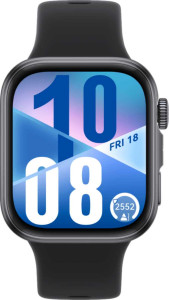
Huawei Watch Fit 4
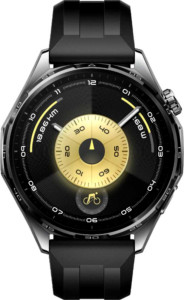
Huawei Watch GT 6

Huawei Watch Fit 4 Huawei Watch GT 6

Overview

When choosing between the Huawei Watch Fit 4 and the Huawei Watch GT 6, shoppers face two smartwatches that share a strong common foundation yet diverge in meaningful ways. Both offer OLED displays, GPS, NFC, heart rate monitoring, and a fully-featured health tracking suite — but key battlegrounds like size and weight, battery capacity, and specialized sensor sets set them apart. Read on to see how every spec stacks up side by side.

Common Features

  • Both watches feature an OLED/AMOLED display.
  • Both watches are waterproof with a 5 ATM rating.
  • Always-On Display is available on both watches.
  • The watch band is replaceable on both models.
  • Neither watch has branded damage-resistant glass.
  • Both watches have a touchscreen display.
  • Blood oxygenation level monitoring is available on both watches.
  • A heart rate monitor is present on both watches.
  • GPS is available on both watches.
  • Both watches include an accelerometer, compass, barometer, and gyroscope.
  • Neither watch monitors perspiration.
  • Both watches track sleep and provide sleep reports.
  • Both watches track distance, steps taken, pace, elevation, and have a route tracker.
  • Activity auto-detection is available on both watches.
  • Neither watch has a cellular module or Wi-Fi support.
  • Both watches are compatible with iOS and Android.
  • NFC is available on both watches.
  • Galileo satellite system support is present on both watches.
  • Both watches support wireless charging and have a rechargeable battery.
  • Neither watch has a solar power battery or removable battery.
  • VO2 max measurement is available on both watches.
  • Resting heart rate measurement is available on both watches.
  • Fast and slow heart rate notifications are available on both watches.
  • Readiness level tracking is available on both watches.
  • Both watches can be used to answer calls and have call control.
  • Phone locating and notification features are present on both watches.
  • Both watches provide activity reports, inactivity alerts, calorie tracking, goal setting, achievements, and an exercise diary.
  • The companion app is free and ad-free on both watches.
  • Both watches have a battery level indicator, auto pause, and passcode support.
  • Both watches are compatible with smart scales and external heart rate monitors.
  • Neither watch is compatible with Windows or Mac OS X, and neither has an external memory slot.

Main Differences

  • Screen size is 1.82″ on the Huawei Watch Fit 4 and 1.47″ on the Huawei Watch GT 6.
  • Ingress Protection rating is IP68 on the Huawei Watch Fit 4 and IP69 on the Huawei Watch GT 6.
  • Pixel density is 347 ppi on the Huawei Watch Fit 4 and 317 ppi on the Huawei Watch GT 6.
  • Resolution is 408 x 480 px on the Huawei Watch Fit 4 and 466 x 466 px on the Huawei Watch GT 6.
  • Thickness is 9.5 mm on the Huawei Watch Fit 4 and 11 mm on the Huawei Watch GT 6.
  • Weight is 27 g on the Huawei Watch Fit 4 and 51.3 g on the Huawei Watch GT 6.
  • Height is 43 mm on the Huawei Watch Fit 4 and 46 mm on the Huawei Watch GT 6.
  • Width is 38 mm on the Huawei Watch Fit 4 and 46 mm on the Huawei Watch GT 6.
  • Sapphire glass display is present on the Huawei Watch GT 6 but not available on the Huawei Watch Fit 4.
  • Volume is 15.523 cm³ on the Huawei Watch Fit 4 and 23.276 cm³ on the Huawei Watch GT 6.
  • A temperature sensor is present on the Huawei Watch GT 6 but not available on the Huawei Watch Fit 4.
  • A cadence sensor is present on the Huawei Watch Fit 4 but not available on the Huawei Watch GT 6.
  • A stroke counter for swimming is present on the Huawei Watch Fit 4 but not available on the Huawei Watch GT 6.
  • Diving design is present on the Huawei Watch GT 6 but not on the Huawei Watch Fit 4.
  • Bluetooth version is 5.2 on the Huawei Watch Fit 4 and 6 on the Huawei Watch GT 6.
  • Battery power is 400 mAh on the Huawei Watch Fit 4 and 867 mAh on the Huawei Watch GT 6.
  • Voice command support is present on the Huawei Watch GT 6 but not available on the Huawei Watch Fit 4.
  • Temperature tracking in the app is available on the Huawei Watch GT 6 but not on the Huawei Watch Fit 4.
Specs Comparison
Huawei Watch Fit 4

Huawei Watch Fit 4

Huawei Watch GT 6

Huawei Watch GT 6

Design:
screen size 1.82" 1.47"
Display type OLED/AMOLED OLED/AMOLED
water resistance Waterproof Waterproof
ATM rating 5 ATM 5 ATM
Ingress Protection (IP) rating IP68 IP69
Always-On Display
pixel density 347 ppi 317 ppi
resolution 408 x 480 px 466 x 466 px
Watch band is replaceable
has branded damage-resistant glass
thickness 9.5 mm 11 mm
weight 27 g 51.3 g
height 43 mm 46 mm
width 38 mm 46 mm
Has a display
has a touch screen
Has sapphire glass display
volume 15.523 cm³ 23.276 cm³
is designed for kids

The most striking physical difference between these two watches is their form factor and weight. The Huawei Watch Fit 4 uses a rectangular 1.82″ display in a slim 9.5 mm chassis weighing just 27 g, while the Huawei Watch GT 6 adopts a round 1.47″ face, is thicker at 11 mm, and nearly doubles the weight at 51.3 g. In real-world terms, the Fit 4 will feel virtually invisible on the wrist during workouts or sleep tracking, whereas the GT 6's heft is more typical of a traditional watch — reassuring to some, but noticeably present during extended wear.

On display quality, the Fit 4 edges ahead with a sharper 347 ppi versus the GT 6's 317 ppi, a tangible difference when reading small text or viewing detailed metrics. Both use OLED/AMOLED panels with an Always-On Display, so contrast and visibility are strong on either device. However, the GT 6 counters with a sapphire glass display — a material significantly harder than standard glass — offering meaningfully better scratch resistance over time, which the Fit 4 lacks entirely.

On durability, both reach 5 ATM water resistance, but the GT 6 holds a slight edge with an IP69 rating versus the Fit 4's IP68, meaning it can handle high-pressure water jets — a minor but real advantage. Overall, the Fit 4 has a clear edge in wearability and screen sharpness, while the GT 6 wins on long-term durability and display protection. The right choice depends on whether the user prioritizes lightweight comfort or a more rugged, premium-feeling build.

Sensors:
Monitors blood oxygenation levels
Has a heart rate monitor
has GPS
has an accelerometer
Has a temperature sensor
has a compass
Has a barometer
has a gyroscope
Has a cadence sensor
Monitors perspiration

Both watches share a strong common sensor foundation — heart rate monitoring, blood oxygen (SpO2), GPS, accelerometer, gyroscope, barometer, and compass are all present on each device. This means core fitness and outdoor navigation capabilities are essentially on par, and neither watch is left wanting for everyday health tracking or route recording during activities like hiking or cycling.

Where the two diverge is telling. The Huawei Watch GT 6 adds a temperature sensor, which enables continuous skin or ambient temperature monitoring — useful for tracking recovery, detecting illness onset, or understanding how environmental conditions affect performance. The Huawei Watch Fit 4, in turn, includes a cadence sensor, which measures steps or pedal strokes per minute — a metric particularly valued by runners and cyclists who want to optimize their movement efficiency and reduce injury risk.

These two differing sensors reflect distinct target audiences rather than one watch being broadly superior. The GT 6's temperature sensing caters to health-focused users who want deeper physiological insight, while the Fit 4's cadence tracking appeals more to performance-oriented athletes. Neither omission is trivial, so the edge here depends entirely on use case: GT 6 wins for health monitoring depth, Fit 4 wins for sport-specific training metrics.

Activity tracking:
Tracks your sleep
Tracks distance
Tracks steps taken
Measures pace
Provides sleep reports
Detects activities automatically
Has a route tracker
Tracks elevation
Has multi-sport mode
Has exercise tagging
Has a stroke counter for swimming
Tracks calorie intake
Designed for diving
Designed for golf

Activity tracking coverage is remarkably consistent between these two watches. Both handle the full spectrum of everyday fitness metrics — sleep tracking with reports, step counting, distance, pace, elevation, route tracking, calorie intake, automatic activity detection, exercise tagging, and multi-sport mode. For the vast majority of users, this shared foundation means neither watch falls short in day-to-day training or health monitoring.

The only two differentiators here point in opposite directions across water sports. The Fit 4 includes a stroke counter for swimming, which gives pool swimmers actionable data on stroke efficiency and lap technique — something the GT 6 simply cannot provide. The GT 6, meanwhile, is designed for diving, meaning it is built and validated for the specific pressures and use cases of underwater diving, going beyond casual swim-proofing. The Fit 4 makes no such claim.

These differences mirror the broader positioning of each device. The Fit 4 serves fitness-minded swimmers who want performance metrics in the pool, while the GT 6 targets users who engage in more demanding aquatic activities. Outside of water sports, the two are completely tied in this category — so the edge goes to whichever watch matches the user's specific aquatic pursuits: Fit 4 for swim training, GT 6 for diving.

Connectivity:
has a cellular module
Is compatible with iOS
Is compatible with Android
Bluetooth version 5.2 6
supports Wi-Fi
supports ANT+
has NFC
supports Galileo

Connectivity across these two watches is largely identical — both support iOS and Android, offer NFC for contactless payments, support the Galileo satellite navigation system, and skip cellular and Wi-Fi entirely. For most users, the practical day-to-day experience of pairing, notifications, and payments will feel indistinguishable.

The sole differentiator is Bluetooth: the Fit 4 uses Bluetooth 5.2 while the GT 6 steps up to Bluetooth 6. In real-world terms, Bluetooth 6 brings improvements in connection precision and efficiency over 5.2 — most notably through enhanced channel sounding capabilities that allow more accurate device positioning, as well as generally lower latency and more reliable connectivity at range. For a smartwatch, this can translate to a more stable link with a paired phone, particularly in congested wireless environments.

The GT 6 holds a measurable, if not dramatic, edge here thanks to its newer Bluetooth standard. It is unlikely to be a deciding factor for casual users, but for those who care about connection reliability or future-proofing, the GT 6's Bluetooth 6 is the meaningful advantage in this category.

Battery:
battery power 400 mAh 867 mAh
has wireless charging
has a rechargeable battery
Has a solar power battery
has a removable battery

Battery capacity is where these two watches diverge most sharply. The Huawei Watch GT 6 packs an 867 mAh cell — more than double the 400 mAh found in the Huawei Watch Fit 4. Raw capacity alone does not determine battery life, since screen size, processor efficiency, and always-on features all play a role, but a difference this large is hard to offset entirely. All else being relatively equal, the GT 6 is built to go significantly longer between charges.

It is worth noting that the Fit 4's smaller battery is directly tied to its much lighter and slimmer physical design — a trade-off that was already evident in the Design category. Users who prioritize wearability and don't mind more frequent charging may find the Fit 4's capacity perfectly acceptable. Both watches share the convenience of wireless charging, so topping up requires no cable fumbling regardless of which device you choose.

The GT 6 holds a clear and substantial edge in this category. For users who travel frequently, dislike daily charging routines, or wear their watch around the clock for sleep tracking, the nearly 2.2× capacity advantage makes a meaningful real-world difference. The Fit 4 simply cannot match it on paper here.

Features:
release date May 2025 September 2025
measures VO2 max
measures resting heart rate
has fast/slow heart rate notifications
shows readiness level
Can be used to answer calls
Locates your phone
Has call control
Has notifications
has irregular heart rate warnings
Has ECG technology
Has silent alarm
Has vibrating alerts
has fall detection
Has a stopwatch
Has smart alarm
has voice commands
Has a built-in camera remote control function
warranty period 1 years 1 years
number of microphones 1 1
has a front camera

Feature parity between these two watches is striking — across health monitoring, communication, and utility functions, they are virtually identical. Both offer VO2 max measurement, resting heart rate tracking, irregular heart rate warnings, call answering and control, phone finder, notifications, vibrating and silent alarms, stopwatch, and camera remote control. For the overwhelming majority of daily smartwatch interactions, users of either device will have access to the same toolkit.

The only functional differentiator in this entire category is voice commands, which the GT 6 supports and the Fit 4 does not. With a single microphone on each device, the GT 6 puts that hardware to broader use — allowing users to trigger functions or queries hands-free, which can be genuinely convenient during workouts, cooking, or driving. The Fit 4's microphone is limited to call use only.

Given how closely matched these two watches are across features, the GT 6 takes a narrow edge here solely on the basis of voice command support. It is not a transformative difference, but it does represent an additional layer of interaction that the Fit 4 cannot offer. Users who never rely on voice controls will find this gap inconsequential, but those who value hands-free convenience will appreciate the GT 6's advantage.

App & Software:
Provides activity reports
Has inactivity alerts
Counts how many calories you've burned
Has goal setting
Has achievements
Free app
Has exercise diary
Ad-free
Has coaching
Has temperature tracking
Has period notifications
Supports routes
Has voice feedback
Has music playback
Displays fertile window notifications
Includes maps
Predicts ovulation
Predicts start date
Supports widgets
Can be personalised
Has barcode scanner on app
Tracks water intake
Has weight tracking
Has live tracking
Tracks BMI

Rarely do two competing products align this completely in a software and app category. Across all 25 tracked specs, the Huawei Watch Fit 4 and Huawei Watch GT 6 match each other point for point — activity reports, coaching, goal setting, maps, live tracking, music playback, comprehensive reproductive health features, water intake, BMI, weight tracking, widgets, personalisation, and more. Both apps are free and ad-free, which is a meaningful quality-of-life detail worth highlighting.

The single exception is temperature tracking in the app, which the GT 6 supports and the Fit 4 does not. This is a direct consequence of the GT 6 having a hardware temperature sensor — the app simply has no temperature data to display on the Fit 4. For users interested in correlating body temperature trends with recovery, sleep quality, or cycle tracking, this gap is functionally relevant.

Outside of that one distinction, this category is essentially a dead heat. The GT 6 earns a slim edge through temperature tracking support, but any user choosing the Fit 4 is giving up very little on the software side. The breadth and depth of features available on both platforms is genuinely comparable, and neither watch shortchanges its users in terms of app capability.

Miscellaneous:
has a battery level indicator
Has auto pause
Has passcode
Compatible with smart scales
Compatible with external heart rate monitors
Is compatible with Windows
has an external memory slot
Is compatible with Mac OS X
has a socket for a 3.5 mm audio jack

The Miscellaneous category delivers the most clear-cut result of this entire comparison: the Huawei Watch Fit 4 and Huawei Watch GT 6 are identical across every single tracked spec. Battery level indicator, auto pause, passcode protection, smart scale compatibility, and support for external heart rate monitors are all present on both devices. Likewise, neither supports Windows or Mac OS X desktop connectivity, external memory expansion, or a 3.5 mm audio jack.

The shared support for external heart rate monitors and smart scales is worth calling out as a positive for both — these integrations allow users to build a more complete health ecosystem beyond what the watch measures on its own, which is a meaningful capability for serious fitness trackers on either device.

This category is a complete tie. There is no differentiator — meaningful or minor — to separate the two watches here. Users can treat this group as a non-factor in their decision-making process and focus their attention on the categories where the two devices actually diverge.

Comparison Summary & Verdict

After a thorough comparison, the two watches reveal clearly distinct personalities. The Huawei Watch Fit 4 stands out for its remarkably lightweight 27 g build, slimmer 9.5 mm profile, higher pixel density, cadence sensor, and swim stroke counter — making it the smarter pick for users who prioritize everyday comfort and active aquatic workouts. The Huawei Watch GT 6, on the other hand, counters with a larger 1.47″ sapphire glass display, a much larger 867 mAh battery, a temperature sensor, Bluetooth 6, voice commands, IP69 rating, and diving-ready design — all of which cater to users demanding longer autonomy, greater durability, and richer health insights. In short, choose the Fit 4 for a featherlight fitness companion, and the GT 6 if you want a more feature-complete, rugged smartwatch built for endurance.

Huawei Watch Fit 4
Buy Huawei Watch Fit 4 if...

Buy the Huawei Watch Fit 4 if you want an ultralight, slim smartwatch with a cadence sensor and swim stroke counter, and you do not need a temperature sensor or voice commands.

Huawei Watch GT 6
Buy Huawei Watch GT 6 if...

Buy the Huawei Watch GT 6 if you prioritize a larger sapphire glass display, significantly longer battery life, a temperature sensor, voice commands, and a higher IP69 water resistance rating.