Huawei Watch Fit 4
Xiaomi Watch S4 41mm

Huawei Watch Fit 4 Xiaomi Watch S4 41mm

Overview

Welcome to our in-depth spec comparison of the Huawei Watch Fit 4 and the Xiaomi Watch S4 41mm — two feature-packed smartwatches competing closely in the mid-range fitness wearable space. From display size and battery endurance to sensor variety and smart connectivity, these two devices take noticeably different approaches to delivering value on your wrist. Read on to see how they stack up across every major specification category.

Common Features

  • Both watches feature an OLED/AMOLED display type.
  • Both watches are waterproof with a 5 ATM rating.
  • Always-On Display is available on both watches.
  • The watch band is replaceable on both models.
  • Neither watch has branded damage-resistant glass (non-sapphire standard glass aside from noted differences).
  • Both watches share the same thickness of 9.5 mm.
  • Blood oxygenation level monitoring is available on both watches.
  • A heart rate monitor is present on both watches.
  • GPS is available on both watches.
  • Both watches include an accelerometer, a compass, a barometer, and a gyroscope.
  • Neither watch monitors perspiration.
  • Both watches track sleep and provide sleep reports.
  • Both watches track distance, steps taken, pace, elevation, and routes, and detect activities automatically.
  • Both watches are compatible with iOS and Android.
  • Neither watch supports Wi-Fi or ANT+.
  • NFC is available on both watches.
  • Both watches support the Galileo satellite system.
  • Wireless charging is available on both watches, and neither has a removable or solar-powered battery.
  • Both watches measure VO2 max, resting heart rate, and provide fast/slow heart rate notifications.
  • Both watches support call answering, call control, phone locating, and notifications.
  • Activity reports, inactivity alerts, calorie tracking, goal setting, achievements, an exercise diary, and an ad-free free app are available on both watches.
  • Both watches have a battery level indicator and passcode support.
  • Neither watch is compatible with Windows or Mac OS X, has an external memory slot, or a 3.5 mm audio jack socket.

Main Differences

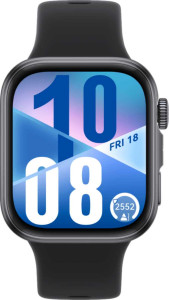
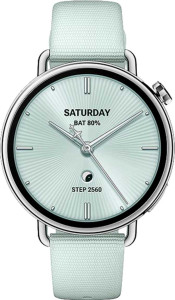
  • Screen size is 1.82″ on Huawei Watch Fit 4 and 1.32″ on Xiaomi Watch S4 41mm.
  • Pixel density is 347 ppi on Huawei Watch Fit 4 and 320 ppi on Xiaomi Watch S4 41mm.
  • Resolution is 408 x 480 px on Huawei Watch Fit 4 and 466 x 466 px on Xiaomi Watch S4 41mm.
  • Weight is 27 g on Huawei Watch Fit 4 and 32 g on Xiaomi Watch S4 41mm.
  • Height is 43 mm on Huawei Watch Fit 4 and 41.2 mm on Xiaomi Watch S4 41mm.
  • Width is 38 mm on Huawei Watch Fit 4 and 41.2 mm on Xiaomi Watch S4 41mm.
  • Sapphire glass display is present on Xiaomi Watch S4 41mm but not available on Huawei Watch Fit 4.
  • Volume is 15.523 cm³ on Huawei Watch Fit 4 and 16.12568 cm³ on Xiaomi Watch S4 41mm.
  • A temperature sensor is present on Xiaomi Watch S4 41mm but not available on Huawei Watch Fit 4.
  • A cadence sensor is present on Huawei Watch Fit 4 but not available on Xiaomi Watch S4 41mm.
  • A cellular module is present on Xiaomi Watch S4 41mm but not available on Huawei Watch Fit 4.
  • Bluetooth version is 5.2 on Huawei Watch Fit 4 and 5.4 on Xiaomi Watch S4 41mm.
  • Battery life is 10 days on Huawei Watch Fit 4 and 8 days on Xiaomi Watch S4 41mm.
  • Battery power is 400 mAh on Huawei Watch Fit 4 and 320 mAh on Xiaomi Watch S4 41mm.
  • Irregular heart rate warnings are available on Huawei Watch Fit 4 but not on Xiaomi Watch S4 41mm.
  • Fall detection is present on Xiaomi Watch S4 41mm but not available on Huawei Watch Fit 4.
  • Voice commands are supported on Xiaomi Watch S4 41mm but not on Huawei Watch Fit 4.
  • Internal storage is 4 GB on Huawei Watch Fit 4 and 32 GB on Xiaomi Watch S4 41mm.
  • Coaching is available in the app on Huawei Watch Fit 4 but not on Xiaomi Watch S4 41mm.
  • Temperature tracking in the app is available on Xiaomi Watch S4 41mm but not on Huawei Watch Fit 4.
  • Route support in the app is available on Huawei Watch Fit 4 but not on Xiaomi Watch S4 41mm.
Specs Comparison
Huawei Watch Fit 4

Huawei Watch Fit 4

Xiaomi Watch S4 41mm

Xiaomi Watch S4 41mm

Design:
screen size 1.82" 1.32"
Display type OLED/AMOLED OLED/AMOLED
water resistance Waterproof Waterproof
ATM rating 5 ATM 5 ATM
Always-On Display
pixel density 347 ppi 320 ppi
resolution 408 x 480 px 466 x 466 px
Watch band is replaceable
has branded damage-resistant glass
thickness 9.5 mm 9.5 mm
weight 27 g 32 g
height 43 mm 41.2 mm
width 38 mm 41.2 mm
Has a display
has a touch screen
Has sapphire glass display
volume 15.523 cm³ 16.12568 cm³
is designed for kids

The most striking design difference between these two watches is their screen size and form factor. The Huawei Watch Fit 4 sports a larger 1.82″ rectangular display at 43 × 38 mm, while the Xiaomi Watch S4 41mm uses a smaller 1.32″ round/square face at 41.2 × 41.2 mm. In practice, the Huawei's larger canvas makes it noticeably better for reading notifications, workout metrics, and UI elements at a glance, despite carrying a slightly lower pixel density of 347 ppi versus the Xiaomi's 320 ppi — both are sharp enough for everyday use. Both use OLED/AMOLED panels with Always-On Display support, so color vibrancy and energy efficiency are on equal footing.

Where the Xiaomi earns a meaningful durability edge is its sapphire glass display, which the Huawei lacks entirely. Sapphire crystal is significantly harder than standard glass and resists everyday scratches far better — a real-world advantage for users who are rough on their gear. Both watches are rated at 5 ATM water resistance, have replaceable bands, and share an identical 9.5 mm thickness, so neither feels bulkier on the wrist from a profile standpoint.

On comfort, the Huawei Watch Fit 4 has a clear advantage at just 27 g versus the Xiaomi's 32 g — a 5-gram difference that becomes perceptible during extended wear, particularly during sleep tracking or long workouts. Overall, the choice here hinges on priorities: the Huawei wins on screen real estate and lighter weight, while the Xiaomi counters with a more durable sapphire glass and a traditional round aesthetic.

Sensors:
Monitors blood oxygenation levels
Has a heart rate monitor
has GPS
has an accelerometer
Has a temperature sensor
has a compass
Has a barometer
has a gyroscope
Has a cadence sensor
Monitors perspiration

At their core, both watches share a strong and nearly identical sensor suite: heart rate monitoring, SpO2 (blood oxygen), GPS, accelerometer, compass, barometer, and gyroscope. This means both are well-equipped for a broad range of fitness tracking, outdoor navigation, and health monitoring scenarios without any meaningful gap between them on the fundamentals.

The differentiation comes down to two mutually exclusive sensors. The Xiaomi Watch S4 includes a temperature sensor, which enables continuous body or wrist-surface temperature tracking — useful for detecting illness onset, monitoring recovery, or tracking hormonal cycle patterns. The Huawei Watch Fit 4, by contrast, offers a cadence sensor, which measures steps or pedal strokes per minute — a metric particularly valued by runners optimizing their stride efficiency and cyclists tracking pedaling rhythm in real time.

Neither omission is trivial, but their relevance is user-dependent. Runners and cyclists who actively train with performance metrics will find the Huawei's cadence data more actionable day-to-day, while users focused on general wellness and passive health monitoring will likely get more long-term value from the Xiaomi's temperature tracking. On balance, the Xiaomi Watch S4 holds a slight edge for health-oriented users, while the Huawei Watch Fit 4 appeals more to performance-focused athletes.

Activity tracking:
Tracks your sleep
Tracks distance
Tracks steps taken
Measures pace
Provides sleep reports
Detects activities automatically
Has a route tracker
Tracks elevation
Has exercise tagging
Has a stroke counter for swimming
Tracks calorie intake
Designed for diving

Across every activity tracking capability in this group, the Huawei Watch Fit 4 and the Xiaomi Watch S4 41mm are in complete lockstep. Both cover the full spectrum of everyday fitness needs: sleep tracking with reports, step and distance counting, pace measurement, elevation tracking, and automatic activity detection. The inclusion of a route tracker on both means GPS-based workout mapping is available to users of either watch without compromise.

Notably, both watches also include a stroke counter for swimming and calorie intake tracking — features that are not universal at this price tier and signal that both devices are targeting users with diverse, multi-sport lifestyles rather than just casual step-counters. Neither is designed for diving, which is consistent with their shared 5 ATM water resistance rating seen in the Design specs.

This is a genuine dead heat. Based strictly on the provided data, no advantage can be awarded to either product in this category — buyers can choose between these two watches entirely on other criteria without sacrificing anything in activity tracking capability.

Connectivity:
has a cellular module
Is compatible with iOS
Is compatible with Android
Bluetooth version 5.2 5.4
supports Wi-Fi
supports ANT+
has NFC
supports Galileo

Both watches share a solid connectivity baseline: dual iOS and Android compatibility, NFC for contactless payments, and Galileo satellite support alongside standard GPS. Neither supports Wi-Fi or ANT+, so accessory pairing with external sensors like chest straps is off the table for both. Where things diverge meaningfully is in two areas: cellular capability and Bluetooth version.

The single biggest differentiator here is that the Xiaomi Watch S4 includes a cellular module, while the Huawei Watch Fit 4 does not. In practice, this means the Xiaomi can make calls, receive notifications, and stream data independently of a paired smartphone — a genuine lifestyle advantage for users who want to leave their phone behind during workouts or commutes. The Huawei, without cellular, remains tethered to a phone for most of its smart features.

The Xiaomi also runs on Bluetooth 5.4 versus the Huawei's Bluetooth 5.2 — a newer specification that brings incremental improvements in connection stability and energy efficiency, though the practical day-to-day difference between these two versions is modest. Taken together, the Xiaomi Watch S4 41mm holds a clear connectivity advantage in this category, primarily driven by its cellular module, which meaningfully expands the watch's independence from a paired device.

Battery:
battery life 10 days 8 days
battery power 400 mAh 320 mAh
has wireless charging
has a rechargeable battery
Has a solar power battery
has a removable battery

Battery is a category where the Huawei Watch Fit 4 pulls ahead cleanly. Its 400 mAh cell is rated for 10 days of battery life, compared to the Xiaomi Watch S4's 320 mAh and 8 days. That two-day gap is practically significant — it means fewer charging cycles per month and less anxiety on longer trips or busy weeks where remembering to charge is an afterthought.

The efficiency story is also worth noting: the Huawei squeezes more rated endurance out of a larger battery, which aligns with its lack of a cellular module (as seen in the Connectivity group). The Xiaomi's cellular capability is a likely contributor to its higher power draw and shorter runtime — a real trade-off users should weigh when deciding between the two.

Both watches support wireless charging and have non-removable, rechargeable batteries with no solar assist — so the charging experience is on equal footing. But on raw longevity between charges, the Huawei Watch Fit 4 holds a clear advantage in this category.

Features:
release date May 2025 June 2025
measures VO2 max
measures resting heart rate
has fast/slow heart rate notifications
shows readiness level
Can be used to answer calls
Locates your phone
Has call control
Has notifications
has irregular heart rate warnings
Has ECG technology
Has silent alarm
Has vibrating alerts
has fall detection
Has a stopwatch
Has smart alarm
has voice commands
internal storage 4GB 32GB
Has a built-in camera remote control function
warranty period 1 years 1 years
number of microphones 1 1
has a front camera

Both watches cover the essentials of a modern smartwatch feature set convincingly — VO2 max estimation, readiness scores, call handling, notifications, and camera remote control are all present on each. The shared foundation is strong, making the divergences all the more worth examining carefully.

The Xiaomi Watch S4 differentiates itself with three notable additions: fall detection, voice commands, and a substantially larger 32GB of internal storage. Fall detection is a meaningful safety feature for older users or those who exercise alone in remote areas, while voice commands add a layer of hands-free convenience during workouts or while driving. The storage gap is striking — 32GB versus the Huawei's 4GB — and directly enables storing more music or data locally on the watch, which pairs naturally with the Xiaomi's cellular capability noted earlier. The Huawei Watch Fit 4, meanwhile, offers irregular heart rate warnings, which the Xiaomi lacks — a passive but potentially important cardiac monitoring feature that can flag anomalies like atrial fibrillation patterns during continuous wear.

Weighing these trade-offs, the Xiaomi's advantages are broader in scope: fall detection, voice control, and vastly more storage each address distinct everyday use cases, whereas the Huawei's irregular heart rate warning, while clinically relevant, is a single feature. On balance, the Xiaomi Watch S4 41mm edges ahead in this category for most users, though health-conscious buyers who prioritize cardiac monitoring may find the Huawei's offering more personally significant.
App & Software:
Provides activity reports
Has inactivity alerts
Counts how many calories you've burned
Has goal setting
Has achievements
Free app
Has exercise diary
Ad-free
Has coaching
Has temperature tracking
Has period notifications
Supports routes
Has music playback
Includes maps
Predicts ovulation
Predicts start date
Supports widgets
Can be personalised
Has barcode scanner on app
Tracks water intake
Has weight tracking

The companion app experience is remarkably consistent between these two watches, with both offering a free, ad-free platform that covers the full wellness spectrum — calorie tracking, water intake, weight tracking, exercise diary, goal setting, music playback, maps, and comprehensive reproductive health features including period notifications, ovulation prediction, and cycle start date forecasting. For the vast majority of users, either app will feel complete and capable out of the box.

The meaningful split comes down to two opposing strengths. The Huawei Watch Fit 4 app includes in-app coaching and route support — coaching provides structured, guided workout plans that add real value for users who want direction rather than just data, while route support enables planned path navigation during outdoor activities. The Xiaomi Watch S4 app counters with temperature tracking, which ties directly into the hardware temperature sensor on the watch itself, enabling longer-term body temperature trend analysis — useful for health monitoring and cycle tracking with greater physiological detail.

The edge here goes to the Huawei Watch Fit 4 for active fitness users, as coaching and route support are features that directly enhance the training experience in ways that are hard to replicate. The Xiaomi's temperature tracking is a meaningful differentiator primarily for health and wellness-focused users, but is limited to those who prioritize that specific data point. Users who train with purpose and follow structured programs will find Huawei's app offering more immediately impactful.

Miscellaneous:
has a battery level indicator
Has passcode
Is compatible with Windows
has an external memory slot
Is compatible with Mac OS X
has a socket for a 3.5 mm audio jack

This is the rare category where the data leaves nothing to debate. Every single specification in this group is identical between the Huawei Watch Fit 4 and the Xiaomi Watch S4 41mm — both have a battery level indicator and passcode protection, and neither offers Windows or Mac OS X compatibility, an external memory slot, or a 3.5 mm audio jack.

The absence of desktop OS compatibility is typical for smartwatches in this segment, which are designed to pair exclusively with mobile devices rather than computers. The lack of a 3.5 mm jack is equally standard, as both watches handle audio through Bluetooth. None of these shared limitations represent a meaningful disadvantage for either product in their intended use context.

This group is a complete tie. Buyers should place no weight on Miscellaneous specs when choosing between these two watches, and focus their decision on the more differentiating categories covered elsewhere in this comparison.

Comparison Summary & Verdict

After a thorough side-by-side review, both watches share a strong foundation: AMOLED displays, GPS, NFC, heart rate and SpO2 monitoring, sleep tracking, and solid activity features. However, their differences reveal two distinct identities. The Huawei Watch Fit 4 stands out with its larger 1.82″ screen, lighter 27 g build, superior 10-day battery life, cadence sensor, irregular heart rate warnings, in-app coaching, and route support — making it the better pick for fitness-focused users who want endurance and structured training guidance. The Xiaomi Watch S4 41mm, on the other hand, impresses with its sapphire glass display, built-in cellular connectivity, temperature sensor, fall detection, voice commands, and a generous 32 GB of internal storage — catering to users who want a more independent, feature-rich smartwatch experience beyond the gym.

Huawei Watch Fit 4
Buy Huawei Watch Fit 4 if...

Buy the Huawei Watch Fit 4 if you prioritize a larger screen, lighter weight, longer battery life, and structured fitness features like coaching, cadence tracking, and route support.

Xiaomi Watch S4 41mm
Buy Xiaomi Watch S4 41mm if...

Buy the Xiaomi Watch S4 41mm if you want a more independent smartwatch with cellular connectivity, sapphire glass protection, fall detection, voice commands, and significantly more internal storage.