Huawei Watch GT 6 41mm
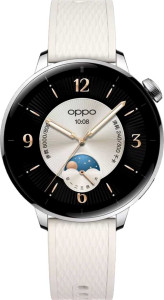
Oppo Watch X2 Mini

Huawei Watch GT 6 41mm Oppo Watch X2 Mini

Overview

Welcome to our in-depth specification comparison between the Huawei Watch GT 6 41mm and the Oppo Watch X2 Mini. These two compact smartwatches share a surprising amount of common ground, yet diverge in some meaningful areas that could make all the difference depending on your lifestyle. From battery performance and connectivity options to sensor capabilities and fitness tracking depth, this comparison breaks down exactly where each watch stands so you can make the most informed choice possible.

Common Features

  • Both watches feature a 1.32″ screen size.
  • Both watches use an OLED/AMOLED display type.
  • Both watches are waterproof with a 5 ATM rating.
  • Always-On Display is available on both watches.
  • Both watches share a pixel density of 352 ppi.
  • Both watches have a resolution of 466 x 466 px.
  • The watch band is replaceable on both watches.
  • Blood oxygenation level monitoring is available on both watches.
  • A heart rate monitor is present on both watches.
  • GPS is available on both watches.
  • An accelerometer, compass, barometer, and gyroscope are all present on both watches.
  • A cadence sensor is not available on either watch.
  • Both watches track sleep, distance, steps, pace, and elevation.
  • Sleep reports and automatic activity detection are available on both watches.
  • A route tracker is available on both watches.
  • Both watches are compatible with iOS and Android.
  • NFC is available on both watches.
  • Galileo satellite support is available on both watches.
  • ANT+ support is not available on either watch.
  • Both watches have a rechargeable battery, with no solar power or removable battery option.
  • VO2 max measurement, resting heart rate tracking, and fast/slow heart rate notifications are available on both watches.
  • Both watches can be used to answer calls and have call control, notifications, and phone locating features.
  • ECG technology is not available on either watch.
  • Both watches provide activity reports, inactivity alerts, calorie tracking, goal setting, achievements, an exercise diary, and a free ad-free app.
  • A battery level indicator and passcode feature are available on both watches.
  • Neither watch is compatible with Windows or Mac OS X, has an external memory slot, or has a 3.5 mm audio jack.

Main Differences

  • The Ingress Protection rating is IP69 on the Huawei Watch GT 6 41mm and IP67 on the Oppo Watch X2 Mini.
  • Thickness is 10 mm on the Huawei Watch GT 6 41mm and 11 mm on the Oppo Watch X2 Mini.
  • Weight is 37.5 g on the Huawei Watch GT 6 41mm and 37.8 g on the Oppo Watch X2 Mini.
  • Height and width are 41.3 mm on the Huawei Watch GT 6 41mm and 43.2 mm on the Oppo Watch X2 Mini.
  • Volume is 17.0569 cm³ on the Huawei Watch GT 6 41mm and 20.52864 cm³ on the Oppo Watch X2 Mini.
  • A temperature sensor is present on the Huawei Watch GT 6 41mm but not available on the Oppo Watch X2 Mini.
  • Multi-sport mode is available on the Huawei Watch GT 6 41mm but not on the Oppo Watch X2 Mini.
  • Diving design support is present on the Huawei Watch GT 6 41mm but not on the Oppo Watch X2 Mini.
  • A cellular module is present on the Oppo Watch X2 Mini but not available on the Huawei Watch GT 6 41mm.
  • Bluetooth version is 6 on the Huawei Watch GT 6 41mm and 5.2 on the Oppo Watch X2 Mini.
  • Wi-Fi support is available on the Oppo Watch X2 Mini but not on the Huawei Watch GT 6 41mm.
  • Battery life is 14 days on the Huawei Watch GT 6 41mm and 16 days on the Oppo Watch X2 Mini.
  • Battery power is 540 mAh on the Huawei Watch GT 6 41mm and 345 mAh on the Oppo Watch X2 Mini.
  • Battery life in training mode is 25 hours on the Huawei Watch GT 6 41mm and 36 hours on the Oppo Watch X2 Mini.
  • Wireless charging is available on the Huawei Watch GT 6 41mm but not on the Oppo Watch X2 Mini.
  • HRV tracking is available on the Huawei Watch GT 6 41mm but not on the Oppo Watch X2 Mini.
  • Readiness level reporting is available on the Huawei Watch GT 6 41mm but not on the Oppo Watch X2 Mini.
  • Irregular heart rate warnings are available on the Huawei Watch GT 6 41mm but not on the Oppo Watch X2 Mini.
  • Faster GPS acquisition is present on the Oppo Watch X2 Mini but not on the Huawei Watch GT 6 41mm.
  • Coaching is available in the app on the Huawei Watch GT 6 41mm but not on the Oppo Watch X2 Mini.
  • Temperature tracking in the app is available on the Huawei Watch GT 6 41mm but not on the Oppo Watch X2 Mini.
  • Route support in the app is available on the Huawei Watch GT 6 41mm but not on the Oppo Watch X2 Mini.
Specs Comparison
Huawei Watch GT 6 41mm

Huawei Watch GT 6 41mm

Oppo Watch X2 Mini

Oppo Watch X2 Mini

Design:
screen size 1.32" 1.32"
Display type OLED/AMOLED OLED/AMOLED
water resistance Waterproof Waterproof
ATM rating 5 ATM 5 ATM
Ingress Protection (IP) rating IP69 IP67
Always-On Display
pixel density 352 ppi 352 ppi
resolution 466 x 466 px 466 x 466 px
Watch band is replaceable
has branded damage-resistant glass
thickness 10 mm 11 mm
weight 37.5 g 37.8 g
height 41.3 mm 43.2 mm
width 41.3 mm 43.2 mm
Has a display
has a touch screen
Has sapphire glass display
volume 17.0569 cm³ 20.52864 cm³
is designed for kids

On the surface, these two watches look nearly identical in design specs: both sport a 1.32″ OLED/AMOLED panel at 466 x 466 px and 352 ppi, both include an Always-On Display, sapphire glass, and a replaceable band. For everyday display quality and wearability fundamentals, users of either watch will have a comparable visual experience.

The real differentiators emerge in the physical dimensions. The Huawei Watch GT 6 41mm measures 41.3 x 41.3 mm with a 10 mm thickness and weighs 37.5 g, while the Oppo Watch X2 Mini is slightly larger at 43.2 x 43.2 mm, 11 mm thick, and 37.8 g. These differences may seem marginal in isolation, but the resulting volume gap — 17.06 cm³ versus 20.53 cm³ — means the GT 6 41mm is meaningfully more compact. For users with smaller wrists or those who prioritize a lower-profile look under a cuff, the Huawei's slimmer, smaller footprint is a tangible advantage.

On durability, both watches are rated at 5 ATM for water resistance, but the GT 6 41mm holds a clear edge with an IP69 rating versus the Oppo's IP67. IP69 adds protection against high-pressure, high-temperature water jets — a meaningful real-world upgrade for users exposed to intense washing, outdoor sports, or harsh environments. Overall, the Huawei Watch GT 6 41mm has the design advantage: it is more compact, slimmer, and carries superior ingress protection.

Sensors:
Monitors blood oxygenation levels
Has a heart rate monitor
has GPS
has an accelerometer
Has a temperature sensor
has a compass
Has a barometer
has a gyroscope
Has a cadence sensor
Monitors perspiration

Both watches share a strong sensor foundation: heart rate monitoring, SpO2 tracking, GPS, accelerometer, gyroscope, compass, and barometer are all present on each device. For the majority of fitness and outdoor use cases — running, hiking, sleep tracking, altitude awareness — either watch delivers a well-rounded suite of health and navigation tools.

The single differentiator in this group carries real weight: the Huawei Watch GT 6 41mm includes a temperature sensor, while the Oppo Watch X2 Mini does not. Wrist-based temperature sensing enables continuous skin temperature monitoring, which is particularly useful for tracking recovery, menstrual cycle patterns, and early signs of illness. It adds a passive, always-on health data layer that the Oppo simply cannot provide.

With every other sensor matched identically, the GT 6 41mm takes a clear edge here purely on the strength of that one addition. For health-conscious users who want deeper physiological insight beyond the basics, the temperature sensor is a meaningful differentiator — not a gimmick — making the Huawei the stronger performer in this category.

Activity tracking:
Tracks your sleep
Tracks distance
Tracks steps taken
Measures pace
Provides sleep reports
Detects activities automatically
Has a route tracker
Tracks elevation
Has multi-sport mode
Has exercise tagging
Tracks calorie intake
Designed for diving
Designed for golf

For everyday fitness tracking, these two watches are nearly indistinguishable. Sleep tracking with reports, step counting, distance, pace, elevation, route tracking, automatic activity detection, exercise tagging, and calorie intake monitoring are all present on both. Users who primarily run, walk, or cycle will find the core tracking experience essentially equivalent.

Two features break the tie. The Huawei Watch GT 6 41mm supports multi-sport mode and is designed for diving, neither of which the Oppo Watch X2 Mini offers. Multi-sport mode is significant for cross-training users — it allows seamless switching between activity profiles in a single session, a meaningful quality-of-life feature for triathletes or anyone who mixes disciplines regularly. Dive support, paired with the GT 6 41mm's IP69 rating noted in the design specs, signals that this watch is engineered for serious water activities, not just splash resistance.

The Oppo Watch X2 Mini holds its own for mainstream fitness use, but the GT 6 41mm is the clear winner in this category. Its broader sport coverage and dive capability make it the more versatile choice for active users who venture beyond standard workouts.

Connectivity:
has a cellular module
Is compatible with iOS
Is compatible with Android
Bluetooth version 6 5.2
supports Wi-Fi
supports ANT+
has NFC
supports Galileo

Where these two watches diverge most sharply is in their approach to independent connectivity. The Oppo Watch X2 Mini includes a cellular module and Wi-Fi, meaning it can send messages, stream data, and stay connected entirely on its own without a paired phone nearby. The Huawei Watch GT 6 41mm offers neither, keeping it tethered to a smartphone for any network-dependent functionality. For users who want to leave their phone behind during workouts or commutes, this is a fundamental lifestyle difference.

The Huawei does counter with a newer Bluetooth 6 versus the Oppo's Bluetooth 5.2. Bluetooth 6 brings improvements in connection reliability and efficiency, which translates to a more stable link to headphones or a paired phone and potentially lower battery drain during wireless communication. It is a meaningful spec advantage, though it only matters when the watch is operating within Bluetooth range of another device.

Both watches share NFC for contactless payments, full iOS and Android compatibility, and Galileo satellite support — so the baseline experience is solid on either. But the Oppo Watch X2 Mini holds the clear connectivity edge overall. Its cellular and Wi-Fi capabilities represent a broader, more autonomous feature set that the GT 6 41mm's superior Bluetooth version alone cannot offset for users who prioritize standalone functionality.

Battery:
battery life 14 days 16 days
battery power 540 mAh 345 mAh
battery life in training mode 25 hours 36 hours
has wireless charging
has a rechargeable battery
Has a solar power battery
has a removable battery

The battery story here is counterintuitive and worth examining closely. The Huawei Watch GT 6 41mm carries a significantly larger 540 mAh cell, yet the Oppo Watch X2 Mini — with just 345 mAh — outlasts it in every stated metric: 16 days of battery life versus 14 days, and an impressive 36 hours in training mode compared to 25 hours. This points to meaningfully better power efficiency in the Oppo, likely a result of its software and hardware optimization. Raw capacity alone does not determine endurance, and the Oppo makes that case clearly.

For multi-day travellers or users who simply dislike charging routines, the Oppo's real-world longevity advantage is practical and consistent across both everyday and active use scenarios. An extra two days of standby life and over ten additional hours during workouts is not a marginal gap — it reflects a fundamentally more efficient platform.

The GT 6 41mm does recover one point with wireless charging, which the Oppo lacks. Wireless charging adds convenience, particularly for overnight top-ups, but it does not change the fundamental endurance equation. On balance, the Oppo Watch X2 Mini holds the battery edge — delivering longer life despite a smaller cell, which is the more impressive engineering outcome regardless of how the watch is charged.

Features:
release date September 2025 April 2025
has HRV tracking
measures VO2 max
measures resting heart rate
has fast/slow heart rate notifications
shows readiness level
Can be used to answer calls
Locates your phone
Has call control
Has notifications
has irregular heart rate warnings
Has ECG technology
Has silent alarm
Has vibrating alerts
has fall detection
Has a stopwatch
Has smart alarm
has voice commands
Acquires GPS faster
warranty period 1 years 1 years
has a front camera

Smartwatch utility staples — call answering, notifications, phone locator, voice commands, silent and vibrating alerts, stopwatch, and VO2 max measurement — are identical across both devices, giving either watch a solid daily-driver feature set. The meaningful distinctions lie specifically in the depth of cardiovascular health monitoring and GPS readiness.

The Huawei Watch GT 6 41mm pulls ahead on health intelligence with three exclusive features: HRV tracking, a readiness score, and irregular heart rate warnings. HRV (heart rate variability) is one of the more clinically respected indicators of recovery and stress load, and pairing it with a readiness score gives the GT 6 41mm a genuinely actionable health feedback loop that the Oppo cannot replicate. Irregular heart rate warnings add a passive safety net for users concerned about arrhythmia detection. Together, these features represent a materially deeper health monitoring platform.

The Oppo Watch X2 Mini answers back with faster GPS acquisition — a practical edge for runners and cyclists who want to start a workout without waiting for a satellite lock. It is a real convenience, but in the context of this feature group as a whole, it does not offset the GT 6 41mm's broader cardiovascular toolkit. The Huawei Watch GT 6 41mm is the clear winner here for users who prioritize health insight over quick GPS readiness.

App & Software:
Provides activity reports
Has inactivity alerts
Counts how many calories you've burned
Has goal setting
Has achievements
Free app
Has exercise diary
Ad-free
Has coaching
Has temperature tracking
Supports routes
Has music playback
Supports widgets
Can be personalised
Has barcode scanner on app
Tracks water intake
Has weight tracking

The companion app experience shares a strong common core: both watches offer activity reports, inactivity alerts, calorie tracking, goal setting, achievements, an exercise diary, music playback, widgets, water intake logging, weight tracking, and personalization — all free and ad-free. For the average user, day-to-day app functionality will feel largely equivalent.

Three features sit exclusively with the Huawei Watch GT 6 41mm: coaching, temperature tracking, and route support. Coaching adds guided, adaptive training guidance within the app — a meaningful step up for users who want structured progression rather than passive data logging. Route support enables planned navigation through the app, which complements the GT 6 41mm's outdoor and multi-sport credentials established in earlier spec groups. Temperature tracking in the app naturally pairs with the hardware sensor already noted in the sensors category, completing the data pipeline from wrist to dashboard.

The Oppo Watch X2 Mini lacks all three of these additions, leaving its app as a capable but more passive data recorder. For users who want their watch ecosystem to actively guide their fitness journey — not just monitor it — the GT 6 41mm offers a meaningfully richer software experience and is the clear winner in this category.

Miscellaneous:
has a battery level indicator
Has passcode
Is compatible with Windows
has an external memory slot
Is compatible with Mac OS X
has a socket for a 3.5 mm audio jack

This category presents a clean sweep of parity. Every spec — battery level indicator, passcode security, absence of external memory, no Windows or Mac OS X compatibility, and no 3.5mm audio jack — is identical across both the Huawei Watch GT 6 41mm and the Oppo Watch X2 Mini.

The shared lack of desktop OS compatibility is worth noting in context: both watches are designed to operate exclusively within a mobile ecosystem, relying on Android or iOS as their management and sync platform. This is standard for the smartwatch category and unlikely to be a deciding factor for most users. Similarly, the absence of a headphone jack is expected — both watches handle audio through Bluetooth, as noted in the connectivity group.

There is no differentiator to call out here, and no winner to declare. This is a straightforward tie, and users should look to the other specification groups — particularly connectivity, features, and battery — to drive their purchase decision.

Comparison Summary & Verdict

After examining the full specification set, both watches prove to be capable compact smartwatches with matching displays, shared health fundamentals, and broad platform compatibility. However, their strengths point in different directions. The Huawei Watch GT 6 41mm stands out with its superior IP69 water resistance, built-in temperature sensor, HRV tracking, irregular heart rate warnings, multi-sport and diving modes, wireless charging, and a richer app experience including coaching and route support — making it the stronger choice for serious fitness enthusiasts. The Oppo Watch X2 Mini, on the other hand, pulls ahead with its cellular connectivity, Wi-Fi support, longer battery life in training mode (36 hours vs 25), and faster GPS acquisition, appealing to users who prioritize staying connected independently and endurance during workouts. Choose the Huawei for depth of health tracking; choose the Oppo for standalone connectivity.

Huawei Watch GT 6 41mm
Buy Huawei Watch GT 6 41mm if...

Buy the Huawei Watch GT 6 41mm if you want a more advanced fitness tracker with a higher IP69 rating, temperature sensing, HRV tracking, multi-sport and diving modes, wireless charging, and a richer suite of health and coaching features.

Oppo Watch X2 Mini
Buy Oppo Watch X2 Mini if...

Buy the Oppo Watch X2 Mini if staying connected on the go matters most to you, as it offers cellular and Wi-Fi support, faster GPS acquisition, and a longer battery life during training sessions.