Huawei Watch GT 6 41mm
Xiaomi Watch S4 41mm

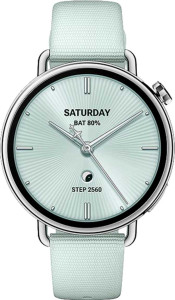
Huawei Watch GT 6 41mm Xiaomi Watch S4 41mm

Overview

Welcome to our in-depth comparison of the Huawei Watch GT 6 41mm and the Xiaomi Watch S4 41mm — two compact 41mm smartwatches that share a surprising amount of common ground while diverging sharply in a few critical areas. Both sport identical 1.32″ AMOLED screens and a rich sensor suite, but the real story lies in their contrasting approaches to battery life, connectivity, and specialized activity tracking. Read on to find out which one is the right fit for your wrist.

Common Features

  • Both watches have a 1.32″ screen size.
  • Both use an OLED/AMOLED display type.
  • Both have a resolution of 466 x 466 px.
  • Both watches are waterproof with a 5 ATM rating.
  • Always-On Display is available on both watches.
  • The watch band is replaceable on both models.
  • Branded damage-resistant glass is not present on either watch.
  • Blood oxygenation level monitoring is available on both watches.
  • A heart rate monitor is present on both watches.
  • GPS is available on both watches.
  • An accelerometer is present on both watches.
  • A temperature sensor is available on both watches.
  • A compass is present on both watches.
  • A barometer is available on both watches.
  • A gyroscope is present on both watches.
  • Sleep tracking is available on both watches.
  • Distance tracking is available on both watches.
  • Step counting is available on both watches.
  • Pace measurement is available on both watches.
  • Sleep reports are provided by both watches.
  • Automatic activity detection is available on both watches.
  • A route tracker is available on both watches.
  • Elevation tracking is available on both watches.
  • Both watches are compatible with iOS and Android.
  • Wi-Fi is not supported on either watch.
  • ANT+ is not supported on either watch.
  • NFC is available on both watches.
  • Galileo satellite system support is available on both watches.
  • Wireless charging is available on both watches.
  • Both watches have a rechargeable battery.
  • Solar power battery is not available on either watch.
  • The battery is not removable on either watch.
  • HRV tracking is available on both watches.
  • VO2 max measurement is available on both watches.
  • Resting heart rate measurement is available on both watches.
  • Fast and slow heart rate notifications are available on both watches.
  • Readiness level is shown on both watches.
  • Both watches can be used to answer calls.
  • Phone locating is available on both watches.
  • Call control is available on both watches.
  • Activity reports are provided by both watches.
  • Inactivity alerts are available on both watches.
  • Calorie burn counting is available on both watches.
  • Goal setting is available on both watches.
  • Achievements are available on both watches.
  • The companion app is free on both watches.
  • An exercise diary is available on both watches.
  • The companion app is ad-free on both watches.
  • A battery level indicator is present on both watches.
  • Passcode protection is available on both watches.
  • Windows compatibility is not available on either watch.
  • An external memory slot is not available on either watch.
  • Mac OS X compatibility is not available on either watch.
  • A 3.5 mm audio jack socket is not present on either watch.

Main Differences

  • Pixel density is 352 ppi on Huawei Watch GT 6 41mm and 320 ppi on Xiaomi Watch S4 41mm.
  • Thickness is 10 mm on Huawei Watch GT 6 41mm and 9.5 mm on Xiaomi Watch S4 41mm.
  • Weight is 37.5 g on Huawei Watch GT 6 41mm and 32 g on Xiaomi Watch S4 41mm.
  • Height is 41.3 mm on Huawei Watch GT 6 41mm and 41.2 mm on Xiaomi Watch S4 41mm.
  • Width is 41.3 mm on Huawei Watch GT 6 41mm and 41.2 mm on Xiaomi Watch S4 41mm.
  • Volume is 17.0569 cm³ on Huawei Watch GT 6 41mm and 16.12568 cm³ on Xiaomi Watch S4 41mm.
  • A stroke counter for swimming is available on Xiaomi Watch S4 41mm but not on Huawei Watch GT 6 41mm.
  • Diving design is present on Huawei Watch GT 6 41mm but not on Xiaomi Watch S4 41mm.
  • A cellular module is present on Xiaomi Watch S4 41mm but not on Huawei Watch GT 6 41mm.
  • Bluetooth version is 6 on Huawei Watch GT 6 41mm and 5.4 on Xiaomi Watch S4 41mm.
  • Battery life is 14 days on Huawei Watch GT 6 41mm and 8 days on Xiaomi Watch S4 41mm.
  • Battery power is 540 mAh on Huawei Watch GT 6 41mm and 320 mAh on Xiaomi Watch S4 41mm.
  • Irregular heart rate warnings are available on Huawei Watch GT 6 41mm but not on Xiaomi Watch S4 41mm.
  • Fall detection is present on Xiaomi Watch S4 41mm but not on Huawei Watch GT 6 41mm.
  • Faster GPS acquisition is available on Xiaomi Watch S4 41mm but not on Huawei Watch GT 6 41mm.
  • Coaching is available on Huawei Watch GT 6 41mm but not on Xiaomi Watch S4 41mm.
  • Route support is available on Huawei Watch GT 6 41mm but not on Xiaomi Watch S4 41mm.
Specs Comparison
Huawei Watch GT 6 41mm

Huawei Watch GT 6 41mm

Xiaomi Watch S4 41mm

Xiaomi Watch S4 41mm

Design:
screen size 1.32" 1.32"
Display type OLED/AMOLED OLED/AMOLED
water resistance Waterproof Waterproof
ATM rating 5 ATM 5 ATM
Always-On Display
pixel density 352 ppi 320 ppi
resolution 466 x 466 px 466 x 466 px
Watch band is replaceable
has branded damage-resistant glass
thickness 10 mm 9.5 mm
weight 37.5 g 32 g
height 41.3 mm 41.2 mm
width 41.3 mm 41.2 mm
Has a display
has a touch screen
Has sapphire glass display
volume 17.0569 cm³ 16.12568 cm³
is designed for kids

Both the Huawei Watch GT 6 41mm and the Xiaomi Watch S4 41mm share a strong design foundation: identical 1.32″ AMOLED panels with a 466 x 466 px resolution, Always-On Display support, 5 ATM water resistance, sapphire glass protection, and replaceable bands. At this level, neither watch compromises on the essentials, and users of either will get a premium, durable build.

The real differences emerge in physical form factor. The Xiaomi Watch S4 is measurably more compact — at 9.5 mm thick and 32 g, it undercuts the GT 6's 10 mm thickness and 37.5 g weight by a meaningful margin. That 5.5 g difference and the slightly smaller volume (16.13 cm³ vs 17.06 cm³) translate to a lighter, less obtrusive feel during all-day and overnight wear — a genuine advantage for comfort-sensitive users. The GT 6, on the other hand, counters with a higher pixel density of 352 ppi versus the S4's 320 ppi. While both screens share the same resolution, the GT 6's sharper pixel density results in a crisper, more refined display — a subtle but noticeable difference when reading text or viewing detailed watch faces up close.

In summary, design preference here comes down to a clear trade-off: the Xiaomi Watch S4 has a physical edge in wearability thanks to its lighter weight and slimmer profile, while the Huawei Watch GT 6 edges ahead in display sharpness. Neither has a dominant overall advantage — choose the S4 for comfort-first wearers, and the GT 6 for those who prioritize display quality.

Sensors:
Monitors blood oxygenation levels
Has a heart rate monitor
has GPS
has an accelerometer
Has a temperature sensor
has a compass
Has a barometer
has a gyroscope
Has a cadence sensor
Monitors perspiration

Across the entire sensor suite, the Huawei Watch GT 6 41mm and the Xiaomi Watch S4 41mm are in complete lockstep. Both pack the core health triumvirate — heart rate monitor, SpO2 (blood oxygen), and skin temperature sensor — alongside a full motion and navigation array: GPS, accelerometer, gyroscope, compass, and barometer. This is a well-rounded, serious sensor stack that comfortably covers the needs of most fitness and outdoor use cases.

The barometer and compass together enable real-time altitude tracking and directional awareness, making both watches credible companions for hiking and trail running — not just gym workouts. The gyroscope combined with the accelerometer allows for more accurate motion detection and activity recognition beyond simple step counting. Neither watch includes a cadence sensor or perspiration monitor, but these remain niche features absent from the vast majority of smartwatches in this segment.

With zero differentiation across every tracked sensor spec, this category is an unambiguous tie. A buyer choosing between these two watches will find no practical sensor advantage on either side — the decision remains entirely with other spec groups.

Activity tracking:
Tracks your sleep
Tracks distance
Tracks steps taken
Measures pace
Provides sleep reports
Detects activities automatically
Has a route tracker
Tracks elevation
Has exercise tagging
Has a stroke counter for swimming
Tracks calorie intake
Designed for diving

For the vast majority of athletes and everyday fitness users, these two watches are functionally identical in activity tracking. Both cover the full essentials — sleep tracking with reports, step counting, distance, pace, elevation, route tracking, automatic activity detection, exercise tagging, and calorie tracking. That's a comprehensive feature set that holds up well against dedicated fitness trackers, not just other smartwatches.

The only divergence lies in two water-sport-specific capabilities that point in opposite directions. The Xiaomi Watch S4 includes a stroke counter for swimming, a useful metric for pool swimmers who want to monitor technique and efficiency — something the GT 6 lacks entirely. The Huawei Watch GT 6, on the other hand, is rated as designed for diving, suggesting it can handle the pressure demands of recreational dive depths where the S4 is not rated for such use.

Neither advantage is universal — they serve distinct user niches. Competitive or recreational pool swimmers get more out of the Xiaomi Watch S4, while divers and those venturing into deeper water environments will find the Huawei Watch GT 6 the safer choice. For anyone outside these water-sport scenarios, the two watches are effectively tied across all activity tracking capabilities.

Connectivity:
has a cellular module
Is compatible with iOS
Is compatible with Android
Bluetooth version 6 5.4
supports Wi-Fi
supports ANT+
has NFC
supports Galileo

Shared ground here includes dual platform compatibility (iOS and Android), NFC for contactless payments, and Galileo satellite support for improved GPS positioning accuracy in regions where Galileo coverage is strong. Neither watch supports Wi-Fi or ANT+, so accessories like heart rate chest straps won't connect on either device.

The headline differentiator is the Xiaomi Watch S4's inclusion of a cellular module — a capability the GT 6 entirely lacks. With an active eSIM, the S4 can make calls, receive notifications, and stream data independently of a paired smartphone. For users who want to leave their phone behind during runs or workouts while staying reachable, this is a substantial functional advantage that no other spec in this group can offset. The Huawei Watch GT 6 counters with a newer Bluetooth 6.0 versus the S4's Bluetooth 5.4. Bluetooth 6 introduces improvements in connection precision and efficiency, which can mean more stable pairing and marginally better energy handling — though in everyday use, both versions will feel reliable for typical watch-to-phone communication.

The connectivity edge goes clearly to the Xiaomi Watch S4. Cellular independence is a transformative capability for active users, and it represents a qualitative leap in standalone functionality that the GT 6's Bluetooth version advantage cannot realistically match for most buying decisions.

Battery:
battery life 14 days 8 days
battery power 540 mAh 320 mAh
has wireless charging
has a rechargeable battery
Has a solar power battery
has a removable battery

Battery is one of the starkest contrasts between these two watches. The Huawei Watch GT 6 41mm carries a 540 mAh cell with a rated 14-day battery life, while the Xiaomi Watch S4 41mm runs a 320 mAh pack rated for just 8 days. That's a 69% larger battery translating to nearly double the endurance — a difference users will feel in their weekly routine. The GT 6 can realistically go two weeks between charges for lighter users, while the S4 will need attention roughly every week.

It's worth noting that the S4's shorter battery life is at least partly a function of its cellular module — powering an eSIM is significantly more demanding than a Bluetooth-only connection, which helps explain why a smaller battery yields fewer days. The GT 6, without cellular, can stretch its larger capacity further. Both watches support wireless charging, which keeps the charging experience equally convenient on either side. Neither offers solar charging or a removable battery.

The battery advantage belongs unambiguously to the Huawei Watch GT 6. For travelers, light users who dislike frequent charging, or anyone wanting minimal charging interruptions, the GT 6's endurance is a compelling differentiator. The S4's trade-off is clear: cellular connectivity comes at a real cost to battery life.

Features:
release date September 2025 June 2025
has HRV tracking
measures VO2 max
measures resting heart rate
has fast/slow heart rate notifications
shows readiness level
Can be used to answer calls
Locates your phone
Has call control
Has notifications
has irregular heart rate warnings
Has ECG technology
Has silent alarm
Has vibrating alerts
has fall detection
Has a stopwatch
Has smart alarm
has voice commands
Has a built-in camera remote control function
Acquires GPS faster
warranty period 1 years 1 years
number of microphones 1 1
has a front camera

The feature sets of these two watches are remarkably well-matched across the board. Both deliver a strong health monitoring toolkit — HRV tracking, VO2 max, resting heart rate, readiness score, and heart rate alerts — alongside practical smartwatch staples like call answering, notifications, voice commands, and a camera remote. For the overwhelming majority of daily use cases, neither watch leaves users wanting for features the other has.

Where they diverge is telling. The Huawei Watch GT 6 includes irregular heart rate warnings, a passive cardiac monitoring feature that can flag potentially concerning rhythm anomalies during normal wear — a meaningful safety net for older users or those with cardiovascular concerns. The Xiaomi Watch S4 counters with two practical advantages: fall detection, which can automatically trigger an alert or emergency contact if a hard fall is detected, and faster GPS acquisition, meaning the watch locks onto satellites more quickly when starting an outdoor workout — a small but genuinely appreciated quality-of-life improvement for runners and cyclists who don't want to stand still waiting for a signal.

This category ends in a nuanced near-tie that hinges entirely on user profile. Health-conscious users or those with cardiac monitoring needs will lean toward the Huawei Watch GT 6, while users prioritizing safety during physical activity or outdoor training responsiveness will find the Xiaomi Watch S4's fall detection and faster GPS lock more compelling. Neither product holds a broad overall edge here.

App & Software:
Provides activity reports
Has inactivity alerts
Counts how many calories you've burned
Has goal setting
Has achievements
Free app
Has exercise diary
Ad-free
Has coaching
Has temperature tracking
Has period notifications
Supports routes
Has music playback
Includes maps
Predicts ovulation
Predicts start date
Supports widgets
Can be personalised
Has barcode scanner on app
Tracks water intake
Has weight tracking

Both companion apps are well-equipped for daily health and fitness management, sharing a long list of capabilities: activity reports, calorie tracking, goal setting, exercise diary, inactivity alerts, temperature and weight tracking, water intake logging, music playback, maps, widgets, personalization, and a full women's health suite including period notifications, ovulation prediction, and cycle start date forecasting. Crucially, both apps are free and ad-free — a combination that is not guaranteed in this product category and worth acknowledging.

Two features separate them. The Huawei Watch GT 6's app includes in-app coaching, which provides structured guidance to help users improve their fitness over time rather than simply logging what they've already done — a meaningful step up for users who want direction, not just data. It also supports route planning within the app, enabling users to map and follow specific outdoor paths directly from the companion software. The Xiaomi Watch S4's app offers neither, which is a tangible functional gap for outdoor athletes and users who prefer guided training programs.

The software edge goes to the Huawei Watch GT 6. Coaching and route support are not minor conveniences — they shift the app from a passive tracker into a more active training tool. Users who want a richer, more guided software experience will find the GT 6's ecosystem meaningfully more capable than what the S4 offers.

Miscellaneous:
has a battery level indicator
Has passcode
Is compatible with Windows
has an external memory slot
Is compatible with Mac OS X
has a socket for a 3.5 mm audio jack

The miscellaneous spec group for these two watches is a clean sweep of identical values across every tracked point. Both feature a battery level indicator and passcode security, and neither supports Windows or Mac OS X desktop connectivity, external memory expansion, or a 3.5mm audio jack. These are all standard characteristics for modern smartwatches in this tier, and the absence of desktop OS compatibility or expandable storage is entirely typical and unlikely to affect most users.

This is a complete tie with no differentiating data points in either direction. Users making a decision between the Huawei Watch GT 6 41mm and the Xiaomi Watch S4 41mm will find nothing in this category to sway them — the comparison rests entirely on the other spec groups.

Comparison Summary & Verdict

After examining every specification, both watches prove to be highly capable companions, yet they clearly target different users. The Huawei Watch GT 6 41mm stands out with its exceptional 14-day battery life, higher pixel density, irregular heart rate warnings, coaching features, and route support — making it the ideal choice for endurance-focused users who prioritize longevity and guided training. The Xiaomi Watch S4 41mm, on the other hand, wins over users who need cellular connectivity, fall detection, a stroke counter for swimming, and faster GPS acquisition, all in a slightly lighter and thinner body. If staying connected independently and having safety-oriented features matters most, the Xiaomi is the stronger pick. If you want a watch that lasts longer between charges and offers deeper coaching tools, the Huawei is the clear winner.

Huawei Watch GT 6 41mm
Buy Huawei Watch GT 6 41mm if...

Buy the Huawei Watch GT 6 41mm if you prioritize a much longer battery life, irregular heart rate warnings, and built-in coaching with route support.

Xiaomi Watch S4 41mm
Buy Xiaomi Watch S4 41mm if...

Buy the Xiaomi Watch S4 41mm if you need cellular connectivity, fall detection, a swimming stroke counter, and faster GPS acquisition in a lighter build.