Huawei Watch GT 6
OnePlus Watch 3 43mm

Huawei Watch GT 6 OnePlus Watch 3 43mm

Overview

Welcome to our in-depth comparison of the Huawei Watch GT 6 and the OnePlus Watch 3 43mm. These two smartwatches compete closely on design and core health tracking, yet diverge sharply when it comes to battery capacity, sensor variety, and platform compatibility. Whether you prioritize a larger display with richer sports modes or a lighter, more compact form factor, this side-by-side breakdown will help you navigate the key trade-offs before making your decision.

Common Features

  • Both watches feature an OLED/AMOLED display type.
  • Both watches are waterproof with a 5 ATM rating.
  • Always-On Display is available on both watches.
  • Both watches share the same resolution of 466 x 466 px.
  • The watch band is replaceable on both watches.
  • Neither watch features branded damage-resistant glass.
  • Both watches have a thickness of 11 mm.
  • Blood oxygenation level monitoring is available on both watches.
  • A heart rate monitor is present on both watches.
  • GPS is available on both watches.
  • Both watches include an accelerometer, a compass, and a gyroscope.
  • Neither watch has a cadence sensor or perspiration monitoring.
  • Both watches track sleep, distance, steps taken, pace, and elevation.
  • Sleep reports and automatic activity detection are available on both watches.
  • A route tracker is present on both watches.
  • Neither watch has a cellular module or Wi-Fi support.
  • Both watches are compatible with Android.
  • NFC is available on both watches.
  • Galileo satellite system support is present on both watches.
  • Neither watch has a solar power battery or a removable battery, but both have rechargeable batteries.
  • HRV tracking, VO2 max measurement, resting heart rate measurement, and fast/slow heart rate notifications are available on both watches.
  • Both watches can be used to answer calls and have call control and notifications.
  • Activity reports, inactivity alerts, calorie tracking, goal setting, achievements, water intake tracking, and weight tracking are available on both watches.
  • Neither watch has a barcode scanner on the app.
  • A battery level indicator is present on both watches.
  • Neither watch is compatible with Windows or Mac OS X.
  • Neither watch has an external memory slot or a 3.5 mm audio jack socket.

Main Differences

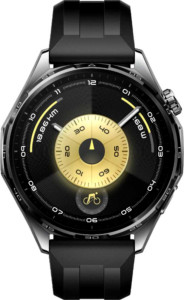
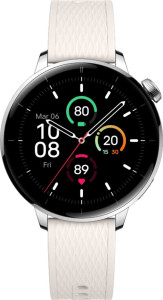
  • Screen size is 1.47″ on the Huawei Watch GT 6 and 1.32″ on the OnePlus Watch 3 43mm.
  • The Ingress Protection rating is IP69 on the Huawei Watch GT 6 and IP67 on the OnePlus Watch 3 43mm.
  • Pixel density is 317 ppi on the Huawei Watch GT 6 and 352 ppi on the OnePlus Watch 3 43mm.
  • Weight is 51.3 g on the Huawei Watch GT 6 and 37.8 g on the OnePlus Watch 3 43mm.
  • Height is 46 mm on the Huawei Watch GT 6 and 43.2 mm on the OnePlus Watch 3 43mm.
  • Width is 46 mm on the Huawei Watch GT 6 and 43.2 mm on the OnePlus Watch 3 43mm.
  • Sapphire glass display is present on the Huawei Watch GT 6 but not available on the OnePlus Watch 3 43mm.
  • Volume is 23.276 cm³ on the Huawei Watch GT 6 and 20.52864 cm³ on the OnePlus Watch 3 43mm.
  • A temperature sensor is present on the Huawei Watch GT 6 but not available on the OnePlus Watch 3 43mm.
  • A barometer is present on the Huawei Watch GT 6 but not available on the OnePlus Watch 3 43mm.
  • Multi-sport mode is available on the Huawei Watch GT 6 but not on the OnePlus Watch 3 43mm.
  • Diving design is present on the Huawei Watch GT 6 but not on the OnePlus Watch 3 43mm.
  • iOS compatibility is present on the Huawei Watch GT 6 but not available on the OnePlus Watch 3 43mm.
  • Bluetooth version is 6 on the Huawei Watch GT 6 and 5.2 on the OnePlus Watch 3 43mm.
  • Battery power is 867 mAh on the Huawei Watch GT 6 and 354 mAh on the OnePlus Watch 3 43mm.
  • Battery life in training mode is 40 hours on the Huawei Watch GT 6 and 36 hours on the OnePlus Watch 3 43mm.
  • Wireless charging is available on the Huawei Watch GT 6 but not on the OnePlus Watch 3 43mm.
  • Irregular heart rate warnings are available on the Huawei Watch GT 6 but not on the OnePlus Watch 3 43mm.
Specs Comparison
Huawei Watch GT 6

Huawei Watch GT 6

OnePlus Watch 3 43mm

OnePlus Watch 3 43mm

Design:
screen size 1.47" 1.32"
Display type OLED/AMOLED OLED/AMOLED
water resistance Waterproof Waterproof
ATM rating 5 ATM 5 ATM
Ingress Protection (IP) rating IP69 IP67
Always-On Display
pixel density 317 ppi 352 ppi
resolution 466 x 466 px 466 x 466 px
Watch band is replaceable
has branded damage-resistant glass
thickness 11 mm 11 mm
weight 51.3 g 37.8 g
height 46 mm 43.2 mm
width 46 mm 43.2 mm
Has a display
has a touch screen
Has sapphire glass display
volume 23.276 cm³ 20.52864 cm³
is designed for kids

Both the Huawei Watch GT 6 and the OnePlus Watch 3 43mm share a strong design foundation: OLED/AMOLED displays, identical 466 x 466 px resolution, Always-On Display, 5 ATM water resistance, replaceable bands, and an 11 mm thickness. These shared traits mean neither watch compromises on core display quality or everyday durability out of the box.

The differences, however, are meaningful. The GT 6 sports a larger 1.47″ screen on a 46 x 46 mm case, making it more readable at a glance — but at a cost: it weighs 51.3 g versus the OnePlus's 37.8 g, a difference of nearly 14 grams that is genuinely noticeable during long wear or sleep tracking. The OnePlus, with its smaller 1.32″ panel on a 43.2 x 43.2 mm body, compensates with a sharper 352 ppi pixel density (vs. 317 ppi), meaning text and icons appear crisper despite the smaller canvas. The GT 6 also carries a sapphire glass display — a scratch-resistant material typically reserved for premium timepieces — which the OnePlus lacks entirely. On water resistance, the GT 6 holds an IP69 rating versus the OnePlus's IP67, meaning it can handle high-pressure water jets, not just brief immersion.

In terms of design, the edge goes to the Huawei Watch GT 6 for users who prioritize a larger screen, superior scratch resistance from sapphire glass, and stronger water protection. The OnePlus Watch 3 43mm is the better fit for those who prefer a lighter, more compact watch with a crisper display — particularly relevant for all-day and overnight wear comfort.
Sensors:
Monitors blood oxygenation levels
Has a heart rate monitor
has GPS
has an accelerometer
Has a temperature sensor
has a compass
Has a barometer
has a gyroscope
Has a cadence sensor
Monitors perspiration

At their core, both watches cover the essentials well: heart rate monitoring, SpO2 tracking, GPS, accelerometer, gyroscope, and compass are present on both. For the majority of fitness and health use cases — running, cycling, sleep tracking, navigation — either watch delivers a comparable sensor baseline.

Where the Huawei Watch GT 6 pulls ahead is in two notable additions: a temperature sensor and a barometer. Wrist-based temperature sensing adds a layer of passive health monitoring, useful for tracking body temperature trends and menstrual cycle insights. The barometer is arguably even more impactful for active users — it measures real-time atmospheric pressure to deliver accurate elevation data during hikes or runs, something GPS altitude alone cannot do reliably. The OnePlus Watch 3 43mm lacks both of these sensors, which is a tangible gap for outdoor enthusiasts or users invested in deeper health metrics.

The sensor edge clearly belongs to the Huawei Watch GT 6. The absence of a barometer on the OnePlus is particularly significant for anyone tracking altitude-dependent activities, and the missing temperature sensor narrows its passive health monitoring scope. Users whose routines stay primarily on flat terrain and who do not prioritize temperature tracking will find the OnePlus sufficient, but for a more comprehensive sensing package, the GT 6 has a measurable advantage here.

Activity tracking:
Tracks your sleep
Tracks distance
Tracks steps taken
Measures pace
Provides sleep reports
Detects activities automatically
Has a route tracker
Tracks elevation
Has multi-sport mode
Has exercise tagging
Tracks calorie intake
Designed for diving
Designed for golf

For everyday fitness tracking, these two watches are nearly identical in scope: sleep tracking with reports, step counting, distance, pace, route tracking, elevation, automatic activity detection, exercise tagging, and calorie tracking are all present on both. Casual users and general fitness enthusiasts will find little to separate them on the activity front.

The distinctions emerge at the edges of the feature set. The Huawei Watch GT 6 includes multi-sport mode and is designed for diving — two capabilities the OnePlus Watch 3 43mm lacks entirely. Multi-sport mode matters for athletes who switch between disciplines like swimming, cycling, and running within a single session or training block, allowing seamless transitions without manually stopping and restarting a workout. Dive support, combined with its stronger water resistance rating from the Design specs, positions the GT 6 as a genuine companion for underwater activities, not just splash-proof wearable use.

The activity tracking edge belongs to the Huawei Watch GT 6. The addition of multi-sport mode meaningfully broadens its appeal to cross-training athletes, and dive support is a differentiator with no equivalent on the OnePlus. Users whose routines involve a single activity type will find the OnePlus fully capable, but for versatility across diverse sports and aquatic use, the GT 6 offers a more expansive tracking toolkit.

Connectivity:
has a cellular module
Is compatible with iOS
Is compatible with Android
Bluetooth version 6 5.2
supports Wi-Fi
supports ANT+
has NFC
supports Galileo

Two connectivity differences stand out immediately. First, the Huawei Watch GT 6 runs Bluetooth 6, a newer standard compared to the Bluetooth 5.2 on the OnePlus Watch 3 43mm. In practical terms, Bluetooth 6 offers improved connection stability, lower latency, and more efficient power use during pairing with a phone — benefits that are subtle day-to-day but compound over time, particularly for audio and real-time data sync. Second, and more consequentially for some buyers, the GT 6 is compatible with both Android and iOS, while the OnePlus is Android-only. This makes the GT 6 a viable option for iPhone users, whereas the OnePlus is a non-starter for that audience entirely.

Where the two watches align: neither supports cellular connectivity or Wi-Fi, both include NFC for contactless payments, and both support the Galileo satellite navigation system alongside standard GPS. These shared traits mean on-wrist payments and multi-constellation positioning accuracy are equally accessible on either device.

The connectivity edge goes to the Huawei Watch GT 6 on two fronts — a newer Bluetooth version and cross-platform compatibility. The iOS support alone is a hard requirement for a significant portion of potential buyers, making the GT 6 the only viable choice for that group. For Android users, the Bluetooth 6 advantage is a meaningful but less decisive differentiator.

Battery:
battery power 867 mAh 354 mAh
battery life in training mode 40 hours 36 hours
has wireless charging
has a rechargeable battery
Has a solar power battery
has a removable battery

The raw capacity gap here is striking: the Huawei Watch GT 6 packs an 867 mAh battery against the 354 mAh cell in the OnePlus Watch 3 43mm — more than twice the capacity. Yet in training mode battery life, the difference narrows dramatically to just 40 hours versus 36 hours. This tells an important story about efficiency: the OnePlus extracts comparable active-use endurance from a much smaller battery, suggesting its processor and software are tuned to manage power draw effectively during workouts.

Where the larger capacity likely pays off is in general daily use and standby longevity — scenarios not directly captured by the training mode figure alone. A bigger reservoir typically means longer stretches between charges in mixed real-world use. On the charging side, the GT 6 adds another advantage: wireless charging, a convenience feature entirely absent on the OnePlus, which requires a wired connection. For users who have already built wireless charging into their daily routine, this removes friction from an otherwise routine task.

The battery edge belongs to the Huawei Watch GT 6. While the OnePlus punches above its weight in training endurance relative to its capacity, the GT 6's substantially larger battery suggests a real-world stamina advantage in everyday use — and wireless charging makes topping it up meaningfully more convenient.

Features:
release date September 2025 July 2025
has HRV tracking
measures VO2 max
measures resting heart rate
has fast/slow heart rate notifications
shows readiness level
Can be used to answer calls
Has call control
Has notifications
has irregular heart rate warnings
Has ECG technology
Has silent alarm
Has vibrating alerts
has fall detection
Has a stopwatch
Has smart alarm
has voice commands
Has a built-in camera remote control function
Acquires GPS faster
has a front camera

Across this feature set, the two watches are remarkably well-matched. Both support call answering and control, notifications, voice commands, HRV tracking, VO2 max measurement, readiness scores, fast/slow heart rate alerts, silent and vibrating alarms, a stopwatch, and a camera remote — a comprehensive everyday and health-focused toolkit that leaves little to differentiate them for most users.

The sole functional gap is irregular heart rate warnings, present on the Huawei Watch GT 6 but absent on the OnePlus Watch 3 43mm. This feature passively monitors heart rhythm during the day and flags patterns that fall outside normal sinus rhythm — a meaningful passive safety net, particularly for older users or those with a family history of cardiac irregularities. It is distinct from standard high/low heart rate alerts, which both watches share, in that it targets the pattern of beats rather than just the rate. Neither watch offers ECG technology, so the GT 6's irregular rhythm detection is a software-driven heuristic rather than a clinical-grade reading, but it still adds a layer of cardiac awareness the OnePlus does not provide.

This group is nearly a tie, but the Huawei Watch GT 6 holds a narrow edge through its irregular heart rate warning capability. For users for whom passive cardiac monitoring is a priority, that single distinction is worth noting — though for everyone else, both watches deliver an essentially equivalent feature experience.

App & Software:
Provides activity reports
Has inactivity alerts
Counts how many calories you've burned
Has goal setting
Has achievements
Has barcode scanner on app
Tracks water intake
Has weight tracking

When it comes to app and software features, the Huawei Watch GT 6 and OnePlus Watch 3 43mm are in perfect lockstep. Activity reports, inactivity alerts, calorie burn tracking, goal setting, achievements, water intake logging, and weight tracking are all present on both — and neither includes a barcode scanner in the companion app. There is not a single differentiating data point in this category.

Taken together, the software ecosystem for health and wellness management is equally capable on both platforms. Users get a well-rounded suite covering physical output, hydration, body composition goals, and motivational tools like achievements — a package that supports consistent habit-building without gaps on either side.

This group is a complete tie. The app and software feature sets are identical based on the available data, and a buyer's decision here should be guided entirely by preferences established in other specification categories rather than anything in this one.

Miscellaneous:
has a battery level indicator
Is compatible with Windows
has an external memory slot
Is compatible with Mac OS X
has a socket for a 3.5 mm audio jack

The miscellaneous specs for the Huawei Watch GT 6 and OnePlus Watch 3 43mm are identical across every data point. Both display a battery level indicator, neither supports Windows or Mac OS X desktop connectivity, neither offers expandable storage via an external memory slot, and neither includes a 3.5 mm audio jack — all of which is standard and expected for modern smartwatches in this category.

This is a complete tie. None of the specs in this group create any meaningful distinction between the two devices, and no purchase decision should hinge on anything found here. Buyers are best served by weighing the more substantive differences surfaced in categories like Design, Sensors, Connectivity, and Battery.

Comparison Summary & Verdict

After examining all the specifications, both watches share a strong foundation: AMOLED displays, NFC, GPS, sleep and activity tracking, and solid health monitoring. However, their differences reveal two distinct personalities. The Huawei Watch GT 6 stands out with its 867 mAh battery, sapphire glass display, IP69 rating, temperature sensor, barometer, multi-sport and diving modes, wireless charging, and iOS compatibility — making it the stronger choice for users who demand endurance, durability, and versatility. The OnePlus Watch 3 43mm, on the other hand, offers a lighter 37.8 g build, a higher pixel density of 352 ppi, and a more compact 43.2 mm footprint, appealing to Android users who prefer a sleeker, everyday wearable without the extra bulk. Your ideal pick ultimately depends on whether you value feature depth and battery life or comfort and portability.

Huawei Watch GT 6
Buy Huawei Watch GT 6 if...

Buy the Huawei Watch GT 6 if you want a larger display, a much bigger battery with wireless charging, sapphire glass protection, a higher IP rating, and broader sensor coverage including a barometer and temperature sensor. It is also the right pick if you need iOS compatibility or dedicated diving and multi-sport modes.

OnePlus Watch 3 43mm
Buy OnePlus Watch 3 43mm if...

Buy the OnePlus Watch 3 43mm if you prefer a lighter, more compact smartwatch with a sharper pixel density for everyday Android use, and you can live without wireless charging or the extended sensor suite.