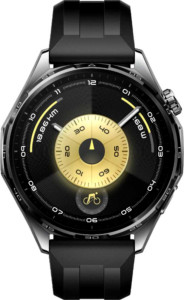
Huawei Watch GT 6
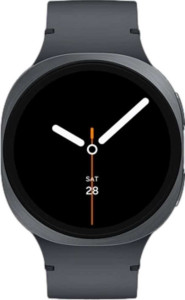
Samsung Galaxy Watch8 LTE 44mm

Huawei Watch GT 6 Samsung Galaxy Watch8 LTE 44mm

Overview

Welcome to our in-depth spec comparison between the Huawei Watch GT 6 and the Samsung Galaxy Watch8 LTE 44mm. These two smartwatches share a surprising amount of common ground, yet diverge sharply in areas that could matter greatly to different users. From battery capacity and water protection to connectivity options and sport-specific tracking features, this comparison breaks down exactly where each watch excels and where it falls short.

Common Features

  • Both watches feature a 1.47″ screen size.
  • Both use an OLED/AMOLED display type.
  • Both have a 5 ATM water resistance rating.
  • Always-On Display is available on both watches.
  • The watch band is replaceable on both models.
  • Neither watch features branded damage-resistant glass.
  • Both watches stand 46 mm tall.
  • Both monitors blood oxygenation levels.
  • Both are equipped with a heart rate monitor.
  • GPS is available on both watches.
  • Both include an accelerometer.
  • A temperature sensor is present on both watches.
  • Both include a compass.
  • A barometer is available on both watches.
  • Both include a gyroscope.
  • Both watches track sleep and provide sleep reports.
  • Distance, steps taken, pace, elevation, and route tracking are supported on both watches.
  • Automatic activity detection is available on both watches.
  • Both are compatible with Android.
  • ANT+ is not supported on either watch.
  • NFC is available on both watches.
  • Galileo satellite system is supported on both watches.
  • Wireless charging is available on both watches.
  • Neither watch has a solar power battery or a removable battery.
  • HRV tracking is available on both watches.
  • VO2 max measurement is supported on both watches.
  • Both measure resting heart rate and provide fast/slow heart rate notifications.
  • Readiness level monitoring is available on both watches.
  • Both watches can be used to answer calls and have call control.
  • Phone-finding functionality is available on both watches.
  • Activity reports, inactivity alerts, calorie tracking, goal setting, achievements, exercise diary, and an ad-free free app are available on both watches.
  • A battery level indicator, auto pause, passcode, and compatibility with smart scales and external heart rate monitors are present on both watches.
  • Neither watch is compatible with Windows, Mac OS X, or has an external memory slot.

Main Differences

  • Water resistance is rated as waterproof on Huawei Watch GT 6 and water resistant on Samsung Galaxy Watch8 LTE 44mm.
  • The Ingress Protection rating is IP69 on Huawei Watch GT 6 and IP68 on Samsung Galaxy Watch8 LTE 44mm.
  • Pixel density is 317 ppi on Huawei Watch GT 6 and 327 ppi on Samsung Galaxy Watch8 LTE 44mm.
  • Resolution is 466 x 466 px on Huawei Watch GT 6 and 480 x 480 px on Samsung Galaxy Watch8 LTE 44mm.
  • Thickness is 11 mm on Huawei Watch GT 6 and 8.6 mm on Samsung Galaxy Watch8 LTE 44mm.
  • Weight is 51.3 g on Huawei Watch GT 6 and 34 g on Samsung Galaxy Watch8 LTE 44mm.
  • Width is 46 mm on Huawei Watch GT 6 and 43.7 mm on Samsung Galaxy Watch8 LTE 44mm.
  • Volume is 23.276 cm³ on Huawei Watch GT 6 and 17.28772 cm³ on Samsung Galaxy Watch8 LTE 44mm.
  • Multi-sport mode is available on Huawei Watch GT 6 but not on Samsung Galaxy Watch8 LTE 44mm.
  • A stroke counter for swimming is available on Samsung Galaxy Watch8 LTE 44mm but not on Huawei Watch GT 6.
  • Diving design is present on Huawei Watch GT 6 but not on Samsung Galaxy Watch8 LTE 44mm.
  • A cellular module is present on Samsung Galaxy Watch8 LTE 44mm but not on Huawei Watch GT 6.
  • iOS compatibility is available on Huawei Watch GT 6 but not on Samsung Galaxy Watch8 LTE 44mm.
  • Bluetooth version is 6 on Huawei Watch GT 6 and 5.3 on Samsung Galaxy Watch8 LTE 44mm.
  • Wi-Fi support is available on Samsung Galaxy Watch8 LTE 44mm but not on Huawei Watch GT 6.
  • Battery power is 867 mAh on Huawei Watch GT 6 and 435 mAh on Samsung Galaxy Watch8 LTE 44mm.
  • ECG technology is present on Samsung Galaxy Watch8 LTE 44mm but not on Huawei Watch GT 6.
  • Fall detection is available on Samsung Galaxy Watch8 LTE 44mm but not on Huawei Watch GT 6.
  • Faster GPS acquisition is a feature of Samsung Galaxy Watch8 LTE 44mm but not of Huawei Watch GT 6.
Specs Comparison
Huawei Watch GT 6

Huawei Watch GT 6

Samsung Galaxy Watch8 LTE 44mm

Samsung Galaxy Watch8 LTE 44mm

Design:
screen size 1.47" 1.47"
Display type OLED/AMOLED OLED/AMOLED
water resistance Waterproof Water resistant
ATM rating 5 ATM 5 ATM
Ingress Protection (IP) rating IP69 IP68
Always-On Display
pixel density 317 ppi 327 ppi
resolution 466 x 466 px 480 x 480 px
Watch band is replaceable
has branded damage-resistant glass
thickness 11 mm 8.6 mm
weight 51.3 g 34 g
height 46 mm 46 mm
width 46 mm 43.7 mm
Has a display
has a touch screen
Has sapphire glass display
volume 23.276 cm³ 17.28772 cm³
is designed for kids

Both watches share the same 1.47″ OLED/AMOLED screen and a 46mm height, so at a glance they appear similarly sized. However, the Samsung Galaxy Watch8 is meaningfully narrower at 43.7mm versus 46mm on the Huawei Watch GT 6, and its overall volume is nearly 26% smaller (17.29 cm³ vs 23.28 cm³). The most striking physical difference is weight and thickness: the Galaxy Watch8 comes in at just 34g and 8.6mm thick, compared to 51.3g and 11mm for the GT 6. That 17-gram gap is substantial in daily wear — the lighter, slimmer Watch8 will sit flatter under a cuff and feel far less present on the wrist during sleep tracking or exercise.

On display quality, the Galaxy Watch8 holds a slight edge with a 480 x 480 px resolution and 327 ppi pixel density versus 466 x 466 px and 317 ppi on the GT 6. The practical difference is modest at this screen size, but the Watch8's panel is marginally crisper for text and icons. Both watches offer an Always-On Display and sapphire glass protection, so durability and glanceability are evenly matched on those fronts.

Where the GT 6 earns a clear advantage is water protection. Its IP69 rating certifies resistance to high-pressure, high-temperature water jets — a step beyond the Galaxy Watch8's IP68 (sustained submersion only). Both carry a 5 ATM rating for swimming, but the GT 6's IP69 makes it more capable in scenarios like rinsing under a tap or exposure to pressurized water. Overall, the Galaxy Watch8 wins on wearability and form factor by a clear margin, while the GT 6 counters with superior ingress protection — making the best choice here a function of whether comfort on the wrist or ruggedness is the higher priority.

Sensors:
Monitors blood oxygenation levels
Has a heart rate monitor
has GPS
has an accelerometer
Has a temperature sensor
has a compass
Has a barometer
has a gyroscope
Has a cadence sensor
Monitors perspiration

Across every sensor listed, the Huawei Watch GT 6 and Samsung Galaxy Watch8 are in complete lockstep. Both carry the full core suite: heart rate monitor, SpO2 blood oxygen tracking, GPS, accelerometer, gyroscope, barometer, compass, and skin temperature sensor. This is a strong and well-rounded package for fitness and health tracking in either case.

The practical value of this shared lineup is significant. The barometer enables elevation tracking and storm alerts during outdoor activity; the temperature sensor supports recovery and cycle-tracking features; and the combination of GPS with the motion sensors (accelerometer and gyroscope) powers accurate auto-workout detection and route mapping without a paired phone. Neither watch cuts corners here — both are genuinely equipped for serious athletes and health-conscious users alike.

Neither a cadence sensor nor perspiration monitoring appears on either device, but these are niche capabilities rarely found at this tier, so their absence is not a meaningful drawback for most users. The verdict for this group is a complete tie — there is no sensor-based reason to choose one watch over the other, and buyers should look to other spec groups, such as design, battery life, or software ecosystem, to differentiate the two.

Activity tracking:
Tracks your sleep
Tracks distance
Tracks steps taken
Measures pace
Provides sleep reports
Detects activities automatically
Has a route tracker
Tracks elevation
Has multi-sport mode
Has exercise tagging
Has a stroke counter for swimming
Tracks calorie intake
Designed for diving
Designed for golf

The foundation of activity tracking is identical between the two watches — sleep tracking with reports, step and distance counting, pace measurement, route tracking, elevation, calorie intake, auto activity detection, and exercise tagging are all present on both. For the everyday fitness user, this shared baseline covers virtually every common use case without compromise.

The divergence emerges at the edges of the feature set, and it is meaningful depending on your sport. The Huawei Watch GT 6 supports multi-sport mode and is designed for diving, making it the stronger companion for users who regularly switch between disciplines or venture into underwater activity. The Samsung Galaxy Watch8, by contrast, forgoes multi-sport mode and diving support but adds a stroke counter for swimming — a more granular metric for pool-focused athletes who want to track technique and efficiency lap by lap.

Neither watch supports golf tracking, so that niche is a non-factor. On balance, the GT 6 holds a broader activity advantage thanks to multi-sport mode and dive capability, which serve a wider range of active lifestyles. The Galaxy Watch8's stroke counter is a worthwhile trade-off only for dedicated swimmers; for everyone else, the GT 6's versatility gives it a clear edge in this category.

Connectivity:
has a cellular module
Is compatible with iOS
Is compatible with Android
Bluetooth version 6 5.3
supports Wi-Fi
supports ANT+
has NFC
supports Galileo

Connectivity is where these two watches diverge most sharply, and the differences carry real consequences for daily use. The Samsung Galaxy Watch8 includes a cellular module and Wi-Fi, meaning it can receive calls, messages, and data independently of a paired phone — a significant advantage for runners, cyclists, or anyone who leaves their phone behind. The Huawei Watch GT 6 has neither, making it fully dependent on a Bluetooth-tethered phone for any live data or notification delivery beyond what is stored on the watch itself.

The GT 6 counters with two notable strengths of its own. First, it supports Bluetooth 6 versus the Watch8's Bluetooth 5.3 — a newer standard that offers improved connection stability and efficiency, which matters most in dense wireless environments. Second, and critically, the GT 6 is compatible with both iOS and Android, while the Galaxy Watch8 is Android-only. For iPhone users, the Watch8 is simply not an option, making this a decisive compatibility barrier. Both watches support NFC for contactless payments and Galileo satellite navigation, so those bases are covered equally.

The winner here depends entirely on your situation. The Galaxy Watch8's cellular independence is a meaningful real-world upgrade for users who want a truly standalone device, but only if they are on Android. The GT 6's cross-platform compatibility gives it a broader audience and its newer Bluetooth version is a plus, but the absence of cellular and Wi-Fi keeps it tethered. For Android users who want phone-free freedom, the Watch8 wins; for iPhone users or anyone not needing cellular, the GT 6 holds the connectivity advantage.
Battery:
battery power 867 mAh 435 mAh
has wireless charging
has a rechargeable battery
Has a solar power battery
has a removable battery

Raw capacity tells a stark story here: the Huawei Watch GT 6 packs an 867 mAh battery, exactly double the 435 mAh found in the Samsung Galaxy Watch8. In the smartwatch world, battery capacity is one of the strongest predictors of how frequently you will need to reach for a charger, and a 2x difference on paper typically translates to a substantial real-world gap in days between charges.

It is worth noting that raw mAh alone does not tell the complete story — a more power-hungry processor, cellular radio, or feature set can close the gap in practice. The Galaxy Watch8's cellular module and Wi-Fi, for instance, are known battery drains that the GT 6 does not carry. Even accounting for those variables, a capacity advantage this large is difficult to fully offset through software or hardware efficiency alone.

Both watches support wireless charging and neither offers a removable or solar-assisted battery, so the charging experience is equivalent in method. The battery category is a clear and decisive win for the Huawei Watch GT 6 — users who prioritize going longer between charges, whether for travel, extended outdoor trips, or simply the convenience of less frequent topping-up, will find it the stronger choice here.

Features:
release date September 2025 July 2025
has HRV tracking
measures VO2 max
measures resting heart rate
has fast/slow heart rate notifications
shows readiness level
Can be used to answer calls
Locates your phone
Has call control
Has notifications
has irregular heart rate warnings
Has ECG technology
Has silent alarm
Has vibrating alerts
has fall detection
Has a stopwatch
Has smart alarm
has voice commands
Has a built-in camera remote control function
Acquires GPS faster

The shared feature set between these two watches is extensive and impressive — HRV tracking, VO2 max, resting heart rate, irregular heart rate warnings, readiness level, call handling, notifications, voice commands, and a camera remote are all present on both. For the vast majority of users, this common ground already represents a fully-featured smartwatch experience with no meaningful gaps.

Where the Samsung Galaxy Watch8 pulls ahead is in three clinically and practically significant additions. ECG technology allows the watch to generate an electrocardiogram reading directly from the wrist — a tool that can help detect atrial fibrillation and is genuinely useful for users with cardiac concerns or those monitored by a physician. Fall detection automatically triggers an emergency alert if a hard fall is detected with no user response, a safety feature with real consequences for older users or solo athletes. Finally, faster GPS acquisition means less standing around waiting for a signal lock before a run or ride — a small but daily quality-of-life win for active users.

The Huawei Watch GT 6 matches the Galaxy Watch8 on every other listed feature and offers no compensating exclusive in this category. The verdict here is a clear edge for the Galaxy Watch8, driven specifically by ECG and fall detection — two features that go beyond fitness convenience into genuine health and safety territory, and which meaningfully raise the ceiling of what the watch can do for its user.

App & Software:
Provides activity reports
Has inactivity alerts
Counts how many calories you've burned
Has goal setting
Has achievements
Free app
Has exercise diary
Ad-free
Has coaching
Has temperature tracking
Has period notifications
Supports routes
Has voice feedback
Has music playback
Includes maps
Predicts start date
Supports widgets
Can be personalised
Has barcode scanner on app
Tracks water intake
Has weight tracking
Tracks BMI

Rarely does a side-by-side comparison land this cleanly: across all 22 app and software specs listed, the Huawei Watch GT 6 and Samsung Galaxy Watch8 are in perfect agreement. Every feature — from activity reports and coaching to music playback, on-watch maps, and BMI tracking — is present on both, and neither watch includes a barcode scanner in its companion app.

The breadth of what both platforms offer is worth appreciating. Covering health body metrics (weight, BMI, water intake, temperature), women's health (period notifications and cycle prediction), fitness tools (exercise diary, goal setting, voice feedback, route support), and lifestyle features (widgets, personalisation, music) in a single free, ad-free app is a genuinely comprehensive package. Users switching from a basic fitness band will find a significant step up on either platform.

With no differentiating data point in this entire category, the verdict is an unambiguous tie. Software experience and ecosystem depth may still differ between the two platforms in ways not captured by these specs — but based strictly on the provided data, neither watch holds any app or software advantage over the other.

Miscellaneous:
has a battery level indicator
Has auto pause
Has passcode
Compatible with smart scales
Compatible with external heart rate monitors
Is compatible with Windows
has an external memory slot
Is compatible with Mac OS X
has a socket for a 3.5 mm audio jack

The miscellaneous spec sheet for these two watches is a mirror image — every single entry matches. Both offer a battery level indicator, auto pause, passcode security, compatibility with smart scales and external heart rate monitors, and neither supports Windows, Mac OS X, external memory, or a 3.5mm audio jack.

A couple of these shared traits are worth highlighting for their practical value. Compatibility with external heart rate monitors is a useful option for athletes who prefer a chest strap's accuracy over wrist-based optical readings during intense training. Smart scale compatibility rounds out the health tracking picture by feeding body composition data directly into the watch's ecosystem, enabling a more holistic view of fitness progress without manual entry.

With no differentiating spec present anywhere in this group, the result is a straightforward tie. Neither the Huawei Watch GT 6 nor the Samsung Galaxy Watch8 gains any advantage here, and buyers should weigh this category as neutral in their overall decision.

Comparison Summary & Verdict

After examining all the evidence, it is clear that both watches serve distinct audiences well. The Huawei Watch GT 6 stands out for its massive 867 mAh battery, higher IP69 waterproof rating, diving-oriented design, multi-sport mode, and iOS compatibility, making it an excellent choice for endurance athletes and users outside the Samsung ecosystem. The Samsung Galaxy Watch8 LTE 44mm, on the other hand, wins on sleeker, lighter design at just 34 g and 8.6 mm thick, and brings key health and safety upgrades like ECG technology, fall detection, a stroke counter for swimmers, built-in LTE connectivity, and faster GPS acquisition, appealing to health-conscious Android users who want a connected, safety-focused companion on their wrist.

Huawei Watch GT 6
Buy Huawei Watch GT 6 if...

Buy the Huawei Watch GT 6 if you want a significantly larger battery, a higher waterproof rating with diving support, multi-sport mode, or if you use an iOS device.

Samsung Galaxy Watch8 LTE 44mm
Buy Samsung Galaxy Watch8 LTE 44mm if...

Buy the Samsung Galaxy Watch8 LTE 44mm if you prioritize a lighter and slimmer design, built-in LTE, ECG monitoring, fall detection, or faster GPS on an Android device.