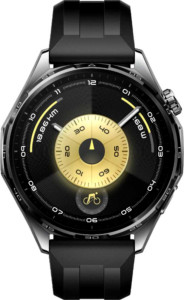
Huawei Watch GT 6
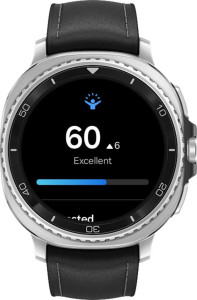
Samsung Galaxy Watch8 LTE Classic

Huawei Watch GT 6 Samsung Galaxy Watch8 LTE Classic

Overview

Welcome to our in-depth specification comparison between the Huawei Watch GT 6 and the Samsung Galaxy Watch8 LTE Classic. Both smartwatches share a strong foundation — sapphire glass displays, comprehensive sensor suites, and robust health tracking — yet they diverge in meaningful ways when it comes to connectivity options, battery capacity, and specialized activity features. Read on to discover which watch is the better fit for your lifestyle.

Common Features

  • Both watches feature an OLED/AMOLED display type.
  • Both watches have a 5 ATM water resistance rating.
  • Always-On Display is available on both watches.
  • The watch band is replaceable on both products.
  • Damage-resistant branded glass is not present on either watch.
  • Both watches have a touchscreen display.
  • Both watches feature sapphire glass on the display.
  • Both watches monitor blood oxygenation levels.
  • A heart rate monitor is present on both watches.
  • Both watches have built-in GPS.
  • An accelerometer is included in both watches.
  • A temperature sensor is available on both watches.
  • A compass is present on both watches.
  • A barometer is included in both watches.
  • A gyroscope is available on both watches.
  • Both watches track sleep and provide sleep reports.
  • Both watches track distance, steps taken, pace, elevation, and include a route tracker.
  • Automatic activity detection is supported on both watches.
  • NFC is supported on both watches.
  • Galileo satellite navigation is supported on both watches.
  • Both watches are compatible with Android devices.
  • ANT+ connectivity is not supported on either watch.
  • Wireless charging is available on both watches.
  • Neither watch has a solar power battery or a removable battery.
  • HRV tracking is available on both watches.
  • Both watches measure VO2 max and resting heart rate.
  • Fast and slow heart rate notifications are available on both watches.
  • Readiness level monitoring is shown on both watches.
  • Both watches can be used to answer calls and offer call control.
  • A phone locator feature is available on both watches.
  • Both watches provide activity reports, inactivity alerts, calorie tracking, goal setting, achievements, an exercise diary, and a free ad-free companion app.
  • A battery level indicator is present on both watches.
  • Auto pause functionality is available on both watches.
  • Passcode protection is supported on both watches.
  • Both watches are compatible with smart scales and external heart rate monitors.
  • Neither watch is compatible with Windows or Mac OS X.
  • Neither watch has an external memory slot.

Main Differences

  • Screen size is 1.47″ on Huawei Watch GT 6 and 1.34″ on Samsung Galaxy Watch8 LTE Classic.
  • The Huawei Watch GT 6 is rated as waterproof, while the Samsung Galaxy Watch8 LTE Classic is rated as water resistant.
  • Ingress Protection rating is IP69 on Huawei Watch GT 6 and IP68 on Samsung Galaxy Watch8 LTE Classic.
  • Pixel density is 317 ppi on Huawei Watch GT 6 and 327 ppi on Samsung Galaxy Watch8 LTE Classic.
  • Resolution is 466 x 466 px on Huawei Watch GT 6 and 438 x 438 px on Samsung Galaxy Watch8 LTE Classic.
  • Thickness is 11 mm on Huawei Watch GT 6 and 10.6 mm on Samsung Galaxy Watch8 LTE Classic.
  • Weight is 51.3 g on Huawei Watch GT 6 and 63.5 g on Samsung Galaxy Watch8 LTE Classic.
  • Height is 46 mm on Huawei Watch GT 6 and 46.4 mm on Samsung Galaxy Watch8 LTE Classic.
  • Width is 46 mm on Huawei Watch GT 6 and 46.4 mm on Samsung Galaxy Watch8 LTE Classic.
  • Volume is 23.276 cm³ on Huawei Watch GT 6 and 22.821376 cm³ on Samsung Galaxy Watch8 LTE Classic.
  • Multi-sport mode is supported on Huawei Watch GT 6 but not available on Samsung Galaxy Watch8 LTE Classic.
  • A stroke counter for swimming is present on Samsung Galaxy Watch8 LTE Classic but not available on Huawei Watch GT 6.
  • Diving support is present on Huawei Watch GT 6 but not available on Samsung Galaxy Watch8 LTE Classic.
  • A cellular module is included in Samsung Galaxy Watch8 LTE Classic but not present on Huawei Watch GT 6.
  • iOS compatibility is supported on Huawei Watch GT 6 but not available on Samsung Galaxy Watch8 LTE Classic.
  • Bluetooth version is 6 on Huawei Watch GT 6 and 5.3 on Samsung Galaxy Watch8 LTE Classic.
  • Wi-Fi connectivity is supported on Samsung Galaxy Watch8 LTE Classic but not available on Huawei Watch GT 6.
  • Battery power is 867 mAh on Huawei Watch GT 6 and 445 mAh on Samsung Galaxy Watch8 LTE Classic.
  • ECG technology is present on Samsung Galaxy Watch8 LTE Classic but not available on Huawei Watch GT 6.
  • Fall detection is supported on Samsung Galaxy Watch8 LTE Classic but not available on Huawei Watch GT 6.
  • Faster GPS acquisition is a feature of Samsung Galaxy Watch8 LTE Classic but is not present on Huawei Watch GT 6.
Specs Comparison
Huawei Watch GT 6

Huawei Watch GT 6

Samsung Galaxy Watch8 LTE Classic

Samsung Galaxy Watch8 LTE Classic

Design:
screen size 1.47" 1.34"
Display type OLED/AMOLED OLED/AMOLED
water resistance Waterproof Water resistant
ATM rating 5 ATM 5 ATM
Ingress Protection (IP) rating IP69 IP68
Always-On Display
pixel density 317 ppi 327 ppi
resolution 466 x 466 px 438 x 438 px
Watch band is replaceable
has branded damage-resistant glass
thickness 11 mm 10.6 mm
weight 51.3 g 63.5 g
height 46 mm 46.4 mm
width 46 mm 46.4 mm
Has a display
has a touch screen
Has sapphire glass display
volume 23.276 cm³ 22.821376 cm³
is designed for kids

Both watches share the same 46 mm footprint, OLED/AMOLED display technology, Always-On Display, sapphire glass, and replaceable bands — so at a glance they appear nearly identical in form. The meaningful differences, however, emerge once you look closer at the display and physical properties. The Huawei Watch GT 6 features a larger 1.47″ screen at 466 × 466 px, while the Samsung Galaxy Watch8 Classic offers a smaller 1.34″ panel at 438 × 438 px but with a slightly higher pixel density of 327 ppi versus 317 ppi. In practice, both are sharp enough that the density gap is negligible to the naked eye, but the GT 6's larger canvas makes text and complications easier to read at a glance.

Where the two watches diverge more meaningfully is in weight and water protection. The GT 6 is notably lighter at 51.3 g compared to the Galaxy Watch8 Classic's 63.5 g — a 12 g difference that is genuinely perceptible during all-day wear, especially during workouts or sleep tracking. On water resistance, the GT 6 holds an edge with an IP69 rating (high-pressure water jets) on top of the shared 5 ATM standard, versus the Watch8 Classic's IP68. The Galaxy Watch8 Classic is slightly thinner at 10.6 mm versus 11 mm, a negligible real-world distinction.

Overall, the Huawei Watch GT 6 has the design edge for most users: its larger display, significantly lighter build, and superior ingress protection rating make it more practical for daily and active use. The Galaxy Watch8 Classic's marginally thinner profile and fractionally higher pixel density do not offset these advantages in any meaningful way.

Sensors:
Monitors blood oxygenation levels
Has a heart rate monitor
has GPS
has an accelerometer
Has a temperature sensor
has a compass
Has a barometer
has a gyroscope
Has a cadence sensor
Monitors perspiration

Across every sensor listed, the Huawei Watch GT 6 and Samsung Galaxy Watch8 Classic are in complete lockstep. Both carry the full suite of health and motion sensors expected at this tier: heart rate monitor, SpO2 (blood oxygen), GPS, accelerometer, gyroscope, barometer, compass, and a temperature sensor. Neither watch includes a cadence sensor or perspiration monitor.

The shared sensor set is genuinely comprehensive for fitness and wellness use. GPS enables accurate outdoor route tracking without a paired phone; the barometer is valuable for hikers tracking elevation; and the temperature sensor supports broader wellness insights. The gyroscope and accelerometer together power reliable activity recognition and sleep tracking. The absence of a cadence sensor is worth noting for cyclists who want pedaling rhythm data natively, though both watches lack it equally.

This category is a dead tie. There is no sensor-based reason to choose one watch over the other — the hardware foundations for health and motion tracking are identical on both devices.

Activity tracking:
Tracks your sleep
Tracks distance
Tracks steps taken
Measures pace
Provides sleep reports
Detects activities automatically
Has a route tracker
Tracks elevation
Has multi-sport mode
Has exercise tagging
Has a stroke counter for swimming
Tracks calorie intake
Designed for diving
Designed for golf

The activity tracking foundations are nearly identical between the two watches — both cover sleep tracking with reports, distance, steps, pace, elevation, route tracking, calorie intake, automatic activity detection, and exercise tagging. For the majority of everyday users, this shared core will be more than sufficient.

The real divergence lies in sport-specific capabilities. The Huawei Watch GT 6 supports multi-sport mode and is designed for diving, making it the stronger companion for users who rotate across a wide variety of athletic disciplines or engage in underwater activities. The Samsung Galaxy Watch8 Classic, on the other hand, skips multi-sport mode and diving support but adds a stroke counter for swimming — a meaningful feature for lap swimmers who want technique-level feedback on their pool sessions, yet less relevant for casual aquatic use.

The edge here depends entirely on the user's lifestyle. For versatile athletes or water sports enthusiasts who dive, the GT 6 holds a broader advantage with multi-sport mode and dive support. For dedicated swimmers focused on pool training, the Galaxy Watch8 Classic's stroke counter is the more targeted tool. Neither watch supports golf tracking, so that use case is off the table for both.

Connectivity:
has a cellular module
Is compatible with iOS
Is compatible with Android
Bluetooth version 6 5.3
supports Wi-Fi
supports ANT+
has NFC
supports Galileo

Connectivity is where these two watches diverge most sharply. The Samsung Galaxy Watch8 Classic includes a cellular module and Wi-Fi, meaning it can make calls, receive notifications, and stream data entirely independently of a paired smartphone. For users who want to leave their phone behind during runs or commutes, this is a significant real-world advantage. The Huawei Watch GT 6 offers neither LTE nor Wi-Fi, keeping it tethered to a phone for most smart functions.

The GT 6 fights back on two fronts, however. First, it runs Bluetooth 6 versus the Galaxy Watch8 Classic's Bluetooth 5.3 — a newer standard that brings improvements in connection stability and efficiency. Second, and critically, the GT 6 is compatible with both iOS and Android, while the Galaxy Watch8 Classic is Android-only. For iPhone users, the Galaxy Watch8 Classic is simply not an option, making the GT 6 the only viable choice regardless of other trade-offs. Both watches share NFC and Galileo satellite support, which are table-stakes features at this tier.

The overall connectivity edge belongs to the Galaxy Watch8 Classic for Android users, thanks to its standalone LTE capability and Wi-Fi support — features that meaningfully extend its usefulness away from a phone. But for anyone in the Apple ecosystem, the GT 6 is the clear winner by default, and its newer Bluetooth standard is a modest but real bonus for all users.

Battery:
battery power 867 mAh 445 mAh
has wireless charging
has a rechargeable battery
Has a solar power battery
has a removable battery

Battery capacity is one of the starkest contrasts between these two watches. The Huawei Watch GT 6 packs an 867 mAh cell — nearly double the 445 mAh found in the Samsung Galaxy Watch8 Classic. Raw capacity alone does not dictate real-world battery life, as power consumption varies with features, software efficiency, and usage patterns, but a near-2x difference in cell size is substantial enough to translate into a meaningful gap in how frequently each watch needs to be charged.

Both watches support wireless charging and use non-removable rechargeable batteries, so the charging experience is equally convenient on either device. Neither offers solar charging, meaning both are fully dependent on regular plug-in or pad-based top-ups. It is worth noting that the Galaxy Watch8 Classic's LTE and Wi-Fi radios — highlighted in the connectivity group — are power-hungry features that will draw more heavily on its smaller battery, likely widening the practical endurance gap further in real use.

The battery edge belongs decisively to the GT 6. Its 867 mAh capacity provides a strong foundation for extended use between charges, making it the more compelling choice for users who prioritize minimizing charging frequency — such as multi-day travelers or those relying on continuous sleep and health tracking.

Features:
release date September 2025 July 2025
has HRV tracking
measures VO2 max
measures resting heart rate
has fast/slow heart rate notifications
shows readiness level
Can be used to answer calls
Locates your phone
Has call control
Has notifications
has irregular heart rate warnings
Has ECG technology
Has silent alarm
Has vibrating alerts
has fall detection
Has a stopwatch
Has smart alarm
has voice commands
Has a built-in camera remote control function
Acquires GPS faster

The feature sets of these two watches overlap heavily — both deliver HRV tracking, VO2 max, resting heart rate, irregular heart rate warnings, call handling, notifications, voice commands, camera remote, stopwatch, and vibrating alerts. For the vast majority of daily smartwatch use cases, neither watch leaves the user wanting. The meaningful story here is in the handful of features where they split.

The Samsung Galaxy Watch8 Classic holds a clear health-safety advantage with two exclusive features: ECG technology and fall detection. ECG enables on-demand electrocardiogram readings that can flag atrial fibrillation — a clinically meaningful capability that goes beyond passive heart rate monitoring. Fall detection automatically alerts emergency contacts if a hard fall is detected and the user is unresponsive, a feature with obvious value for older users or solo athletes. Additionally, the Galaxy Watch8 Classic acquires GPS faster, which is a practical benefit for runners and cyclists who want to start a workout without waiting for satellite lock. The Huawei Watch GT 6 offers none of these three features.

The Galaxy Watch8 Classic takes a clear edge in this category. The addition of ECG and fall detection meaningfully raises its ceiling as a health-monitoring device, not just a fitness tracker — and faster GPS lock is a welcome convenience bonus on top. The GT 6 matches it on nearly everything else, but cannot close the gap on these safety-oriented differentiators.

App & Software:
Provides activity reports
Has inactivity alerts
Counts how many calories you've burned
Has goal setting
Has achievements
Free app
Has exercise diary
Ad-free
Has coaching
Has temperature tracking
Has period notifications
Supports routes
Has voice feedback
Has music playback
Includes maps
Predicts start date
Supports widgets
Can be personalised
Has barcode scanner on app
Tracks water intake
Has weight tracking
Tracks BMI

Remarkably, the app and software feature sets of the Huawei Watch GT 6 and Samsung Galaxy Watch8 Classic are identical across every single data point provided. Both companion apps are free and ad-free, cover the full wellness tracking stack — calories, water intake, weight, BMI, temperature, and period tracking with cycle prediction — and support goal setting, achievements, coaching, and an exercise diary.

Beyond health logging, both platforms extend into practical daily use with equal capability: music playback, maps and route support, voice feedback, widgets, and personalization options are all present on both. Neither app includes a barcode scanner, which would have been a useful addition for nutrition tracking, but that gap applies equally to both watches.

This category is a complete tie. Based strictly on the provided specs, no software or app-based advantage can be assigned to either product. Users should weigh their decision on this front based on ecosystem preference — how each app integrates with the rest of their phone and health platform — rather than feature breadth, which is matched point for point here.

Miscellaneous:
has a battery level indicator
Has auto pause
Has passcode
Compatible with smart scales
Compatible with external heart rate monitors
Is compatible with Windows
has an external memory slot
Is compatible with Mac OS X
has a socket for a 3.5 mm audio jack

The miscellaneous spec group tells a straightforward story: the Huawei Watch GT 6 and Samsung Galaxy Watch8 Classic are evenly matched on every single point. Both include a battery level indicator, auto pause, passcode security, compatibility with smart scales, and support for external heart rate monitors — a useful feature for athletes who prefer chest strap accuracy over wrist-based optical readings during intense training.

On the limitations side, neither watch is compatible with Windows or Mac OS X as a standalone device, neither has an external memory slot for expandable storage, and neither includes a 3.5 mm audio jack — none of which are realistic expectations for modern smartwatches in this category, so these absences carry no practical weight in the comparison.

This group is a complete tie. Every spec aligns perfectly between the two devices, and no meaningful advantage can be assigned to either watch based on the data provided here. Users should look to other specification groups — particularly connectivity, features, and battery — to differentiate the two.

Comparison Summary & Verdict

After examining every specification, it is clear that both watches excel in different scenarios. The Huawei Watch GT 6 stands out with its massive 867 mAh battery, lighter 51.3 g build, Bluetooth 6, iOS compatibility, multi-sport mode, and diving support — making it an excellent companion for endurance athletes and users who prioritize long battery life and broader phone compatibility. The Samsung Galaxy Watch8 LTE Classic, on the other hand, offers a more connected and safety-focused experience thanks to its built-in cellular module, Wi-Fi, ECG technology, fall detection, stroke counter, and faster GPS acquisition. If staying connected independently and accessing advanced health monitoring features matters most to you, the Samsung is the stronger choice. If raw battery endurance, lighter weight, and versatile sport tracking are your priorities, the Huawei delivers compelling value.

Huawei Watch GT 6
Buy Huawei Watch GT 6 if...

Buy the Huawei Watch GT 6 if you want a lighter watch with a much larger battery, iOS compatibility, multi-sport and diving support, and the latest Bluetooth 6 connectivity.

Samsung Galaxy Watch8 LTE Classic
Buy Samsung Galaxy Watch8 LTE Classic if...

Buy the Samsung Galaxy Watch8 LTE Classic if you need built-in LTE and Wi-Fi for phone-free use, ECG monitoring, fall detection, and faster GPS acquisition.