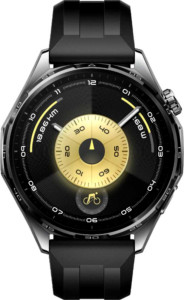
Huawei Watch GT 6
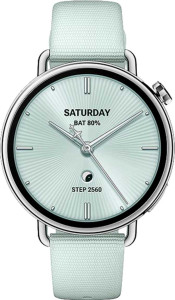
Xiaomi Watch S4 41mm

Huawei Watch GT 6 Xiaomi Watch S4 41mm

Overview

When choosing between the Huawei Watch GT 6 and the Xiaomi Watch S4 41mm, two capable smartwatches come head to head across design, fitness tracking, connectivity, and battery life. Both share a strong sensor suite and broad platform compatibility, yet they diverge sharply in areas like size and weight, cellular connectivity, and activity-specific features. Read on to see which watch best fits your lifestyle.

Common Features

  • Both watches feature an OLED/AMOLED display.
  • Both watches are waterproof with a 5 ATM rating.
  • Always-On Display is available on both watches.
  • Both watches share a resolution of 466 x 466 px.
  • The watch band is replaceable on both models.
  • Neither watch features branded damage-resistant glass.
  • Both watches monitor blood oxygenation levels.
  • Both watches include a heart rate monitor.
  • Both watches have built-in GPS.
  • Both watches include an accelerometer, gyroscope, compass, barometer, and temperature sensor.
  • Sleep tracking and sleep reports are available on both watches.
  • Both watches track distance, steps taken, pace, elevation, and detect activities automatically.
  • Both watches have a built-in route tracker.
  • Both watches are compatible with iOS and Android.
  • Neither watch supports Wi-Fi or ANT+.
  • NFC is available on both watches.
  • Both watches support the Galileo satellite system.
  • Wireless charging is supported on both watches.
  • Neither watch has a solar power battery or a removable battery.
  • Both watches support HRV tracking, VO2 max measurement, resting heart rate measurement, and fast/slow heart rate notifications.
  • Both watches can be used to answer calls and have call control.
  • The phone locator feature is available on both watches.
  • Both watches show a readiness level.
  • Both apps provide activity reports, inactivity alerts, calorie tracking, goal setting, achievements, an exercise diary, and are free and ad-free.
  • Both watches have a battery level indicator and passcode support.
  • Neither watch is compatible with Windows or Mac OS X, has an external memory slot, or a 3.5 mm audio jack.

Main Differences

  • Screen size is 1.47″ on Huawei Watch GT 6 and 1.32″ on Xiaomi Watch S4 41mm.
  • Pixel density is 317 ppi on Huawei Watch GT 6 and 320 ppi on Xiaomi Watch S4 41mm.
  • Thickness is 11 mm on Huawei Watch GT 6 and 9.5 mm on Xiaomi Watch S4 41mm.
  • Weight is 51.3 g on Huawei Watch GT 6 and 32 g on Xiaomi Watch S4 41mm.
  • Height and width are 46 mm on Huawei Watch GT 6 and 41.2 mm on Xiaomi Watch S4 41mm.
  • Volume is 23.276 cm³ on Huawei Watch GT 6 and 16.12568 cm³ on Xiaomi Watch S4 41mm.
  • A stroke counter for swimming is available on Xiaomi Watch S4 41mm but not on Huawei Watch GT 6.
  • Diving design is present on Huawei Watch GT 6 but not on Xiaomi Watch S4 41mm.
  • A cellular module is available on Xiaomi Watch S4 41mm but not on Huawei Watch GT 6.
  • Bluetooth version is 6 on Huawei Watch GT 6 and 5.4 on Xiaomi Watch S4 41mm.
  • Battery power is 867 mAh on Huawei Watch GT 6 and 320 mAh on Xiaomi Watch S4 41mm.
  • Irregular heart rate warnings are available on Huawei Watch GT 6 but not on Xiaomi Watch S4 41mm.
  • Fall detection is present on Xiaomi Watch S4 41mm but not on Huawei Watch GT 6.
  • Faster GPS acquisition is available on Xiaomi Watch S4 41mm but not on Huawei Watch GT 6.
  • Coaching features are available in the Huawei Watch GT 6 app but not in the Xiaomi Watch S4 41mm app.
  • Route support is available in the Huawei Watch GT 6 app but not in the Xiaomi Watch S4 41mm app.
Specs Comparison
Huawei Watch GT 6

Huawei Watch GT 6

Xiaomi Watch S4 41mm

Xiaomi Watch S4 41mm

Design:
screen size 1.47" 1.32"
Display type OLED/AMOLED OLED/AMOLED
water resistance Waterproof Waterproof
ATM rating 5 ATM 5 ATM
Always-On Display
pixel density 317 ppi 320 ppi
resolution 466 x 466 px 466 x 466 px
Watch band is replaceable
has branded damage-resistant glass
thickness 11 mm 9.5 mm
weight 51.3 g 32 g
height 46 mm 41.2 mm
width 46 mm 41.2 mm
Has a display
has a touch screen
Has sapphire glass display
volume 23.276 cm³ 16.12568 cm³
is designed for kids

Both watches share a strong design foundation: OLED/AMOLED displays, sapphire glass protection, Always-On Display, replaceable bands, and identical 466 x 466 px resolution — meaning neither has a meaningful edge in display quality or durability basics. Pixel density is also virtually identical at 317 ppi vs 320 ppi, so sharpness will look the same in practice.

Where these two diverge sharply is physical form factor. The Huawei Watch GT 6 is a noticeably larger watch: 46 mm in both height and width with an 11 mm thickness, versus the Xiaomi Watch S4 41mm's more compact 41.2 mm case and slimmer 9.5 mm profile. This translates directly into volume — 23.3 cm³ for the GT 6 versus just 16.1 cm³ for the S4 — and most tellingly, weight: 51.3 g against a remarkably light 32 g. That nearly 20-gram difference is substantial for all-day and sleep tracking comfort.

The Xiaomi Watch S4 has a clear edge for users who prefer a discreet, lightweight wearable that sits low on the wrist and suits smaller wrists well. The Huawei GT 6 offers a larger screen in a bigger chassis, which some users prefer for readability, but it comes at the cost of bulk and wrist presence. If form factor and wearability comfort are priorities, the Xiaomi S4 wins this category decisively.

Sensors:
Monitors blood oxygenation levels
Has a heart rate monitor
has GPS
has an accelerometer
Has a temperature sensor
has a compass
Has a barometer
has a gyroscope
Has a cadence sensor
Monitors perspiration

Across every sensor listed, the Huawei Watch GT 6 and Xiaomi Watch S4 41mm are in complete lockstep. Both carry the full suite expected of a capable sports smartwatch: heart rate monitor, SpO2 (blood oxygen), GPS, accelerometer, gyroscope, compass, barometer, and a temperature sensor — and both equally lack a cadence sensor and perspiration monitoring.

The practical implication is that users of either watch get the same breadth of health and activity tracking capability. The barometer enables elevation tracking for hikes and stair counting; the combined accelerometer and gyroscope support motion-based activity detection and sleep staging; and onboard GPS means routes can be recorded without needing a paired phone nearby. These are not entry-level omissions — this is a well-rounded sensor package on both sides.

This category is a definitive tie. There is no sensor-based reason to choose one watch over the other — the decision will have to rest on other specification groups such as design, battery, or software ecosystem.

Activity tracking:
Tracks your sleep
Tracks distance
Tracks steps taken
Measures pace
Provides sleep reports
Detects activities automatically
Has a route tracker
Tracks elevation
Has exercise tagging
Has a stroke counter for swimming
Tracks calorie intake
Designed for diving

For the vast majority of activity tracking needs, these two watches are evenly matched. Sleep tracking with reports, step counting, distance, pace, elevation, route tracking, automatic activity detection, exercise tagging, and calorie tracking — all present on both. Everyday athletes and casual fitness users will find no functional gap between them here.

The real story is in the water. The Xiaomi Watch S4 includes a stroke counter for swimming, which the Huawei GT 6 lacks — a meaningful advantage for lap swimmers who want stroke-by-stroke performance data without manual logging. The GT 6, however, flips the advantage for more serious aquatic pursuits: it is designed for diving, while the S4 is not. Dive mode typically accounts for depth pressure beyond standard waterproofing ratings and may support dedicated dive metrics, making the GT 6 the only viable option for underwater activities beyond recreational swimming.

Neither watch dominates outright — the edge depends entirely on the user's water activity of choice. Swimmers training in a pool will prefer the Xiaomi S4's stroke counter, while divers or those engaging in deeper water sports should lean toward the Huawei GT 6. For purely land-based activity tracking, both are effectively tied.

Connectivity:
has a cellular module
Is compatible with iOS
Is compatible with Android
Bluetooth version 6 5.4
supports Wi-Fi
supports ANT+
has NFC
supports Galileo

Shared ground first: both watches support NFC for contactless payments, are compatible with iOS and Android, support the Galileo satellite system for improved GPS accuracy, and skip Wi-Fi and ANT+ entirely. For most users, this baseline is more than adequate for day-to-day smartwatch connectivity.

Two specs split them meaningfully. The Xiaomi Watch S4 includes a cellular module — a significant functional upgrade that allows the watch to make calls, receive notifications, and stream data independently of a paired smartphone. For runners, cyclists, or anyone who leaves their phone behind, this is a genuine lifestyle differentiator. The Huawei GT 6 has no cellular capability, keeping it tethered to a phone for most communication functions. On the other hand, the GT 6 pulls ahead with Bluetooth 6 versus the S4's Bluetooth 5.4. Bluetooth 6 brings improved connection stability and more precise distance estimation, which can enhance real-time data syncing and phone-pairing reliability — though the practical gap between these two versions is modest in everyday use.

Overall, the Xiaomi Watch S4 holds the connectivity edge. The addition of a cellular module is a far more impactful real-world differentiator than the Bluetooth version gap — phone independence is a qualitative leap in smartwatch utility that the Huawei GT 6 simply cannot match in this category.

Battery:
battery power 867 mAh 320 mAh
has wireless charging
has a rechargeable battery
Has a solar power battery
has a removable battery

Charging method parity is the only story both watches share here: both support wireless charging and use sealed, non-removable rechargeable batteries. Everything else in this category tilts heavily in one direction.

The Huawei Watch GT 6 packs an 867 mAh battery against the Xiaomi Watch S4's 320 mAh — a difference of more than 2.7x. Raw mAh capacity does not translate linearly to battery life (power efficiency of the chipset, display size, and active features all play a role), but a gap this wide is impossible to offset through software optimization alone. In practical terms, users can reasonably expect the GT 6 to go significantly longer between charges, which matters enormously for sleep tracking continuity and reducing charging anxiety during multi-day trips or outdoor activities. It is also worth noting that the GT 6's larger case from the Design group naturally accommodates this bigger cell — the S4's slimmer, lighter build comes with an inherent capacity trade-off.

The Huawei Watch GT 6 wins this category decisively. For users who prioritize extended battery life — particularly those who travel frequently, track overnight sleep without interruption, or simply dislike daily charging — the GT 6's capacity advantage is one of the most tangible real-world differentiators in this entire comparison.

Features:
release date September 2025 June 2025
has HRV tracking
measures VO2 max
measures resting heart rate
has fast/slow heart rate notifications
shows readiness level
Can be used to answer calls
Locates your phone
Has call control
Has notifications
has irregular heart rate warnings
Has ECG technology
Has silent alarm
Has vibrating alerts
has fall detection
Has a stopwatch
Has smart alarm
has voice commands
Has a built-in camera remote control function
Acquires GPS faster
warranty period 1 years 1 years
number of microphones 1 1
has a front camera

The feature sets of these two watches overlap heavily. Both offer HRV tracking, VO2 max, readiness scores, call handling, notifications, voice commands, camera remote, vibrating and silent alarms, and phone locating — a robust smartwatch package on either wrist. Neither includes ECG technology or a smart alarm, and both carry a single microphone and a one-year warranty, leaving no gap to exploit on those fronts.

Where they diverge comes down to two targeted trade-offs. The Huawei GT 6 includes irregular heart rate warnings, a passive safety feature that can flag potentially concerning arrhythmia patterns during continuous monitoring — something the Xiaomi Watch S4 omits. The S4 counters with fall detection, which automatically alerts emergency contacts if a hard fall is detected and goes unacknowledged — a feature the GT 6 lacks entirely. Additionally, the S4 benefits from faster GPS acquisition, meaning it locks onto a satellite signal more quickly at the start of an outdoor workout, a small but genuinely useful convenience for runners and cyclists who do not want to wait around before heading out.

Neither watch holds a sweeping advantage here — the differences are feature-specific and user-dependent. Older users or those with cardiac concerns may value the GT 6's irregular heart rate warnings; those prioritizing personal safety during solo outdoor activities or who are statistically at higher fall risk will find the S4's fall detection more relevant. The S4's faster GPS lock is a minor but consistent quality-of-life win for frequent outdoor exercisers. On balance, this group is close to a tie, with each watch holding one or two niche advantages over the other.

App & Software:
Provides activity reports
Has inactivity alerts
Counts how many calories you've burned
Has goal setting
Has achievements
Free app
Has exercise diary
Ad-free
Has coaching
Has temperature tracking
Has period notifications
Supports routes
Has music playback
Includes maps
Predicts ovulation
Predicts start date
Supports widgets
Can be personalised
Has barcode scanner on app
Tracks water intake
Has weight tracking

Software depth is a genuine strength for both watches, and the overlap is extensive: activity reports, inactivity alerts, calorie tracking, goal setting, achievements, an exercise diary, temperature and weight tracking, water intake logging, music playback, maps, widgets, full personalisation, women's health features including ovulation prediction and period notifications — all present on both, through a free and ad-free companion app. For the majority of users, the app experience will feel functionally equivalent.

Two omissions on the Xiaomi Watch S4 side break the symmetry. The Huawei GT 6 app includes in-app coaching, which provides structured guidance to help users improve performance over time — a meaningful addition for those who want more than raw data and prefer directed training feedback. The GT 6 also supports route planning within the app, enabling users to pre-load or follow mapped paths during outdoor activities. The S4 lacks both, which is a notable gap given that its companion features are otherwise competitive.

The Huawei GT 6 takes a clear edge in this category. Coaching and route support are not minor UI niceties — they represent a meaningfully richer training and navigation experience. Users who engage seriously with structured workouts or outdoor navigation via their watch's app will find the GT 6's software offering noticeably more complete.

Miscellaneous:
has a battery level indicator
Has passcode
Is compatible with Windows
has an external memory slot
Is compatible with Mac OS X
has a socket for a 3.5 mm audio jack

This category is a clean sweep tie. Every single spec listed here is identical between the Huawei Watch GT 6 and the Xiaomi Watch S4: both have a battery level indicator and passcode security, and neither supports Windows or Mac OS X pairing, external memory expansion, or a 3.5 mm audio jack.

The absence of desktop OS compatibility is standard practice for consumer smartwatches in this segment, which rely on mobile companion apps rather than direct PC connections. The lack of a 3.5 mm jack and external memory slot is equally unsurprising — neither feature has been relevant to mainstream smartwatch design for years, with audio handled via Bluetooth and storage managed internally.

There is simply no differentiator to analyze here. Users can disregard this category entirely when choosing between these two watches, as it contributes nothing to the decision either way.

Comparison Summary & Verdict

After a thorough side-by-side review, both watches prove well-rounded, but each targets a distinct type of user. The Huawei Watch GT 6 stands out with its larger display, a significantly bigger 867 mAh battery, diving-ready design, irregular heart rate warnings, coaching features, and route support in its app — making it the stronger companion for serious outdoor adventurers and fitness enthusiasts who want longer autonomy. The Xiaomi Watch S4 41mm, on the other hand, wins on compactness and weight at just 32 g, adds a cellular module for standalone connectivity, offers fall detection, faster GPS acquisition, and a stroke counter for swimmers, making it ideal for everyday wearers and swimmers who value independence from their phone.

Huawei Watch GT 6
Buy Huawei Watch GT 6 if...

Buy the Huawei Watch GT 6 if you want a longer-lasting battery, diving support, and advanced coaching and route features in the companion app.

Xiaomi Watch S4 41mm
Buy Xiaomi Watch S4 41mm if...

Buy the Xiaomi Watch S4 41mm if you prefer a lighter, more compact watch with cellular independence, fall detection, and swim stroke tracking.