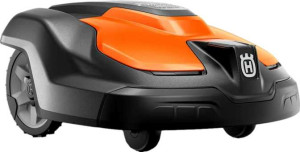
Husqvarna Automower 550H EPOS
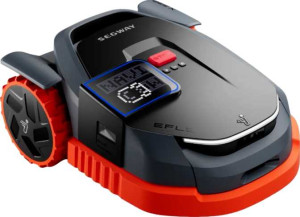
Segway Navimow X390

Husqvarna Automower 550H EPOS Segway Navimow X390

Overview

Welcome to our detailed spec breakdown pitting the Husqvarna Automower 550H EPOS against the Segway Navimow X390. Both are feature-rich robotic lawn mowers targeting large gardens, sharing smart connectivity, scheduling, and anti-theft capabilities. Yet beneath the surface, they diverge sharply on slope handling, mowing efficiency, noise levels, and physical dimensions — factors that can make or break the fit for your specific lawn.

Common Features

  • Both products have a dedicated smartphone app.
  • Both products support Wi-Fi connectivity.
  • Both products have Bluetooth.
  • Both products are electric.
  • Both products support remote control via smartphone.
  • Both products have an obstacle sensor.
  • Both products have a rain sensor.
  • Both products can be scheduled.
  • Both products have anti-theft features.
  • Both products support auto docking.
  • Both products work with Alexa.
  • Both products are compatible with Google Assistant.
  • Both products have a display.
  • Both products have a removable battery.

Main Differences

  • Audible noise is 68 dB on Husqvarna Automower 550H EPOS and 60 dB on Segway Navimow X390.
  • Audible noise in eco mode is 56 dB on Husqvarna Automower 550H EPOS and 50 dB on Segway Navimow X390.
  • Cutting width is 24 cm on Husqvarna Automower 550H EPOS and 23.7 cm on Segway Navimow X390.
  • Height is 351 mm on Husqvarna Automower 550H EPOS and 307 mm on Segway Navimow X390.
  • Recommended area is 10117 m² on Husqvarna Automower 550H EPOS and 10000 m² on Segway Navimow X390.
  • Lawn area coverage is 12140 m² on Husqvarna Automower 550H EPOS and 12000 m² on Segway Navimow X390.
  • Thickness is 749 mm on Husqvarna Automower 550H EPOS and 698 mm on Segway Navimow X390.
  • Volume is 165626.37 cm³ on Husqvarna Automower 550H EPOS and 117857.3 cm³ on Segway Navimow X390.
  • Weight is 15694 g on Husqvarna Automower 550H EPOS and 19900 g on Segway Navimow X390.
  • Width is 630 mm on Husqvarna Automower 550H EPOS and 550 mm on Segway Navimow X390.
  • Slope performance is 15% on Husqvarna Automower 550H EPOS and 50% on Segway Navimow X390.
  • Mowing time is 200 m on Husqvarna Automower 550H EPOS and 240 m on Segway Navimow X390.
  • Number of cutting height settings is 5 on Husqvarna Automower 550H EPOS and 6 on Segway Navimow X390.
  • Maximum cutting height is 91 mm on Husqvarna Automower 550H EPOS and 70 mm on Segway Navimow X390.
  • Minimum cutting height is 51 mm on Husqvarna Automower 550H EPOS and 20 mm on Segway Navimow X390.
  • Working area capacity is 208 m²/h on Husqvarna Automower 550H EPOS and 320 m²/h on Segway Navimow X390.
  • Charge time is 1 hour on Husqvarna Automower 550H EPOS and 1.67 hours on Segway Navimow X390.
  • Voltage is 18V on Husqvarna Automower 550H EPOS and 11V on Segway Navimow X390.
  • Wattage is 37W on Husqvarna Automower 550H EPOS and 42W on Segway Navimow X390.
Specs Comparison
Husqvarna Automower 550H EPOS

Husqvarna Automower 550H EPOS

Segway Navimow X390

Segway Navimow X390

General info:
audible noise 68 dB 60 dB
Has a dedicated smartphone app
supports Wi-Fi
audible noise (eco) 56 dB 50 dB
Has Bluetooth
cutting width 24 cm 23.7 cm
Is electric
height 351 mm 307 mm
recommended area 10117 m² 10000 m²
release date March 2025 April 2025
supports a remote smartphone
lawn area coverage 12140 m² 12000 m²
thickness 749 mm 698 mm
volume 165626.37 cm³ 117857.3 cm³
weight 15694 g 19900 g
width 630 mm 550 mm

Both the Husqvarna Automower 550H EPOS and the Segway Navimow X390 share the same essential connectivity foundation — Wi-Fi, Bluetooth, a dedicated smartphone app, and remote smartphone support — so neither holds an advantage on smart-home integration. Their cutting widths are virtually identical (24 cm vs. 23.7 cm), and their recommended and actual lawn coverage figures are remarkably close, making them direct competitors for large-garden use at around the 10,000–12,000 m² range.

Where the two diverge meaningfully is in acoustics and physical characteristics. The Navimow X390 runs noticeably quieter — 60 dB standard and 50 dB in eco mode versus the Automower's 68 dB and 56 dB — a difference of 8 dB that, due to the logarithmic nature of the decibel scale, translates to the X390 sounding roughly 2.5 times less loud in practice. For users who run their mower during daytime hours in noise-sensitive neighborhoods, this is a significant real-world advantage. On the other hand, the 550H EPOS is considerably lighter at 15,694 g compared to the X390's 19,900 g, a gap of over 4 kg that makes a tangible difference when manually lifting or repositioning the unit. The Automower is also physically larger in overall volume, while the X390 has a more compact, lower-profile body (307 mm tall vs. 351 mm).

In this general category, neither product dominates outright. The Navimow X390 holds a clear acoustic edge, which is a meaningful differentiator for quiet operation, but the 550H EPOS wins on ease of handling thanks to its significantly lower weight. Users prioritizing minimal noise should lean toward the X390; those who value a lighter unit to carry around will prefer the Husqvarna.
Features:
has an obstacle sensor
Has a rain sensor
can be scheduled
has anti-theft features
auto docking
works with Alexa
compatible with Google Assistant
Has a display
has a frost sensor
Has mulching feature
adapts to weather conditions
works in rain

Across every feature tracked in this group, the Husqvarna Automower 550H EPOS and the Segway Navimow X390 are in complete lockstep. Both carry the full suite of intelligent automation capabilities: obstacle sensing, rain and frost sensors, auto docking, scheduling, and weather adaptation. These are not minor checkboxes — a frost sensor, for instance, prevents the mower from operating on frozen ground where it could damage both the turf and the machine, while weather adaptation means the unit can autonomously adjust its mowing frequency based on grass growth conditions, reducing user intervention considerably.

The parity extends to smart home integration and user interface as well. Both support Amazon Alexa and Google Assistant, accept voice commands within a smart home ecosystem, and feature an on-unit display for direct interaction without requiring a phone. The inclusion of mulching on both models is also worth noting — mulching returns clippings to the lawn as natural fertilizer, which over time can visibly improve turf health and reduce the need for external fertilizers.

This group results in a complete tie. There is no differentiator here, not even a minor one. Buyers choosing between these two models should place no weight on features when making their decision, and instead focus on the distinctions surfaced in other specification groups.

Performance:
slope performance 15% 50%
mowing time 200 m 240 m
number of cutting height settings 5 6
maximum cutting height 91 mm 70 mm
minimum cutting height 51 mm 20 mm
working area capacity 208 m²/h 320 m²/h

Performance is where the gap between these two mowers becomes most pronounced. The Segway Navimow X390's 50% slope rating versus the Automower 550H EPOS's 15% is the standout difference in this group. To put that in practical terms, 15% corresponds to a relatively gentle incline — manageable for most flat-to-slightly-hilly gardens — while 50% is a steep gradient that covers nearly any residential terrain short of a cliff face. For owners with genuinely hilly properties, this spec alone could be decisive.

The efficiency figures tell a similar story in favor of the X390. Its working area capacity of 320 m²/h versus the Automower's 208 m²/h means the Segway covers the same ground roughly 54% faster per session — a significant operational advantage on large lawns, translating to more mowing done per charge cycle. The X390 also edges ahead on session duration with 240 minutes of mowing time compared to 200 minutes. On cutting height, the two products cater to different preferences: the Automower reaches a taller maximum of 91 mm, useful for owners who prefer a longer, meadow-style cut, while the X390 goes considerably lower with a 20 mm minimum, better suited to those who want a manicured, fine-lawn finish. The X390 also offers one additional height increment with its 6-step adjustment range.

The Navimow X390 holds a clear overall edge in this group, winning on slope capability, area throughput, and session endurance. The 550H EPOS's only performance distinction is its higher maximum cutting height, which is a meaningful advantage exclusively for users who specifically want to maintain taller grass. For the majority of performance-focused buyers, the X390's numbers are objectively stronger across the board.

Power:
charge time 1 hours 1.67 hours
has a removable battery
voltage 18V 11V
wattage 37W 42W

A shared removable battery design is the one point of parity here — a genuinely useful feature on both units, since it means a spare battery can be swapped in to extend runtime without waiting at the dock. Beyond that, the power profiles of these two mowers diverge in instructive ways. The Automower 550H EPOS operates at a notably higher 18V compared to the X390's 11V. In battery-powered equipment, higher voltage generally enables more efficient power delivery and stronger motor torque headroom, which can matter when the mower encounters dense or wet grass patches.

The charge time gap is operationally significant: the 550H EPOS returns to full charge in 1 hour, while the X390 requires approximately 1 hour and 40 minutes. Given that both mowers run for comparable session lengths — as established in the performance specs — the Automower will cycle through charge-and-mow loops more quickly over the course of a day. On large lawns requiring multiple sessions, this 40-minute difference per cycle compounds noticeably. The X390 does draw slightly more wattage at 42W versus 37W, but given its longer charge time, this higher draw does not translate into a faster charge — it simply reflects a different battery chemistry or capacity configuration.

The 550H EPOS has the clearer advantage in this group, driven by its substantially faster charge time and higher operating voltage. The X390's removable battery partially offsets the slower charging if a spare is on hand, but taken purely on the provided specs, the Husqvarna's power system is more operationally efficient for continuous use.

Comparison Summary & Verdict

After examining every spec, these two mowers serve meaningfully different gardeners. The Husqvarna Automower 550H EPOS stands out with a faster 1-hour charge time, a lighter 15.7 kg body, and a higher maximum cutting height of 91 mm — ideal for owners who want quick turnarounds and prefer a taller, lusher lawn finish. The Segway Navimow X390 counters with a commanding 50% slope performance, a much higher working area capacity of 320 m²/h, quieter operation at 60 dB, and a lower minimum cutting height of 20 mm, making it the stronger choice for hilly terrain and larger plots that demand speed and precision. Both cover comparable lawn areas and share a near-identical feature set, so your decision should hinge on terrain gradient and mowing pace priorities.

Husqvarna Automower 550H EPOS
Buy Husqvarna Automower 550H EPOS if...

Buy the Husqvarna Automower 550H EPOS if you want a lighter mower with a faster 1-hour charge time and a higher maximum cutting height for a lusher lawn finish on relatively flat terrain.

Segway Navimow X390
Buy Segway Navimow X390 if...

Buy the Segway Navimow X390 if your garden features steep slopes up to 50%, you need a higher mowing capacity of 320 m²/h, or you prioritize quieter operation and a lower minimum cutting height.