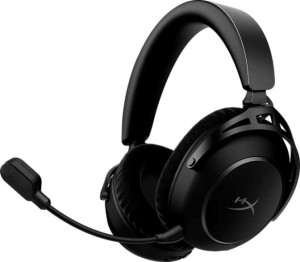
HyperX Cloud Alpha 2
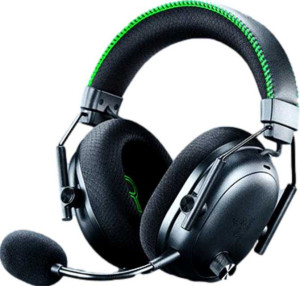
Razer BlackShark V3 Pro

HyperX Cloud Alpha 2 Razer BlackShark V3 Pro

Overview

When choosing between the HyperX Cloud Alpha 2 and the Razer BlackShark V3 Pro, gamers and audio enthusiasts face a compelling decision across several key fronts. Both are closed-back, over-ear wireless headsets sharing a strong feature foundation, yet they diverge sharply in areas like battery life, audio frequency range, and noise-cancellation capabilities. Which one truly fits your setup and listening habits? Read on to find out.

Common Features

  • Both headsets use an over-ear fit.
  • Both headsets have a detachable cable.
  • Neither headset features RGB lighting.
  • Neither headset can be folded.
  • Neither headset uses an open-back design.
  • Both headsets have stereo speakers.
  • Both headsets offer virtual surround sound.
  • Spatial audio is supported on both headsets.
  • Both headsets use a neodymium magnet.
  • Passive noise reduction is present on both headsets.
  • Both headsets have 2 drivers.
  • Both headsets feature a noise-canceling microphone.
  • The highest microphone frequency is 10000 Hz on both headsets.
  • Both headsets have a removable microphone.
  • Both headsets include a single microphone.
  • Both headsets have a rechargeable battery.
  • A battery level indicator is present on both headsets.
  • Both headsets support 3.5mm, USB, 2.4GHz wireless, and Bluetooth connectivity.
  • Both headsets can be used wirelessly.
  • Both headsets have a USB Type-C port.
  • NFC Bluetooth pairing is not supported on either headset.
  • A control panel placed on the device is present on both headsets.
  • Neither headset has a vibration function.
  • Neither headset has an in-line control panel.
  • Both headsets come with a 2-year warranty.
  • A travel bag is included with both headsets.

Main Differences

  • Weight is 336 g on HyperX Cloud Alpha 2 and 367 g on Razer BlackShark V3 Pro.
  • A tangle-free cable is present on Razer BlackShark V3 Pro but not available on HyperX Cloud Alpha 2.
  • The lowest frequency is 20 Hz on HyperX Cloud Alpha 2 and 12 Hz on Razer BlackShark V3 Pro.
  • The highest frequency is 20000 Hz on HyperX Cloud Alpha 2 and 28000 Hz on Razer BlackShark V3 Pro.
  • Active noise cancellation (ANC) is present on Razer BlackShark V3 Pro but not available on HyperX Cloud Alpha 2.
  • Driver unit size is 53 mm on HyperX Cloud Alpha 2 and 50 mm on Razer BlackShark V3 Pro.
  • The lowest microphone frequency is 10 Hz on HyperX Cloud Alpha 2 and 12 Hz on Razer BlackShark V3 Pro.
  • Battery life is 250 hours on HyperX Cloud Alpha 2 and 70 hours on Razer BlackShark V3 Pro.
  • Charge time is 6 hours on HyperX Cloud Alpha 2 and 4 hours on Razer BlackShark V3 Pro.
  • A removable battery is present on Razer BlackShark V3 Pro but not available on HyperX Cloud Alpha 2.
  • AAC support is present on HyperX Cloud Alpha 2 but not available on Razer BlackShark V3 Pro.
  • The maximum Bluetooth range is 20 m on HyperX Cloud Alpha 2 and 10 m on Razer BlackShark V3 Pro.
  • Headset use (with microphone active) is supported on HyperX Cloud Alpha 2 but not available on Razer BlackShark V3 Pro.
Specs Comparison
HyperX Cloud Alpha 2

HyperX Cloud Alpha 2

Razer BlackShark V3 Pro

Razer BlackShark V3 Pro

Design:
Fit Over-ear Over-ear
has a detachable cable
weight 336 g 367 g
has RGB lighting
can be folded
has an open-back design
has a tangle free cable
has stereo speakers

Both the HyperX Cloud Alpha 2 and the Razer BlackShark V3 Pro share the same fundamental design philosophy: closed-back, over-ear builds with detachable cables and no RGB lighting. This positions both headsets as focused, no-frills performers aimed at users who prioritize function over flashy aesthetics. The detachable cable is a meaningful shared feature, as it protects against one of the most common failure points in wired headsets and makes transport easier.

Where the two diverge is in weight and cable quality. The Cloud Alpha 2 comes in at 336 g versus the BlackShark V3 Pro's 367 g — a 31 g difference that may seem minor on paper, but during extended gaming sessions of several hours, the lighter load of the HyperX can meaningfully reduce neck and ear fatigue. On the other hand, the Razer counters with a tangle-free cable, which the HyperX lacks. A tangle-free cable is a practical daily-use advantage, reducing frustration during setup and storage and improving long-term cable durability.

On balance, neither headset dominates outright in design. The Cloud Alpha 2 has the edge for long-session comfort thanks to its lighter frame, while the BlackShark V3 Pro edges ahead in cable convenience. Users who wear their headset for marathon sessions should lean toward the HyperX, while those who frequently pack up or cable-manage their setup may prefer the Razer's tangle-free solution.

Sound quality:
lowest frequency 20 Hz 12 Hz
highest frequency 20000 Hz 28000 Hz
has active noise cancellation (ANC)
Surround sound Virtual Virtual
supports spatial audio
driver unit size 53 mm 50 mm
has a neodymium magnet
has passive noise reduction
drivers count 2 2

The frequency response range is where these two headsets diverge most sharply. The HyperX Cloud Alpha 2 covers the standard 20–20,000 Hz range — the accepted boundary of human hearing — which is perfectly adequate for gaming and music. The Razer BlackShark V3 Pro, however, extends to 12 Hz on the low end and 28,000 Hz on the high end. The sub-20 Hz extension adds physical rumble and presence to deep bass, making explosions and low-frequency sound effects feel more impactful, while the extended high-frequency ceiling can add subtle air and detail to higher-pitched sounds even if not consciously perceived.

The most decisive differentiator in this group is noise cancellation. The BlackShark V3 Pro includes active noise cancellation (ANC), which the Cloud Alpha 2 entirely lacks. Both headsets offer passive noise reduction through their closed-back design, but ANC actively counters ambient noise through microphone-driven signal processing — a significant advantage in noisy environments like offices or shared spaces. For competitive gamers who need to stay focused or for anyone using the headset outside a quiet room, this is a meaningful real-world edge.

On shared ground, both headsets use neodymium magnet drivers, support virtual surround sound and spatial audio, and each carry a 2-driver configuration — so neither has a structural advantage in stereo imaging or driver technology. The Cloud Alpha 2's slightly larger 53 mm drivers versus the Razer's 50 mm could theoretically move more air for fuller bass, but this advantage is modest and likely outweighed by the BlackShark V3 Pro's broader frequency range and ANC. Overall, the Razer BlackShark V3 Pro holds a clear edge in sound quality specs, particularly for users who value noise isolation and extended sonic range.

Microphone:
has a noise-canceling microphone
lowest mic frequency 10 Hz 12 Hz
highest mic frequency 10000 Hz 10000 Hz
has a removable microphone
number of microphones 1 1

Across nearly every microphone specification, the HyperX Cloud Alpha 2 and the Razer BlackShark V3 Pro are remarkably evenly matched. Both feature a single noise-canceling, removable microphone with an identical upper frequency limit of 10,000 Hz — a ceiling that comfortably covers the full intelligibility range of the human voice, which typically peaks around 8,000 Hz. For gaming communication and voice chat, this is more than sufficient.

The only numerical difference between the two is the low-end mic frequency floor: 10 Hz for the HyperX versus 12 Hz for the Razer. In practice, this 2 Hz gap is entirely imperceptible and carries no real-world significance for voice reproduction. Human speech fundamentals rarely dip below 80–100 Hz, so neither headset gains any practical advantage from extending this low.

With identical noise-canceling capability, the same removable design, a single-microphone setup on both, and no meaningful difference in frequency response, this category is a near-perfect tie. Users should not factor microphone specifications into their decision between these two headsets — the real differentiators lie elsewhere.

Power:
Battery life 250 hours 70 hours
charge time 6 hours 4 hours
has a rechargeable battery
has a battery level indicator
has a removable battery

Battery life is where the HyperX Cloud Alpha 2 delivers one of the most striking advantages in this entire comparison. Its rated 250-hour battery life dwarfs the Razer BlackShark V3 Pro's already-respectable 70 hours — meaning the HyperX could theoretically run for over ten days of continuous use before needing a charge. Even accounting for real-world variance, this is an extraordinary endurance figure that effectively removes battery anxiety from the equation entirely for most users.

The tradeoff comes at charging time. The Cloud Alpha 2 requires 6 hours to fully recharge versus the BlackShark V3 Pro's 4 hours — a 50% longer wait. However, given how infrequently the HyperX will need charging, this is a minor inconvenience in practice. The Razer counters with a removable battery, which the HyperX lacks. This is a meaningful long-term ownership advantage: a swappable battery means the BlackShark V3 Pro's lifespan is not tied to the health of a sealed cell, and advanced users can carry a spare for uninterrupted use.

Weighing these factors together, the Cloud Alpha 2 holds a dominant edge for day-to-day convenience thanks to its vastly superior battery endurance. The BlackShark V3 Pro's removable battery is a compelling long-term durability argument, but for the majority of users, the HyperX's ability to go weeks between charges is the more immediately impactful advantage in this category.

Connectivity:
connectivity 3.5mm, USB, 2.4GHz wireless, Bluetooth 3.5mm, USB, 2.4GHz wireless, Bluetooth
compatibility PlayStation, PC, Nintendo Switch, Xbox PC, PlayStation, Xbox, Nintendo Switch
Can be used wirelessly
Has USB Type-C
has AAC
maximum Bluetooth range 20 m 10 m
supports Bluetooth pairing using NFC

At first glance, these two headsets appear connectivity equals — both offer the same four connection modes (3.5mm, USB, 2.4GHz wireless, and Bluetooth), both support USB Type-C charging, and both are compatible with the same four major platforms: PC, PlayStation, Xbox, and Nintendo Switch. For most users, this breadth of multi-platform flexibility is genuinely useful and means neither headset forces compromises based on your gaming ecosystem.

Look closer, however, and two differences emerge in the HyperX Cloud Alpha 2's favor. First, its Bluetooth range extends to 20 m, double the Razer BlackShark V3 Pro's 10 m. In practical terms, this means the HyperX can maintain a stable wireless connection across larger rooms or when moving further from the source device — a tangible advantage for users who listen to audio while moving around a home or office. Second, the Cloud Alpha 2 supports AAC (Advanced Audio Codec), which the BlackShark V3 Pro lacks. AAC delivers noticeably higher Bluetooth audio quality, particularly on Apple devices and modern smartphones, reducing the compression artifacts that can make Bluetooth audio sound flat or muddy.

With identical connection options and platform support across the board, the differentiators here are quality-of-life features — and both of them favor the HyperX Cloud Alpha 2. The doubled Bluetooth range and AAC support give it a clear connectivity edge, especially for users who primarily connect via Bluetooth or frequently move around while wearing their headset.
Features:
release date August 2025 July 2025
control panel placed on a device
can be used as a headset
has a vibration function
Has an in-line control panel
warranty period 2 years 2 years
travel bag is included

This feature set is largely identical between the two headsets, and for good reason — both include on-device controls, a travel bag, and a 2-year warranty, while neither offers a vibration function or an in-line control panel. The shared warranty length and included travel bag are worth noting as baseline value indicators, confirming that both manufacturers back their products with comparable post-purchase support and portability accessories.

The sole differentiator in this group is a notable one: the HyperX Cloud Alpha 2 can function as a headset for phone calls, while the Razer BlackShark V3 Pro cannot. This means the HyperX is more versatile as an everyday audio device — users can seamlessly take calls on a smartphone or use it in communication apps beyond gaming without switching to a different headset. For someone who wants a single headset that crosses between gaming and daily productivity or mobile use, this is a meaningful functional advantage.

Given how closely matched the rest of this category is, the Cloud Alpha 2 earns the edge here purely on the strength of its headset functionality. It is a small but practical distinction that widens its appeal beyond dedicated gaming scenarios, while the BlackShark V3 Pro remains the more narrowly focused option in this regard.

Comparison Summary & Verdict

After a thorough look at both headsets, the right choice comes down to your priorities. The HyperX Cloud Alpha 2 stands out with its extraordinary 250-hour battery life, broader Bluetooth range of 20 m, AAC support, and a lighter 336 g build — making it the go-to pick for endurance-focused users who hate frequent charging. The Razer BlackShark V3 Pro, on the other hand, counters with a wider frequency response of 12–28000 Hz, Active Noise Cancellation, a tangle-free cable, a removable battery, and faster 4-hour charging — appealing to audiophiles and commuters who value sound fidelity and convenience on the go. Both headsets share virtual surround sound, a removable noise-canceling microphone, and a travel bag, so neither will disappoint on the fundamentals.

HyperX Cloud Alpha 2
Buy HyperX Cloud Alpha 2 if...

Buy the HyperX Cloud Alpha 2 if you prioritize an exceptional 250-hour battery life, a lighter headset, wider Bluetooth range, and AAC audio support.

Razer BlackShark V3 Pro
Buy Razer BlackShark V3 Pro if...

Buy the Razer BlackShark V3 Pro if you want Active Noise Cancellation, a wider frequency response for richer audio, a removable battery, and faster charging.