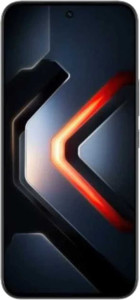
Infinix GT 30 5G
Infinix GT 30 Pro

Infinix GT 30 5G Infinix GT 30 Pro

Overview

Welcome to this in-depth specification comparison between the Infinix GT 30 5G and the Infinix GT 30 Pro. Both phones share a striking amount of common ground — from their identical OLED displays and IP64-rated builds to their Android 15 software and 5500 mAh batteries — but key battlegrounds emerge around raw processing power, camera resolution, and charging versatility. Read on to see how these two gaming-focused siblings truly stack up against each other.

Common Features

  • Both phones are water resistant with an IP64 ingress protection rating.
  • Both phones share the same dimensions: 8 mm thick, 75.8 mm wide, and 163.7 mm tall.
  • Neither phone has a rugged build, and neither can be folded.
  • Both phones feature a 6.78″ OLED/AMOLED display with a resolution of 1224 x 2720 px and a pixel density of 440 ppi.
  • Both phones support a 144Hz refresh rate and a 240Hz touch sampling rate.
  • Both phones have a typical brightness of 700 nits and damage-resistant glass.
  • Both phones are built on a 4 nm semiconductor process and support 64-bit computing.
  • Both phones use big.LITTLE technology with HMP and have 8 CPU threads.
  • Both phones support DirectX 12 and have integrated LTE and integrated graphics.
  • Both phones have a dual-lens main camera with wide apertures of 2.2f and 1.9f.
  • Both phones have a 13 MP front camera and support 4K video recording at 60 fps.
  • Neither phone has built-in optical image stabilization, and neither has a BSI sensor.
  • Both phones feature a dual-tone LED flash with 2 LEDs.
  • Both phones run Android 15 and offer theme customization and app tracking blocking.
  • Both phones have clipboard warnings, location privacy options, and camera/microphone privacy options.
  • Both phones have a 5500 mAh battery with 45W fast charging and come with a charger.
  • Both phones support reverse wireless charging and have a non-removable battery.
  • Neither phone has a 3.5 mm audio jack, but both feature stereo speakers and a radio.
  • Both phones support 5G, Wi-Fi 6, Bluetooth 5.4, NFC, USB Type-C, and dual SIM.
  • Both phones lack an external memory slot and use USB version 2.

Main Differences

  • Weight is 187 g on Infinix GT 30 5G and 189 g on Infinix GT 30 Pro.
  • Internal storage is 256GB on Infinix GT 30 5G and 512GB on Infinix GT 30 Pro.
  • RAM is 8GB on Infinix GT 30 5G and 12GB on Infinix GT 30 Pro.
  • The chipset is MediaTek Dimensity 7400 on Infinix GT 30 5G and MediaTek Dimensity 8350 on Infinix GT 30 Pro.
  • The GPU is Mali G615 MC2 on Infinix GT 30 5G and Mali G615 MC6 on Infinix GT 30 Pro.
  • CPU speed is 4 x 2.6 & 4 x 2 GHz on Infinix GT 30 5G and 1 x 3.35 & 3 x 3.2 & 4 x 2.2 GHz on Infinix GT 30 Pro.
  • GPU clock speed is 1047 MHz on Infinix GT 30 5G and 1400 MHz on Infinix GT 30 Pro.
  • RAM speed is 6400 MHz on Infinix GT 30 5G and 8533 MHz on Infinix GT 30 Pro.
  • Maximum memory bandwidth is 25.6 GB/s on Infinix GT 30 5G and 68.2 GB/s on Infinix GT 30 Pro.
  • Maximum memory amount is 16GB on Infinix GT 30 5G and 24GB on Infinix GT 30 Pro.
  • AnTuTu benchmark score is 778500 on Infinix GT 30 5G and 1450000 on Infinix GT 30 Pro.
  • Main camera resolution is 64 & 8 MP on Infinix GT 30 5G and 108 & 8 MP on Infinix GT 30 Pro.
  • Wireless charging is present on Infinix GT 30 Pro but not available on Infinix GT 30 5G.
Specs Comparison
Infinix GT 30 5G

Infinix GT 30 5G

Infinix GT 30 Pro

Infinix GT 30 Pro

Design:
water resistance Water resistant Water resistant
weight 187 g 189 g
thickness 8 mm 8 mm
width 75.8 mm 75.8 mm
height 163.7 mm 163.7 mm
volume 99.26768 cm³ 99.26768 cm³
Ingress Protection (IP) rating IP64 IP64
has a rugged build
can be folded

In terms of design, the Infinix GT 30 5G and Infinix GT 30 Pro are virtually identical twins. Both share the exact same dimensions — 163.7 × 75.8 × 8 mm — resulting in the same calculated volume of 99.27 cm³. This means users will experience no difference whatsoever in how either device fits in the hand or pocket.

The only measurable distinction is weight: the GT 30 Pro comes in at 189 g versus the GT 30 5G's 187 g — a 2 g difference that is imperceptible in everyday use and irrelevant as a deciding factor. Both phones also carry an IP64 rating, which means they are protected against dust ingress and splashing water from any direction, though neither is rated for submersion. Neither device features a rugged build or a foldable form factor.

In the Design category, these two phones are essentially tied. There is no meaningful advantage on either side — they occupy the same physical space, feel nearly identical in weight, and offer the same level of environmental protection. Design should not be a differentiating factor in a buying decision between these two models.

Display:
Display type OLED/AMOLED OLED/AMOLED
screen size 6.78" 6.78"
pixel density 440 ppi 440 ppi
resolution 1224 x 2720 px 1224 x 2720 px
refresh rate 144Hz 144Hz
touch sampling rate 240Hz 240Hz
brightness (typical) 700 nits 700 nits
has branded damage-resistant glass
Gorilla Glass version Gorilla Glass 7i Gorilla Glass 7i
supports HDR10
supports HDR10+
Always-On Display
supports Dolby Vision
contrast ratio 5000000:1 5000000:1
Has a secondary screen
has a touch screen

Both the Infinix GT 30 5G and Infinix GT 30 Pro feature an identical display panel in every measurable way. The shared OLED/AMOLED technology delivers deep blacks and vivid colors thanks to a 5,000,000:1 contrast ratio, while the 6.78-inch screen at 440 ppi ensures sharp, detailed visuals that comfortably exceed the threshold where individual pixels become indistinguishable to the naked eye.

On the performance side, a 144Hz refresh rate provides smooth scrolling and responsive gaming, complemented by a 240Hz touch sampling rate that minimizes input lag — a combination well-suited to the GT series' gaming-oriented positioning. The 700 nits typical brightness and Gorilla Glass 7i protection are shared across both models, offering reasonable outdoor visibility and a degree of scratch and drop resistance. The absence of HDR10+ or Dolby Vision support is a shared limitation, meaning neither phone is optimized for premium HDR content.

This category results in a complete tie. Every single display specification — panel type, size, resolution, refresh rate, brightness, glass protection, and feature set — is identical between the two devices. Display quality cannot serve as a differentiator when choosing between these two models.

Performance:
internal storage 256GB 512GB
RAM 8GB 12GB
AnTuTu benchmark score 778500 1450000
Chipset (SoC) name MediaTek Dimensity 7400 MediaTek Dimensity 8350
GPU name Mali G615 MC2 Mali G615 MC6
CPU speed 4 x 2.6 & 4 x 2 GHz 1 x 3.35 & 3 x 3.2 & 4 x 2.2 GHz
GPU clock speed 1047 MHz 1400 MHz
Has integrated LTE
RAM speed 6400 MHz 8533 MHz
semiconductor size 4 nm 4 nm
Supports 64-bit
DirectX version DirectX 12 DirectX 12
Has integrated graphics
Uses big.LITTLE technology
CPU threads 8 threads 8 threads
Uses HMP
maximum memory bandwidth 25.6 GB/s 68.2 GB/s
maximum memory amount 16GB 24GB
DDR memory version 5 5

Performance is where these two devices diverge sharply. The Infinix GT 30 Pro is powered by the MediaTek Dimensity 8350, a substantially more capable chipset than the Dimensity 7400 found in the GT 30 5G. This gap is quantified starkly by their AnTuTu scores: 1,450,000 versus 778,500 — the Pro scores roughly 86% higher, placing it in a meaningfully different performance tier for demanding tasks like high-fidelity gaming, video editing, and heavy multitasking.

The CPU architecture tells a similar story. The Pro's processor features a prime core clocked at 3.35 GHz, whereas the GT 30 5G's peak clock tops out at 2.6 GHz. GPU differences are equally pronounced: the Pro's Mali G615 MC6 runs at 1400 MHz with six cores, compared to the MC2 variant in the GT 30 5G running at 1047 MHz — more cores and higher clocks translate directly to faster frame rates in graphics-intensive games. Memory bandwidth further widens the gap, with the Pro reaching 68.2 GB/s versus 25.6 GB/s, meaning the Pro can feed its processor data far more rapidly, reducing bottlenecks in complex workloads. The Pro also ships with 12 GB of RAM and 512 GB of storage, compared to 8 GB / 256 GB on the GT 30 5G.

The GT 30 Pro holds a clear and decisive advantage in this category across every meaningful performance metric. For users who prioritize raw speed, gaming headroom, and future-proofing, the Pro is the stronger choice by a considerable margin.

Cameras:
megapixels (main camera) 64 & 8 MP 108 & 8 MP
wide aperture (main camera) 2.2 & 1.9f 2.2 & 1.9f
Has a dual-lens (or multi-lens) main camera
megapixels (front camera) 13MP 13MP
has built-in optical image stabilization
video recording (main camera) 2160 x 60 fps 2160 x 60 fps
Has a dual-tone LED flash
number of flash LEDs 2 2
has a BSI sensor
has a CMOS sensor
has continuous autofocus when recording movies
Has phase-detection autofocus for photos
supports slow-motion video recording
has a built-in HDR mode
has manual exposure
has a flash
optical zoom 0x 0x
has manual ISO
has a serial shot mode
has manual focus
has a front camera
Has laser autofocus
Shoots 360° panorama
has manual white balance
shoots raw
has touch autofocus
has manual shutter speed
can create panoramas in-camera
wide aperture (front camera) 2.2f 2.2f
Has timelapse function
Has a front-facing LED flash
has a dual-lens (or multi-lens) front camera
supports HDR10 recording
supports Dolby Vision recording
has a front-facing camera under the display
Has a RGB LED flash
has 3D photo/video recording capabilities

The camera systems on these two phones are nearly identical in architecture, but differ in one notable spec: the primary lens on the Infinix GT 30 Pro packs 108 MP, compared to 64 MP on the GT 30 5G. A higher megapixel count enables more detail in well-lit shots and gives users greater flexibility to crop aggressively without losing resolution — a tangible advantage for photography enthusiasts who frequently reframe images in post.

Beyond that single distinction, the two systems are carbon copies. Both pair their main sensor with an 8 MP secondary lens at matching apertures, shoot 4K at 60fps, and share the same autofocus stack — phase-detection, laser, touch, and continuous AF during video. Both also support RAW capture, manual exposure, manual ISO, slow-motion video, and HDR mode. Neither includes optical image stabilization, which is a shared limitation worth noting for handheld video stability. The front camera is a 13 MP single-lens setup on both devices.

The GT 30 Pro holds a narrow edge in this category purely on the strength of its higher-resolution main sensor. However, since every other camera feature — including video capabilities, autofocus systems, and manual controls — is identical, the practical gap for most users will be modest and primarily noticeable in high-detail stills or heavy cropping scenarios.

Operating system:
Android version Android 15 Android 15
has clipboard warnings
has location privacy options
has camera/microphone privacy options
has Mail Privacy Protection
has theme customization
can block app tracking
blocks cross-site tracking
has on-device machine learning
has notification permissions
has media picker
Can play games while they download
has dark mode
has Wi-Fi password sharing
has battery health check
has an extra dim mode
has focus modes
has dynamic theming
can offload apps
Has customizable notifications
has Live Text
has full-page screenshots
supports split screen
gets direct OS updates
has PiP
Can be used as a PC
Has sharing intents
has a child lock
Supports widgets
Is free and open source
Has offline voice recognition
has voice commands
Tracks the current position of a mobile device
is a multi-user system
has Quick Start

Running Android 15 on both devices, the software experience offered by the Infinix GT 30 5G and Infinix GT 30 Pro is completely uniform. Neither receives direct OS updates from Google, meaning both rely on Infinix's own update pipeline — a shared consideration for users who prioritize timely security patches and version upgrades.

The feature set is comprehensive and identical across both models. Privacy-conscious users get camera and microphone access controls, location permissions, app tracking blocks, and clipboard warnings. Day-to-day usability is well-covered too, with dynamic theming, split-screen multitasking, Picture-in-Picture, customizable notifications, on-device machine learning, and offline voice recognition all present on both phones. Notable absences — such as cross-site tracking protection, Wi-Fi password sharing, and focus modes — apply equally to both.

This category is a straightforward tie. Every OS feature, privacy control, and software capability listed is shared between the two devices without exception. The operating system experience will be indistinguishable in practice, and should play no role in differentiating a purchase decision between these two models.

Battery:
battery power 5500 mAh 5500 mAh
has wireless charging
Supports fast charging
charging speed 45W 45W
has reverse wireless charging
comes with a charger
has a removable battery
has a battery level indicator
has a rechargeable battery

Capacity and wired charging are identical across both phones: a 5500 mAh battery paired with 45W fast charging provides a generous power reserve with reasonably quick top-up speeds. Both also support reverse wireless charging, meaning either device can be used to charge accessories like earbuds — a useful convenience feature shared equally.

The single differentiator in this category is that the Infinix GT 30 Pro supports wireless charging, while the GT 30 5G does not. Wireless charging adds a meaningful layer of daily convenience — the ability to place the phone on a pad without fumbling for a cable, particularly useful on a bedside table or desk. It is a quality-of-life feature that, once adopted, is difficult to go without.

The GT 30 Pro takes a clear edge here. With every other battery spec being equal, wireless charging support is the sole but genuine differentiator — and for users who value a cable-free charging workflow, it is a tangible advantage that the GT 30 5G simply cannot match.

Audio:
has a socket for a 3.5 mm audio jack
has stereo speakers
has aptX
has LDAC
has aptX HD
has aptX Adaptive
has aptX Lossless
Has a radio

Audio hardware is identical on the Infinix GT 30 5G and Infinix GT 30 Pro. Both feature stereo speakers — a meaningful inclusion for gaming and media consumption, as stereo output creates a noticeably wider, more immersive soundstage compared to a single mono speaker. Both also retain an FM radio receiver, a feature increasingly rare in modern smartphones that remains genuinely useful in regions with strong broadcast infrastructure or during emergencies.

The absence of a 3.5mm headphone jack on both devices means wired audio requires a USB-C adapter or dongle. More notably, neither phone supports any high-resolution Bluetooth audio codec — no aptX, aptX HD, aptX Adaptive, aptX Lossless, or LDAC. Users with premium wireless headphones capable of hi-res audio transmission will be limited to standard Bluetooth audio quality on either device.

This category is a complete tie. Every audio specification — speakers, jack, radio, and Bluetooth codec support — is identical between the two models. Audio capability offers no basis for choosing one over the other.

Connectivity & Features:
release date August 2025 May 2025
has 5G support
Wi-Fi version Wi-Fi 4 (802.11n), Wi-Fi 5 (802.11ac), Wi-Fi 6 (802.11ax) Wi-Fi 4 (802.11n), Wi-Fi 5 (802.11ac), Wi-Fi 6 (802.11ax)
SIM cards 2 SIM 2 SIM
Bluetooth version 5.4 5.4
has an external memory slot
Has USB Type-C
USB version 2 2
has NFC
Has a fingerprint scanner
has emergency SOS via satellite
has crash detection
is DLNA-certified
has a gyroscope
supports ANT+
Has a heart rate monitor
has GPS
has a compass
supports Wi-Fi
Has an infrared sensor
has an accelerometer
has a cellular module
Has a barometer
has an HDMI output
Uses 3D facial recognition
Has an iris scanner
Stylus included
supports Galileo
Has motion tracking
Has optical tracking
Has a built-in projector

Across the full connectivity stack, the Infinix GT 30 5G and Infinix GT 30 Pro are indistinguishable. Both support 5G, Wi-Fi 6, and Bluetooth 5.4 — a modern and well-rounded combination. Wi-Fi 6 delivers faster throughput and better performance in congested network environments, while Bluetooth 5.4 ensures stable, energy-efficient connections to wireless peripherals. NFC support on both devices enables contactless payments and quick device pairing.

The sensor and feature set is equally matched. Both include a gyroscope, accelerometer, compass, GPS with Galileo support, fingerprint scanner, and an infrared sensor — the latter being a practical addition that allows the phone to function as a universal remote control. The shared USB 2.0 Type-C port is functional but worth noting as a ceiling on wired data transfer speeds, and neither model supports external storage expansion. Features like satellite SOS, crash detection, and a barometer are absent on both.

This category is a complete tie — every connectivity feature, sensor, and protocol is identical between the two phones. Users prioritizing a specific connectivity capability will find no reason to favor one model over the other based on these specs alone.

Miscellaneous:
has a video light
Has sapphire glass display
Has a curved display
Has an e-paper display

The miscellaneous specs for the Infinix GT 30 5G and Infinix GT 30 Pro are entirely identical. Both include a video light — essentially a persistent torch mode useful for low-light video recording — and neither features a curved display, sapphire glass, or an e-paper screen. The absence of a curved display means both use flat panels, which many users actually prefer for reduced accidental edge touches and easier screen protector application.

This category is a tie in every respect. With only a handful of data points available and no divergence between the two models, miscellaneous features contribute nothing to differentiating a purchase decision here.

Comparison Summary & Verdict

After examining every specification, the choice between the Infinix GT 30 5G and the Infinix GT 30 Pro comes down to how much performance and versatility you need. Both phones deliver an identical 6.78″ 144Hz OLED display, the same IP64 water resistance, and identical 45W fast charging — so neither compromises on everyday essentials. However, the Infinix GT 30 Pro pulls significantly ahead with its MediaTek Dimensity 8350 chipset, a much higher AnTuTu score of 1,450,000, 12GB of RAM, 512GB of storage, a superior 108 MP main camera, and the added convenience of wireless charging. The Infinix GT 30 5G, powered by the Dimensity 7400 with 8GB RAM and 256GB storage, remains a solid, capable device for users who do not demand top-tier performance. In short, budget-conscious buyers will find genuine value in the GT 30 5G, while power users and mobile gamers who want the best the GT series offers should invest in the GT 30 Pro.

Infinix GT 30 5G
Buy Infinix GT 30 5G if...

Buy the Infinix GT 30 5G if you want a capable 5G smartphone with a stunning OLED display and solid everyday performance at a more accessible price point.

Infinix GT 30 Pro
Buy Infinix GT 30 Pro if...

Buy the Infinix GT 30 Pro if you want significantly more processing power, a higher-resolution 108 MP camera, more RAM and storage, and the added convenience of wireless charging.