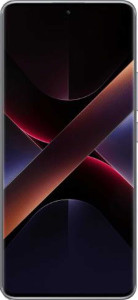
On paper, the Infinix GT 30 5G looks competitive here: its 6.78-inch panel is slightly larger and its 144Hz refresh rate edges out the Poco X7's 120Hz, which can translate to marginally smoother scrolling and gaming animations. Pixel density is virtually identical at 440 vs 446 ppi, so sharpness is a non-issue for both. Where things diverge sharply, however, is brightness — the GT 30 tops out at 700 nits typical, while the Poco X7 reaches 1200 nits. That 71% brightness advantage is not a paper spec; it means the Poco X7 remains clearly legible in direct sunlight where the GT 30 will visibly struggle.
The Poco X7 also dominates on HDR credentials, supporting HDR10, HDR10+, and Dolby Vision — the full trifecta — while the GT 30 supports none of them. This matters if you consume streaming content on Netflix, Prime Video, or YouTube, as HDR-capable phones render a wider dynamic range with richer highlights and deeper shadows. On top of that, Xiaomi equipped the Poco X7 with Gorilla Glass Victus 2, a meaningfully tougher glass generation than the GT 30's Gorilla Glass 7i, offering better resistance to drops and scratches.
The Poco X7 wins this category decisively. The GT 30's larger screen and higher refresh rate are real but secondary advantages — the Poco X7's superior brightness, comprehensive HDR support, and stronger glass protection add up to a more capable and durable display in practically every scenario that matters.