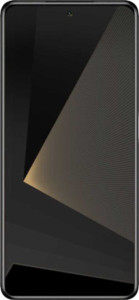
Infinix GT 30 5G
ZTE Nubia Neo 3 GT

Infinix GT 30 5G ZTE Nubia Neo 3 GT

Overview

Welcome to our in-depth comparison of the Infinix GT 30 5G and the ZTE Nubia Neo 3 GT — two mid-range 5G smartphones that share a surprising amount of common ground yet diverge sharply in several key areas. From display sharpness and refresh rate to chipset architecture, camera capabilities, and battery performance, each device takes a distinct approach to delivering value. Read on to discover which one aligns best with your priorities.

Common Features

  • Both phones have an OLED/AMOLED display type.
  • HDR10 support is not available on either product.
  • HDR10+ support is not available on either product.
  • Always-On Display is available on both products.
  • Dolby Vision support is not available on either product.
  • Neither phone has a secondary screen.
  • Both phones have a touchscreen.
  • Both phones come with 256GB of internal storage.
  • Integrated LTE is present on both products.
  • Both phones support 64-bit processing.
  • Both phones use big.LITTLE technology and HMP.
  • Both phones have 8 CPU threads.
  • Both phones feature a dual-lens main camera.
  • Optical image stabilization is not available on either product.
  • Both phones have a CMOS sensor and support phase-detection autofocus.
  • Continuous autofocus during video recording is supported on both phones.
  • Slow-motion video recording is supported on both phones.
  • Both phones run Android 15.
  • Fast charging is supported on both phones, and both come with a charger.
  • Wireless charging is not available on either product.
  • Neither phone has a removable battery.
  • Both phones lack a 3.5mm audio jack but feature stereo speakers.
  • Both phones support 5G, NFC, dual SIM, USB Type-C, and Wi-Fi 6.
  • A fingerprint scanner is present on both phones.
  • Neither phone has an external memory slot.
  • Emergency SOS via satellite is not available on either product.

Main Differences

  • Screen size is 6.78″ on Infinix GT 30 5G and 6.8″ on ZTE Nubia Neo 3 GT.
  • Pixel density is 440 ppi on Infinix GT 30 5G and 386 ppi on ZTE Nubia Neo 3 GT.
  • Resolution is 1224 x 2720 px on Infinix GT 30 5G and 1080 x 2392 px on ZTE Nubia Neo 3 GT.
  • Refresh rate is 144Hz on Infinix GT 30 5G and 120Hz on ZTE Nubia Neo 3 GT.
  • Damage-resistant glass is present on Infinix GT 30 5G but not available on ZTE Nubia Neo 3 GT.
  • RAM is 8GB on Infinix GT 30 5G and 12GB on ZTE Nubia Neo 3 GT.
  • AnTuTu benchmark score is 778500 on Infinix GT 30 5G and 800000 on ZTE Nubia Neo 3 GT.
  • The chipset is MediaTek Dimensity 7400 on Infinix GT 30 5G and Unisoc T9100 on ZTE Nubia Neo 3 GT.
  • The GPU is Mali G615 MC2 on Infinix GT 30 5G and Mali G57 MP4 on ZTE Nubia Neo 3 GT.
  • CPU speed is 4 x 2.6 & 4 x 2 GHz on Infinix GT 30 5G and 1 x 2.7 & 3 x 2.3 & 4 x 2.1 GHz on ZTE Nubia Neo 3 GT.
  • RAM speed is 6400 MHz on Infinix GT 30 5G and 2133 MHz on ZTE Nubia Neo 3 GT.
  • Semiconductor size is 4 nm on Infinix GT 30 5G and 6 nm on ZTE Nubia Neo 3 GT.
  • Maximum memory amount is 16GB on Infinix GT 30 5G and 8GB on ZTE Nubia Neo 3 GT.
  • DDR memory version is DDR5 on Infinix GT 30 5G and DDR4 on ZTE Nubia Neo 3 GT.
  • Main camera resolution is 64 & 8 MP on Infinix GT 30 5G and 50 & 2 MP on ZTE Nubia Neo 3 GT.
  • Main camera video recording goes up to 2160p at 60 fps on Infinix GT 30 5G and 1080p at 30 fps on ZTE Nubia Neo 3 GT.
  • Front camera resolution is 13MP on Infinix GT 30 5G and 16MP on ZTE Nubia Neo 3 GT.
  • Laser autofocus is available on Infinix GT 30 5G but not on ZTE Nubia Neo 3 GT.
  • RAW photo capture is supported on Infinix GT 30 5G but not on ZTE Nubia Neo 3 GT.
  • A dual-tone LED flash is present on Infinix GT 30 5G but not on ZTE Nubia Neo 3 GT.
  • Battery capacity is 5500 mAh on Infinix GT 30 5G and 6000 mAh on ZTE Nubia Neo 3 GT.
  • Charging speed is 45W on Infinix GT 30 5G and 80W on ZTE Nubia Neo 3 GT.
  • A built-in radio is available on Infinix GT 30 5G but not on ZTE Nubia Neo 3 GT.
  • Bluetooth version is 5.4 on Infinix GT 30 5G and 5.2 on ZTE Nubia Neo 3 GT.
  • An infrared sensor is present on Infinix GT 30 5G but not on ZTE Nubia Neo 3 GT.
Specs Comparison
Infinix GT 30 5G

Infinix GT 30 5G

ZTE Nubia Neo 3 GT

ZTE Nubia Neo 3 GT

Design:
has a rugged build
can be folded

In terms of design fundamentals, the Infinix GT 30 5G and the ZTE Nubia Neo 3 GT share identical characteristics across the provided specs: neither offers a rugged build nor a foldable form factor.

The absence of rugged construction on both devices means neither is rated for enhanced resistance to drops, dust, or water beyond standard consumer-grade protection — users with demanding environments should factor this in. Similarly, both follow the conventional candy-bar smartphone form, foregoing the premium foldable experience entirely.

Based strictly on the available design specs, these two phones are in a complete tie — there is no differentiator between them within this category. Prospective buyers will need to look to other spec groups, such as display, build materials, or dimensions, to find meaningful design distinctions.

Display:
Display type OLED/AMOLED OLED/AMOLED
screen size 6.78" 6.8"
pixel density 440 ppi 386 ppi
resolution 1224 x 2720 px 1080 x 2392 px
refresh rate 144Hz 120Hz
has branded damage-resistant glass
supports HDR10
supports HDR10+
Always-On Display
supports Dolby Vision
Has a secondary screen
has a touch screen

Both phones sport an OLED/AMOLED panel at nearly identical screen sizes — 6.78″ for the Infinix GT 30 5G versus 6.8″ for the ZTE Nubia Neo 3 GT — so the viewing experience starts from a similar baseline. The real divergence lies in sharpness and motion handling: the Infinix pulls ahead with a 1224 x 2720 px resolution translating to 440 ppi, compared to the Nubia Neo 3 GT's 1080 x 2392 px at 386 ppi. That 54 ppi gap is perceptible in daily use — text appears crisper, fine UI details are more defined, and images render with noticeably more precision on the Infinix.

The refresh rate gap reinforces the Infinix's lead. Its 144Hz panel delivers smoother scrolling and more responsive gaming feedback compared to the Nubia's 120Hz — a meaningful difference for the gaming-oriented audience both devices seem to target. On top of that, the Infinix GT 30 5G includes branded damage-resistant glass, a protection layer absent on the Nubia Neo 3 GT, adding real-world durability value to an already stronger display package.

Both devices share Always-On Display support and lack HDR10, HDR10+, or Dolby Vision certification, so neither has an edge in HDR content rendering. Overall, the Infinix GT 30 5G holds a clear advantage in this category — higher pixel density, a faster refresh rate, and physical screen protection make it the stronger display choice based on the available specs.

Performance:
internal storage 256GB 256GB
RAM 8GB 12GB
AnTuTu benchmark score 778500 800000
Chipset (SoC) name MediaTek Dimensity 7400 Unisoc T9100
GPU name Mali G615 MC2 Mali G57 MP4
CPU speed 4 x 2.6 & 4 x 2 GHz 1 x 2.7 & 3 x 2.3 & 4 x 2.1 GHz
Has integrated LTE
RAM speed 6400 MHz 2133 MHz
semiconductor size 4 nm 6 nm
Supports 64-bit
Has integrated graphics
Uses big.LITTLE technology
CPU threads 8 threads 8 threads
Uses HMP
maximum memory amount 16GB 8GB
DDR memory version 5 4

The chipset matchup here is more nuanced than the headline benchmark suggests. The ZTE Nubia Neo 3 GT's Unisoc T9100 edges out the Infinix GT 30 5G's MediaTek Dimensity 7400 in raw AnTuTu score — 800,000 versus 778,500 — a roughly 3% difference that is unlikely to be felt in everyday tasks. What matters more is the manufacturing process: the Dimensity 7400 is built on a 4nm node compared to the T9100's 6nm, which translates to better power efficiency and thermal management under sustained loads — a critical factor for gaming sessions.

The RAM picture is split in an interesting way. The Nubia ships with 12GB of RAM versus the Infinix's 8GB, giving it more headroom for aggressive multitasking right out of the box. However, the Infinix counters with significantly faster DDR5 memory at 6400 MHz, compared to the Nubia's DDR4 at 2133 MHz — a three-fold speed advantage that benefits bandwidth-intensive tasks like gaming and GPU workloads. The Infinix also supports a higher maximum memory of 16GB versus the Nubia's ceiling of 8GB, offering more long-term headroom via virtual RAM expansion.

Taken together, neither phone dominates outright, but the Infinix GT 30 5G holds a meaningful structural edge: its more modern process node and vastly faster RAM architecture position it better for sustained performance and efficiency, even if the Nubia briefly wins on multitasking capacity and raw benchmark numbers. For users prioritizing gaming endurance and future-proofing, the Infinix is the stronger platform here.

Cameras:
megapixels (main camera) 64 & 8 MP 50 & 2 MP
wide aperture (main camera) 2.2 & 1.9f 2.4 & 1.8f
Has a dual-lens (or multi-lens) main camera
megapixels (front camera) 13MP 16MP
has built-in optical image stabilization
video recording (main camera) 2160 x 60 fps 1080 x 30 fps
Has a dual-tone LED flash
number of flash LEDs 2 1
has a BSI sensor
has a CMOS sensor
has continuous autofocus when recording movies
Has phase-detection autofocus for photos
supports slow-motion video recording
has a built-in HDR mode
has manual exposure
has a flash
optical zoom 0x 0x
has manual ISO
has a serial shot mode
has manual focus
has a front camera
Has laser autofocus
Shoots 360° panorama
has manual white balance
shoots raw
has touch autofocus
has manual shutter speed
can create panoramas in-camera
wide aperture (front camera) 2.2f 2f
Has timelapse function
Has a front-facing LED flash
has a dual-lens (or multi-lens) front camera
supports HDR10 recording
supports Dolby Vision recording
has a front-facing camera under the display
Has a RGB LED flash
has 3D photo/video recording capabilities

The main camera gap is substantial. The Infinix GT 30 5G leads with a 64MP primary lens against the Nubia Neo 3 GT's 50MP, but the more telling difference is in the secondary shooter: 8MP versus a modest 2MP — the Nubia's secondary lens offers little practical utility beyond depth sensing, while the Infinix's 8MP ultra-wide adds genuine versatility. Video capability widens the gap further: the Infinix records up to 2160p at 60fps (4K), whereas the Nubia tops out at 1080p at 30fps, a significant limitation for anyone who values high-resolution video capture.

Feature-by-feature, the Infinix continues to pull ahead in meaningful ways. It includes laser autofocus — faster and more reliable in low-light locking — which the Nubia lacks entirely. It also supports RAW shooting, a critical capability for photographers who want post-processing flexibility, and its dual-tone LED flash (two LEDs) produces more natural-looking artificial lighting compared to the Nubia's single-LED unit. The Nubia counters only with a marginally brighter front camera aperture (f/2.0 vs f/2.2), which may aid slightly in selfie low-light performance.

The verdict in this category is clear: the Infinix GT 30 5G holds a decisive camera advantage. Higher-resolution sensors, 4K video, laser autofocus, RAW support, and a more capable flash system collectively represent a meaningfully more complete imaging package than what the Nubia Neo 3 GT offers.

Operating system:
Android version Android 15 Android 15
has clipboard warnings
has location privacy options
has camera/microphone privacy options
has Mail Privacy Protection
has theme customization
can block app tracking
blocks cross-site tracking
has on-device machine learning
has notification permissions
has media picker
Can play games while they download
has dark mode
has Wi-Fi password sharing
has battery health check
has an extra dim mode
has focus modes
has dynamic theming
can offload apps
Has customizable notifications
has Live Text
has full-page screenshots
supports split screen
gets direct OS updates
has PiP
Can be used as a PC
Has sharing intents
has a child lock
Supports widgets
Is free and open source
Has offline voice recognition
has voice commands
Tracks the current position of a mobile device
is a multi-user system
has Quick Start

Rarely does a spec group produce such a clean result: every single operating system feature listed is identical across both devices. Both the Infinix GT 30 5G and the ZTE Nubia Neo 3 GT ship with Android 15, carry the same privacy controls — including location, camera, and microphone permissions — and support the same productivity features such as split-screen multitasking, Picture-in-Picture, widgets, and dynamic theming.

Notably, neither device receives direct OS updates from Google, meaning both rely on their respective manufacturers for software maintenance — a consideration for users who prioritize long-term software support and timely security patches. On the privacy side, both block app tracking but neither blocks cross-site tracking, placing them at the same level of browser-level data protection.

This category is a complete tie. With no differentiating features across the entire OS spec set, the software experience offers no basis for choosing one device over the other. Users should weigh manufacturer-specific UI skins and their respective update track records as factors outside the scope of these specs.

Battery:
battery power 5500 mAh 6000 mAh
has wireless charging
Supports fast charging
charging speed 45W 80W
comes with a charger
has a removable battery
has a battery level indicator
has a rechargeable battery

The ZTE Nubia Neo 3 GT takes a clear lead in both battery dimensions that matter most. Its 6000 mAh cell outpaces the Infinix GT 30 5G's 5500 mAh by a meaningful 500 mAh — enough to translate into noticeably longer screen-on time during gaming or video playback, which is especially relevant given the target audience of both devices.

The charging speed gap is even more pronounced. The Nubia's 80W fast charging is nearly double the Infinix's 45W, meaning the Nubia can go from low battery to full charge in significantly less time. For users who game heavily and need quick top-ups between sessions, this is a practical, everyday advantage. Both phones come bundled with a charger in the box and lack wireless charging, so neither has an edge on convenience features beyond wired speed.

All told, the ZTE Nubia Neo 3 GT wins this category decisively — it offers more capacity to last longer between charges and faster replenishment when it does need power. The Infinix's 5500 mAh is by no means weak, but on both key battery metrics, the Nubia holds the stronger hand.

Audio:
has a socket for a 3.5 mm audio jack
has stereo speakers
has aptX
has LDAC
has aptX HD
has aptX Adaptive
has aptX Lossless
Has a radio

For the most part, these two devices are evenly matched on audio. Both drop the 3.5mm headphone jack — meaning wired audio requires a USB-C adapter — and both feature stereo speakers, which deliver a wider, more immersive soundstage compared to mono setups, beneficial for gaming and media consumption alike. Neither device supports any high-resolution Bluetooth audio codec such as aptX, LDAC, or their variants, so wireless audio quality is limited to standard SBC/AAC transmission regardless of which phone you choose.

The one differentiator is the Infinix GT 30 5G's inclusion of a built-in FM radio, a feature absent on the Nubia Neo 3 GT. While radio may seem like a legacy feature, it remains genuinely useful in areas with limited data connectivity or during emergencies, and it consumes no mobile data — a small but real practical advantage for certain users.

Overall, the Infinix GT 30 5G edges ahead in this category, but only narrowly. The FM radio is the sole differentiator in an otherwise identical audio spec set, so the margin of advantage is modest. Users for whom wireless audio codec quality is a priority will find neither phone particularly distinguished here.

Connectivity & Features:
release date August 2025 March 2025
has 5G support
Wi-Fi version Wi-Fi 4 (802.11n), Wi-Fi 5 (802.11ac), Wi-Fi 6 (802.11ax) Wi-Fi 4 (802.11n), Wi-Fi 5 (802.11ac), Wi-Fi 6 (802.11ax)
SIM cards 2 SIM 2 SIM
Bluetooth version 5.4 5.2
has an external memory slot
Has USB Type-C
has NFC
Has a fingerprint scanner
has emergency SOS via satellite
has crash detection
is DLNA-certified
has a gyroscope
supports ANT+
Has a heart rate monitor
has GPS
has a compass
supports Wi-Fi
Has an infrared sensor
has an accelerometer
has a cellular module
Has a barometer
has an HDMI output
Uses 3D facial recognition
Has an iris scanner
Stylus included
supports Galileo
Has motion tracking
Has optical tracking
Has a built-in projector

The connectivity foundations are essentially identical: both phones support 5G, Wi-Fi 6, dual SIM, USB-C, NFC, and the same GPS/Galileo satellite navigation combination. For most users, this means comparable wireless performance in everyday scenarios — fast network access, contactless payments, and accurate positioning are equally available on either device.

Two specs set the Infinix GT 30 5G apart. First, its Bluetooth 5.4 versus the Nubia Neo 3 GT's 5.2 brings incremental improvements in connection stability and energy efficiency — a modest but real advantage for users who rely heavily on wireless peripherals. More distinctly, the Infinix includes an infrared sensor, which the Nubia lacks entirely. This allows the Infinix to function as a universal remote control for TVs, air conditioners, and other IR-compatible appliances — a genuinely useful feature that adds everyday utility well beyond smartphone basics.

The Infinix GT 30 5G takes this category by a clear margin. While the Nubia matches it on all core connectivity specs, the combination of a newer Bluetooth version and the added infrared blaster gives the Infinix a broader and more versatile feature set with no offsetting advantages on the Nubia's side.

Miscellaneous:
has a video light
Has sapphire glass display
Has a curved display
Has an e-paper display

The miscellaneous spec sheet for these two devices is a mirror image. Both the Infinix GT 30 5G and the ZTE Nubia Neo 3 GT include a video light, and neither features sapphire glass, a curved display, or an e-paper screen — each of those being premium or niche characteristics typically found in higher-tier or specialized devices.

This category is a complete tie. With every listed attribute identical across both phones, there is simply no differentiating factor to analyze here. Prospective buyers should look to the other spec groups — particularly display, performance, and battery — where meaningful distinctions between the two devices do exist.

Comparison Summary & Verdict

After a thorough look at both devices, it is clear that each excels in different areas. The Infinix GT 30 5G stands out with its sharper 144Hz display, faster DDR5 RAM at 6400 MHz, a more capable camera system featuring 64 MP resolution, 4K 60fps video, laser autofocus, and RAW shooting, plus a 4 nm chipset and extras like an infrared sensor and FM radio. It is the stronger pick for users who prioritize display quality, photography versatility, and processing efficiency. The ZTE Nubia Neo 3 GT, on the other hand, counters with more RAM (12 GB), a larger 6000 mAh battery, and significantly faster 80W charging, making it a compelling choice for power users and heavy multitaskers who value all-day endurance above all else. Both run Android 15 and support 5G, NFC, and Wi-Fi 6, so the choice ultimately comes down to your personal usage priorities.

Infinix GT 30 5G
Buy Infinix GT 30 5G if...

Buy the Infinix GT 30 5G if you want a sharper, faster 144Hz display, a more versatile camera system with 4K video and RAW support, and a more efficient 4 nm chipset with DDR5 RAM.

ZTE Nubia Neo 3 GT
Buy ZTE Nubia Neo 3 GT if...

Buy the ZTE Nubia Neo 3 GT if you prioritize longer battery life with its larger 6000 mAh cell and want faster 80W charging to get back up and running quickly.