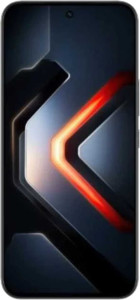
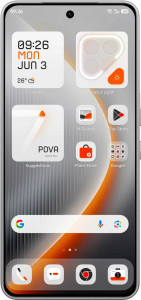
Infinix GT 30 Pro (256GB / 12GB RAM)
Tecno Pova 7 Ultra 5G

Infinix GT 30 Pro (256GB / 12GB RAM) Tecno Pova 7 Ultra 5G

Overview

Welcome to our in-depth comparison of the Infinix GT 30 Pro (256GB / 12GB RAM) and the Tecno Pova 7 Ultra 5G — two mid-range 5G contenders built on the same MediaTek Dimensity 8350 chipset yet taking noticeably different paths. From battery capacity and charging speeds to camera capabilities and everyday usability features, this head-to-head breakdown covers every key specification to help you decide which device best fits your needs.

Common Features

  • Both phones are water resistant with an IP64 ingress protection rating.
  • Neither phone has a rugged build.
  • Neither phone can be folded.
  • Both phones feature an OLED/AMOLED display.
  • Both phones have a 144Hz refresh rate.
  • Both phones support a 240Hz touch sampling rate.
  • HDR10 support is not available on either phone.
  • HDR10+ support is not available on either phone.
  • Dolby Vision support is not available on either phone.
  • Neither phone has a secondary screen.
  • Both phones have a touchscreen.
  • Both phones come with 256GB of internal storage.
  • Both phones are powered by the MediaTek Dimensity 8350 chipset.
  • Both phones use a Mali G615 MC6 GPU running at 1400 MHz.
  • Both phones share the same CPU speed of 1 x 3.35 & 3 x 3.2 & 4 x 2.2 GHz.
  • Both phones achieved a Geekbench 6 multi-core score of 4700 and a single-core score of 1536.
  • Both phones have integrated LTE support.
  • Both phones feature a dual-lens main camera with 108 & 8 MP.
  • Both phones have a 13MP front camera.
  • Optical image stabilization is not available on either phone.
  • Both phones have 2 flash LEDs.
  • Neither phone has a BSI sensor, but both have a CMOS sensor.
  • Both phones support continuous autofocus when recording movies.
  • Both phones run Android 15.
  • Both phones include clipboard warnings, location privacy options, and camera/microphone privacy options.
  • Mail Privacy Protection is not available on either phone.
  • Both phones support theme customization and can block app tracking.
  • Cross-site tracking blocking is not available on either phone.
  • Both phones support wireless charging at 30W.
  • Both phones support fast charging and come with a charger included.
  • Neither phone has a removable battery.
  • Both phones have a battery level indicator and a rechargeable battery.
  • Both phones have stereo speakers.
  • Neither phone supports aptX, LDAC, aptX HD, aptX Adaptive, aptX Adaptive, or aptX Lossless.
  • Both phones support 5G connectivity.
  • Both phones have dual SIM card slots.
  • Neither phone has an external memory slot.
  • Both phones feature a USB Type-C port with USB version 2.
  • Both phones have NFC and a fingerprint scanner.
  • Emergency SOS via satellite is not available on either phone.
  • Both phones have a video light.
  • Neither phone has a sapphire glass display, a curved display, or an e-paper display.

Main Differences

  • Thickness is 8 mm on Infinix GT 30 Pro (256GB / 12GB RAM) and 8.9 mm on Tecno Pova 7 Ultra 5G.
  • Width is 75.8 mm on Infinix GT 30 Pro (256GB / 12GB RAM) and 75.2 mm on Tecno Pova 7 Ultra 5G.
  • Height is 163.7 mm on Infinix GT 30 Pro (256GB / 12GB RAM) and 160 mm on Tecno Pova 7 Ultra 5G.
  • Volume is 99.27 cm³ on Infinix GT 30 Pro (256GB / 12GB RAM) and 107.08 cm³ on Tecno Pova 7 Ultra 5G.
  • Screen size is 6.78″ on Infinix GT 30 Pro (256GB / 12GB RAM) and 6.67″ on Tecno Pova 7 Ultra 5G.
  • Pixel density is 440 ppi on Infinix GT 30 Pro (256GB / 12GB RAM) and 460 ppi on Tecno Pova 7 Ultra 5G.
  • Resolution is 1224 x 2720 px on Infinix GT 30 Pro (256GB / 12GB RAM) and 1260 x 2800 px on Tecno Pova 7 Ultra 5G.
  • Damage-resistant glass is present on Infinix GT 30 Pro (256GB / 12GB RAM) but not available on Tecno Pova 7 Ultra 5G.
  • RAM is 8GB on Infinix GT 30 Pro (256GB / 12GB RAM) and 12GB on Tecno Pova 7 Ultra 5G.
  • AnTuTu benchmark score is 1,450,000 on Infinix GT 30 Pro (256GB / 12GB RAM) and 1,530,000 on Tecno Pova 7 Ultra 5G.
  • Dual-tone LED flash is present on Infinix GT 30 Pro (256GB / 12GB RAM) but not available on Tecno Pova 7 Ultra 5G.
  • Laser autofocus is present on Infinix GT 30 Pro (256GB / 12GB RAM) but not available on Tecno Pova 7 Ultra 5G.
  • RAW shooting is supported on Infinix GT 30 Pro (256GB / 12GB RAM) but not on Tecno Pova 7 Ultra 5G.
  • Battery capacity is 5500 mAh on Infinix GT 30 Pro (256GB / 12GB RAM) and 6000 mAh on Tecno Pova 7 Ultra 5G.
  • Wired charging speed is 45W on Infinix GT 30 Pro (256GB / 12GB RAM) and 70W on Tecno Pova 7 Ultra 5G.
  • Reverse wireless charging is available on Infinix GT 30 Pro (256GB / 12GB RAM) but not on Tecno Pova 7 Ultra 5G.
  • A 3.5mm audio jack is absent on Infinix GT 30 Pro (256GB / 12GB RAM) but present on Tecno Pova 7 Ultra 5G.
  • A built-in radio is present on Infinix GT 30 Pro (256GB / 12GB RAM) but not available on Tecno Pova 7 Ultra 5G.
  • An infrared sensor is present on Infinix GT 30 Pro (256GB / 12GB RAM) but not available on Tecno Pova 7 Ultra 5G.
Specs Comparison
Infinix GT 30 Pro (256GB / 12GB RAM)

Infinix GT 30 Pro (256GB / 12GB RAM)

Tecno Pova 7 Ultra 5G

Tecno Pova 7 Ultra 5G

Design:
water resistance Water resistant Water resistant
thickness 8 mm 8.9 mm
width 75.8 mm 75.2 mm
height 163.7 mm 160 mm
volume 99.26768 cm³ 107.0848 cm³
Ingress Protection (IP) rating IP64 IP64
has a rugged build
can be folded

Both the Infinix GT 30 Pro and the Tecno Pova 7 Ultra 5G share an IP64 rating, meaning neither is fully waterproof but both offer meaningful protection against dust ingress and water splashes from any direction. For everyday use — caught in light rain or the occasional kitchen splash — this is practically equivalent protection, so neither phone holds an advantage here.

Where the two diverge is in their physical form factor. The GT 30 Pro is noticeably slimmer at 8 mm thick versus the Pova 7 Ultra's 8.9 mm, a nearly 11% difference that is genuinely perceptible when the phone is in your pocket or palm. The GT 30 Pro is also taller (163.7 mm vs 160 mm), but that extra height is more than offset by its lower overall volume — 99.27 cm³ compared to the Pova 7 Ultra's 107.08 cm³. In practical terms, the GT 30 Pro is the more compact and pocketable device despite being the taller of the two.

Neither phone features a rugged build or a foldable form factor. Overall, the Infinix GT 30 Pro has a clear design edge: its slimmer profile and meaningfully smaller volume make it the more ergonomic and carry-friendly option, while both phones remain on equal footing when it comes to water and dust resistance.

Display:
Display type OLED/AMOLED OLED/AMOLED
screen size 6.78" 6.67"
pixel density 440 ppi 460 ppi
resolution 1224 x 2720 px 1260 x 2800 px
refresh rate 144Hz 144Hz
touch sampling rate 240Hz 240Hz
has branded damage-resistant glass
supports HDR10
supports HDR10+
supports Dolby Vision
Has a secondary screen
has a touch screen

Both phones use OLED/AMOLED panels with a 144Hz refresh rate and 240Hz touch sampling rate, so the fundamentals of smoothness and responsiveness are identical. At these specs, scrolling and gaming feel equally fluid on either device, and neither holds a motion-quality advantage over the other.

The more interesting split is in screen size versus pixel density. The GT 30 Pro offers a larger canvas at 6.78″ with a resolution of 1224 x 2720 px, landing at 440 ppi — already well above the threshold where individual pixels become invisible at normal viewing distances. The Pova 7 Ultra counters with a slightly smaller 6.67″ screen but a higher resolution of 1260 x 2800 px, pushing pixel density to 460 ppi. In real-world use, that 20 ppi gap is essentially imperceptible to the naked eye, so the size-versus-sharpness trade-off is practically a wash.

The single clearest differentiator in this group is glass protection: the GT 30 Pro includes branded damage-resistant glass, while the Pova 7 Ultra does not. This meaningfully impacts long-term durability — scratch and crack resistance matters daily, not just in drop scenarios. Neither phone supports HDR10, HDR10+, or Dolby Vision, so premium HDR content will look the same on both. On balance, the Infinix GT 30 Pro takes a narrow but practical edge in this category, thanks solely to its screen protection advantage.

Performance:
internal storage 256GB 256GB
RAM 8GB 12GB
AnTuTu benchmark score 1450000 1530000
Chipset (SoC) name MediaTek Dimensity 8350 MediaTek Dimensity 8350
GPU name Mali G615 MC6 Mali G615 MC6
CPU speed 1 x 3.35 & 3 x 3.2 & 4 x 2.2 GHz 1 x 3.35 & 3 x 3.2 & 4 x 2.2 GHz
Geekbench 6 result (multi) 4700 4700
Geekbench 6 result (single) 1536 1536
GPU clock speed 1400 MHz 1400 MHz
Has integrated LTE
RAM speed 8533 MHz 8533 MHz
semiconductor size 4 nm 4 nm
Supports 64-bit
DirectX version DirectX 12 DirectX 12
Has integrated graphics
Uses big.LITTLE technology
CPU threads 8 threads 8 threads
Has NX bit
Uses HMP
Has TrustZone
maximum memory bandwidth 68.2 GB/s 68.2 GB/s
OpenCL version 2 2
memory channels 4 4
maximum memory amount 24GB 24GB
DDR memory version 5 5
L3 core 4 MB/core 4 MB/core
L3 cache 4 MB 4 MB

At their core, these two phones are performance twins. Both are powered by the MediaTek Dimensity 8350 on a 4 nm process, paired with a Mali G615 MC6 GPU running at 1400 MHz. Geekbench 6 scores confirm this parity precisely — identical single-core scores of 1536 and multi-core scores of 4700 — meaning raw CPU throughput, app launch speed, and sustained computational tasks will feel indistinguishable between the two devices in everyday use.

The one meaningful differentiator is RAM. The GT 30 Pro ships with 8GB, while the Pova 7 Ultra comes with 12GB. That 4GB gap matters in practice: more RAM allows more apps to remain active in the background without being reloaded, which benefits heavy multitaskers and users who switch frequently between demanding applications. This likely explains why the Pova 7 Ultra posts a moderately higher AnTuTu score of 1,530,000 versus the GT 30 Pro's 1,450,000 — AnTuTu's workload is sensitive to available memory, so the gap reflects the RAM advantage rather than any silicon difference.

For gaming or single-threaded workloads, the two phones are effectively equal. But for sustained multitasking and keeping more of your app ecosystem live in memory, the Tecno Pova 7 Ultra holds a clear and practical edge in this category, purely on the strength of its larger RAM allocation.

Cameras:
megapixels (main camera) 108 & 8 MP 108 & 8 MP
Has a dual-lens (or multi-lens) main camera
megapixels (front camera) 13MP 13MP
has built-in optical image stabilization
Has a dual-tone LED flash
number of flash LEDs 2 2
has a BSI sensor
has a CMOS sensor
has continuous autofocus when recording movies
Has phase-detection autofocus for photos
supports slow-motion video recording
has a built-in HDR mode
has manual exposure
has a flash
optical zoom 0x 0x
has manual ISO
has a serial shot mode
has manual focus
has a front camera
Has laser autofocus
Shoots 360° panorama
has manual white balance
shoots raw
has touch autofocus
has manual shutter speed
can create panoramas in-camera
Has timelapse function
Has a front-facing LED flash
has a dual-lens (or multi-lens) front camera
supports HDR10 recording
supports Dolby Vision recording
has a front-facing camera under the display
Has a RGB LED flash
has 3D photo/video recording capabilities

On paper, the camera systems look nearly identical — both feature a 108 MP + 8 MP dual rear setup and a 13 MP front camera, with a shared feature set covering phase-detection autofocus, continuous autofocus during video, slow-motion, HDR mode, and a full suite of manual controls including ISO, focus, exposure, and white balance. For the vast majority of shooting scenarios, users of either phone will be working with equivalent hardware and capabilities.

The differences, though few, are meaningful for specific use cases. The GT 30 Pro adds laser autofocus, which improves focus acquisition speed and accuracy in low-light or low-contrast scenes where phase-detection alone can struggle. It also supports RAW shooting, a significant advantage for anyone who edits photos post-capture, since RAW files retain far more dynamic range and detail than processed JPEGs. The Pova 7 Ultra lacks both of these features. Additionally, the GT 30 Pro includes a dual-tone LED flash, which produces more natural-looking skin tones in flash photography by blending warm and cool light — the Pova 7 Ultra's flash does not carry this designation despite also having two LEDs.

The Infinix GT 30 Pro takes a clear win in this category. RAW support alone is a noteworthy differentiator for photography-minded users, and the addition of laser autofocus further widens the gap in versatility and low-light reliability.

Operating system:
Android version Android 15 Android 15
has clipboard warnings
has location privacy options
has camera/microphone privacy options
has Mail Privacy Protection
has theme customization
can block app tracking
blocks cross-site tracking
has on-device machine learning
has notification permissions
has media picker
Can play games while they download
has dark mode
has Wi-Fi password sharing
has battery health check
has an extra dim mode
has focus modes
has dynamic theming
can offload apps
Has customizable notifications
has Live Text
has full-page screenshots
supports split screen
gets direct OS updates
has PiP
Can be used as a PC
Has sharing intents
has a child lock
Supports widgets
Is free and open source
Has offline voice recognition
has voice commands
Tracks the current position of a mobile device
is a multi-user system
has Quick Start

This is a rare case of a complete tie. The Infinix GT 30 Pro and the Tecno Pova 7 Ultra run identical software configurations — both launch on Android 15 and share every single feature listed in this group, from privacy controls like camera/microphone permissions and app tracking blockers, to productivity tools like split-screen, Picture-in-Picture, and widgets, to quality-of-life additions like dark mode, dynamic theming, and battery health checks.

A few shared omissions are worth noting from a user expectations standpoint. Neither phone receives direct OS updates — meaning software updates are routed through the manufacturer rather than pushed straight from Google — which can result in slower delivery of Android patches and security fixes. Neither device supports Wi-Fi password sharing or Focus Modes, features that Android users upgrading from more feature-rich skins may notice are absent.

Since the spec data is a perfect mirror across all fields, this category is an absolute draw. The choice between these two phones cannot be influenced by software features — every capability and every limitation is shared equally.

Battery:
battery power 5500 mAh 6000 mAh
has wireless charging
Supports fast charging
charging speed 45W 70W
wireless charging speed 30W 30W
has reverse wireless charging
comes with a charger
has a removable battery
has a battery level indicator
has a rechargeable battery

Capacity and charging speed are where these two phones diverge most sharply. The Tecno Pova 7 Ultra packs a larger 6000 mAh battery versus the GT 30 Pro's 5500 mAh — a 9% difference that, all else being equal, translates to a meaningful buffer of extra screen-on time before needing to reach for a charger. The Pova 7 Ultra also charges significantly faster at 70W wired, compared to the GT 30 Pro's 45W. In practical terms, that gap can shave 20–30 minutes off a full charge cycle, which matters on busy days when charging time is limited.

Wireless charging is shared at 30W on both devices, so there is no advantage to claim there. The one area where the GT 30 Pro pulls ahead is reverse wireless charging — it can top up accessories like earbuds or a smartwatch wirelessly, a convenience feature the Pova 7 Ultra entirely lacks. Both phones come bundled with a charger and have non-removable batteries, so those points cancel out.

Weighing the trade-offs: the Pova 7 Ultra's combination of a bigger battery and faster wired charging makes it the stronger performer for users who prioritize endurance and quick top-ups. The GT 30 Pro's reverse wireless charging is a genuine perk, but it is a niche convenience that does not outweigh the Pova 7 Ultra's core battery advantages. On balance, the Tecno Pova 7 Ultra holds the edge in this category.

Audio:
has a socket for a 3.5 mm audio jack
has stereo speakers
has aptX
has LDAC
has aptX HD
has aptX Adaptive
has aptX Lossless
Has a radio

Stereo speakers are the one point of parity here — both the GT 30 Pro and the Pova 7 Ultra deliver dual-channel sound, and neither supports high-resolution Bluetooth audio codecs like aptX, LDAC, or any of their variants. For wireless listening, both phones are limited to standard Bluetooth audio quality, so there is nothing to separate them on that front.

The key differentiators cut in opposite directions. The Pova 7 Ultra includes a 3.5 mm headphone jack, which the GT 30 Pro omits entirely. For users with wired headphones or who prefer the reliability and zero-latency of a physical connection, this is a genuine practical advantage — no adapter needed, no charging a wireless pair. Conversely, the GT 30 Pro carries a built-in FM radio receiver, a feature the Pova 7 Ultra lacks, which remains useful in areas with good broadcast coverage or during emergencies when data connectivity is unavailable.

Which advantage matters more comes down entirely to personal habit. The 3.5 mm jack on the Pova 7 Ultra has broader everyday appeal and serves a wider audience, making it the more universally useful feature. However, for users who have already moved to wireless audio and value radio access, the GT 30 Pro's trade-off is acceptable. On aggregate, the Tecno Pova 7 Ultra holds a narrow edge in this category by virtue of the headphone jack's wider practical utility.

Connectivity & Features:
release date May 2025 June 2025
has 5G support
SIM cards 2 SIM 2 SIM
has an external memory slot
Has USB Type-C
USB version 2 2
has NFC
Has a fingerprint scanner
has emergency SOS via satellite
has crash detection
is DLNA-certified
has a gyroscope
supports ANT+
Has a heart rate monitor
has GPS
has a compass
supports Wi-Fi
Has an infrared sensor
has an accelerometer
has a cellular module
Has a barometer
has an HDMI output
Uses 3D facial recognition
Has an iris scanner
Stylus included
supports Galileo
Has motion tracking
Has optical tracking
Has a built-in projector

Connectivity fundamentals are identical across the board — both phones support 5G, dual SIM, NFC, USB Type-C (USB 2.0), Wi-Fi, and GPS with Galileo support. Core sensors including the gyroscope, accelerometer, compass, and fingerprint scanner are also shared, meaning neither phone has an advantage in navigation accuracy, motion-based gaming, or biometric security.

The sole differentiator in this entire group is the GT 30 Pro's built-in infrared (IR) blaster, which the Pova 7 Ultra lacks. An IR blaster lets the phone act as a universal remote for TVs, air conditioners, set-top boxes, and other IR-controlled appliances — a niche but genuinely handy feature for users who want to consolidate remote controls into their phone. It costs nothing in day-to-day use and adds a layer of convenience that the Pova 7 Ultra simply cannot replicate.

With every other connectivity and sensor spec in perfect alignment, the Infinix GT 30 Pro takes a narrow win here on the strength of that IR blaster alone. It is not a headline feature, but in a category this evenly matched, it is the only differentiator — and it favors the GT 30 Pro.

Miscellaneous:
has a video light
Has sapphire glass display
Has a curved display
Has an e-paper display

The Miscellaneous category offers nothing to separate these two devices. The Infinix GT 30 Pro and the Tecno Pova 7 Ultra share every attribute listed here — both include a video light, and neither features a sapphire glass display, a curved screen, or an e-paper display.

This is a complete tie with no differentiators to analyze. The decision between these two phones cannot be influenced by anything in this specification group.

Comparison Summary & Verdict

Both the Infinix GT 30 Pro (256GB / 12GB RAM) and the Tecno Pova 7 Ultra 5G share a strong common foundation — identical chipset, OLED displays with 144Hz refresh rates, and 5G connectivity — but their differences reveal two distinct personalities. The Infinix GT 30 Pro stands out with its slimmer profile, damage-resistant glass, laser autofocus, RAW shooting support, dual-tone LED flash, reverse wireless charging, and an infrared sensor, making it the more feature-rich pick for power users and photography enthusiasts. The Tecno Pova 7 Ultra 5G, on the other hand, counters with a larger 6000 mAh battery, significantly faster 70W wired charging, a higher 12GB RAM configuration, a 3.5mm headphone jack, and a slightly sharper 460 ppi display — making it ideal for users who prioritize endurance and everyday versatility. Choose the Infinix GT 30 Pro if refined camera tools and a compact, glass-protected build matter most; opt for the Tecno Pova 7 Ultra 5G if all-day battery life and faster top-ups are your top priorities.

Infinix GT 30 Pro (256GB / 12GB RAM)
Buy Infinix GT 30 Pro (256GB / 12GB RAM) if...

Buy the Infinix GT 30 Pro (256GB / 12GB RAM) if you want a slimmer phone with damage-resistant glass, laser autofocus, RAW shooting, dual-tone flash, reverse wireless charging, and an infrared sensor for a more complete feature set.

Tecno Pova 7 Ultra 5G
Buy Tecno Pova 7 Ultra 5G if...

Buy the Tecno Pova 7 Ultra 5G if you prioritize a larger 6000 mAh battery, faster 70W wired charging, 12GB of RAM, and the convenience of a 3.5mm headphone jack.