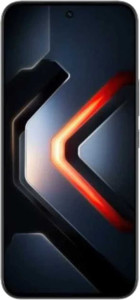
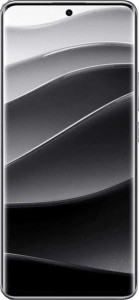
The chipset gap between these two phones is substantial. The Infinix GT 30 Pro runs on the Dimensity 8350, a firmly upper-mid-range SoC, while the Redmi Note 14 Pro 5G is powered by the Dimensity 7300, a more modest mid-range chip. The AnTuTu scores reflect this hierarchy starkly: the GT 30 Pro posts 1,450,000 versus the Redmi's 720,000 — roughly double. AnTuTu measures overall system throughput including CPU, GPU, and memory subsystem together, so this gap points to a meaningfully faster experience across gaming, multitasking, and sustained workloads.
The Geekbench 6 results tell a more nuanced story. The Redmi Note 14 Pro 5G actually scores higher in both single-core (2051 vs 1536) and multi-core (6487 vs 4700) tests, which measure raw CPU efficiency. This suggests the Dimensity 7300's CPU cores are architecturally more efficient on pure compute tasks. However, the GT 30 Pro's commanding AnTuTu lead is likely driven by its considerably faster GPU — the Mali G615 MC6 clocked at 1400 MHz versus the Redmi's Mali G615 MC2 at 1047 MHz — and its significantly quicker RAM at 8533 MHz versus 6400 MHz. For gaming and graphics-intensive applications, those GPU and memory advantages carry real weight.
The Infinix GT 30 Pro holds the stronger overall performance edge. Its higher AnTuTu score, faster GPU, quicker RAM, and larger maximum memory ceiling (24 GB vs 16 GB) collectively make it the more capable device for demanding use cases. The Redmi's CPU efficiency advantage is genuine but narrow in scope — it does not overcome the GT 30 Pro's broader system-level lead, particularly for users prioritizing gaming or future-proofing.