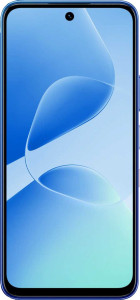
Infinix Hot 60 5G
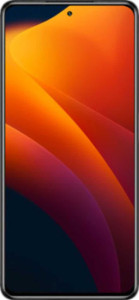
Infinix Hot 60 Pro

Infinix Hot 60 5G Infinix Hot 60 Pro

Overview

Welcome to our in-depth comparison of the Infinix Hot 60 5G and the Infinix Hot 60 Pro. While these two smartphones share the same Infinix Hot 60 family name, they take noticeably different paths when it comes to display technology, performance hardware, and overall design priorities. From connectivity options to camera capabilities and charging speeds, there is more separating these two devices than their names suggest. Read on to find out which one is the right fit for you.

Common Features

  • Both phones are water resistant with an IP64 ingress protection rating.
  • Neither phone has a rugged build.
  • Neither phone can be folded.
  • Both phones have a typical brightness of 700 nits.
  • HDR10 support is not available on either phone.
  • HDR10+ support is not available on either phone.
  • Always-On Display is available on both phones.
  • Dolby Vision support is not available on either phone.
  • Neither phone has a secondary screen.
  • Both phones have a touchscreen.
  • Both phones share the same CPU speed of 2 x 2.2 and 6 x 2 GHz.
  • Both phones have integrated LTE.
  • Both phones use a 6 nm semiconductor size.
  • Both phones support 64-bit processing.
  • Both phones use big.LITTLE technology with 8 CPU threads and HMP support.
  • Both phones have a 50 MP main camera without optical image stabilization.
  • Both phones support video recording at 1440 x 30 fps on the main camera.
  • Neither phone has a BSI sensor, but both have a CMOS sensor.
  • Both phones run Android 15.
  • Both phones support fast charging but do not support wireless charging.
  • Both phones have a non-removable battery with a rechargeable battery indicator.
  • Both phones have a 3.5 mm audio jack.
  • Neither phone supports aptX, LDAC, aptX HD, aptX Adaptive, aptX Lossless.
  • Both phones support Wi-Fi 4 (802.11n) and Wi-Fi 5 (802.11ac).
  • Both phones have dual SIM support and Bluetooth 5.4.
  • Both phones have an external memory slot and USB Type-C with USB 2.0.
  • Neither phone has NFC, but both have a fingerprint scanner.
  • Both phones have a video light and neither has a sapphire glass, curved, or e-paper display.

Main Differences

  • Weight is 193 g on Infinix Hot 60 5G and 170 g on Infinix Hot 60 Pro.
  • Thickness is 7.8 mm on Infinix Hot 60 5G and 6.6 mm on Infinix Hot 60 Pro.
  • Width is 76.8 mm on Infinix Hot 60 5G and 75.9 mm on Infinix Hot 60 Pro.
  • Height is 166 mm on Infinix Hot 60 5G and 163.5 mm on Infinix Hot 60 Pro.
  • Volume is 99.44 cm³ on Infinix Hot 60 5G and 81.90 cm³ on Infinix Hot 60 Pro.
  • The display type is LCD IPS on Infinix Hot 60 5G and OLED/AMOLED on Infinix Hot 60 Pro.
  • Screen size is 6.7″ on Infinix Hot 60 5G and 6.78″ on Infinix Hot 60 Pro.
  • Pixel density is 262 ppi on Infinix Hot 60 5G and 440 ppi on Infinix Hot 60 Pro.
  • Resolution is 720 x 1600 px on Infinix Hot 60 5G and 1224 x 2720 px on Infinix Hot 60 Pro.
  • Refresh rate is 120Hz on Infinix Hot 60 5G and 144Hz on Infinix Hot 60 Pro.
  • Damage-resistant glass is present on Infinix Hot 60 Pro but not available on Infinix Hot 60 5G.
  • Internal storage is 128GB on Infinix Hot 60 5G and 256GB on Infinix Hot 60 Pro.
  • RAM is 6GB on Infinix Hot 60 5G and 8GB on Infinix Hot 60 Pro.
  • The chipset is MediaTek Dimensity 7020 on Infinix Hot 60 5G and MediaTek Helio G200 on Infinix Hot 60 Pro.
  • The GPU is IMG BXM 8 256 on Infinix Hot 60 5G and Mali G57 on Infinix Hot 60 Pro.
  • GPU clock speed is 900 MHz on Infinix Hot 60 5G and 1100 MHz on Infinix Hot 60 Pro.
  • RAM speed is 2750 MHz on Infinix Hot 60 5G and 4266 MHz on Infinix Hot 60 Pro.
  • DirectX version is DirectX 12 on Infinix Hot 60 5G and DirectX 11 on Infinix Hot 60 Pro.
  • Maximum memory amount is 16GB on Infinix Hot 60 5G and 12GB on Infinix Hot 60 Pro.
  • TDP is 7W on Infinix Hot 60 5G and 5W on Infinix Hot 60 Pro.
  • DDR memory version is DDR5 on Infinix Hot 60 5G and DDR4 on Infinix Hot 60 Pro.
  • Front camera resolution is 8MP on Infinix Hot 60 5G and 13MP on Infinix Hot 60 Pro.
  • Dual-tone LED flash is present on Infinix Hot 60 Pro but not available on Infinix Hot 60 5G.
  • Battery capacity is 5200 mAh on Infinix Hot 60 5G and 5160 mAh on Infinix Hot 60 Pro.
  • Charging speed is 18W on Infinix Hot 60 5G and 45W on Infinix Hot 60 Pro.
  • Stereo speakers are present on Infinix Hot 60 5G but not available on Infinix Hot 60 Pro.
  • FM radio is available on Infinix Hot 60 Pro but not present on Infinix Hot 60 5G.
  • 5G support is available on Infinix Hot 60 5G but not present on Infinix Hot 60 Pro.
  • Download speed is 2770 Mbit/s on Infinix Hot 60 5G and 650 Mbit/s on Infinix Hot 60 Pro.
Specs Comparison
Infinix Hot 60 5G

Infinix Hot 60 5G

Infinix Hot 60 Pro

Infinix Hot 60 Pro

Design:
water resistance Water resistant Water resistant
weight 193 g 170 g
thickness 7.8 mm 6.6 mm
width 76.8 mm 75.9 mm
height 166 mm 163.5 mm
volume 99.44064 cm³ 81.90369 cm³
Ingress Protection (IP) rating IP64 IP64
has a rugged build
can be folded

Both the Infinix Hot 60 5G and the Hot 60 Pro share the same IP64 water resistance rating, meaning neither is fully submersible but both offer protection against dust and water splashes — a practical feature for everyday use. Neither device has a rugged build or a foldable form factor, so they compete squarely as standard candy-bar smartphones.

Where they diverge meaningfully is in physical footprint. The Hot 60 Pro is noticeably slimmer at 6.6 mm versus 7.8 mm for the Hot 60 5G — a 1.2 mm difference that is clearly perceptible in-hand and in a pocket. The Pro is also significantly lighter at 170 g compared to 193 g, a 23-gram gap that adds up during prolonged use, reducing hand fatigue during calls or media consumption. Its overall volume of 81.9 cm³ versus 99.4 cm³ confirms the Pro is the more compact device across all three dimensions.

The Hot 60 Pro holds a clear edge in this category. Its slimmer profile, lighter weight, and smaller overall volume make it the more refined and comfortable device to carry and use daily, without sacrificing any protection-level parity with its sibling.

Display:
Display type LCD, IPS OLED/AMOLED
screen size 6.7" 6.78"
pixel density 262 ppi 440 ppi
resolution 720 x 1600 px 1224 x 2720 px
refresh rate 120Hz 144Hz
brightness (typical) 700 nits 700 nits
has branded damage-resistant glass
supports HDR10
supports HDR10+
Always-On Display
supports Dolby Vision
Has a secondary screen
has a touch screen

The display is where the gap between these two devices becomes most dramatic. The Hot 60 5G uses an LCD IPS panel, while the Hot 60 Pro steps up to an OLED/AMOLED panel — a fundamental technology difference. OLED delivers true blacks, higher contrast, and more vivid colors by lighting pixels individually, whereas LCD relies on a backlight that limits contrast and color depth. For media consumption, gaming, or simply browsing, this distinction is immediately visible to the naked eye.

Resolution and sharpness tell a similar story. The Hot 60 5G resolves at 720 x 1600 px for a pixel density of just 262 ppi, which at this screen size can produce a noticeably soft image — fine text and detailed graphics may appear slightly jagged. The Hot 60 Pro counters with a 1224 x 2720 px resolution and 440 ppi, a density sharp enough that individual pixels are imperceptible. The Pro also edges ahead on refresh rate at 144Hz versus 120Hz, resulting in marginally smoother scrolling and animations. Additionally, the Pro includes branded damage-resistant glass — an omission on the Hot 60 5G that leaves its screen more vulnerable to everyday scratches.

The Hot 60 Pro wins this category decisively. The combination of an OLED panel, significantly higher pixel density, faster refresh rate, and screen protection glass makes it a class above its sibling in nearly every display dimension that matters to real-world users.

Performance:
internal storage 128GB 256GB
RAM 6GB 8GB
Chipset (SoC) name MediaTek Dimensity 7020 MediaTek Helio G200
GPU name IMG BXM 8 256 Mali G57
CPU speed 2 x 2.2 & 6 x 2 GHz 2 x 2.2 & 6 x 2 GHz
GPU clock speed 900 MHz 1100 MHz
Has integrated LTE
RAM speed 2750 MHz 4266 MHz
semiconductor size 6 nm 6 nm
Supports 64-bit
DirectX version DirectX 12 DirectX 11
Has integrated graphics
Uses big.LITTLE technology
CPU threads 8 threads 8 threads
Uses HMP
OpenCL version 2 2
maximum memory amount 16GB 12GB
Thermal Design Power (TDP) 7W 5W
DDR memory version 5 4

Chipset choice is the defining story here. The Hot 60 5G runs on the MediaTek Dimensity 7020 — a connectivity-forward chip with integrated 5G and support for DirectX 12, the more modern graphics API. The Hot 60 Pro opts for the MediaTek Helio G200, a gaming-oriented processor that compensates with a faster GPU clock of 1100 MHz versus 900 MHz, which translates to snappier frame rendering in GPU-intensive tasks. Both chips share the same 6 nm fabrication process and identical 8-thread CPU configuration, so raw processing workloads like app launches and multitasking will feel broadly similar day-to-day.

Memory is where the Pro pulls ahead in practical terms: 8 GB of RAM versus 6 GB means more apps stay resident in the background without needing to reload, and its 256 GB of internal storage doubles the Hot 60 5G's 128 GB baseline. However, the Hot 60 5G counters with a higher maximum expandable memory ceiling of 16 GB compared to the Pro's 12 GB cap — useful for users who rely heavily on virtual RAM features. The Hot 60 5G also uses DDR5 memory, a newer standard, though the Pro's DDR4 runs at a higher clock speed of 4266 MHz versus 2750 MHz, making raw bandwidth comparisons between the two less straightforward.

Declaring a single winner here requires nuance. The Hot 60 Pro edges ahead for most users thanks to more RAM, double the storage, and a faster GPU — advantages that show up in everyday multitasking and gaming. The Hot 60 5G, however, retains a meaningful advantage for users who specifically need 5G connectivity and a more modern graphics API, making it the stronger pick in markets where 5G infrastructure is available.

Cameras:
megapixels (main camera) 50 MP 50 MP
Has a dual-lens (or multi-lens) main camera
megapixels (front camera) 8MP 13MP
has built-in optical image stabilization
video recording (main camera) 1440 x 30 fps 1440 x 30 fps
Has a dual-tone LED flash
number of flash LEDs 2 2
has a BSI sensor
has a CMOS sensor
has continuous autofocus when recording movies
Has phase-detection autofocus for photos
supports slow-motion video recording
has a built-in HDR mode
has manual exposure
has a flash
optical zoom 0x 0x
has manual ISO
has a serial shot mode
has manual focus
has a front camera
Has laser autofocus
Shoots 360° panorama
has manual white balance
shoots raw
has touch autofocus
has manual shutter speed
can create panoramas in-camera
Has timelapse function
Has a front-facing LED flash
has a dual-lens (or multi-lens) front camera
supports HDR10 recording
supports Dolby Vision recording
has a front-facing camera under the display
Has a RGB LED flash
has 3D photo/video recording capabilities

On the rear camera front, these two devices are effectively identical. Both carry a single 50 MP main sensor with CMOS technology, phase-detection autofocus, continuous autofocus during video, and a maximum video resolution of 1440p at 30 fps. The full manual control suite — ISO, exposure, focus, and white balance — is present on both, as are slow-motion, timelapse, and panorama modes. Neither offers optical image stabilization or optical zoom, so users relying heavily on either feature will find the same limitations regardless of which model they choose.

The two meaningful differentiators emerge in the front camera and flash. The Hot 60 Pro ships with a 13 MP selfie camera compared to the Hot 60 5G's 8 MP, a gap that results in noticeably more detail in selfies and sharper video during front-facing calls. The Pro also includes a dual-tone LED flash on the rear — absent on the Hot 60 5G — which produces more natural-looking colors in flash photography by blending warm and cool light temperatures to better match ambient conditions.

The Hot 60 Pro takes a narrow but clear win here. The higher-resolution front camera is a daily-use advantage for anyone who regularly takes selfies or video calls, and the dual-tone flash is a genuine quality-of-life improvement for rear camera flash shots. These are not transformative differences, but they are consistent, practical ones.

Operating system:
Android version Android 15 Android 15
has clipboard warnings
has location privacy options
has camera/microphone privacy options
has Mail Privacy Protection
has theme customization
can block app tracking
blocks cross-site tracking
has on-device machine learning
has notification permissions
has media picker
Can play games while they download
has dark mode
has Wi-Fi password sharing
has battery health check
has an extra dim mode
has focus modes
has dynamic theming
can offload apps
Has customizable notifications
has Live Text
has full-page screenshots
supports split screen
gets direct OS updates
has PiP
Can be used as a PC
Has sharing intents
has a child lock
Supports widgets
Is free and open source
Has offline voice recognition
has voice commands
Tracks the current position of a mobile device
is a multi-user system
has Quick Start

Across every operating system specification provided, the Infinix Hot 60 5G and Hot 60 Pro are a perfect match. Both run Android 15 and share an identical feature set — from privacy controls like camera and microphone permissions, location options, and app tracking blockers, to usability features such as dark mode, dynamic theming, split-screen multitasking, Picture-in-Picture, and offline voice recognition.

Neither device receives direct OS updates from Google, which means both rely on Infinix's own update cadence — a consideration worth keeping in mind for long-term software support. On the privacy front, both lack cross-site tracking protection and Wi-Fi password sharing, limitations that apply equally to each model and therefore do not differentiate them.

This category is a complete tie. There is not a single software feature that sets one device apart from the other. A buyer's operating system experience will be identical on either phone, so this group carries no weight in the purchasing decision between the two.

Battery:
battery power 5200 mAh 5160 mAh
has wireless charging
Supports fast charging
charging speed 18W 45W
has a removable battery
has a battery level indicator
has a rechargeable battery

Battery capacity between the two is essentially a wash — 5200 mAh on the Hot 60 5G versus 5160 mAh on the Hot 60 Pro is a 40 mAh difference so marginal that it will have no measurable impact on real-world endurance. Both are sealed, non-removable packs, and neither supports wireless charging, so the playing field on raw battery fundamentals is level.

The decisive gap is in charging speed. The Hot 60 Pro supports 45W fast charging compared to just 18W on the Hot 60 5G — a 2.5x difference that is extremely noticeable in practice. At 45W, topping up from low battery to a usable level takes a fraction of the time; a 30-minute charge session on the Pro will restore significantly more capacity than the same session on the Hot 60 5G. For users with busy schedules or limited access to outlets throughout the day, this is a genuinely meaningful quality-of-life advantage.

The Hot 60 Pro wins this category. While both phones will last a similar duration on a full charge, the Pro's 45W charging means you spend far less time tethered to a cable — a practical, everyday advantage that the Hot 60 5G's marginally larger battery cannot offset.

Audio:
has a socket for a 3.5 mm audio jack
has stereo speakers
has aptX
has LDAC
has aptX HD
has aptX Adaptive
has aptX Lossless
Has a radio

Shared ground first: both phones retain the 3.5 mm headphone jack, a welcome inclusion for wired audio users, and neither supports high-resolution Bluetooth codecs such as aptX, LDAC, or their variants — so wireless audio quality is capped at standard levels on both devices.

The two meaningful trade-offs pull in opposite directions. The Hot 60 5G features stereo speakers, which produce a wider, more immersive soundstage when watching videos, playing games, or listening to music without headphones — a single speaker, by comparison, sounds noticeably flatter and less spatial. The Hot 60 Pro, on the other hand, forgoes stereo output but includes a built-in FM radio, enabling access to local broadcast stations without an internet connection — a feature that still holds practical value in regions with strong FM coverage or for users who prefer not to consume mobile data for audio.

This category comes down to use-case priority. For media consumption and general speaker output, the Hot 60 5G holds the advantage with its stereo setup. For users who value offline broadcast radio access, the Hot 60 Pro offers something the 5G model simply cannot. Neither product dominates outright, but most users will find stereo speakers the more frequently useful feature, giving the Hot 60 5G a slight practical edge here.

Connectivity & Features:
release date July 2025 July 2025
has 5G support
Wi-Fi version Wi-Fi 4 (802.11n), Wi-Fi 5 (802.11ac) Wi-Fi 4 (802.11n), Wi-Fi 5 (802.11ac)
SIM cards 2 SIM 2 SIM
Bluetooth version 5.4 5.4
has an external memory slot
Has USB Type-C
USB version 2 2
has NFC
download speed 2770 MBits/s 650 MBits/s
Has a fingerprint scanner
has emergency SOS via satellite
has crash detection
is DLNA-certified
has a gyroscope
supports ANT+
Has a heart rate monitor
has GPS
has a compass
supports Wi-Fi
Has an infrared sensor
has an accelerometer
has a cellular module
Has a barometer
has an HDMI output
Uses 3D facial recognition
Has an iris scanner
Stylus included
supports Galileo
Has motion tracking
Has optical tracking
Has a built-in projector

The single most consequential difference in this category is network generation. The Hot 60 5G supports 5G connectivity with a peak download speed of 2770 Mbits/s, while the Hot 60 Pro is limited to 4G with a ceiling of 650 Mbits/s — less than a quarter of the speed. In practical terms, this gap matters most for users in areas with active 5G coverage, where streaming high-resolution content, downloading large files, or maintaining low-latency connections becomes noticeably faster and more responsive on the Hot 60 5G.

Beyond network generation, the two devices are remarkably well-matched. Both share the same Wi-Fi 5 support, Bluetooth 5.4, USB Type-C at USB 2.0 speeds, dual SIM slots, microSD expansion, and an identical sensor suite including gyroscope, accelerometer, compass, GPS with Galileo support, and an infrared sensor. The absence of NFC on both rules out contactless payments for either device, and neither offers advanced biometrics beyond a standard fingerprint scanner.

The Hot 60 5G wins this category clearly and for a defining reason. Its 5G capability is not merely a spec checkbox — it is a future-facing connectivity advantage that meaningfully expands what the device can do on a mobile network. For users in 5G markets or those planning to keep their phone for several years as 5G infrastructure matures, this distinction alone makes the Hot 60 5G the stronger choice in connectivity terms.

Miscellaneous:
has a video light
Has sapphire glass display
Has a curved display
Has an e-paper display

The miscellaneous specification group offers no differentiation between these two devices whatsoever. Both feature a video light, and neither carries a sapphire glass display, a curved screen, or an e-paper panel — the full set of data points aligns identically across the board.

This is a complete tie, and by a significant margin the thinnest category in this comparison. No purchasing decision should be influenced by these specs, as they provide zero basis for preferring one model over the other.

Comparison Summary & Verdict

After a thorough comparison, it is clear that both phones serve different types of users. The Infinix Hot 60 5G stands out with its 5G connectivity, stereo speakers, larger battery at 5200 mAh, and support for up to 16GB of maximum memory, making it a strong pick for users who prioritize future-proof network speeds and multimedia consumption. On the other hand, the Infinix Hot 60 Pro excels in display quality with its OLED panel at 440 ppi and 144Hz refresh rate, significantly faster 45W charging, a slimmer and lighter design, a higher-resolution 13MP front camera, and more base storage at 256GB. If visual quality and fast top-ups matter most to you, the Hot 60 Pro is the clear choice. If 5G access and audio experience are your priorities, the Hot 60 5G delivers better value in those areas.

Infinix Hot 60 5G
Buy Infinix Hot 60 5G if...

Buy the Infinix Hot 60 5G if you want 5G connectivity for faster mobile network speeds and prefer stereo speakers for a richer multimedia experience.

Infinix Hot 60 Pro
Buy Infinix Hot 60 Pro if...

Buy the Infinix Hot 60 Pro if you prioritize a vivid OLED display with higher pixel density, a slimmer design, faster 45W charging, and more built-in storage.