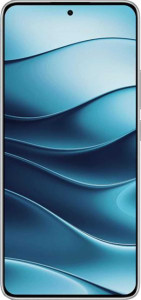
Infinix Hot 60 5G
Xiaomi Redmi Note 14 5G (Global)

Infinix Hot 60 5G Xiaomi Redmi Note 14 5G (Global)

Overview

When choosing between the Infinix Hot 60 5G and the Xiaomi Redmi Note 14 5G (Global), buyers face a genuinely interesting crossroads. Both phones share a solid 5G foundation, a 120Hz refresh rate, and fast-charging support, yet they diverge sharply when it comes to display quality, camera versatility, and everyday performance features. This comparison digs into every key specification to help you decide which device truly fits your needs.

Common Features

  • Both phones are water resistant with an IP64 ingress protection rating.
  • Neither phone has a rugged build.
  • Neither phone can be folded.
  • Both phones have a 120Hz refresh rate.
  • Both phones have a 240Hz touch sampling rate.
  • Always-On Display is available on both phones.
  • Dolby Vision support is not available on either phone.
  • Neither phone has a secondary screen.
  • Both phones have a touchscreen.
  • Both phones share the same Geekbench 6 multi-core score of 2291 and single-core score of 884.
  • Both phones share the same Geekbench 5 multi-core score of 1890 and single-core score of 690.
  • Both phones have a GPU clock speed of 900 MHz.
  • Both phones have integrated LTE.
  • Both phones use 2750 MHz RAM speed.
  • Both phones are built on a 6 nm semiconductor process.
  • Neither phone has a dual-tone LED flash.
  • Neither phone has a BSI sensor.
  • Both phones have a CMOS sensor.
  • Both phones support continuous autofocus when recording movies.
  • Both phones have phase-detection autofocus for photos.
  • Both phones support slow-motion video recording.
  • Both phones have a built-in HDR mode.
  • Both phones support manual exposure.
  • Both phones provide clipboard warnings.
  • Both phones have location privacy options.
  • Both phones have camera and microphone privacy options.
  • Mail Privacy Protection is not available on either phone.
  • Both phones support theme customization.
  • Both phones can block app tracking.
  • Cross-site tracking blocking is not available on either phone.
  • Both phones have on-device machine learning.
  • Neither phone supports wireless charging.
  • Both phones support fast charging.
  • Neither phone has a removable battery.
  • Both phones have a battery level indicator.
  • Both phones have a rechargeable battery.
  • Both phones include a 3.5mm audio jack.
  • Both phones have stereo speakers.
  • aptX support is not available on either phone.
  • aptX HD support is not available on either phone.
  • aptX Adaptive support is not available on either phone.
  • aptX Lossless support is not available on either phone.
  • Both phones support 5G.
  • Both phones support Wi-Fi 4 (802.11n) and Wi-Fi 5 (802.11ac).
  • Both phones have dual SIM card slots.
  • Both phones have an external memory slot.
  • Both phones have a USB Type-C port with USB version 2.
  • Both phones have a download speed of 2770 MBits/s.
  • Both phones have a fingerprint scanner.
  • Both phones have a video light.
  • Neither phone has a sapphire glass display.
  • Neither phone has a curved display.
  • Neither phone has an e-paper display.

Main Differences

  • Weight is 193 g on Infinix Hot 60 5G and 190 g on Xiaomi Redmi Note 14 5G (Global).
  • Thickness is 7.8 mm on Infinix Hot 60 5G and 8 mm on Xiaomi Redmi Note 14 5G (Global).
  • Width is 76.8 mm on Infinix Hot 60 5G and 75.7 mm on Xiaomi Redmi Note 14 5G (Global).
  • Height is 166 mm on Infinix Hot 60 5G and 162.4 mm on Xiaomi Redmi Note 14 5G (Global).
  • Display type is LCD IPS on Infinix Hot 60 5G and OLED/AMOLED on Xiaomi Redmi Note 14 5G (Global).
  • Screen size is 6.7″ on Infinix Hot 60 5G and 6.67″ on Xiaomi Redmi Note 14 5G (Global).
  • Pixel density is 262 ppi on Infinix Hot 60 5G and 395 ppi on Xiaomi Redmi Note 14 5G (Global).
  • Resolution is 720 x 1600 px on Infinix Hot 60 5G and 1080 x 2400 px on Xiaomi Redmi Note 14 5G (Global).
  • Damage-resistant glass is present on Xiaomi Redmi Note 14 5G (Global) but not available on Infinix Hot 60 5G.
  • HDR10 support is present on Xiaomi Redmi Note 14 5G (Global) but not available on Infinix Hot 60 5G.
  • HDR10+ support is present on Xiaomi Redmi Note 14 5G (Global) but not available on Infinix Hot 60 5G.
  • Internal storage is 128GB on Infinix Hot 60 5G and 512GB on Xiaomi Redmi Note 14 5G (Global).
  • RAM is 6GB on Infinix Hot 60 5G and 12GB on Xiaomi Redmi Note 14 5G (Global).
  • The chipset is MediaTek Dimensity 7020 on Infinix Hot 60 5G and MediaTek Dimensity 7025 on Xiaomi Redmi Note 14 5G (Global).
  • CPU speed is 2 x 2.2 & 6 x 2 GHz on Infinix Hot 60 5G and 2 x 2.5 & 6 x 2 GHz on Xiaomi Redmi Note 14 5G (Global).
  • The main camera is 50 MP on Infinix Hot 60 5G and 108 & 8 & 2 MP on Xiaomi Redmi Note 14 5G (Global).
  • Main camera aperture is f/1.6 on Infinix Hot 60 5G and f/1.7, f/2.2, and f/2.4 on Xiaomi Redmi Note 14 5G (Global).
  • A multi-lens main camera is present on Xiaomi Redmi Note 14 5G (Global) but not available on Infinix Hot 60 5G.
  • Front camera resolution is 8 MP on Infinix Hot 60 5G and 20 MP on Xiaomi Redmi Note 14 5G (Global).
  • Optical image stabilization is present on Xiaomi Redmi Note 14 5G (Global) but not available on Infinix Hot 60 5G.
  • Maximum video recording resolution is 1440 x 30 fps on Infinix Hot 60 5G and 1080 x 30 fps on Xiaomi Redmi Note 14 5G (Global).
  • Number of flash LEDs is 2 on Infinix Hot 60 5G and 1 on Xiaomi Redmi Note 14 5G (Global).
  • Front camera aperture is f/2.0 on Infinix Hot 60 5G and f/2.2 on Xiaomi Redmi Note 14 5G (Global).
  • Android version is Android 15 on Infinix Hot 60 5G and Android 14 on Xiaomi Redmi Note 14 5G (Global).
  • App offloading is supported on Infinix Hot 60 5G but not available on Xiaomi Redmi Note 14 5G (Global).
  • Battery capacity is 5200 mAh on Infinix Hot 60 5G and 5110 mAh on Xiaomi Redmi Note 14 5G (Global).
  • Charging speed is 18W on Infinix Hot 60 5G and 45W on Xiaomi Redmi Note 14 5G (Global).
  • LDAC support is present on Xiaomi Redmi Note 14 5G (Global) but not available on Infinix Hot 60 5G.
  • A built-in radio is present on Xiaomi Redmi Note 14 5G (Global) but not available on Infinix Hot 60 5G.
  • Bluetooth version is 5.4 on Infinix Hot 60 5G and 5.3 on Xiaomi Redmi Note 14 5G (Global).
  • NFC is present on Xiaomi Redmi Note 14 5G (Global) but not available on Infinix Hot 60 5G.
Specs Comparison
Infinix Hot 60 5G

Infinix Hot 60 5G

Xiaomi Redmi Note 14 5G (Global)

Xiaomi Redmi Note 14 5G (Global)

Design:
water resistance Water resistant Water resistant
weight 193 g 190 g
thickness 7.8 mm 8 mm
width 76.8 mm 75.7 mm
height 166 mm 162.4 mm
volume 99.44064 cm³ 98.34944 cm³
Ingress Protection (IP) rating IP64 IP64
has a rugged build
can be folded

Both phones share the same IP64 ingress protection rating, meaning neither is fully waterproof but both can handle splashes and dust — a solid baseline for everyday durability. Neither features a rugged build or a foldable form factor, so they occupy the same conventional smartphone category from a structural standpoint.

Where the two diverge is in their physical footprint. The Redmi Note 14 is measurably more compact: it is shorter (162.4 mm vs 166 mm), narrower (75.7 mm vs 76.8 mm), and has a slightly smaller overall volume (98.35 cm³ vs 99.44 cm³). It is also 3 g lighter (190 g vs 193 g), which may seem minor on paper but translates to a marginally more comfortable grip during extended one-handed use. The Infinix Hot 60 5G, on the other hand, is thinner at 7.8 mm compared to the Redmi's 8 mm, giving it a slightly sleeker profile despite its larger frame.

Overall, the Redmi Note 14 5G holds a modest but real ergonomic edge in this category — it is lighter and more compact in the dimensions that most affect in-hand feel. The Hot 60 5G's thinner build is a minor counterpoint, but it does not fully offset the size advantage of its rival. For users who prioritize a more pocketable and lighter device, the Redmi Note 14 is the better choice here.

Display:
Display type LCD, IPS OLED/AMOLED
screen size 6.7" 6.67"
pixel density 262 ppi 395 ppi
resolution 720 x 1600 px 1080 x 2400 px
refresh rate 120Hz 120Hz
touch sampling rate 240Hz 240Hz
has branded damage-resistant glass
supports HDR10
supports HDR10+
Always-On Display
supports Dolby Vision
Has a secondary screen
has a touch screen

The display category is where these two phones diverge most sharply. The Redmi Note 14 5G features an AMOLED panel versus the Hot 60 5G's IPS LCD — a fundamental technology gap that affects nearly every aspect of the viewing experience. AMOLED delivers true blacks, higher contrast, and more vibrant colors, while also enabling a more power-efficient Always-On Display mode since inactive pixels draw no current.

The resolution gap compounds this advantage considerably. The Redmi Note 14's 1080 x 2400 px resolution yields a pixel density of 395 ppi, compared to the Hot 60 5G's 720 x 1600 px at just 262 ppi. That difference is clearly perceptible to the naked eye — text appears crisper, images sharper, and fine UI details are more defined on the Redmi. Additionally, the Redmi Note 14 supports HDR10 and HDR10+ and comes with branded damage-resistant glass, neither of which the Hot 60 5G offers. HDR support means compatible streaming content renders with a wider dynamic range, while protective glass adds a meaningful layer of durability against everyday scratches.

Where the two phones are evenly matched — 120Hz refresh rate and 240Hz touch sampling rate — matters for smoothness and responsiveness, but these shared traits do not offset the Redmi's substantial lead elsewhere. The Redmi Note 14 5G has a commanding advantage in this category across panel quality, sharpness, and content fidelity, making it the clear winner for display-focused buyers.

Performance:
internal storage 128GB 512GB
RAM 6GB 12GB
Chipset (SoC) name MediaTek Dimensity 7020 MediaTek Dimensity 7025
GPU name IMG BXM 8 256 IMG BXM-8-256
CPU speed 2 x 2.2 & 6 x 2 GHz 2 x 2.5 & 6 x 2 GHz
Geekbench 6 result (multi) 2291 2291
Geekbench 6 result (single) 884 884
Geekbench 5 result (multi) 1890 1890
Geekbench 5 result (single) 690 690
GPU clock speed 900 MHz 900 MHz
Has integrated LTE
RAM speed 2750 MHz 2750 MHz
semiconductor size 6 nm 6 nm
Supports 64-bit
DirectX version DirectX 12 DirectX 12
Has integrated graphics
Uses big.LITTLE technology
Has NX bit
Uses HMP
OpenCL version 2 2
maximum memory amount 16GB 16GB
uses multithreading
DDR memory version 5 5
shading units 18 18

On the surface, these two phones look nearly identical in raw compute performance — and the benchmarks confirm it. Both score precisely 2291 (multi-core) and 884 (single-core) on Geekbench 6, a result that reflects their closely related chipsets: the Dimensity 7020 in the Hot 60 5G and the Dimensity 7025 in the Redmi Note 14. The Redmi's performance cores clock slightly higher at 2.5 GHz vs 2.2 GHz, but this marginal advantage clearly does not translate into a measurable real-world throughput difference given the identical benchmark results. GPU architecture, clock speed, and graphics API support are also a wash between the two.

Where the Redmi Note 14 5G pulls decisively ahead is in memory and storage provisioning. It ships with 12 GB of RAM versus the Hot 60 5G's 6 GB — double the amount — and offers 512 GB of internal storage compared to just 128 GB. More RAM means the system can keep significantly more apps active in the background without needing to reload them, which has a tangible impact on multitasking fluidity even when the raw processor performance is equivalent. The storage gap is equally consequential for users who store media locally or install many large apps.

The verdict here is nuanced: pure processing power is a tie, but the Redmi Note 14 5G wins the performance category overall thanks to its superior memory and storage configuration. These are the specs that determine day-to-day smoothness and long-term usability, making the Redmi the more capable device for demanding users — even if neither phone has a chip-level compute advantage over the other.

Cameras:
megapixels (main camera) 50 MP 108 & 8 & 2 MP
wide aperture (main camera) 1.6f 1.7 & 2.2 & 2.4f
Has a dual-lens (or multi-lens) main camera
megapixels (front camera) 8MP 20MP
has built-in optical image stabilization
video recording (main camera) 1440 x 30 fps 1080 x 30 fps
Has a dual-tone LED flash
number of flash LEDs 2 1
has a BSI sensor
has a CMOS sensor
has continuous autofocus when recording movies
Has phase-detection autofocus for photos
supports slow-motion video recording
has a built-in HDR mode
has manual exposure
has a flash
optical zoom 0x 0x
has manual ISO
has a serial shot mode
has manual focus
has a front camera
Has laser autofocus
Shoots 360° panorama
has manual white balance
shoots raw
has touch autofocus
has manual shutter speed
can create panoramas in-camera
wide aperture (front camera) 2f 2.2f
Has timelapse function
Has a front-facing LED flash
has a dual-lens (or multi-lens) front camera
supports HDR10 recording
supports Dolby Vision recording
has a front-facing camera under the display
Has a RGB LED flash
has 3D photo/video recording capabilities

The camera systems on these two phones reflect meaningfully different design philosophies. The Redmi Note 14 5G deploys a triple-lens rear setup headlined by a 108 MP main sensor, complemented by an 8 MP and a 2 MP lens, while the Hot 60 5G relies on a single 50 MP rear camera. Beyond megapixel count, the Redmi also includes optical image stabilization (OIS) — an important hardware feature that physically compensates for hand movement during shots, resulting in noticeably sharper photos in low light and smoother handheld video. The Hot 60 5G lacks OIS entirely, which is a tangible disadvantage in challenging shooting conditions.

The front camera gap is similarly pronounced. The Redmi Note 14 offers a 20 MP selfie shooter compared to the Hot 60 5G's 8 MP, a difference that will be apparent in detail and clarity for portrait and video call use cases. One counterpoint worth noting: the Hot 60 5G's front camera has a slightly wider aperture (f/2.0 vs f/2.2), meaning it admits marginally more light — a modest advantage in low-light selfies that does not fully offset the resolution gap. Interestingly, the Hot 60 5G tops out at 1440p video recording versus the Redmi's 1080p, giving it an edge on paper for video resolution, though both cap at 30 fps.

Across the key dimensions of versatility, stabilization, resolution, and selfie quality, the Redmi Note 14 5G is the stronger camera system. The multi-lens array, much higher main sensor resolution, OIS, and superior front camera combine to give it a clear overall advantage — the Hot 60 5G's higher video resolution ceiling is a notable but isolated bright spot that does not shift the balance.

Operating system:
Android version Android 15 Android 14
has clipboard warnings
has location privacy options
has camera/microphone privacy options
has Mail Privacy Protection
has theme customization
can block app tracking
blocks cross-site tracking
has on-device machine learning
has notification permissions
has media picker
Can play games while they download
has dark mode
has Wi-Fi password sharing
has battery health check
has an extra dim mode
has focus modes
has dynamic theming
can offload apps
Has customizable notifications
has Live Text
has full-page screenshots
supports split screen
gets direct OS updates
has PiP
Can be used as a PC
Has sharing intents
has a child lock
Supports widgets
Is free and open source
Has offline voice recognition
has voice commands
Tracks the current position of a mobile device
is a multi-user system
has Quick Start

The most consequential difference in this category is the base Android version. The Infinix Hot 60 5G ships with Android 15, one full generation ahead of the Redmi Note 14 5G's Android 14. This matters not just for access to the latest features and UI refinements, but also for security patch recency — a newer OS baseline means the device starts its lifecycle in a more up-to-date security posture. Neither phone receives direct OS updates according to the provided specs, which makes the Hot 60 5G's head start all the more meaningful in practical terms.

Beyond the version gap, the two phones are remarkably similar in their software feature sets. Both support the same broad range of privacy controls, productivity tools, and customization options — dark mode, dynamic theming, split-screen multitasking, picture-in-picture, widgets, and on-device machine learning are all present on each. One secondary differentiator is app offloading: the Hot 60 5G can offload apps to free up storage while retaining the app's data, a useful feature for managing the device's more limited 128 GB of internal storage. The Redmi Note 14 does not support this, though its much larger 512 GB storage makes the need for offloading far less pressing.

This category goes to the Infinix Hot 60 5G, primarily on the strength of its newer Android version. Given that neither device gets direct OS updates, launching on Android 15 rather than Android 14 provides a real-world advantage in longevity and software currency that the Redmi cannot match here.

Battery:
battery power 5200 mAh 5110 mAh
has wireless charging
Supports fast charging
charging speed 18W 45W
has a removable battery
has a battery level indicator
has a rechargeable battery

Battery capacity is effectively a tie. The Hot 60 5G packs 5200 mAh against the Redmi Note 14 5G's 5110 mAh — a difference of just 90 mAh that will have no perceptible impact on real-world endurance. Both phones sit comfortably in the large-battery segment, and day-to-day longevity will be determined far more by software efficiency and screen-on time than by this negligible capacity gap.

Charging speed is where a genuine divergence emerges. The Redmi Note 14 supports 45W fast charging, more than double the Hot 60 5G's 18W ceiling. In practice, this means the Redmi can go from low battery to a meaningful charge level in a fraction of the time — a significant convenience advantage for users who rely on quick top-ups throughout the day. At 45W, a substantial charge can be restored during a short break, whereas 18W charging demands considerably more patience for the same result.

Neither phone offers wireless charging or a removable battery, so those factors are off the table for both. Overall, the Redmi Note 14 5G takes this category — not on capacity, where the two are essentially equal, but on the strength of its considerably faster 45W charging, which is a practical daily advantage that the Hot 60 5G's modest capacity lead cannot compensate for.

Audio:
has a socket for a 3.5 mm audio jack
has stereo speakers
has aptX
has LDAC
has aptX HD
has aptX Adaptive
has aptX Lossless
Has a radio

For the most part, these two phones are evenly matched on audio fundamentals. Both retain the increasingly rare 3.5 mm headphone jack — a welcome inclusion for users with wired headphones — and both feature stereo speakers for a more immersive media experience compared to a single-speaker setup. Neither supports aptX or its higher-tier variants, so Bluetooth audio codec parity is largely a non-issue at the standard level.

Two features separate them, however. The Redmi Note 14 5G supports LDAC, Sony's high-resolution Bluetooth audio codec that transmits up to three times more data than standard Bluetooth audio. For users with LDAC-compatible wireless headphones, this translates to noticeably higher fidelity during wireless playback — a meaningful differentiator for audio-conscious buyers. Additionally, the Redmi includes an FM radio receiver, which the Hot 60 5G lacks entirely. While radio is a niche feature for many, it holds genuine utility in areas with limited data connectivity.

Given that the shared features form a solid baseline, the two exclusive additions on the Redmi Note 14 5G — LDAC support and FM radio — are enough to hand it the edge in this category. Neither is a headline feature, but together they represent a more complete audio package for users who care about wireless audio quality or offline listening options.

Connectivity & Features:
release date July 2025 January 2025
has 5G support
Wi-Fi version Wi-Fi 4 (802.11n), Wi-Fi 5 (802.11ac) Wi-Fi 4 (802.11n), Wi-Fi 5 (802.11ac)
SIM cards 2 SIM 2 SIM
Bluetooth version 5.4 5.3
has an external memory slot
Has USB Type-C
USB version 2 2
has NFC
download speed 2770 MBits/s 2770 MBits/s
Has a fingerprint scanner
has emergency SOS via satellite
has crash detection
is DLNA-certified
has a gyroscope
supports ANT+
Has a heart rate monitor
has GPS
has a compass
supports Wi-Fi
Has an infrared sensor
has an accelerometer
has a cellular module
Has a barometer
has an HDMI output
Uses 3D facial recognition
Has an iris scanner
Stylus included
supports Galileo
Has motion tracking
Has optical tracking
Has a built-in projector

Across the broad connectivity checklist, these two phones are strikingly alike. Both support 5G, dual SIM, Wi-Fi 5, USB Type-C, expandable storage, and an identical peak download speed of 2770 Mbits/s. Sensor parity is also high — fingerprint scanner, GPS, compass, gyroscope, accelerometer, infrared sensor, and Galileo support are all present on each device, giving both a well-rounded feature baseline for navigation, biometrics, and peripheral control.

The meaningful divergence comes down to two points. The Redmi Note 14 5G includes NFC, while the Hot 60 5G does not — a significant omission for users who rely on contactless payments or NFC-based data transfers, as this is a feature that cannot be added after purchase. In the other direction, the Hot 60 5G carries a slightly newer Bluetooth 5.4 versus the Redmi's Bluetooth 5.3. The practical difference between these two successive versions is minimal for most users, making it a far less impactful distinction than the NFC gap.

On balance, the Redmi Note 14 5G holds the edge in this category. Its NFC support is a genuinely useful real-world feature that a growing number of users depend on daily, and the Hot 60 5G's marginal Bluetooth version advantage does not come close to offsetting that absence.

Miscellaneous:
has a video light
Has sapphire glass display
Has a curved display
Has an e-paper display

The miscellaneous specs for these two phones are identical across every data point provided. Both feature a video light, and neither offers a sapphire glass display, a curved display, or an e-paper display. There is simply nothing in this spec group that separates one device from the other.

This category is a complete tie. Buyers should look to the other specification groups — display, performance, cameras, and connectivity — where the meaningful differences between the Infinix Hot 60 5G and the Xiaomi Redmi Note 14 5G actually lie.

Comparison Summary & Verdict

After reviewing every specification, these two phones clearly target different kinds of users. The Xiaomi Redmi Note 14 5G (Global) pulls ahead in the areas that matter most to enthusiasts: its OLED display with 395 ppi, 108 MP triple-camera system with optical image stabilization, 45W fast charging, 12 GB of RAM, and extras like NFC and LDAC make it the stronger all-round performer. Meanwhile, the Infinix Hot 60 5G has its own merits, including a larger 5200 mAh battery, Android 15 out of the box, a newer Bluetooth 5.4 chip, and a dual-flash LED setup. Choose the Infinix if you want a budget-friendly daily driver with the latest Android and solid battery endurance. Opt for the Xiaomi if you value a sharper, more vibrant screen and a more capable camera and charging experience.

Infinix Hot 60 5G
Buy Infinix Hot 60 5G if...

Buy the Infinix Hot 60 5G if you want the latest Android 15 experience, a larger battery, and a newer Bluetooth version at a more accessible price point.

Xiaomi Redmi Note 14 5G (Global)
Buy Xiaomi Redmi Note 14 5G (Global) if...

Buy the Xiaomi Redmi Note 14 5G (Global) if you prioritize a vivid OLED display, a versatile multi-lens camera with optical image stabilization, faster 45W charging, and handy extras like NFC and LDAC.