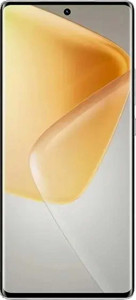
Infinix Hot 60 Pro Plus
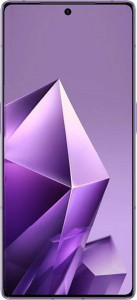
Infinix Note 50 4G

Infinix Hot 60 Pro Plus Infinix Note 50 4G

Overview

Welcome to our in-depth comparison of the Infinix Hot 60 Pro Plus and the Infinix Note 50 4G. Both phones share a surprising amount of common ground, including a 6.78″ OLED display, 144Hz refresh rate, and 256GB of storage, yet they diverge in meaningful ways. From design and weight to camera versatility and charging features, each device takes a distinct approach to delivering value. Read on to discover which one best fits your needs.

Common Features

  • Both phones are water resistant.
  • Neither phone has a rugged build.
  • Neither phone can be folded.
  • Both phones feature an OLED/AMOLED display.
  • Both phones share the same screen size of 6.78″.
  • Both phones support a 144Hz refresh rate.
  • HDR10 support is not available on either product.
  • HDR10+ support is not available on either product.
  • Dolby Vision support is not available on either product.
  • Neither phone has a secondary screen.
  • Both phones have a touchscreen.
  • Both phones come with 256GB of internal storage.
  • Both phones have 8GB of RAM.
  • Both phones use the Mali G57 GPU.
  • Both phones share the same CPU speed of 2 x 2.2 & 6 x 2 GHz.
  • Both phones have integrated LTE support.
  • Both phones have RAM speed of 4266 MHz.
  • Both phones are built on a 6 nm semiconductor process.
  • Both phones support 64-bit processing.
  • Both phones have a 13MP front camera.
  • Both phones record main camera video at 1440 x 30 fps.
  • Both phones have 2 flash LEDs.
  • A BSI sensor is not present on either phone.
  • Both phones have a CMOS sensor.
  • Both phones support continuous autofocus when recording movies.
  • Both phones feature phase-detection autofocus for photos.
  • Both phones support slow-motion video recording.
  • Both phones run Android 15.
  • Both phones display clipboard warnings.
  • Both phones offer location privacy options.
  • Both phones offer camera and microphone privacy options.
  • Mail Privacy Protection is not available on either phone.
  • Both phones support theme customization.
  • Both phones can block app tracking.
  • Cross-site tracking blocking is not available on either phone.
  • Both phones support fast charging.
  • Both phones charge at 45W.
  • Neither phone has a removable battery.
  • Both phones have a battery level indicator.
  • Both phones have a rechargeable battery.
  • Neither phone has a 3.5mm audio jack.
  • Both phones have stereo speakers.
  • aptX support is not available on either phone.
  • LDAC support is not available on either phone.
  • Both phones have an FM radio.
  • Neither phone supports 5G.
  • Both phones support Wi-Fi 4 (802.11n) and Wi-Fi 5 (802.11ac).
  • Both phones have dual SIM card slots.
  • Both phones use Bluetooth 5.4.
  • Both phones have a USB Type-C port.
  • Both phones use USB version 2.
  • Both phones have a download speed of 650 MBits/s.
  • Both phones have an upload speed of 150 MBits/s.
  • Both phones have a video light.
  • Neither phone has a sapphire glass display.
  • Neither phone has an e-paper display.

Main Differences

  • Weight is 155 g on Infinix Hot 60 Pro Plus and 199 g on Infinix Note 50 4G.
  • Thickness is 6 mm on Infinix Hot 60 Pro Plus and 7.6 mm on Infinix Note 50 4G.
  • Width is 75.8 mm on Infinix Hot 60 Pro Plus and 74.4 mm on Infinix Note 50 4G.
  • Height is 164 mm on Infinix Hot 60 Pro Plus and 163.3 mm on Infinix Note 50 4G.
  • Volume is 74.5872 cm³ on Infinix Hot 60 Pro Plus and 92.336352 cm³ on Infinix Note 50 4G.
  • The IP rating is IP65 on Infinix Hot 60 Pro Plus and IP64 on Infinix Note 50 4G.
  • Pixel density is 440 ppi on Infinix Hot 60 Pro Plus and 393 ppi on Infinix Note 50 4G.
  • Resolution is 1224 x 2720 px on Infinix Hot 60 Pro Plus and 1080 x 2436 px on Infinix Note 50 4G.
  • Damage-resistant glass is present on Infinix Hot 60 Pro Plus but not available on Infinix Note 50 4G.
  • Always-On Display is available on Infinix Note 50 4G but not on Infinix Hot 60 Pro Plus.
  • The chipset is MediaTek Helio G200 on Infinix Hot 60 Pro Plus and MediaTek Helio G100 on Infinix Note 50 4G.
  • GPU clock speed is 1100 MHz on Infinix Hot 60 Pro Plus and 1000 MHz on Infinix Note 50 4G.
  • The main camera is 50 MP on Infinix Hot 60 Pro Plus and 50 & 8 MP on Infinix Note 50 4G.
  • A dual-lens main camera is present on Infinix Note 50 4G but not on Infinix Hot 60 Pro Plus.
  • Optical image stabilization is available on Infinix Note 50 4G but not on Infinix Hot 60 Pro Plus.
  • A dual-tone LED flash is present on Infinix Hot 60 Pro Plus but not on Infinix Note 50 4G.
  • Battery capacity is 5160 mAh on Infinix Hot 60 Pro Plus and 5200 mAh on Infinix Note 50 4G.
  • Wireless charging is available on Infinix Note 50 4G but not on Infinix Hot 60 Pro Plus.
  • Reverse wireless charging is available on Infinix Note 50 4G but not on Infinix Hot 60 Pro Plus.
  • NFC is present on Infinix Note 50 4G but not available on Infinix Hot 60 Pro Plus.
  • An infrared sensor is present on Infinix Hot 60 Pro Plus but not on Infinix Note 50 4G.
  • A curved display is featured on Infinix Hot 60 Pro Plus but not on Infinix Note 50 4G.
Specs Comparison
Infinix Hot 60 Pro Plus

Infinix Hot 60 Pro Plus

Infinix Note 50 4G

Infinix Note 50 4G

Design:
water resistance Water resistant Water resistant
weight 155 g 199 g
thickness 6 mm 7.6 mm
width 75.8 mm 74.4 mm
height 164 mm 163.3 mm
volume 74.5872 cm³ 92.336352 cm³
Ingress Protection (IP) rating IP65 IP64
has a rugged build
can be folded

The most striking design difference between these two phones is how they feel in the hand. The Infinix Hot 60 Pro+ is remarkably slim at 6 mm thick and weighs just 155 g, while the Infinix Note 50 4G measures 7.6 mm thick and tips the scale at 199 g. That 44-gram gap is meaningful in daily use — the Hot 60 Pro+ will feel noticeably lighter during long sessions and one-handed use, and its slimmer profile makes it easier to slip into a pocket. The volume difference reinforces this: the Hot 60 Pro+ displaces about 74.6 cm³ versus 92.3 cm³ for the Note 50 4G, making it a substantially more compact device overall despite near-identical screen heights.

On water resistance, both phones carry an IP6X dust-tight rating, but they differ in liquid protection. The Hot 60 Pro+ holds an IP65 certification, meaning it can withstand sustained low-pressure water jets from any direction. The Note 50 4G is rated IP64, which covers water splashes but not directed jets. For most everyday scenarios — rain, accidental sink splashes — both are adequately protected, but IP65 offers a slightly wider margin of safety in wetter conditions.

Neither phone has a rugged build or a foldable form factor, so there are no structural trade-offs to consider on those fronts. Overall, the Hot 60 Pro+ holds a clear design edge: it is meaningfully lighter, thinner, and marginally better protected against water, making it the more portable and pocketable of the two.

Display:
Display type OLED/AMOLED OLED/AMOLED
screen size 6.78" 6.78"
pixel density 440 ppi 393 ppi
resolution 1224 x 2720 px 1080 x 2436 px
refresh rate 144Hz 144Hz
has branded damage-resistant glass
supports HDR10
supports HDR10+
Always-On Display
supports Dolby Vision
Has a secondary screen
has a touch screen

Both phones share the same 6.78-inch OLED/AMOLED panel and a smooth 144Hz refresh rate, so the baseline viewing and scrolling experience is comparable. Where they diverge is resolution: the Hot 60 Pro+ drives a 1224 x 2720 px panel at 440 ppi, while the Note 50 4G runs at 1080 x 2436 px and 393 ppi. That 47 ppi gap is perceptible — text appears crisper, fine UI details render more cleanly, and photos look sharper on the Hot 60 Pro+, especially when viewed up close.

Two feature-level differences pull each phone in opposite directions. The Hot 60 Pro+ includes branded damage-resistant glass, adding a meaningful layer of scratch and impact protection that the Note 50 4G lacks — a practical durability advantage for users who skip screen protectors. On the flip side, the Note 50 4G supports Always-On Display, letting users glance at the time, notifications, or widgets without fully waking the screen. For many people this is a genuine convenience in daily use, and its absence on the Hot 60 Pro+ is a minor but real omission.

Weighing these factors, the Hot 60 Pro+ holds the stronger display advantage overall: its sharper panel and protective glass are hardware qualities that cannot be patched in, while Always-On Display, though useful, is a software-tier feature. For users who prioritize visual fidelity and screen durability, the Hot 60 Pro+ is the clearer choice here.

Performance:
internal storage 256GB 256GB
RAM 8GB 8GB
Chipset (SoC) name MediaTek Helio G200 MediaTek Helio G100
GPU name Mali G57 Mali G57
CPU speed 2 x 2.2 & 6 x 2 GHz 2 x 2.2 & 6 x 2 GHz
GPU clock speed 1100 MHz 1000 MHz
Has integrated LTE
RAM speed 4266 MHz 4266 MHz
semiconductor size 6 nm 6 nm
Supports 64-bit
DirectX version DirectX 11 DirectX 11
Has integrated graphics
OpenGL ES version 3.2 3.2
Uses big.LITTLE technology
CPU threads 8 threads 8 threads
Uses HMP
maximum memory bandwidth 17.1 GB/s 17.1 GB/s
OpenCL version 2 2
maximum memory amount 12GB 12GB
Thermal Design Power (TDP) 5W 5W
DDR memory version 4 4

These two phones are built on near-identical hardware foundations — same 8GB RAM, same 256GB storage, same 8-core CPU configuration, same 6nm manufacturing process, and the same memory architecture including 4266 MHz RAM speed and 17.1 GB/s memory bandwidth. For everyday tasks like app switching, browsing, and media consumption, users of either phone will have a practically indistinguishable experience.

The sole differentiator is the chipset generation: the Hot 60 Pro+ runs on the Helio G200, while the Note 50 4G uses the Helio G100. This manifests in one measurable way — GPU clock speed. The Hot 60 Pro+'s Mali G57 runs at 1100 MHz versus 1000 MHz on the Note 50 4G, a roughly 10% advantage. In practice, this translates to modestly smoother frame rates in graphically demanding games and slightly faster GPU-accelerated tasks, though both chips share the same GPU architecture, so the gap is incremental rather than generational.

Given how closely matched these platforms are, the Hot 60 Pro+ holds a narrow but real performance edge purely by virtue of the higher GPU clock speed. For general use the difference will rarely surface, but for gaming-focused users, the G200 is the more capable chip of the two.

Cameras:
megapixels (main camera) 50 MP 50 & 8 MP
Has a dual-lens (or multi-lens) main camera
megapixels (front camera) 13MP 13MP
has built-in optical image stabilization
video recording (main camera) 1440 x 30 fps 1440 x 30 fps
Has a dual-tone LED flash
number of flash LEDs 2 2
has a BSI sensor
has a CMOS sensor
has continuous autofocus when recording movies
Has phase-detection autofocus for photos
supports slow-motion video recording
has a built-in HDR mode
has manual exposure
has a flash
optical zoom 0x 0x
has manual ISO
has a serial shot mode
has manual focus
has a front camera
Has laser autofocus
Shoots 360° panorama
has manual white balance
shoots raw
has touch autofocus
has manual shutter speed
can create panoramas in-camera
Has timelapse function
Has a front-facing LED flash
has a dual-lens (or multi-lens) front camera
supports HDR10 recording
supports Dolby Vision recording
has a front-facing camera under the display
Has a RGB LED flash
has 3D photo/video recording capabilities

The camera systems share a solid common feature set — 50 MP primary sensor, 13 MP front camera, phase-detection autofocus, continuous autofocus during video, HDR mode, slow-motion, and a full suite of manual controls. Both top out at 1440p at 30fps for video. For most shooting scenarios, these shared capabilities mean comparable results. The meaningful differences, however, sit in two distinct areas that pull the advantage firmly toward the Note 50 4G.

Most significantly, the Note 50 4G features a dual-lens rear camera system — a 50 MP primary paired with an 8 MP secondary lens — giving it compositional flexibility that the single-lens Hot 60 Pro+ simply cannot match. The additional lens opens up different focal perspectives, which is a hardware capability that software cannot replicate. Equally important is the Note 50 4G's optical image stabilization (OIS), absent on the Hot 60 Pro+. OIS physically counteracts hand movement during capture, producing noticeably steadier handheld video and reducing blur in low-light stills — one of the most practically impactful camera features in real-world use.

The Hot 60 Pro+ counters with a dual-tone LED flash, which renders skin tones more naturally in flash photography, but this is a minor advantage against the Note 50 4G's structural camera upgrades. On camera capability, the Note 50 4G holds a clear and meaningful edge thanks to OIS and its multi-lens system.

Operating system:
Android version Android 15 Android 15
has clipboard warnings
has location privacy options
has camera/microphone privacy options
has Mail Privacy Protection
has theme customization
can block app tracking
blocks cross-site tracking
has on-device machine learning
has notification permissions
has media picker
Can play games while they download
has dark mode
has Wi-Fi password sharing
has battery health check
has an extra dim mode
has focus modes
has dynamic theming
can offload apps
Has customizable notifications
has Live Text
has full-page screenshots
supports split screen
gets direct OS updates
has PiP
Can be used as a PC
Has sharing intents
has a child lock
Supports widgets
Is free and open source
Has offline voice recognition
has voice commands
Tracks the current position of a mobile device
is a multi-user system
has Quick Start

Across every single operating system specification provided, the Infinix Hot 60 Pro+ and the Infinix Note 50 4G are identical. Both run Android 15, carry the same privacy controls, support the same productivity features — split screen, Picture-in-Picture, widgets, dynamic theming — and share the same limitations, such as no direct OS updates and no Wi-Fi password sharing.

This is a complete tie. There is no differentiator in this category, and choosing between these two phones on software grounds alone is not possible. Any decision should be driven entirely by the hardware differences covered in other specification groups.

Battery:
battery power 5160 mAh 5200 mAh
has wireless charging
Supports fast charging
charging speed 45W 45W
has reverse wireless charging
has a removable battery
has a battery level indicator
has a rechargeable battery

Raw capacity is essentially a wash here — 5160 mAh on the Hot 60 Pro+ versus 5200 mAh on the Note 50 4G is a 40 mAh difference that will never be perceptible in real-world endurance. Both phones also match on wired fast charging at 45W, meaning similar time-to-full from a cable. On these two dimensions, users can expect a virtually identical experience.

Where the Note 50 4G pulls clearly ahead is charging flexibility. It supports both wireless charging and reverse wireless charging — features entirely absent on the Hot 60 Pro+. Wireless charging removes the friction of plugging in, a convenience that compounds meaningfully over daily use. Reverse wireless charging adds the ability to top up accessories like earbuds or a friend's device directly from the phone's battery, effectively turning it into a portable pad.

These are not minor software differences — they require dedicated hardware coils that the Hot 60 Pro+ simply does not have. The Note 50 4G is the clear winner in this category, offering a meaningfully more versatile charging ecosystem despite the near-identical battery capacity and wired charging speeds.

Audio:
has a socket for a 3.5 mm audio jack
has stereo speakers
has aptX
has LDAC
has aptX HD
has aptX Adaptive
has aptX Lossless
Has a radio

Audio is another category where these two phones are completely identical. Both feature stereo speakers and a built-in FM radio, while neither includes a 3.5mm headphone jack nor any high-resolution Bluetooth audio codec — no aptX, LDAC, or any of their variants. Users relying on wired headphones will need a USB-C adapter on either device.

This is a straightforward tie. There is no audio specification in the provided data that distinguishes one phone from the other, and the choice between them should rest entirely on the differences identified in other categories.

Connectivity & Features:
release date July 2025 March 2025
has 5G support
Wi-Fi version Wi-Fi 4 (802.11n), Wi-Fi 5 (802.11ac) Wi-Fi 4 (802.11n), Wi-Fi 5 (802.11ac)
SIM cards 2 SIM 2 SIM
Bluetooth version 5.4 5.4
Has USB Type-C
USB version 2 2
has NFC
download speed 650 MBits/s 650 MBits/s
upload speed 150 MBits/s 150 MBits/s
Has a fingerprint scanner
has emergency SOS via satellite
has crash detection
is DLNA-certified
has a gyroscope
supports ANT+
Has a heart rate monitor
has GPS
has a compass
supports Wi-Fi
Has an infrared sensor
has an accelerometer
has a cellular module
Has a barometer
has an HDMI output
Uses 3D facial recognition
Has an iris scanner
Stylus included
supports Galileo
Has motion tracking
Has optical tracking
Has a built-in projector

The connectivity foundations of these two phones are essentially the same — dual SIM, Wi-Fi 5, Bluetooth 5.4, USB Type-C, GPS with Galileo support, and identical cellular speeds of 650 Mbps down and 150 Mbps up. Neither supports 5G, which is an expected trade-off at this price tier. For standard day-to-day connectivity needs, both phones perform on equal footing.

The two meaningful divergences are a direct swap of niche but genuinely useful features. The Note 50 4G includes NFC, enabling contactless payments, quick device pairing, and transit card functionality — conveniences that are increasingly relied upon in daily life and impossible to replicate without the hardware. The Hot 60 Pro+ counters with an infrared sensor, which allows the phone to function as a universal remote control for TVs, air conditioners, and other IR-compatible appliances — absent entirely on the Note 50 4G.

Which advantage matters more depends entirely on the user's lifestyle. NFC's utility is broader and more frequently triggered for most people, making the Note 50 4G the more versatile choice for connectivity in general. However, for users in environments where IR remote control is a daily need, the Hot 60 Pro+'s infrared sensor is a compelling differentiator. On balance, NFC edges out IR as the more universally impactful feature, giving the Note 50 4G a slight overall advantage in this category.

Miscellaneous:
has a video light
Has sapphire glass display
Has a curved display
Has an e-paper display

This category comes down to a single differentiator: the Infinix Hot 60 Pro+ features a curved display, while the Infinix Note 50 4G has a flat panel. Both share a video light and neither uses sapphire glass or an e-paper display, so those points are moot.

A curved screen is primarily an aesthetic and ergonomic choice. The edges of the display wrap slightly toward the frame, giving the phone a more premium, sleek look and making it feel narrower in the hand during swipe gestures. The trade-off is that curved displays can be slightly more prone to accidental edge touches and are sometimes harder to fit with screen protectors. Users who prioritize a modern, high-end appearance will favor the Hot 60 Pro+'s design, while those who prefer a straightforward, protector-friendly flat panel may actually prefer the Note 50 4G.

As the only distinguishing spec here, the Hot 60 Pro+ technically holds the edge for users drawn to a more refined aesthetic — though whether a curved display is an advantage or a minor inconvenience is largely a matter of personal preference.

Comparison Summary & Verdict

After a thorough comparison, both phones prove to be capable mid-range contenders running Android 15 with identical storage and display sizes. However, their strengths point to different users. The Infinix Hot 60 Pro Plus stands out with its slimmer, lighter build, higher pixel density of 440 ppi, damage-resistant glass, a curved display, and an infrared sensor, making it ideal for users who value portability and a premium feel. The Infinix Note 50 4G, on the other hand, earns its place with a dual-lens OIS camera, wireless and reverse wireless charging, NFC support, and an Always-On Display, appealing to users who prioritize camera flexibility and modern connectivity features. Your choice ultimately comes down to whether you prefer a sleek, lightweight handset or a feature-rich device built for versatility.

Infinix Hot 60 Pro Plus
Buy Infinix Hot 60 Pro Plus if...

Buy the Infinix Hot 60 Pro Plus if you want a lighter, slimmer phone with a sharper display, damage-resistant glass, and an infrared sensor for remote control functionality.

Infinix Note 50 4G
Buy Infinix Note 50 4G if...

Buy the Infinix Note 50 4G if you need a versatile dual-lens camera with optical image stabilization, wireless charging, reverse wireless charging, and NFC support.