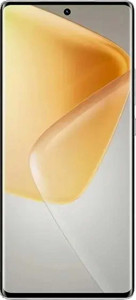
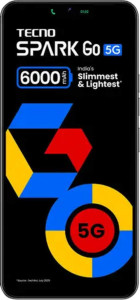
Panel technology is where these two phones diverge most dramatically. The Infinix Hot 60 Pro Plus uses an AMOLED display, which delivers true blacks, vibrant colors, and superior contrast by lighting pixels individually. The Tecno Spark Go 5G, by contrast, relies on an IPS LCD panel — a perfectly functional technology, but one that cannot match AMOLED for color depth or power efficiency when displaying dark content. For media consumption, gaming, or simply browsing with a dark theme, the Hot 60 Pro Plus will look noticeably richer and more immersive.
The resolution gap compounds this advantage significantly. The Hot 60 Pro Plus resolves at 1224 x 2720 px, translating to a sharp 440 ppi pixel density, where individual pixels are essentially invisible to the naked eye. The Spark Go 5G's 720 x 1600 px resolution yields just 260 ppi — a density where text edges and fine image details can appear noticeably softer, particularly when reading small text or viewing high-resolution photos up close. Both screens are similarly sized at around 6.7 inches, so the ppi difference is a direct reflection of clarity, not screen footprint.
Refresh rate is less of a differentiator here: 144 Hz on the Hot 60 Pro Plus versus 120 Hz on the Spark Go 5G — both feel smooth for everyday scrolling and gaming, though the higher ceiling gives the Hot 60 Pro Plus a marginal edge for fast-motion content. The Hot 60 Pro Plus also includes branded damage-resistant glass, adding a layer of scratch protection the Spark Go 5G lacks. Taken together, the Infinix Hot 60 Pro Plus holds a commanding advantage in this category across panel quality, sharpness, and durability — there is no close call here.