Infinix Hot 60 Pro
Infinix Hot 60 Pro Plus

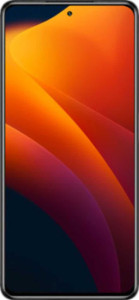
Infinix Hot 60 Pro Infinix Hot 60 Pro Plus

Overview

When choosing between the Infinix Hot 60 Pro and the Infinix Hot 60 Pro Plus, the decision is far from straightforward. Both smartphones share the same display size, chipset, camera setup, and battery capacity, yet they diverge in meaningful ways around build design, audio configuration, and a handful of practical features. Whether portability, audio experience, or connectivity flexibility matters most to you, this side-by-side comparison will help you identify exactly which model fits your needs.

Common Features

  • Both devices offer water resistance.
  • Neither device has a rugged build.
  • Neither device can be folded.
  • Both feature an OLED/AMOLED display.
  • Both have a 6.78″ screen size.
  • Both offer a pixel density of 440 ppi.
  • Both have a resolution of 1224 x 2720 px.
  • Both support a 144Hz refresh rate.
  • Both have a typical brightness of 700 nits.
  • Damage-resistant glass is present on both, with Gorilla Glass 7i.
  • Both are powered by the MediaTek Helio G200 chipset with a Mali G57 GPU.
  • Both offer 8GB of RAM at 4266 MHz and 256GB of internal storage.
  • Both have a 50 MP main camera with a single lens and no optical image stabilization.
  • Both have a 13 MP front camera.
  • Both support video recording at 1440 x 30 fps.
  • Both have a dual-tone LED flash with 2 LEDs.
  • Both run Android 15.
  • Both have a 5160 mAh battery with 45W fast charging and no wireless charging.
  • Wireless charging is not available on either device.
  • Neither device supports 5G.
  • Both support Wi-Fi 4 (802.11n) and Wi-Fi 5 (802.11ac).
  • Both have Bluetooth 5.4, USB Type-C with USB 2.0, and dual SIM support.
  • NFC is not available on either device.
  • Both offer a maximum download speed of 650 Mbits/s.
  • A built-in radio is present on both devices.
  • A video light is present on both devices.
  • Neither device has a sapphire glass display or an e-paper display.

Main Differences

  • Weight is 170 g on the Infinix Hot 60 Pro and 155 g on the Infinix Hot 60 Pro Plus.
  • Thickness is 6.6 mm on the Infinix Hot 60 Pro and 6 mm on the Infinix Hot 60 Pro Plus.
  • Width is 75.9 mm on the Infinix Hot 60 Pro and 75.8 mm on the Infinix Hot 60 Pro Plus.
  • Height is 163.5 mm on the Infinix Hot 60 Pro and 164 mm on the Infinix Hot 60 Pro Plus.
  • Volume is 81.90 cm³ on the Infinix Hot 60 Pro and 74.59 cm³ on the Infinix Hot 60 Pro Plus.
  • The IP rating is IP64 on the Infinix Hot 60 Pro and IP65 on the Infinix Hot 60 Pro Plus.
  • Always-On Display is available on the Infinix Hot 60 Pro but not on the Infinix Hot 60 Pro Plus.
  • A 3.5 mm audio jack is present on the Infinix Hot 60 Pro but not on the Infinix Hot 60 Pro Plus.
  • Stereo speakers are available on the Infinix Hot 60 Pro Plus but not on the Infinix Hot 60 Pro.
  • An external memory slot is present on the Infinix Hot 60 Pro but not on the Infinix Hot 60 Pro Plus.
  • A curved display is featured on the Infinix Hot 60 Pro Plus but not on the Infinix Hot 60 Pro.
Specs Comparison
Infinix Hot 60 Pro

Infinix Hot 60 Pro

Infinix Hot 60 Pro Plus

Infinix Hot 60 Pro Plus

Design:
water resistance Water resistant Water resistant
weight 170 g 155 g
thickness 6.6 mm 6 mm
width 75.9 mm 75.8 mm
height 163.5 mm 164 mm
volume 81.90369 cm³ 74.5872 cm³
Ingress Protection (IP) rating IP64 IP65
has a rugged build
can be folded

Both phones share nearly identical footprints in terms of width and height, so the differences that matter in the hand come down to thickness and weight. The Infinix Hot 60 Pro Plus is notably slimmer at 6 mm versus 6.6 mm for the standard Hot 60 Pro — a gap that, while modest on paper, is perceptible when gripping the device or sliding it into a pocket. More meaningfully, the Pro Plus is 15 grams lighter (155 g vs. 170 g), a difference that becomes noticeable during extended one-handed use or long browsing sessions, reducing fatigue over time.

On water and dust resistance, both phones carry an IP6X rating, meaning both are fully dust-tight. However, the Pro Plus holds a IP65 certification compared to the Pro's IP64, which translates to protection against low-pressure water jets from any direction — a step up from the Pro's resistance to water splashes only. In practical terms, the Pro Plus can better handle a sudden rain shower or an accidental sink splash without concern.

Neither device offers a rugged build or a foldable form factor, so those are non-differentiators. Overall, the Hot 60 Pro Plus holds a clear design edge: it is lighter, thinner, occupies less volume, and carries a marginally superior IP rating — making it the more refined and pocket-friendly of the two.

Display:
Display type OLED/AMOLED OLED/AMOLED
screen size 6.78" 6.78"
pixel density 440 ppi 440 ppi
resolution 1224 x 2720 px 1224 x 2720 px
refresh rate 144Hz 144Hz
brightness (typical) 700 nits 700 nits
has branded damage-resistant glass
Gorilla Glass version Gorilla Glass 7i Gorilla Glass 7i
supports HDR10
supports HDR10+
Always-On Display
supports Dolby Vision
Has a secondary screen
has a touch screen

For the vast majority of display specs, these two phones are carbon copies of each other. Both feature a 6.78″ OLED/AMOLED panel at 1224 x 2720 px resolution, delivering a sharp 440 ppi pixel density — comfortably above the threshold where individual pixels become invisible to the naked eye. The 144Hz refresh rate ensures smooth scrolling and responsive touch interaction, and a 700 nits typical brightness provides solid visibility in most indoor and moderately lit outdoor conditions. Both panels are also protected by Gorilla Glass 7i, offering meaningful scratch and drop resistance for everyday use.

The sole differentiator in this category is the Always-On Display feature, which the Hot 60 Pro supports and the Pro Plus does not. Always-On Display lets users glance at the time, date, or notifications without fully waking the screen — a small but genuinely convenient quality-of-life feature that many users come to rely on, especially on OLED panels where only lit pixels consume power, keeping the battery impact minimal.

Stripped of that one distinction, the two displays are functionally identical. The Hot 60 Pro takes a narrow but real edge here purely by virtue of offering Always-On Display — a feature absent on the Pro Plus with no compensating display advantage to speak of.

Performance:
internal storage 256GB 256GB
RAM 8GB 8GB
Chipset (SoC) name MediaTek Helio G200 MediaTek Helio G200
GPU name Mali G57 Mali G57
CPU speed 2 x 2.2 & 6 x 2 GHz 2 x 2.2 & 6 x 2 GHz
GPU clock speed 1100 MHz 1100 MHz
Has integrated LTE
RAM speed 4266 MHz 4266 MHz
semiconductor size 6 nm 6 nm
Supports 64-bit
DirectX version DirectX 11 DirectX 11
Has integrated graphics
OpenGL ES version 3.2 3.2
Uses big.LITTLE technology
CPU threads 8 threads 8 threads
Uses HMP
maximum memory bandwidth 17.1 GB/s 17.1 GB/s
OpenCL version 2 2
maximum memory amount 12GB 12GB
Thermal Design Power (TDP) 5W 5W
DDR memory version 4 4

Under the hood, the Infinix Hot 60 Pro and Hot 60 Pro Plus are entirely identical — both are powered by the MediaTek Helio G200 chipset, built on a 6 nm process. The 6 nm fabrication node strikes a practical balance between power efficiency and thermal management, which aligns with the shared 5W TDP and helps keep sustained performance stable without excessive heat buildup during gaming or heavy multitasking.

Both devices ship with 8 GB of RAM and 256 GB of internal storage, with RAM running at 4266 MHz on a DDR4 interface and a maximum memory bandwidth of 17.1 GB/s. The octa-core CPU uses big.LITTLE architecture with Heterogeneous Multi-Processing (HMP), allowing the chip to dynamically assign tasks across its two performance cores and six efficiency cores — a setup that keeps everyday workloads responsive while preserving battery life. Graphics are handled by the Mali G57 GPU clocked at 1100 MHz, capable enough for casual to mid-tier gaming at the panel's native resolution.

There is simply no differentiator to call out here. Every performance metric — chipset, RAM, storage, GPU, memory speed, and thermal envelope — is identical across both phones. This category is an absolute tie, and performance should play no role in choosing between the two.

Cameras:
megapixels (main camera) 50 MP 50 MP
Has a dual-lens (or multi-lens) main camera
megapixels (front camera) 13MP 13MP
has built-in optical image stabilization
video recording (main camera) 1440 x 30 fps 1440 x 30 fps
Has a dual-tone LED flash
number of flash LEDs 2 2
has a BSI sensor
has a CMOS sensor
has continuous autofocus when recording movies
Has phase-detection autofocus for photos
supports slow-motion video recording
has a built-in HDR mode
has manual exposure
has a flash
optical zoom 0x 0x
has manual ISO
has a serial shot mode
has manual focus
has a front camera
Has laser autofocus
Shoots 360° panorama
has manual white balance
shoots raw
has touch autofocus
has manual shutter speed
can create panoramas in-camera
Has timelapse function
Has a front-facing LED flash
has a dual-lens (or multi-lens) front camera
supports HDR10 recording
supports Dolby Vision recording
has a front-facing camera under the display
Has a RGB LED flash
has 3D photo/video recording capabilities

Camera hardware and capabilities are identical across both phones. Each sports a 50 MP single-lens rear camera and a 13 MP front shooter, with video topping out at 1440p at 30 fps on the main camera. The absence of optical image stabilization on both means handheld video will rely entirely on electronic stabilization or steady hands — a notable limitation for anyone prioritizing smooth footage. Neither phone offers optical zoom, so digital cropping is the only option when shooting distant subjects.

Where the camera system shows genuine versatility is in its manual controls and shooting modes. Both devices support manual exposure, ISO, focus, and white balance, giving photography enthusiasts meaningful hands-on control beyond the standard auto mode. Phase-detection autofocus ensures quick and accurate subject locking for stills, while continuous autofocus during video recording keeps moving subjects sharp. Slow-motion, timelapse, HDR mode, and panorama round out a capable, if mid-range, feature set.

With every single camera specification matching point for point, this category is an unambiguous tie. Neither the Hot 60 Pro nor the Pro Plus offers any photographic advantage over the other — camera preference should carry zero weight in the buying decision between these two.

Operating system:
Android version Android 15 Android 15
has clipboard warnings
has location privacy options
has camera/microphone privacy options
has Mail Privacy Protection
has theme customization
can block app tracking
blocks cross-site tracking
has on-device machine learning
has notification permissions
has media picker
Can play games while they download
has dark mode
has Wi-Fi password sharing
has battery health check
has an extra dim mode
has focus modes
has dynamic theming
can offload apps
Has customizable notifications
has Live Text
has full-page screenshots
supports split screen
gets direct OS updates
has PiP
Can be used as a PC
Has sharing intents
has a child lock
Supports widgets
Is free and open source
Has offline voice recognition
has voice commands
Tracks the current position of a mobile device
is a multi-user system
has Quick Start

Running Android 15 on both devices, the software experience is completely uniform across the Hot 60 Pro and Hot 60 Pro Plus. Android 15 brings a modern privacy framework that both phones fully leverage — including granular location controls, camera and microphone access indicators, app tracking blocks, and clipboard warnings. These aren't just checkbox features; they represent meaningful safeguards for users who are increasingly conscious of how apps handle their data in the background.

On the usability front, both phones share a well-rounded feature set: dynamic theming, dark mode, Picture-in-Picture, split-screen multitasking, full-page screenshots, and widget support all come standard. On-device machine learning enables smarter experiences like Live Text — useful for extracting text from images directly on the phone without a cloud dependency. Notably, neither device receives direct OS updates from Google, meaning updates are routed through Infinix, which can introduce delays in receiving security patches or new Android versions.

Every OS feature listed is shared identically between the two models, leaving no software-based reason to choose one over the other. This is a complete tie — the operating system experience will feel indistinguishable in daily use regardless of which model a buyer selects.

Battery:
battery power 5160 mAh 5160 mAh
has wireless charging
Supports fast charging
charging speed 45W 45W
has reverse wireless charging
has a removable battery
has a battery level indicator
has a rechargeable battery

Matching spec for spec once again, both the Infinix Hot 60 Pro and Hot 60 Pro Plus pack a 5160 mAh battery — a capacity that sits comfortably above the mainstream 5000 mAh threshold and should comfortably support a full day of mixed usage for most users. Paired with the efficient Helio G200 chipset noted in the performance category, that capacity is well-positioned to translate into genuine all-day endurance.

Charging is equally matched, with both phones supporting 45W fast charging. At that wattage, topping up from low to full should take well under an hour, meaningfully reducing the time a user is tethered to a cable. Neither device offers wireless or reverse wireless charging, which keeps the feature set straightforward but does rule out the convenience of Qi-based charging pads.

There is no differentiator anywhere in this category. Identical battery capacity, identical charging speed, and identical feature omissions make this a clear tie — battery life and charging behavior will be indistinguishable between the two models in real-world use.

Audio:
has a socket for a 3.5 mm audio jack
has stereo speakers
has aptX
has LDAC
has aptX HD
has aptX Adaptive
has aptX Lossless
Has a radio

Audio is where these two phones finally diverge in a meaningful and directly opposing way. The Hot 60 Pro retains a 3.5 mm headphone jack but relies on a single speaker, while the Hot 60 Pro Plus drops the headphone jack entirely in favor of stereo speakers. This is a classic trade-off that essentially comes down to how a user primarily consumes audio.

Stereo speakers make a tangible difference for media consumption — watching videos, playing games, or listening to music without headphones benefits noticeably from two-channel sound that creates a sense of width and separation. A single speaker, by contrast, produces mono audio that can feel flat and directional. On the other hand, the headphone jack on the Hot 60 Pro opens the door to wired audio accessories without any adapter — a convenience that audiophiles and users with existing wired headphones will appreciate, especially given that neither phone supports high-resolution Bluetooth codecs like aptX HD or LDAC, making wired the only path to higher-fidelity personal listening. Both phones also include an FM radio, a shared minor perk.

Neither choice is objectively superior — it hinges entirely on personal use patterns. Users who frequently watch content or game without headphones will find the Pro Plus's stereo speakers the more impactful feature; those who rely on wired headphones daily will prefer the Pro's headphone jack. For the broader audience that leans toward speaker-based media consumption, the Pro Plus holds the slight edge.

Connectivity & Features:
release date July 2025 July 2025
has 5G support
Wi-Fi version Wi-Fi 4 (802.11n), Wi-Fi 5 (802.11ac) Wi-Fi 4 (802.11n), Wi-Fi 5 (802.11ac)
SIM cards 2 SIM 2 SIM
Bluetooth version 5.4 5.4
has an external memory slot
Has USB Type-C
USB version 2 2
has NFC
download speed 650 MBits/s 650 MBits/s
upload speed 150 MBits/s 150 MBits/s
Has a fingerprint scanner
has emergency SOS via satellite
has crash detection
is DLNA-certified
has a gyroscope
supports ANT+
Has a heart rate monitor
has GPS
has a compass
supports Wi-Fi
Has an infrared sensor
has an accelerometer
has a cellular module
Has a barometer
has an HDMI output
Uses 3D facial recognition
Has an iris scanner
Stylus included
supports Galileo
Has motion tracking
Has optical tracking
Has a built-in projector

Across the broad landscape of connectivity features, these two phones are nearly indistinguishable. Both operate on 4G LTE (no 5G on either), support dual SIM cards, and share identical Wi-Fi capabilities with Wi-Fi 5 (802.11ac) — delivering solid wireless throughput for streaming and browsing. Bluetooth 5.4 is present on both, offering stable, low-latency connections to wireless accessories. USB Type-C at USB 2.0 speeds handles charging and data transfer on each, and neither device includes NFC, which rules out contactless payments via the phone's built-in hardware on both models.

The sensor suite is equally matched — gyroscope, accelerometer, compass, GPS with Galileo support, and an infrared sensor are all present on both phones. The IR blaster in particular is a handy inclusion that lets the device double as a universal remote for TVs and other appliances, a feature increasingly rare on mid-range devices. The one and only differentiator in this entire category is the external memory slot, which the Hot 60 Pro supports and the Hot 60 Pro Plus does not. With both phones shipping at 256 GB of internal storage, the omission is less critical than it would be on a lower-storage device, but it still matters for users who want to cheaply expand capacity or transfer files via physical card.

The Hot 60 Pro takes a clear, if narrow, edge here. The microSD slot gives it meaningful long-term storage flexibility that the Pro Plus simply cannot match — a tangible practical advantage that could tip the scale for storage-conscious buyers.
Miscellaneous:
has a video light
Has sapphire glass display
Has a curved display
Has an e-paper display

This category is light on specs but does contain one genuine differentiator. Both phones include a video light — essentially a front-facing flash useful for illuminating subjects during video calls or selfie recording in low-light conditions — and neither features sapphire glass or an e-paper display, so those are non-factors for both.

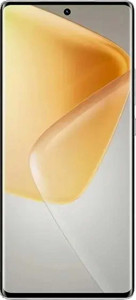
The sole distinction here is that the Hot 60 Pro Plus sports a curved display, while the Hot 60 Pro uses a flat panel. A curved screen gives the device a more premium aesthetic, with the edges of the display gently wrapping around the frame for a sleeker in-hand feel. It can also reduce the visual prominence of bezels when viewed straight-on. The practical trade-off is that curved displays can be slightly more prone to accidental edge touches and may be marginally harder to protect with screen protectors — though neither advantage nor disadvantage is dramatic in everyday use.

Based strictly on the provided data, the Hot 60 Pro Plus holds the edge in this category. The curved display is the only differentiating feature, and it leans in the Pro Plus's favor for users who value a more refined, premium visual design.

Comparison Summary & Verdict

Both the Infinix Hot 60 Pro and the Infinix Hot 60 Pro Plus deliver the same core experience: a sharp 6.78″ OLED display at 144Hz, the MediaTek Helio G200 chipset, a 50 MP main camera, and a 5160 mAh battery with 45W fast charging. However, their differences cater to distinct user profiles. The Infinix Hot 60 Pro is the better pick for users who value a 3.5 mm headphone jack, expandable storage via a microSD slot, and an Always-On Display. On the other hand, the Infinix Hot 60 Pro Plus appeals to those who prefer a lighter and slimmer body (155 g, 6 mm), a superior IP65 water resistance rating, stereo speakers, and a curved display aesthetic. Neither device supports 5G or NFC, so buyers seeking those features should look elsewhere.

Infinix Hot 60 Pro
Buy Infinix Hot 60 Pro if...

Buy the Infinix Hot 60 Pro if you want a headphone jack, expandable storage, and an Always-On Display for a more traditional and versatile smartphone experience.

Infinix Hot 60 Pro Plus
Buy Infinix Hot 60 Pro Plus if...

Buy the Infinix Hot 60 Pro Plus if you prefer a lighter, slimmer design with stronger IP65 water resistance and stereo speakers for a more premium look and audio experience.