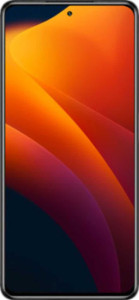
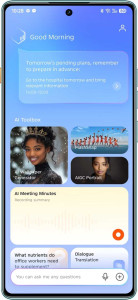
Connectivity fundamentals are identical across both phones — dual SIM, USB Type-C 2.0, matching 4G download and upload speeds, fingerprint scanner, GPS with Galileo support, gyroscope, accelerometer, and compass. Neither offers 5G, NFC is absent on one side, and neither supports advanced safety features like satellite SOS or crash detection. The real story here is a straight swap of two distinct feature advantages, one per device.
The Tecno Camon 40 includes NFC, which the Hot 60 Pro lacks entirely. NFC enables contactless payments, quick device pairing, and transit card functionality — for users in markets where tap-to-pay infrastructure is established, this is a daily-use feature that meaningfully affects how the phone integrates into their routine. The Hot 60 Pro responds with a built-in infrared sensor, absent on the Camon 40. An IR blaster lets the phone act as a universal remote for televisions, air conditioners, and other IR-compatible appliances — a niche but genuinely useful convenience for users who want to consolidate their remotes.
Which advantage matters more is squarely a lifestyle question. NFC is arguably the higher-utility feature for users in digitally connected urban environments where contactless payments are commonplace, giving the Camon 40 a slight practical edge for the broader audience. The Hot 60 Pro's IR blaster, however, remains a meaningful differentiator for users who would actually use it — a feature that has largely disappeared from mainstream smartphones and is not easily replicated otherwise.