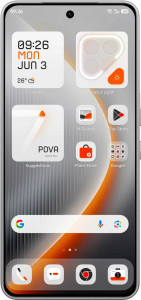
The rear camera setup is where these two phones diverge most visibly. The Tecno Pova 7 Ultra 5G fields a dual-lens system combining a 108 MP primary sensor with an 8 MP secondary lens, while the Infinix Hot 60 Pro relies on a single 50 MP shooter. On resolution alone, 108 MP captures significantly more detail and gives users far greater flexibility to crop into a shot without losing clarity — an advantage that is noticeable when printing large or zooming in post-capture. The secondary lens on the Pova 7 Ultra also opens up compositional versatility that a single-lens system simply cannot replicate.
Outside of the main camera hardware, the two phones are remarkably similar in capability. Both share the same 13 MP front camera, identical autofocus systems (phase-detection and touch autofocus), continuous autofocus during video, slow-motion recording, HDR mode, and a comparable manual controls suite including ISO, exposure, focus, and white balance. Neither shoots RAW, supports optical zoom, or offers OIS — so low-light and telephoto performance will have natural limitations on both devices.
The Pova 7 Ultra 5G takes a clear edge in this category, driven entirely by its higher-resolution 108 MP sensor and the added versatility of a dual-lens rear system. For users who prioritize camera flexibility and detail in their photos, it is the stronger choice. The Hot 60 Pro's 50 MP single camera is a capable everyday shooter, but it cannot match the Pova 7 Ultra's hardware breadth at the rear.