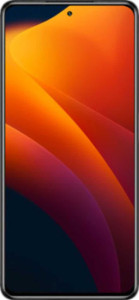
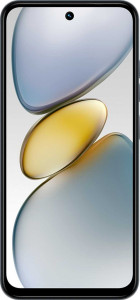
The shared connectivity foundation is solid on both devices: dual SIM, expandable storage via microSD, USB Type-C, fingerprint scanner, GPS with Galileo support, and Wi-Fi are all present on each. Neither phone offers 5G or NFC, which are the two most commonly sought connectivity upgrades at this tier — users who need contactless payments or next-generation cellular speeds will find both phones equally limited in that regard.
Two differences stand out. First, cellular data throughput: the Infinix Hot 60 Pro supports download speeds up to 650 Mbits/s versus the Tecno Spark 40's 300 Mbits/s, and upload speeds of 150 Mbits/s against 100 Mbits/s. In practice, real-world LTE speeds are dictated by network conditions, but the Hot 60 Pro's higher ceiling means it is better equipped to take advantage of strong 4G signals when available — relevant for large file transfers, streaming, or cloud backups on the go. Second, the Hot 60 Pro includes an infrared sensor, which the Spark 40 lacks. This allows the phone to function as a universal remote control for TVs, air conditioners, and other IR-compatible appliances — a genuinely convenient everyday utility for many users.
The Infinix Hot 60 Pro takes this category. Its higher LTE throughput ceiling and the addition of an infrared sensor are both practical, real-world advantages that the Spark 40 simply does not offer, with no compensating features on the Spark 40's side to close the gap.