Infinix Hot 60 Pro
Xiaomi Redmi Note 14 Pro 4G (Global)

Infinix Hot 60 Pro Xiaomi Redmi Note 14 Pro 4G (Global)

Overview

Welcome to our in-depth comparison of the Infinix Hot 60 Pro and the Xiaomi Redmi Note 14 Pro 4G (Global), two compelling mid-range Android smartphones that share a surprising amount of common ground yet diverge sharply in several key areas. From display brightness and camera versatility to audio performance and connectivity, each device makes distinct trade-offs that could make one a far better fit for your lifestyle than the other. Read on as we break down every specification side by side.

Common Features

  • Both phones are water resistant with an IP64 ingress protection rating.
  • Neither phone has a rugged build.
  • Neither phone can be folded.
  • Both phones feature an OLED/AMOLED display type.
  • Both phones have branded damage-resistant glass.
  • Always-On Display is available on both phones.
  • Neither phone has a secondary screen.
  • Both phones have a touchscreen.
  • Both phones use a Mali G57 GPU.
  • CPU speed is 2 x 2.2 & 6 x 2 GHz on both phones.
  • Both phones have integrated LTE.
  • RAM speed is 4266 MHz on both phones.
  • Both phones are built on a 6 nm semiconductor process.
  • Both phones support 64-bit processing.
  • Both phones support DirectX version 11.
  • Both phones have integrated graphics.
  • Neither phone has built-in optical image stabilization.
  • Both phones have a CMOS sensor.
  • Both phones support continuous autofocus when recording movies.
  • Both phones have phase-detection autofocus for photos.
  • Both phones support slow-motion video recording.
  • Both phones have a built-in HDR mode.
  • Both phones support manual exposure.
  • Both phones have clipboard warnings.
  • Both phones have location privacy options.
  • Both phones have camera and microphone privacy options.
  • Mail Privacy Protection is not available on either phone.
  • Both phones support theme customization.
  • Both phones can block app tracking.
  • Cross-site tracking blocking is not available on either phone.
  • Both phones have on-device machine learning.
  • Neither phone supports wireless charging.
  • Both phones support fast charging at 45W.
  • Both phones come with a charger included.
  • Neither phone has a removable battery.
  • Both phones have a battery level indicator.
  • Both phones have a rechargeable battery.
  • Both phones have a 3.5 mm audio jack.
  • aptX HD support is not available on either phone.
  • aptX Adaptive support is not available on either phone.
  • aptX Lossless support is not available on either phone.
  • Neither phone supports 5G.
  • Both phones have dual SIM card slots.
  • Both phones have USB Type-C with USB version 2.
  • Both phones have a download speed of 650 MBits/s and upload speed of 150 MBits/s.
  • Both phones have a fingerprint scanner.
  • Emergency SOS via satellite is not available on either phone.
  • Both phones have a video light.
  • Neither phone has a sapphire glass display.
  • Neither phone has an e-paper display.

Main Differences

  • Weight is 170 g on Infinix Hot 60 Pro and 180 g on Xiaomi Redmi Note 14 Pro 4G (Global).
  • Thickness is 6.6 mm on Infinix Hot 60 Pro and 8.2 mm on Xiaomi Redmi Note 14 Pro 4G (Global).
  • Width is 75.9 mm on Infinix Hot 60 Pro and 74.9 mm on Xiaomi Redmi Note 14 Pro 4G (Global).
  • Height is 163.5 mm on Infinix Hot 60 Pro and 162.2 mm on Xiaomi Redmi Note 14 Pro 4G (Global).
  • Volume is 81.90 cm³ on Infinix Hot 60 Pro and 99.62 cm³ on Xiaomi Redmi Note 14 Pro 4G (Global).
  • Screen size is 6.78″ on Infinix Hot 60 Pro and 6.67″ on Xiaomi Redmi Note 14 Pro 4G (Global).
  • Pixel density is 440 ppi on Infinix Hot 60 Pro and 395 ppi on Xiaomi Redmi Note 14 Pro 4G (Global).
  • Resolution is 1224 x 2720 px on Infinix Hot 60 Pro and 1080 x 2400 px on Xiaomi Redmi Note 14 Pro 4G (Global).
  • Refresh rate is 144Hz on Infinix Hot 60 Pro and 120Hz on Xiaomi Redmi Note 14 Pro 4G (Global).
  • Typical brightness is 700 nits on Infinix Hot 60 Pro and 1800 nits on Xiaomi Redmi Note 14 Pro 4G (Global).
  • The Infinix Hot 60 Pro uses Gorilla Glass 7i, while the Xiaomi Redmi Note 14 Pro 4G (Global) uses Gorilla Glass Victus 2.
  • HDR10 support is present on Xiaomi Redmi Note 14 Pro 4G (Global) but not available on Infinix Hot 60 Pro.
  • HDR10+ support is present on Xiaomi Redmi Note 14 Pro 4G (Global) but not available on Infinix Hot 60 Pro.
  • Dolby Vision support is present on Xiaomi Redmi Note 14 Pro 4G (Global) but not available on Infinix Hot 60 Pro.
  • Internal storage is 256GB on Infinix Hot 60 Pro and 512GB on Xiaomi Redmi Note 14 Pro 4G (Global).
  • RAM is 8GB on Infinix Hot 60 Pro and 12GB on Xiaomi Redmi Note 14 Pro 4G (Global).
  • AnTuTu benchmark score is 464800 on Infinix Hot 60 Pro and 420000 on Xiaomi Redmi Note 14 Pro 4G (Global).
  • The chipset is MediaTek Helio G200 on Infinix Hot 60 Pro and MediaTek Helio G100 on Xiaomi Redmi Note 14 Pro 4G (Global).
  • GPU clock speed is 1100 MHz on Infinix Hot 60 Pro and 1000 MHz on Xiaomi Redmi Note 14 Pro 4G (Global).
  • Main camera resolution is 50 MP on Infinix Hot 60 Pro and 200 & 8 & 2 MP on Xiaomi Redmi Note 14 Pro 4G (Global).
  • A multi-lens main camera is present on Xiaomi Redmi Note 14 Pro 4G (Global) but not on Infinix Hot 60 Pro.
  • Front camera resolution is 13 MP on Infinix Hot 60 Pro and 32 MP on Xiaomi Redmi Note 14 Pro 4G (Global).
  • Main camera video recording goes up to 1440 x 30 fps on Infinix Hot 60 Pro and 2160 x 30 fps on Xiaomi Redmi Note 14 Pro 4G (Global).
  • A dual-tone LED flash is present on Infinix Hot 60 Pro but not on Xiaomi Redmi Note 14 Pro 4G (Global).
  • Number of flash LEDs is 2 on Infinix Hot 60 Pro and 1 on Xiaomi Redmi Note 14 Pro 4G (Global).
  • Infinix Hot 60 Pro runs Android 15, while Xiaomi Redmi Note 14 Pro 4G (Global) runs Android 14.
  • App offloading is supported on Infinix Hot 60 Pro but not on Xiaomi Redmi Note 14 Pro 4G (Global).
  • Battery capacity is 5160 mAh on Infinix Hot 60 Pro and 5500 mAh on Xiaomi Redmi Note 14 Pro 4G (Global).
  • Stereo speakers are present on Xiaomi Redmi Note 14 Pro 4G (Global) but not on Infinix Hot 60 Pro.
  • aptX support is present on Xiaomi Redmi Note 14 Pro 4G (Global) but not on Infinix Hot 60 Pro.
  • LDAC support is present on Xiaomi Redmi Note 14 Pro 4G (Global) but not on Infinix Hot 60 Pro.
  • A built-in radio is present on Infinix Hot 60 Pro but not on Xiaomi Redmi Note 14 Pro 4G (Global).
  • Wi-Fi versions supported are Wi-Fi 4 and Wi-Fi 5 on Infinix Hot 60 Pro, and Wi-Fi 4, Wi-Fi 5, and Wi-Fi 6 on Xiaomi Redmi Note 14 Pro 4G (Global).
  • Bluetooth version is 5.4 on Infinix Hot 60 Pro and 5.3 on Xiaomi Redmi Note 14 Pro 4G (Global).
  • An external memory slot is available on Infinix Hot 60 Pro but not on Xiaomi Redmi Note 14 Pro 4G (Global).
  • NFC is present on Xiaomi Redmi Note 14 Pro 4G (Global) but not on Infinix Hot 60 Pro.
  • A curved display is present on Xiaomi Redmi Note 14 Pro 4G (Global) but not on Infinix Hot 60 Pro.
Specs Comparison
Infinix Hot 60 Pro

Infinix Hot 60 Pro

Xiaomi Redmi Note 14 Pro 4G (Global)

Xiaomi Redmi Note 14 Pro 4G (Global)

Design:
water resistance Water resistant Water resistant
weight 170 g 180 g
thickness 6.6 mm 8.2 mm
width 75.9 mm 74.9 mm
height 163.5 mm 162.2 mm
volume 81.90369 cm³ 99.619996 cm³
Ingress Protection (IP) rating IP64 IP64
has a rugged build
can be folded

Both phones share the same IP64 water resistance rating, meaning neither is rugged-built nor foldable — they are conventional, splash-resistant slabs on equal footing in terms of durability classification. That said, their physical form factors tell meaningfully different stories.

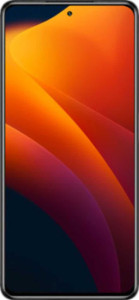
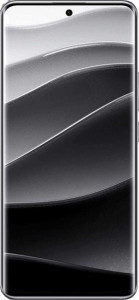
The Infinix Hot 60 Pro is the slimmer and lighter device by a notable margin: at 6.6 mm thick and 170 g, it undercuts the Redmi Note 14 Pro's 8.2 mm and 180 g. That 1.6 mm difference in thickness is not trivial — it directly affects how the phone feels slipping in and out of a pocket, and whether it sits flush or bulges. The 10 g weight gap is modest in isolation, but combined with the slimmer profile, the Hot 60 Pro will feel noticeably more comfortable during extended one-handed use. Its total volume of 81.9 cm³ versus the Redmi's 99.6 cm³ reinforces just how much more compact it is despite being very slightly taller and wider.

For users who prioritize a lean, pocketable design, the Infinix Hot 60 Pro holds a clear edge in this category. The Redmi Note 14 Pro's larger volume likely accommodates more substantial internal hardware, but purely from a design and ergonomics standpoint, the Hot 60 Pro is the more refined form factor of the two.

Display:
Display type OLED/AMOLED OLED/AMOLED
screen size 6.78" 6.67"
pixel density 440 ppi 395 ppi
resolution 1224 x 2720 px 1080 x 2400 px
refresh rate 144Hz 120Hz
brightness (typical) 700 nits 1800 nits
has branded damage-resistant glass
Gorilla Glass version Gorilla Glass 7i Gorilla Glass Victus 2
supports HDR10
supports HDR10+
Always-On Display
supports Dolby Vision
Has a secondary screen
has a touch screen

On the surface, both phones share the same OLED/AMOLED panel technology and Always-On Display support, but dig deeper and the Redmi Note 14 Pro pulls ahead in nearly every quality metric that matters for everyday viewing. Its 1800 nits of typical brightness dwarfs the Hot 60 Pro's 700 nits — a gap large enough to make a real difference under direct sunlight, where the Redmi remains comfortably legible while the Infinix may struggle. Add full HDR10+ and Dolby Vision support on the Redmi versus none on the Infinix, and streaming HDR content from compatible platforms will look noticeably richer and more dynamic on the Redmi.

The Hot 60 Pro fights back on resolution and screen real estate. Its larger 6.78″ panel at 1224 x 2720 px yields a sharper 440 ppi, compared to the Redmi's 6.67″ at 1080 x 2400 px and 395 ppi. In practice, both are sharp enough that most users won't notice the difference at normal viewing distances, but the Hot 60 Pro's higher pixel density does give it a slight edge for fine text and detail. Its 144Hz refresh rate also edges out the Redmi's 120Hz, resulting in marginally smoother scrolling and animations.

Glass protection, however, tilts back toward the Redmi: Gorilla Glass Victus 2 is a meaningfully tougher generation than the Infinix's Gorilla Glass 7i, offering better resistance to drops and scratches in real-world use. Weighing everything together, the Redmi Note 14 Pro holds a clear overall display advantage — its far superior brightness, HDR ecosystem support, and tougher glass outweigh the Infinix's leads in pixel density and refresh rate for the vast majority of users.
Performance:
internal storage 256GB 512GB
RAM 8GB 12GB
AnTuTu benchmark score 464800 420000
Chipset (SoC) name MediaTek Helio G200 MediaTek Helio G100
GPU name Mali G57 Mali G57
CPU speed 2 x 2.2 & 6 x 2 GHz 2 x 2.2 & 6 x 2 GHz
GPU clock speed 1100 MHz 1000 MHz
Has integrated LTE
RAM speed 4266 MHz 4266 MHz
semiconductor size 6 nm 6 nm
Supports 64-bit
DirectX version DirectX 11 DirectX 11
Has integrated graphics
OpenGL ES version 3.2 3.2
Uses big.LITTLE technology
CPU threads 8 threads 8 threads
Uses HMP
maximum memory bandwidth 17.1 GB/s 17.1 GB/s
OpenCL version 2 2
maximum memory amount 12GB 12GB
Thermal Design Power (TDP) 5W 5W
DDR memory version 4 4

Chipset generation is where the first meaningful split occurs: the Infinix Hot 60 Pro runs on the MediaTek Helio G200 while the Redmi Note 14 Pro carries the older Helio G100. Both are fabbed on the same 6 nm process with identical CPU configurations and memory bandwidth, but the G200 translates its generational gains directly into benchmark results — an AnTuTu score of 464,800 versus the Redmi's 420,000, a roughly 10% lead. The Hot 60 Pro's GPU also clocks higher at 1100 MHz versus 1000 MHz, which, combined with the same Mali G57 architecture, gives it a tangible edge in graphics-intensive tasks like gaming.

Flip to storage and the Redmi reclaims ground. Its 512 GB of internal storage doubles the Hot 60 Pro's 256 GB, which matters significantly for users who accumulate large media libraries or avoid cloud storage. It also ships with 12 GB of RAM versus the Infinix's 8 GB, providing more headroom for aggressive multitasking and keeping more apps alive in the background without reloading.

Ultimately, this category comes down to what you value more: raw speed or capacity. The Infinix Hot 60 Pro holds the performance edge thanks to its faster chipset and GPU, making it the stronger choice for gaming and demanding workloads. The Redmi Note 14 Pro counters with superior storage and RAM, better serving power users who juggle many apps and store large files locally. Neither product dominates outright, but for pure processing headroom, the Hot 60 Pro leads.

Cameras:
megapixels (main camera) 50 MP 200 & 8 & 2 MP
Has a dual-lens (or multi-lens) main camera
megapixels (front camera) 13MP 32MP
has built-in optical image stabilization
video recording (main camera) 1440 x 30 fps 2160 x 30 fps
Has a dual-tone LED flash
number of flash LEDs 2 1
has a BSI sensor
has a CMOS sensor
has continuous autofocus when recording movies
Has phase-detection autofocus for photos
supports slow-motion video recording
has a built-in HDR mode
has manual exposure
has a flash
optical zoom 0x 0x
has manual ISO
has a serial shot mode
has manual focus
has a front camera
Has laser autofocus
Shoots 360° panorama
has manual white balance
shoots raw
has touch autofocus
has manual shutter speed
can create panoramas in-camera
Has timelapse function
Has a front-facing LED flash
has a dual-lens (or multi-lens) front camera
supports HDR10 recording
supports Dolby Vision recording
has a front-facing camera under the display
Has a RGB LED flash
has 3D photo/video recording capabilities

The camera hardware gap between these two phones is substantial. The Redmi Note 14 Pro fields a triple-lens system headlined by a 200 MP main sensor alongside 8 MP and 2 MP auxiliary lenses, while the Infinix Hot 60 Pro relies on a single 50 MP shooter. A 200 MP sensor allows for far greater detail capture and more flexible digital cropping — effectively simulating zoom — which partly compensates for both phones sharing 0x optical zoom. The Redmi's multi-lens setup also adds versatility for different focal lengths and shooting scenarios that simply aren't available on the single-lens Hot 60 Pro.

Video recording follows the same pattern. The Redmi tops out at 4K (2160p) at 30 fps, a full tier above the Infinix's ceiling of 1440p at 30 fps. For users who care about video quality — whether for content creation or simply preserving memories at higher fidelity — that difference is meaningful and not easily closed in post-processing. Selfie capability also diverges sharply: the Redmi's 32 MP front camera significantly outresolves the Hot 60 Pro's 13 MP, giving it a clear advantage for portrait and video call quality.

Manual controls, autofocus behavior, and feature sets like slow-motion, timelapse, HDR, and panorama are evenly matched across both devices. But on the specs that define camera ceiling — sensor resolution, lens count, and video resolution — the Redmi Note 14 Pro holds a decisive advantage in this category across every major dimension.

Operating system:
Android version Android 15 Android 14
has clipboard warnings
has location privacy options
has camera/microphone privacy options
has Mail Privacy Protection
has theme customization
can block app tracking
blocks cross-site tracking
has on-device machine learning
has notification permissions
has media picker
Can play games while they download
has dark mode
has Wi-Fi password sharing
has battery health check
has an extra dim mode
has focus modes
has dynamic theming
can offload apps
Has customizable notifications
has Live Text
has full-page screenshots
supports split screen
gets direct OS updates
has PiP
Can be used as a PC
Has sharing intents
has a child lock
Supports widgets
Is free and open source
Has offline voice recognition
has voice commands
Tracks the current position of a mobile device
is a multi-user system
has Quick Start

Software differentiation here is narrow but real. The Infinix Hot 60 Pro ships with Android 15, one full version ahead of the Redmi Note 14 Pro's Android 14. That generational lead means the Hot 60 Pro arrives with more recent privacy refinements, security patches, and system-level improvements baked in from day one — without the user needing to wait for an update that may or may not come, since neither device receives direct OS updates.

The only other functional difference across this entire spec set is app offloading: the Hot 60 Pro supports it, the Redmi does not. Offloading allows the system to automatically remove rarely used apps while preserving their data, freeing up storage space intelligently — a useful feature on a 256 GB device where storage management matters. Every other capability, from dynamic theming and split-screen to on-device machine learning, PiP, and the full suite of privacy controls, is identically supported on both phones.

Given how closely matched these two are across nearly every software feature, the Infinix Hot 60 Pro holds a modest but clear edge in this category — a newer OS version and app offloading support are the only differentiators, but they are both meaningful ones in the context of long-term usability.

Battery:
battery power 5160 mAh 5500 mAh
has wireless charging
Supports fast charging
charging speed 45W 45W
comes with a charger
has a removable battery
has a battery level indicator
has a rechargeable battery

Charging architecture is identical across these two phones — both support 45W fast charging, both come bundled with a charger, and neither offers wireless charging. At 45W, topping up from low battery to a usable level takes roughly 30–40 minutes on either device, so day-to-day charging convenience is a wash.

Where they diverge is raw capacity. The Redmi Note 14 Pro packs a 5500 mAh cell versus the Hot 60 Pro's 5160 mAh — a 340 mAh difference, or about 6.5% more energy storage. In practical terms, this translates to a modest but real extension of screen-on time, particularly noticeable during long days of heavy use when every percentage point of battery matters. The gap won't dramatically change behavior for most users, but the Redmi does hold a consistent endurance advantage on paper.

Given that charging speed is fully matched, the Redmi Note 14 Pro edges ahead in this category purely on the basis of its larger battery. It's not a dramatic lead, but for users who frequently push through long days without access to a charger, that extra capacity is the deciding factor.

Audio:
has a socket for a 3.5 mm audio jack
has stereo speakers
has aptX
has LDAC
has aptX HD
has aptX Adaptive
has aptX Lossless
Has a radio

A shared 3.5 mm headphone jack is the one common ground here — a welcome inclusion on both devices in an era where it's increasingly omitted. Beyond that, the audio profiles diverge noticeably. The Redmi Note 14 Pro brings stereo speakers to the table, which makes a tangible difference for media consumption: movies, music, and games all benefit from the wider soundstage and improved directionality that dual speakers provide, compared to the Hot 60 Pro's single-speaker setup.

For wireless audio, the Redmi again pulls ahead. Support for aptX and LDAC means it can transmit higher-quality Bluetooth audio to compatible headphones — LDAC in particular can stream at up to three times the bitrate of standard Bluetooth audio, making it a meaningful advantage for anyone using high-quality wireless headphones. The Infinix Hot 60 Pro supports none of these codecs, capping Bluetooth audio at standard quality regardless of the headphones connected.

The Hot 60 Pro's one exclusive is a built-in FM radio, useful in areas with strong broadcast coverage or for users who prefer not to stream. It's a niche perk, but a genuine one. Overall, though, the Redmi Note 14 Pro holds a clear audio advantage — stereo speakers and premium wireless codec support are more broadly impactful features than FM radio for the majority of users.

Connectivity & Features:
release date July 2025 January 2025
has 5G support
Wi-Fi version Wi-Fi 4 (802.11n), Wi-Fi 5 (802.11ac) Wi-Fi 4 (802.11n), Wi-Fi 6 (802.11ax), Wi-Fi 5 (802.11ac)
SIM cards 2 SIM 2 SIM
Bluetooth version 5.4 5.3
has an external memory slot
Has USB Type-C
USB version 2 2
has NFC
download speed 650 MBits/s 650 MBits/s
upload speed 150 MBits/s 150 MBits/s
Has a fingerprint scanner
has emergency SOS via satellite
has crash detection
is DLNA-certified
has a gyroscope
supports ANT+
Has a heart rate monitor
has GPS
has a compass
supports Wi-Fi
Has an infrared sensor
has an accelerometer
has a cellular module
Has a barometer
has an HDMI output
Uses 3D facial recognition
Has an iris scanner
Stylus included
supports Galileo
Has motion tracking
Has optical tracking
Has a built-in projector

Four meaningful differences define this category, and they split evenly between the two devices. The Redmi Note 14 Pro gains the upper hand in wireless networking with Wi-Fi 6 (802.11ax) support, a standard the Infinix Hot 60 Pro lacks — Wi-Fi 6 delivers faster throughput and better performance in congested environments like offices or apartment buildings with many competing networks. The Redmi also includes NFC, enabling contactless payments and quick device pairing, which is a genuinely practical omission on the Hot 60 Pro for anyone who relies on mobile payments.

The Hot 60 Pro counters with two of its own advantages. Its Bluetooth 5.4 is a newer revision than the Redmi's 5.3, offering incremental improvements in connection reliability and efficiency. More practically, it supports an external memory card slot, allowing users to expand storage affordably — something the Redmi Note 14 Pro entirely omits. For a device that ships with only 256 GB of internal storage, expandable storage is a meaningful safety net.

Sensors, cellular speeds, USB specification, and GPS capabilities are identical across both phones. The deciding factor comes down to use priorities: the Redmi's NFC and Wi-Fi 6 are high-utility daily features for a broad audience, while the Infinix's expandable storage addresses a specific but common concern about long-term capacity. On balance, the Redmi Note 14 Pro holds a slight connectivity edge for most users, but neither phone dominates this category outright.

Miscellaneous:
has a video light
Has sapphire glass display
Has a curved display
Has an e-paper display

This is a thin category with only one real differentiator. Both phones include a video light and forgo sapphire glass and e-paper displays — none of which are surprising omissions at this segment. The sole distinguishing feature is the Redmi Note 14 Pro's curved display, which the Infinix Hot 60 Pro lacks.

A curved screen is largely an aesthetic and ergonomic choice: the gentle edge curvature gives the Redmi a more premium, seamless look in hand, and can make swiping in from the sides feel slightly more natural. The trade-off is that curved panels are marginally more susceptible to edge cracks from drops and can introduce minor reflection artifacts at the display's periphery — factors worth considering for users without a case.

With so little separating them here, the Redmi Note 14 Pro holds a narrow edge on the strength of its curved display alone, which contributes to a more refined aesthetic. Whether that matters is largely a matter of personal preference, making this category close to a wash for most buyers.

Comparison Summary & Verdict

After examining every specification, it is clear that both phones serve different types of users. The Infinix Hot 60 Pro stands out with its higher refresh rate of 144Hz, sharper pixel density of 440 ppi, a slimmer and lighter build, a newer Android 15 OS, expandable storage, and a higher AnTuTu benchmark score — making it a strong pick for users who value smooth visuals and raw performance at a lean form factor. The Xiaomi Redmi Note 14 Pro 4G (Global), on the other hand, wins decisively in areas like display brightness at 1800 nits, a versatile 200 MP triple-camera system, superior audio with stereo speakers and LDAC, Wi-Fi 6 support, NFC, and a larger 5500 mAh battery — catering to users who prioritize media consumption, photography, and all-day connectivity.

Infinix Hot 60 Pro
Buy Infinix Hot 60 Pro if...

Buy the Infinix Hot 60 Pro if you want a slimmer, lighter phone with a higher 144Hz refresh rate, sharper display, better benchmark performance, and expandable storage at a more compact size.

Xiaomi Redmi Note 14 Pro 4G (Global)
Buy Xiaomi Redmi Note 14 Pro 4G (Global) if...

Buy the Xiaomi Redmi Note 14 Pro 4G (Global) if you prioritize a brighter display, a versatile 200 MP triple-camera setup, stereo speakers with LDAC audio, NFC, Wi-Fi 6, and a larger battery for all-day use.