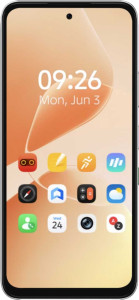
Infinix Hot 60i (128GB / 4GB RAM)
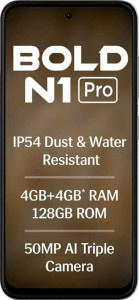
Lava Bold N1 Pro

Infinix Hot 60i (128GB / 4GB RAM) Lava Bold N1 Pro

Overview

Welcome to our in-depth spec comparison between the Infinix Hot 60i (128GB / 4GB RAM) and the Lava Bold N1 Pro — two budget-friendly Android smartphones vying for attention in a competitive segment. Both devices share a number of fundamentals, yet they diverge in meaningful ways across charging speed, multimedia features, and connectivity extras. Read on to see which one better suits your needs.

Common Features

  • Both phones are water resistant.
  • Neither phone has a rugged build.
  • Neither phone can be folded.
  • Both phones feature an LCD IPS display type.
  • Both phones share a resolution of 720 x 1600 px.
  • Both phones have a 120Hz refresh rate.
  • Neither phone has branded damage-resistant glass.
  • Neither phone supports HDR10, HDR10+, or Dolby Vision.
  • Neither phone has a secondary screen.
  • Both phones come with 128GB of internal storage and 4GB of RAM.
  • Both phones use a 12 nm semiconductor process.
  • Both phones support 64-bit processing and DirectX 12.
  • Both phones have integrated LTE and integrated graphics.
  • Both phones share a Geekbench 6 multi-core score of 1391.
  • Both phones have a 50 MP main camera and an 8 MP front camera.
  • Neither phone has optical image stabilization, a dual-tone LED flash, or a BSI sensor.
  • Both phones have a CMOS sensor and support continuous autofocus when recording video.
  • Both phones run Android with clipboard warnings, location privacy options, and camera/microphone privacy options.
  • Both phones support theme customization, app tracking blocking, and on-device machine learning.
  • Neither phone supports wireless charging, and both support fast charging.
  • Neither phone has a removable battery, and both have a battery level indicator and rechargeable battery.
  • Both phones have a 3.5mm audio jack and an FM radio.
  • Neither phone supports aptX, LDAC, aptX HD, aptX Adaptive, aptX Lossless, or 5G.
  • Both phones support Wi-Fi 4 (802.11n) and Wi-Fi 5 (802.11ac).
  • Both phones have dual SIM support, an external memory slot, USB Type-C, and a fingerprint scanner.
  • Both phones share download speeds of 300 MBits/s and upload speeds of 100 MBits/s.
  • Both phones have a video light, and neither has a sapphire glass, curved, or e-paper display.

Main Differences

  • Weight is 188 g on Infinix Hot 60i (128GB / 4GB RAM) and 200 g on Lava Bold N1 Pro.
  • Thickness is 7.7 mm on Infinix Hot 60i (128GB / 4GB RAM) and 8.4 mm on Lava Bold N1 Pro.
  • Width is 76.6 mm on Infinix Hot 60i (128GB / 4GB RAM) and 77.2 mm on Lava Bold N1 Pro.
  • Height is 166 mm on Infinix Hot 60i (128GB / 4GB RAM) and 165.8 mm on Lava Bold N1 Pro.
  • Volume is 97.91 cm³ on Infinix Hot 60i (128GB / 4GB RAM) and 107.52 cm³ on Lava Bold N1 Pro.
  • Ingress Protection rating is IP64 on Infinix Hot 60i (128GB / 4GB RAM) and IP54 on Lava Bold N1 Pro.
  • Screen size is 6.7″ on Infinix Hot 60i (128GB / 4GB RAM) and 6.67″ on Lava Bold N1 Pro.
  • Pixel density is 262 ppi on Infinix Hot 60i (128GB / 4GB RAM) and 263 ppi on Lava Bold N1 Pro.
  • Always-On Display is available on Infinix Hot 60i (128GB / 4GB RAM) but not on Lava Bold N1 Pro.
  • The chipset is MediaTek Helio G81 Ultra on Infinix Hot 60i (128GB / 4GB RAM) and Unisoc T606 on Lava Bold N1 Pro.
  • The GPU is Mali G52 MP2 on Infinix Hot 60i (128GB / 4GB RAM) and Mali G57 MP1 on Lava Bold N1 Pro.
  • CPU speed is 2 x 2 & 6 x 1.8 GHz on Infinix Hot 60i (128GB / 4GB RAM) and 2 x 1.6 & 6 x 1.6 GHz on Lava Bold N1 Pro.
  • Geekbench 6 single-core score is 420 on Infinix Hot 60i (128GB / 4GB RAM) and 371 on Lava Bold N1 Pro.
  • Geekbench 5 multi-core score is 1300 on Infinix Hot 60i (128GB / 4GB RAM) and 1175 on Lava Bold N1 Pro.
  • Geekbench 5 single-core score is 350 on Infinix Hot 60i (128GB / 4GB RAM) and 313 on Lava Bold N1 Pro.
  • RAM speed is 1800 MHz on Infinix Hot 60i (128GB / 4GB RAM) and 1600 MHz on Lava Bold N1 Pro.
  • Maximum memory bandwidth is 13.41 GB/s on Infinix Hot 60i (128GB / 4GB RAM) and 12.8 GB/s on Lava Bold N1 Pro.
  • L2 cache is 0.3 MB on Infinix Hot 60i (128GB / 4GB RAM) and 2 MB on Lava Bold N1 Pro.
  • Maximum supported memory is 8GB on Infinix Hot 60i (128GB / 4GB RAM) and 14GB on Lava Bold N1 Pro.
  • GPU execution units total 2 on Infinix Hot 60i (128GB / 4GB RAM) and 1 on Lava Bold N1 Pro.
  • GPU turbo speed is 950 MHz on Infinix Hot 60i (128GB / 4GB RAM) and 650 MHz on Lava Bold N1 Pro.
  • Main camera video recording goes up to 1440p at 30 fps on Infinix Hot 60i (128GB / 4GB RAM) and up to 1080p at 30 fps on Lava Bold N1 Pro.
  • The number of flash LEDs is 2 on Infinix Hot 60i (128GB / 4GB RAM) and 1 on Lava Bold N1 Pro.
  • Android version is Android 15 on Infinix Hot 60i (128GB / 4GB RAM) and Android 14 on Lava Bold N1 Pro.
  • App offloading is supported on Infinix Hot 60i (128GB / 4GB RAM) but not on Lava Bold N1 Pro.
  • Battery capacity is 5160 mAh on Infinix Hot 60i (128GB / 4GB RAM) and 5000 mAh on Lava Bold N1 Pro.
  • Charging speed is 45W on Infinix Hot 60i (128GB / 4GB RAM) and 10W on Lava Bold N1 Pro.
  • Stereo speakers are present on Infinix Hot 60i (128GB / 4GB RAM) but not on Lava Bold N1 Pro.
  • Bluetooth version is 5.3 on Infinix Hot 60i (128GB / 4GB RAM) and 5.0 on Lava Bold N1 Pro.
  • NFC is available on Infinix Hot 60i (128GB / 4GB RAM) but not on Lava Bold N1 Pro.
  • A gyroscope is present on Infinix Hot 60i (128GB / 4GB RAM) but not on Lava Bold N1 Pro.
  • A compass is present on Infinix Hot 60i (128GB / 4GB RAM) but not on Lava Bold N1 Pro.
  • An infrared sensor is present on Infinix Hot 60i (128GB / 4GB RAM) but not on Lava Bold N1 Pro.
Specs Comparison
Infinix Hot 60i (128GB / 4GB RAM)

Infinix Hot 60i (128GB / 4GB RAM)

Lava Bold N1 Pro

Lava Bold N1 Pro

Design:
water resistance Water resistant Water resistant
weight 188 g 200 g
thickness 7.7 mm 8.4 mm
width 76.6 mm 77.2 mm
height 166 mm 165.8 mm
volume 97.91012 cm³ 107.517984 cm³
Ingress Protection (IP) rating IP64 IP54
has a rugged build
can be folded

In terms of physical form, these two phones are remarkably close in footprint — nearly identical height and width — but the Infinix Hot 60i pulls ahead in the dimensions that matter most for daily comfort. At 7.7 mm thick and 188 g, it is noticeably slimmer and lighter than the Lava Bold N1 Pro, which measures 8.4 mm and weighs 200 g. That 12-gram and 0.7 mm difference may sound minor on paper, but over a full day of one-handed use, the Hot 60i will feel meaningfully less fatiguing in the hand and pocket.

On water and dust resistance, both phones carry an IP rating, but the Hot 60i again holds the stronger position. Its IP64 rating means it is fully dust-tight and protected against water splashes from any direction. The Bold N1 Pro's IP54 rating offers only partial dust protection — enough to handle light dust exposure but not a fully sealed enclosure. In practice, the Hot 60i is the safer choice in dusty environments such as construction sites, sandy beaches, or dry outdoor settings.

Neither device has a rugged build or a foldable form factor, so both target the mainstream, everyday-use segment. Overall, the Infinix Hot 60i holds a clear design advantage: it is lighter, thinner, more compact by volume, and offers superior ingress protection. For users who prioritize a comfortable, pocketable device with better environmental durability, the Hot 60i is the stronger choice in this category.

Display:
Display type LCD, IPS LCD, IPS
screen size 6.7" 6.67"
pixel density 262 ppi 263 ppi
resolution 720 x 1600 px 720 x 1600 px
refresh rate 120Hz 120Hz
has branded damage-resistant glass
supports HDR10
supports HDR10+
Always-On Display
supports Dolby Vision
Has a secondary screen
has a touch screen

The display specs here are about as close as they get. Both phones use an LCD IPS panel, share an identical 720 x 1600 px resolution, land at virtually the same pixel density (262 vs 263 ppi), and both run a 120Hz refresh rate. That refresh rate is a genuine win for the segment — smoother scrolling and more responsive touch interaction are perceptible in everyday use compared to a standard 60Hz screen. Neither device supports HDR10, HDR10+, or Dolby Vision, and neither has damage-resistant glass, so both sit at the same baseline for visual richness and screen durability.

The one meaningful differentiator is Always-On Display, which the Infinix Hot 60i supports and the Lava Bold N1 Pro does not. On an LCD panel, Always-On Display is less power-efficient than on OLED (where only lit pixels draw current), so its practical utility here is limited — but it still provides at-a-glance time and notification info without a full wake gesture, which some users genuinely value.

Overall, this category is essentially a tie. The panel technology, sharpness, and smoothness are functionally identical for real-world use. The Hot 60i's Always-On Display is a minor convenience edge, but not a compelling reason to choose one phone over the other on display merits alone.

Performance:
internal storage 128GB 128GB
RAM 4GB 4GB
Chipset (SoC) name MediaTek Helio G81 Ultra Unisoc T606
GPU name Mali G52 MP2 Mali G57 MP1
CPU speed 2 x 2 & 6 x 1.8 GHz 2 x 1.6 & 6 x 1.6 GHz
Geekbench 6 result (multi) 1391 1391
Geekbench 6 result (single) 420 371
Geekbench 5 result (multi) 1300 1175
Geekbench 5 result (single) 350 313
Has integrated LTE
RAM speed 1800 MHz 1600 MHz
semiconductor size 12 nm 12 nm
Supports 64-bit
DirectX version DirectX 12 DirectX 12
Has integrated graphics
OpenGL ES version 3.2 3.2
Uses big.LITTLE technology
CPU threads 8 threads 8 threads
Has TrustZone
maximum memory bandwidth 13.41 GB/s 12.8 GB/s
OpenCL version 2 2
L2 cache 0.3 MB 2 MB
eMMC version 5.1 5.1
maximum memory amount 8GB 14GB
GPU execution units 2 1
GPU turbo 950 MHz 650 MHz
Thermal Design Power (TDP) 5W 10W
DDR memory version 4 4
shading units 32 64
L3 cache 1 MB 1 MB

Both phones ship with 4GB of RAM and 128GB of storage on identical eMMC 5.1 flash, but the chipsets underneath tell a different story. The Infinix Hot 60i runs the MediaTek Helio G81 Ultra, whose performance cores clock at 2.0 GHz — a meaningful step above the Unisoc T606 in the Lava Bold N1 Pro, whose all-core design maxes out at just 1.6 GHz. That gap shows clearly in benchmarks: the Hot 60i leads in Geekbench 6 single-core (420 vs 371) and both Geekbench 5 scores, reflecting snappier app launches, faster UI rendering, and more headroom for sustained workloads like gaming or video processing.

The GPU picture is more nuanced. The Hot 60i's Mali G52 MP2 has two execution units running at a 950 MHz turbo, while the Bold N1 Pro's Mali G57 MP1 has only one execution unit at 650 MHz — despite having more shading units on paper. Higher clock speed and greater parallelism give the Hot 60i a practical graphics edge in 3D tasks. Equally important is thermal efficiency: the Hot 60i's 5W TDP versus the Bold N1 Pro's 10W TDP means the Infinix chip runs cooler and draws less power under load, which translates directly to less throttling over time and better battery longevity during demanding use.

The Infinix Hot 60i holds a clear performance advantage in this category. Faster CPU clocks, stronger single-core scores, a higher-clocked GPU, and half the thermal footprint make it the more capable and efficient chip for everyday and gaming workloads at this price tier.

Cameras:
megapixels (main camera) 50 MP 50 MP
Has a dual-lens (or multi-lens) main camera
megapixels (front camera) 8MP 8MP
has built-in optical image stabilization
video recording (main camera) 1440 x 30 fps 1080 x 30 fps
Has a dual-tone LED flash
number of flash LEDs 2 1
has a BSI sensor
has a CMOS sensor
has continuous autofocus when recording movies
Has phase-detection autofocus for photos
supports slow-motion video recording
has a built-in HDR mode
has manual exposure
has a flash
optical zoom 0x 0x
has manual ISO
has a serial shot mode
has manual focus
has a front camera
Has laser autofocus
Shoots 360° panorama
has manual white balance
shoots raw
has touch autofocus
has manual shutter speed
can create panoramas in-camera
Has timelapse function
Has a front-facing LED flash
has a dual-lens (or multi-lens) front camera
supports HDR10 recording
supports Dolby Vision recording
has a front-facing camera under the display
Has a RGB LED flash
has 3D photo/video recording capabilities

Strip away the marketing and the camera specs here are nearly a carbon copy of each other: both phones feature a single 50 MP rear sensor and an 8 MP front camera, with no optical image stabilization, no optical zoom, and identical feature sets covering phase-detection autofocus, continuous autofocus during video, HDR mode, slow-motion, timelapse, and a full manual controls suite. For still photography, users of either device will have essentially the same toolbox to work with.

Two differences do stand out. First, the Infinix Hot 60i records video at up to 1440p at 30 fps, while the Lava Bold N1 Pro caps out at 1080p at 30 fps. That extra resolution gives the Hot 60i more detail in footage and more flexibility when cropping or reframing clips in post. Second, the Hot 60i has two flash LEDs compared to the Bold N1 Pro's single LED — more flash output generally means better-lit subjects at distance in low-light shots.

The Infinix Hot 60i takes a clear edge in this category. The jump from 1080p to 1440p video is the more impactful advantage for anyone who shoots and keeps video content, and the dual-LED flash adds a tangible low-light benefit. Neither phone is a photography powerhouse at this tier, but for camera-conscious buyers, the Hot 60i is the stronger choice.

Operating system:
Android version Android 15 Android 14
has clipboard warnings
has location privacy options
has camera/microphone privacy options
has Mail Privacy Protection
has theme customization
can block app tracking
blocks cross-site tracking
has on-device machine learning
has notification permissions
has media picker
Can play games while they download
has dark mode
has Wi-Fi password sharing
has battery health check
has an extra dim mode
has focus modes
has dynamic theming
can offload apps
Has customizable notifications
has Live Text
has full-page screenshots
supports split screen
gets direct OS updates
has PiP
Can be used as a PC
Has sharing intents
has a child lock
Supports widgets
Is free and open source
Has offline voice recognition
has voice commands
Tracks the current position of a mobile device
is a multi-user system
has Quick Start

The most consequential difference here is the Android version. The Infinix Hot 60i ships with Android 15, while the Lava Bold N1 Pro launches on Android 14. That one-generation gap matters because Android 15 brings refined privacy controls, improved background task management, and enhanced adaptive battery behavior — features the Bold N1 Pro simply does not have out of the box. For a device with no direct OS updates on either side, starting on the newer version means the Hot 60i begins its lifecycle closer to the current security and feature baseline.

Beyond the version gap, the feature sets are near-identical across privacy, productivity, and customization. Both support split-screen, Picture-in-Picture, dynamic theming, on-device machine learning, and a robust suite of privacy controls. One secondary distinction is app offloading: the Hot 60i supports it, the Bold N1 Pro does not. Offloading allows rarely used apps to be temporarily removed while preserving their data — a useful space-saving mechanism on a phone where storage management matters.

The Infinix Hot 60i holds the edge in this category, driven primarily by its Android 15 foundation. With neither phone receiving direct OS updates, starting one version ahead is a meaningful long-term advantage in terms of features, security patches, and compatibility with newer apps.

Battery:
battery power 5160 mAh 5000 mAh
has wireless charging
Supports fast charging
charging speed 45W 10W
has a removable battery
has a battery level indicator
has a rechargeable battery

Capacity-wise, these two phones are close but not equal. The Infinix Hot 60i packs a 5160 mAh battery against the Lava Bold N1 Pro's 5000 mAh — a modest 160 mAh difference that is unlikely to translate into a dramatically longer single-day runtime, but does give the Hot 60i a small endurance edge, particularly over multi-day use or heavy workloads.

Where the gap becomes genuinely significant is charging speed. The Hot 60i supports 45W fast charging, while the Bold N1 Pro is limited to 10W. In practical terms, 45W can take a depleted battery to around 50–70% in roughly 30 minutes, whereas 10W charging is a slow, overnight-style affair. For users who rely on quick top-ups between commutes or during short breaks, this is a day-to-day quality-of-life difference that is hard to overstate. Neither phone supports wireless charging, so the wired charging speed is the only refueling option available.

The Infinix Hot 60i wins this category decisively. The slightly larger battery is a secondary factor — it is the 45W charging advantage that makes the real-world difference, turning what could be a lengthy charging session on the Bold N1 Pro into a quick, convenient top-up on the Hot 60i.

Audio:
has a socket for a 3.5 mm audio jack
has stereo speakers
has aptX
has LDAC
has aptX HD
has aptX Adaptive
has aptX Lossless
Has a radio

Both phones cover the audio basics comfortably — a 3.5 mm headphone jack and a built-in FM radio are present on each, which remains a valued combination for users who prefer wired headphones or want cable-free radio listening without streaming data. Neither device supports high-resolution Bluetooth codecs like aptX, LDAC, or their variants, so wireless audio quality over Bluetooth will be on equal footing for both.

The single but meaningful dividing line is speaker configuration. The Infinix Hot 60i features stereo speakers, while the Lava Bold N1 Pro has only a mono speaker. Stereo output creates a wider soundstage — dialogue in videos feels more separated, music has left-right directionality, and overall perceived loudness and depth are noticeably improved, especially when watching content in landscape orientation. Mono speakers, by contrast, project sound from a single point, which can feel flat and one-dimensional in media consumption scenarios.

The Infinix Hot 60i has a clear audio advantage. The stereo speaker setup is a tangible, everyday upgrade for anyone who watches video, plays games, or listens to music through the phone's built-in speakers — which, for a mainstream device at this price tier, is likely the majority of users.

Connectivity & Features:
release date July 2025 June 2025
has 5G support
Wi-Fi version Wi-Fi 4 (802.11n), Wi-Fi 5 (802.11ac) Wi-Fi 4 (802.11n), Wi-Fi 5 (802.11ac)
SIM cards 2 SIM 2 SIM
Bluetooth version 5.3 5
has an external memory slot
Has USB Type-C
has NFC
download speed 300 MBits/s 300 MBits/s
upload speed 100 MBits/s 100 MBits/s
Has a fingerprint scanner
has emergency SOS via satellite
has crash detection
is DLNA-certified
has a gyroscope
supports ANT+
Has a heart rate monitor
has GPS
has a compass
supports Wi-Fi
Has an infrared sensor
has an accelerometer
has a cellular module
Has a barometer
has an HDMI output
Uses 3D facial recognition
Has an iris scanner
Stylus included
supports Galileo
Has motion tracking
Has optical tracking
Has a built-in projector

On the shared fundamentals, these two phones are well matched: dual SIM, USB Type-C, Wi-Fi 5, microSD expansion, GPS with Galileo support, fingerprint scanner, and identical LTE download and upload speeds. Neither supports 5G, which is expected at this price tier. Where they diverge is in the quality and breadth of their sensor and connectivity packages — and here the Infinix Hot 60i builds a notably stronger profile.

The Hot 60i supports NFC, while the Lava Bold N1 Pro does not. For many users, NFC is the gateway to contactless payments, quick device pairing, and transit card functionality — its absence on the Bold N1 Pro is a tangible day-to-day limitation. The Hot 60i also runs Bluetooth 5.3 versus the Bold N1 Pro's Bluetooth 5.0, offering improved connection stability and slightly better energy efficiency with compatible peripherals. Beyond wireless, the Hot 60i adds a gyroscope, compass, and infrared sensor — none of which are present on the Bold N1 Pro. The gyroscope enables accurate motion-based gaming and augmented reality apps; the compass supports proper map orientation; and the infrared sensor lets the phone double as a universal remote for TVs and appliances.

The Infinix Hot 60i wins this category by a considerable margin. The combination of NFC, a newer Bluetooth version, and three additional sensors makes it a meaningfully more versatile device for everyday connectivity and utility — advantages that the Bold N1 Pro simply cannot match on paper.

Miscellaneous:
has a video light
Has sapphire glass display
Has a curved display
Has an e-paper display

The miscellaneous specs for these two phones are an exact match across every data point provided. Both have a video light, neither has sapphire glass, a curved display, or an e-paper display. There is simply nothing in this category that distinguishes one device from the other.

This category is a complete tie. Buyers should place no weight on these specs when choosing between the two devices, and can look to the other specification groups — particularly Performance, Battery, and Connectivity — where meaningful differences do exist.

Comparison Summary & Verdict

After examining every specification, the two phones emerge as distinct choices for different types of buyers. The Infinix Hot 60i (128GB / 4GB RAM) stands out with its significantly faster 45W charging, superior IP64 water resistance, stereo speakers, Always-On Display, NFC, gyroscope, compass, infrared sensor, Android 15, and stronger overall CPU and GPU benchmark results — making it the better pick for users who want a more feature-rich daily driver. The Lava Bold N1 Pro, on the other hand, offers a larger L2 cache of 2 MB and support for up to 14GB of maximum memory, and comes in if raw multitasking headroom or simply a slightly different form factor matters to you. Both share the same display resolution, 50 MP main camera, 128GB storage, and 4GB RAM, so everyday essentials are evenly matched. Overall, the Infinix Hot 60i is the more well-rounded package, while the Lava Bold N1 Pro suits buyers focused on memory expandability on a tighter budget.

Infinix Hot 60i (128GB / 4GB RAM)
Buy Infinix Hot 60i (128GB / 4GB RAM) if...

Buy the Infinix Hot 60i (128GB / 4GB RAM) if you want faster 45W charging, a richer feature set including NFC, stereo speakers, and infrared sensor, plus stronger water resistance and the latest Android 15.

Lava Bold N1 Pro
Buy Lava Bold N1 Pro if...

Buy the Lava Bold N1 Pro if you prioritize support for up to 14GB of maximum memory and a larger L2 cache, and do not rely heavily on extras like NFC or fast charging.