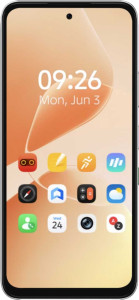
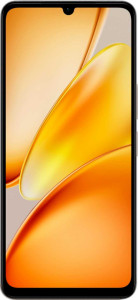
The most impactful difference here is cellular: the Vivo T4 Lite 5G supports 5G, while the Infinix Hot 60i is limited to 4G LTE. This is reflected dramatically in their peak download speeds — 3300 Mbits/s versus 300 Mbits/s — though real-world speeds depend heavily on carrier and network availability. For users in areas with 5G coverage, or those planning to keep their phone for several years as 5G networks expand, this is a meaningful long-term consideration. The Vivo also nudges ahead on Bluetooth 5.4 versus the Infinix's 5.3, though the practical difference between these two adjacent versions is negligible in everyday use.
The Infinix Hot 60i fights back with two notable hardware extras. It includes NFC — absent on the Vivo — which enables contactless payments, transit card emulation, and quick device pairing, a genuinely useful daily-use feature for those in NFC-supported ecosystems. It also carries an infrared sensor and a gyroscope, neither of which the Vivo offers. The IR blaster lets the phone function as a universal remote for TVs and appliances, while the gyroscope enables more accurate motion-based gaming, compass navigation, and augmented reality applications.
This category involves real trade-offs rather than a clean sweep. The Vivo T4 Lite 5G holds the bigger-picture advantage with future-proof 5G connectivity, but the Infinix Hot 60i delivers more versatile day-to-day utility through NFC, an infrared sensor, and a gyroscope. Which edge matters more depends entirely on whether 5G access or on-device feature breadth is the higher priority for the buyer.