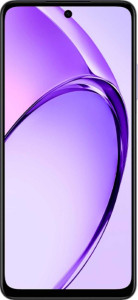
The most significant divide in this category is network generation. The Infinix Hot 60i 5G supports 5G connectivity, while the Oppo A5i is limited to 4G LTE with a peak download speed of 2900 Mbits/s versus the Infinix's 3300 Mbits/s. For users in areas with active 5G coverage, this means considerably faster downloads, lower latency for gaming and video calls, and better future-proofing as 4G networks gradually give way. For those in regions where 5G remains sparse, the gap is less immediately relevant — but as a long-term ownership consideration, 5G support is a meaningful asset.
The Infinix also pulls ahead on several supplementary features. Its Bluetooth 5.3 edges out the A5i's Bluetooth 5.0, offering marginally better connection stability and efficiency with compatible devices. It includes an external memory slot for expandable storage — absent on the Oppo — which is especially useful given the A5i's more limited 128 GB internal capacity. The Infinix additionally carries an infrared sensor, enabling it to function as a universal remote for TVs and appliances, a niche but genuinely handy feature the A5i lacks entirely.
Taken together, the Infinix Hot 60i 5G wins this category decisively. Its 5G support alone would be sufficient to tip the scales, but the added advantages of expandable storage, a newer Bluetooth version, and an IR blaster reinforce the lead across multiple dimensions. The Oppo A5i matches the Infinix on core shared features — NFC, dual SIM, USB-C, and location sensors — but cannot close the gap on connectivity breadth.